Ilan Kapoor – författare
382 kr
Skickas
306 kr
Läs direkt efter köp
306 kr
Läs direkt efter köp
2 714 kr
Skickas inom 10-15 vardagar
705 kr
Skickas inom 10-15 vardagar
2 151 kr
Skickas inom 10-15 vardagar
588 kr
Skickas inom 10-15 vardagar
914 kr
Läs direkt efter köp
This book uses a postcolonial lens to question development’s dominant cultural representations and institutional practices, investigating the possibilities for a transformatory postcolonial politics.
Ilan Kapoor examines recent development policy initiatives in such areas as ‘governance,’ ‘human rights’ and ‘participation’ to better understand and contest the production of knowledge in development - its cultural assumptions, power implications, and hegemonic politics. The volume shows how development practitioners and westernized elites/intellectuals are often complicit in this neo-colonial knowledge production. Noble gestures such as giving foreign aid or promoting participation and democracy frequently mask their institutional biases and economic and geopolitical interests, while silencing the subaltern (marginalized groups), on whose behalf they purportedly work. In response, the book argues for a radical ethical and political self-reflexivity that is vigilant to our reproduction of neo-colonialisms and amenable to public contestation of development priorities. It also underlines subaltern political strategies that can (and do) lead to greater democratic dialogue.
922 kr
Läs direkt efter köp
This book uses a postcolonial lens to question development’s dominant cultural representations and institutional practices, investigating the possibilities for a transformatory postcolonial politics.
Ilan Kapoor examines recent development policy initiatives in such areas as ‘governance,’ ‘human rights’ and ‘participation’ to better understand and contest the production of knowledge in development - its cultural assumptions, power implications, and hegemonic politics. The volume shows how development practitioners and westernized elites/intellectuals are often complicit in this neo-colonial knowledge production. Noble gestures such as giving foreign aid or promoting participation and democracy frequently mask their institutional biases and economic and geopolitical interests, while silencing the subaltern (marginalized groups), on whose behalf they purportedly work. In response, the book argues for a radical ethical and political self-reflexivity that is vigilant to our reproduction of neo-colonialisms and amenable to public contestation of development priorities. It also underlines subaltern political strategies that can (and do) lead to greater democratic dialogue.
682 kr
Läs direkt efter köp
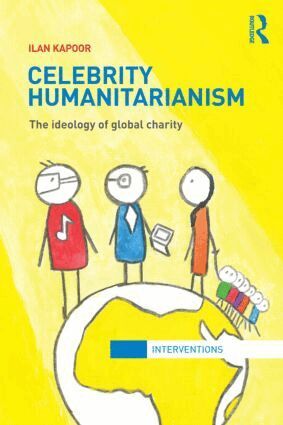
In the last two decades especially, we have witnessed the rise of ‘celebrity’ forms of global humanitarianism and charity work, spearheaded by entertainment stars, billionaires, and activist NGOs (e.g. Bob Geldof, Bono, Angelina Jolie, Madonna, Bill Gates, George Soros, Save Darfur, Medeçins Sans Frontières). This book examines this new phenomenon, arguing that celebrity humanitarianism legitimates, and indeed promotes, neoliberal capitalism and global inequality.
Drawing on Slavoj Žižek’s work, the book argues how celebrity humanitarianism, far from being altruistic, is significantly contaminated and ideological: it is most often self-serving, helping to promote institutional aggrandizement and the celebrity ‘brand’; it advances consumerism and corporate capitalism, and rationalizes the very global inequality it seeks to redress; it is fundamentally depoliticizing, despite its pretensions to ‘activism’; and it contributes to a ‘postdemocratic’ political landscape, which appears outwardly open and consensual, but is in fact managed by unaccountable elites.
682 kr
Läs direkt efter köp
In the last two decades especially, we have witnessed the rise of ‘celebrity’ forms of global humanitarianism and charity work, spearheaded by entertainment stars, billionaires, and activist NGOs (e.g. Bob Geldof, Bono, Angelina Jolie, Madonna, Bill Gates, George Soros, Save Darfur, Medeçins Sans Frontières). This book examines this new phenomenon, arguing that celebrity humanitarianism legitimates, and indeed promotes, neoliberal capitalism and global inequality.
Drawing on Slavoj Žižek’s work, the book argues how celebrity humanitarianism, far from being altruistic, is significantly contaminated and ideological: it is most often self-serving, helping to promote institutional aggrandizement and the celebrity ‘brand’; it advances consumerism and corporate capitalism, and rationalizes the very global inequality it seeks to redress; it is fundamentally depoliticizing, despite its pretensions to ‘activism’; and it contributes to a ‘postdemocratic’ political landscape, which appears outwardly open and consensual, but is in fact managed by unaccountable elites.
422 kr
Skickas inom 5-8 vardagar
1 172 kr
Skickas inom 5-8 vardagar
715 kr
Skickas inom 10-15 vardagar
374 kr
Skickas inom 10-15 vardagar
1 541 kr
Skickas inom 10-15 vardagar
271 kr
Skickas inom 10-15 vardagar
1 328 kr
Skickas inom 5-8 vardagar
430 kr
Läs direkt efter köp
Rethinking Development Politics reassesses development in relation to three significant schools of thought: Modernization; (neo)Marxist political economy; and Postdevelopment/Decoloniality. It exposes how all three disavow the unconscious temptations of development, resulting in the rationalization of the market, the undervaluation of fantasy and fetishism, and the advocacy of an uncritical politics of authenticity. The book distinguishes the psychoanalytic approach from its predecessors by focusing on contemporary case studies, including digital and green modernization, trade, neopopulism, anti-racist training, and radical politics in present-day Iran. Crucially, these case studies speak to the extent to which the unconscious may be a political resource for reconfiguring development politics to put the subaltern first.
Proposing a distinctive method of inquiry, Rethinking Development Politics will be of great interest to students, academics, and researchers in development studies, psychology, sociology, international relations, political science, and peace and conflict studies. Its critical analysis will also be of great use to global agency officials, corporate policy-makers, public policy institutions, and activist and advocacy organizations.