
Hannah Carton - Böcker
Visar alla böcker från författaren Hannah Carton. Handla med fri frakt och snabb leverans.
3 produkter
3 produkter
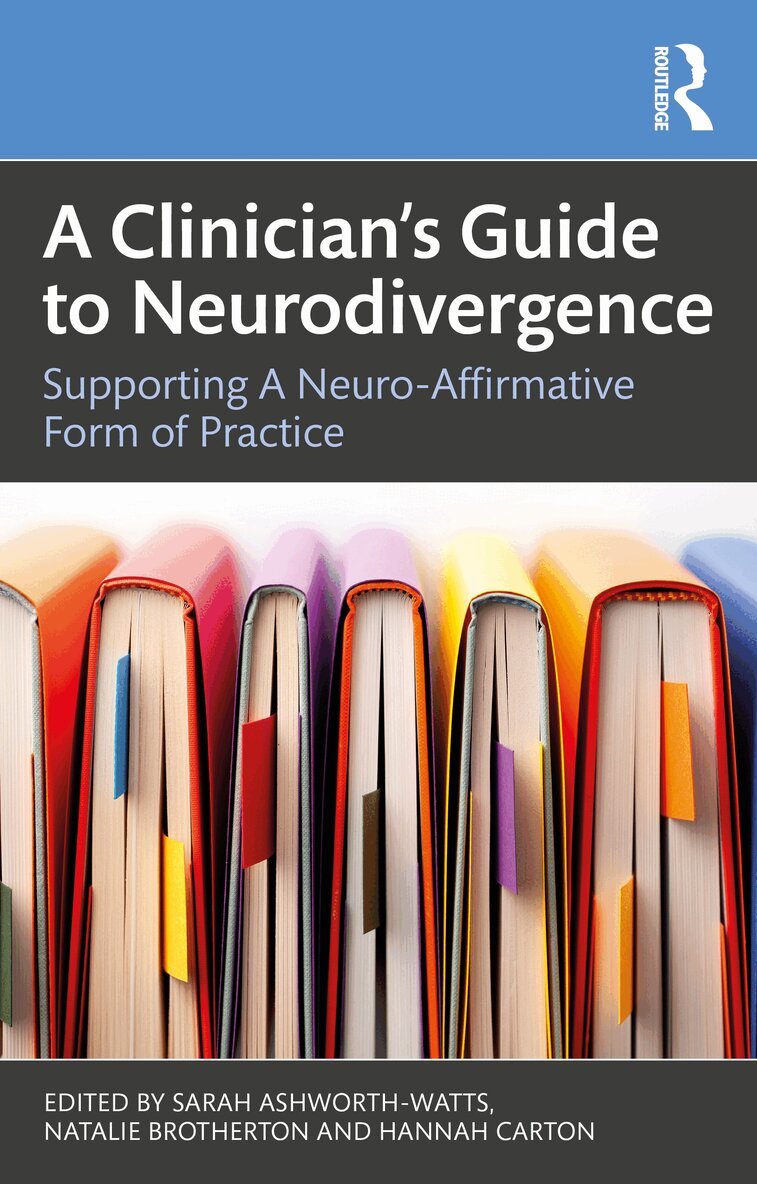
Clinician’s Guide to Neurodivergence
Supporting a Neuro-Affirmative Form of Practice
Häftad, Engelska, 2025
454 kr
Skickas inom 10-15 vardagar
A Clinician’s Guide to Neurodivergence: Supporting a neuro-affirmative form of practice is a concise handbook which provides a comprehensive and accessible overview of a range of conditions to support clinicians working with individuals with diverse neurocognitive profiles. It provides a practical guide for clinicians to move towards a more neuro-aware and neuro-affirmative way of working. It sets out guidance around diagnosis and access to services whilst giving consideration to the adaptations and accommodations that might be necessary to avoid the inequities that can often be experienced through neuro-normative or heteronormative practices.Topics covered include learning difficulties such as Dyslexia and Dyscalculia, Autism, ADHD, acquired brain injury and various other neurodivergent profiles. The intersection of neurodivergence with factors such as gender and age and comorbidity with mental health and personality profiles are also considered. Drawing on the NICE guidelines, the International Classification of Disease (ICD) system, and the Diagnostical Statistical Manual (DSM), each chapter provides the background to different neuro-cognitive profiles, common indicators that may be observed, screening and diagnostic assessment, clinical recommendations and signposting to relevant resources and services.It is valuable reading for students, researchers, clinicians, therapists, medical and allied professionals who require an introductory text providing in-depth details regarding a range of neurodivergent conditions.
Clinician’s Guide to Neurodivergence
Supporting a Neuro-Affirmative Form of Practice
Inbunden, Engelska, 2025
2 150 kr
Skickas inom 10-15 vardagar
A Clinician’s Guide to Neurodivergence: Supporting a neuro-affirmative form of practice is a concise handbook which provides a comprehensive and accessible overview of a range of conditions to support clinicians working with individuals with diverse neurocognitive profiles. It provides a practical guide for clinicians to move towards a more neuro-aware and neuro-affirmative way of working. It sets out guidance around diagnosis and access to services whilst giving consideration to the adaptations and accommodations that might be necessary to avoid the inequities that can often be experienced through neuro-normative or heteronormative practices.Topics covered include learning difficulties such as Dyslexia and Dyscalculia, Autism, ADHD, acquired brain injury and various other neurodivergent profiles. The intersection of neurodivergence with factors such as gender and age and comorbidity with mental health and personality profiles are also considered. Drawing on the NICE guidelines, the International Classification of Disease (ICD) system, and the Diagnostical Statistical Manual (DSM), each chapter provides the background to different neuro-cognitive profiles, common indicators that may be observed, screening and diagnostic assessment, clinical recommendations and signposting to relevant resources and services.It is valuable reading for students, researchers, clinicians, therapists, medical and allied professionals who require an introductory text providing in-depth details regarding a range of neurodivergent conditions.

606 kr
Skickas inom 10-15 vardagar
This book highlights human behaviour and architectural considerations for prescriptive code requirements for emergency exits in heritage cultural centers. Closed circuit television camera (CCTV) footage from a Canadian heritage cultural centre was analyzed from three separate unannounced evacuations, where recommendations based on the first two evacuations were implemented for the third. This study aims to (1) develop a baseline for the behaviour and actions of people during the pre-movement and movement stages of emergency egress and evacuation situations and (2) collect behavioural and movement data to aid the fire safety community with the decision process for egress and evacuation strategies and (3) interrogate and highlight architectural barriers in heritage structures with respect to emergency evacuation. The discussion of findings includes occupant behaviour, architectural implications and evacuation modelling and considers the often-conflicting intersection between architectural conservation and fire safety.