
Ilan Kapoor - Böcker
Visar alla böcker från författaren Ilan Kapoor. Handla med fri frakt och snabb leverans.
12 produkter
12 produkter

385 kr
Skickas
In Universal Politics, Ilan Kapoor and Zahi Zalloua argue that, in the face of the relentless advance of global capitalism, a universal politics is needed today more than ever. But rather than appealing to the narrow particularism of identity politics, the authors argue for a negative universality rooted in social antagonism (i.e., shared experiences of exploitation and marginalization). This conception of shared struggle avoids the trap of a neocolonial universalism, while foregrounding the politics of the systematically dispossessed and excluded. The book examines what a universal politics might look like in the context of key current global sites of struggle, including climate change, workers' struggles, the Palestinian question, the refugee crisis, Black Lives Matter, #MeToo, Political Islam, the Bolivian state under Morales, the European Union, and COVID-19. It also discusses the main political ingredients, gaps, and limitations of a universal politics.
2 634 kr
Skickas inom 10-15 vardagar
This book uses a postcolonial lens to question development’s dominant cultural representations and institutional practices, investigating the possibilities for a transformatory postcolonial politics. Ilan Kapoor examines recent development policy initiatives in such areas as ‘governance,’ ‘human rights’ and ‘participation’ to better understand and contest the production of knowledge in development - its cultural assumptions, power implications, and hegemonic politics. The volume shows how development practitioners and westernized elites/intellectuals are often complicit in this neo-colonial knowledge production. Noble gestures such as giving foreign aid or promoting participation and democracy frequently mask their institutional biases and economic and geopolitical interests, while silencing the subaltern (marginalized groups), on whose behalf they purportedly work. In response, the book argues for a radical ethical and political self-reflexivity that is vigilant to our reproduction of neo-colonialisms and amenable to public contestation of development priorities. It also underlines subaltern political strategies that can (and do) lead to greater democratic dialogue.
691 kr
Skickas inom 10-15 vardagar
This book uses a postcolonial lens to question development’s dominant cultural representations and institutional practices, investigating the possibilities for a transformatory postcolonial politics. Ilan Kapoor examines recent development policy initiatives in such areas as ‘governance,’ ‘human rights’ and ‘participation’ to better understand and contest the production of knowledge in development - its cultural assumptions, power implications, and hegemonic politics. The volume shows how development practitioners and westernized elites/intellectuals are often complicit in this neo-colonial knowledge production. Noble gestures such as giving foreign aid or promoting participation and democracy frequently mask their institutional biases and economic and geopolitical interests, while silencing the subaltern (marginalized groups), on whose behalf they purportedly work. In response, the book argues for a radical ethical and political self-reflexivity that is vigilant to our reproduction of neo-colonialisms and amenable to public contestation of development priorities. It also underlines subaltern political strategies that can (and do) lead to greater democratic dialogue.
2 088 kr
Skickas inom 10-15 vardagar
In the last two decades especially, we have witnessed the rise of ‘celebrity’ forms of global humanitarianism and charity work, spearheaded by entertainment stars, billionaires, and activist NGOs (e.g. Bob Geldof, Bono, Angelina Jolie, Madonna, Bill Gates, George Soros, Save Darfur, Medeçins Sans Frontières). This book examines this new phenomenon, arguing that celebrity humanitarianism legitimates, and indeed promotes, neoliberal capitalism and global inequality.Drawing on Slavoj Žižek’s work, the book argues how celebrity humanitarianism, far from being altruistic, is significantly contaminated and ideological: it is most often self-serving, helping to promote institutional aggrandizement and the celebrity ‘brand’; it advances consumerism and corporate capitalism, and rationalizes the very global inequality it seeks to redress; it is fundamentally depoliticizing, despite its pretensions to ‘activism’; and it contributes to a ‘postdemocratic’ political landscape, which appears outwardly open and consensual, but is in fact managed by unaccountable elites.
576 kr
Skickas inom 10-15 vardagar
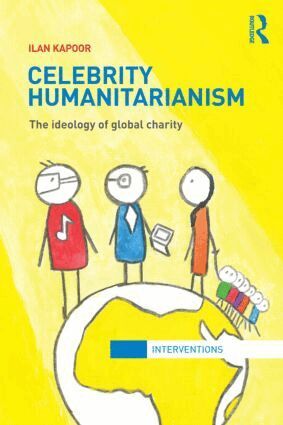
In the last two decades especially, we have witnessed the rise of ‘celebrity’ forms of global humanitarianism and charity work, spearheaded by entertainment stars, billionaires, and activist NGOs (e.g. Bob Geldof, Bono, Angelina Jolie, Madonna, Bill Gates, George Soros, Save Darfur, Medeçins Sans Frontières). This book examines this new phenomenon, arguing that celebrity humanitarianism legitimates, and indeed promotes, neoliberal capitalism and global inequality.Drawing on Slavoj Žižek’s work, the book argues how celebrity humanitarianism, far from being altruistic, is significantly contaminated and ideological: it is most often self-serving, helping to promote institutional aggrandizement and the celebrity ‘brand’; it advances consumerism and corporate capitalism, and rationalizes the very global inequality it seeks to redress; it is fundamentally depoliticizing, despite its pretensions to ‘activism’; and it contributes to a ‘postdemocratic’ political landscape, which appears outwardly open and consensual, but is in fact managed by unaccountable elites.
550 kr
Skickas inom 3-6 vardagar
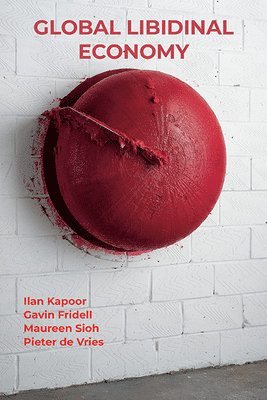
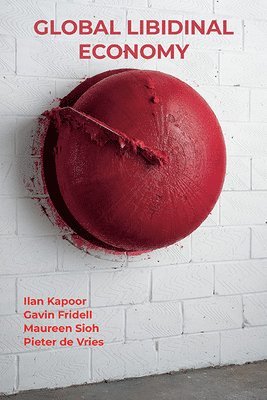
Claims unconscious desire plays a constitutive role in global political economy.This is the first book to examine global political economy from a psychoanalytic perspective. It claims that the libidinal-the site of unconscious desire-plays not a supplementary or trivial, but a constitutive role in global political economy. Consumption, for example, is not simply a way of satisfying a material or biological need but a doomed attempt at soothing our deeply held sense of loss; and capital is not just a means to material growth and prosperity but is invested with "drive" that seduces, beguiles, and manipulates in the service of unending accumulation. Thus, in contrast to political economy, which assumes a rational subject, libidinal economy is founded on the notion of a desiring subject, who obeys a logic not of good sense or self-interest but profligacy and irrationality. By applying a psychoanalytic lens, Global Libidinal Economy thereby seeks to uncover the unconscious excesses and antagonisms emergent in such key political economy categories as "production," "trade," and "ecology," while also bringing out significant contemporary themes relating to "gender" and "race."
1 415 kr
Skickas inom 3-6 vardagar
Claims unconscious desire plays a constitutive role in global political economy.This is the first book to examine global political economy from a psychoanalytic perspective. It claims that the libidinal-the site of unconscious desire-plays not a supplementary or trivial, but a constitutive role in global political economy. Consumption, for example, is not simply a way of satisfying a material or biological need but a doomed attempt at soothing our deeply held sense of loss; and capital is not just a means to material growth and prosperity but is invested with "drive" that seduces, beguiles, and manipulates in the service of unending accumulation. Thus, in contrast to political economy, which assumes a rational subject, libidinal economy is founded on the notion of a desiring subject, who obeys a logic not of good sense or self-interest but profligacy and irrationality. By applying a psychoanalytic lens, Global Libidinal Economy thereby seeks to uncover the unconscious excesses and antagonisms emergent in such key political economy categories as "production," "trade," and "ecology," while also bringing out significant contemporary themes relating to "gender" and "race."

701 kr
Skickas inom 10-15 vardagar
Psychoanalysis and the GlObal is about the hole at the heart of the “glObal,” meaning the instability and indecipherability that lies at the hub of globalization. The contributors use psychoanalysis to expose the unconscious desires, excesses, and antagonisms that accompany the world of economic flows, cultural circulation, and sociopolitical change. Unlike the mainstream discourse of globalization, which most often assumes unencumbered movement across borders, these contributors uncover what Lacan calls “the Real” of the glObal-its rifts, gaps, exceptions, and contradictions.Psychoanalysis and the GlObal adopts a psychoanalytic lens to highlight the unconscious circuits of enjoyment, racism, and anxiety that trouble, if not undermine, globalization’s economic, cultural, and environmental goals or gains. The contributors interrogate how unconscious desires and drives are externalized in our increasingly globalizing world: the ways in which traumas and emotional conflicts are integral to the disjunctures, homogeneities, and contingencies of global interactions; how social passions are manifested and materialized in political economy as much as in climate change, urban architecture, refugee and gender politics, or the growth of neo-populism; and how the unconscious serves as a basis for the rise and breakdown of popular movements against authoritarianism and neoliberal globalization. Psychoanalysis and the GlObal represents a major step forward in understanding globalization and also in extending the range and power of psychoanalytic critiques in, and of, geography.

367 kr
Skickas inom 10-15 vardagar
Psychoanalysis and the GlObal is about the hole at the heart of the “glObal,” meaning the instability and indecipherability that lies at the hub of globalization. The contributors use psychoanalysis to expose the unconscious desires, excesses, and antagonisms that accompany the world of economic flows, cultural circulation, and sociopolitical change. Unlike the mainstream discourse of globalization, which most often assumes unencumbered movement across borders, these contributors uncover what Lacan calls “the Real” of the glObal-its rifts, gaps, exceptions, and contradictions.Psychoanalysis and the GlObal adopts a psychoanalytic lens to highlight the unconscious circuits of enjoyment, racism, and anxiety that trouble, if not undermine, globalization’s economic, cultural, and environmental goals or gains. The contributors interrogate how unconscious desires and drives are externalized in our increasingly globalizing world: the ways in which traumas and emotional conflicts are integral to the disjunctures, homogeneities, and contingencies of global interactions; how social passions are manifested and materialized in political economy as much as in climate change, urban architecture, refugee and gender politics, or the growth of neo-populism; and how the unconscious serves as a basis for the rise and breakdown of popular movements against authoritarianism and neoliberal globalization. Psychoanalysis and the GlObal represents a major step forward in understanding globalization and also in extending the range and power of psychoanalytic critiques in, and of, geography.
1 475 kr
Skickas inom 10-15 vardagar
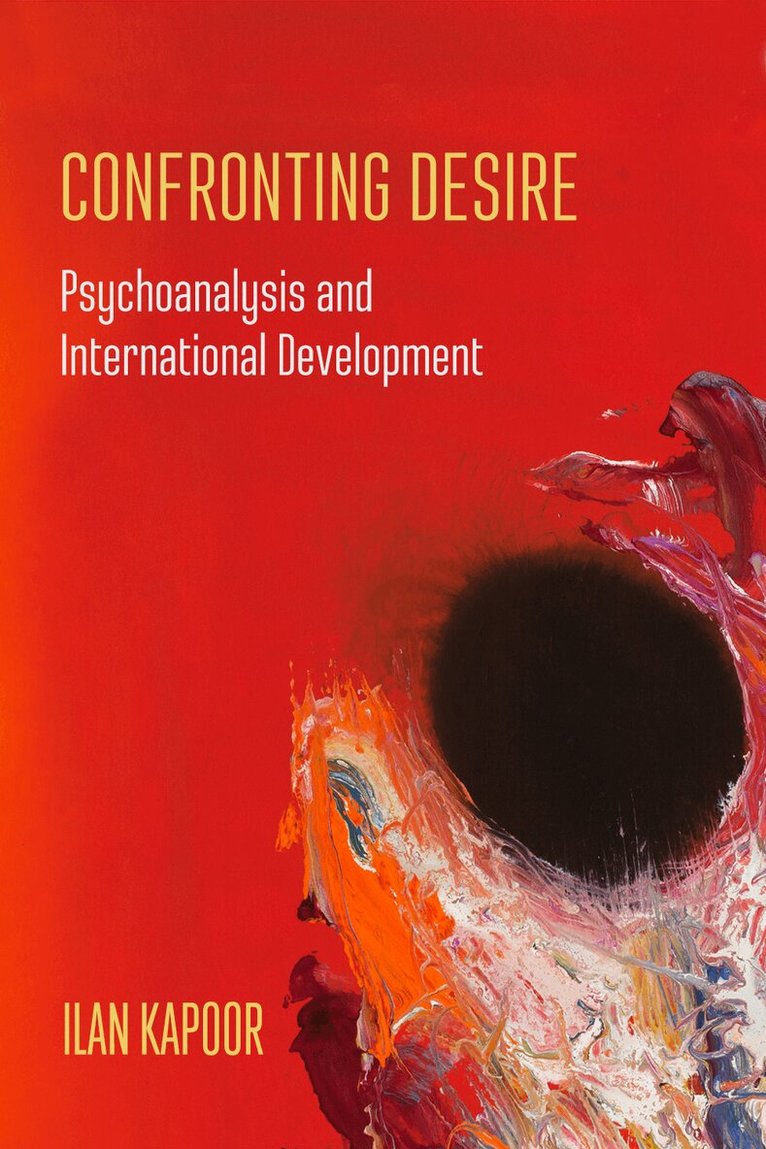
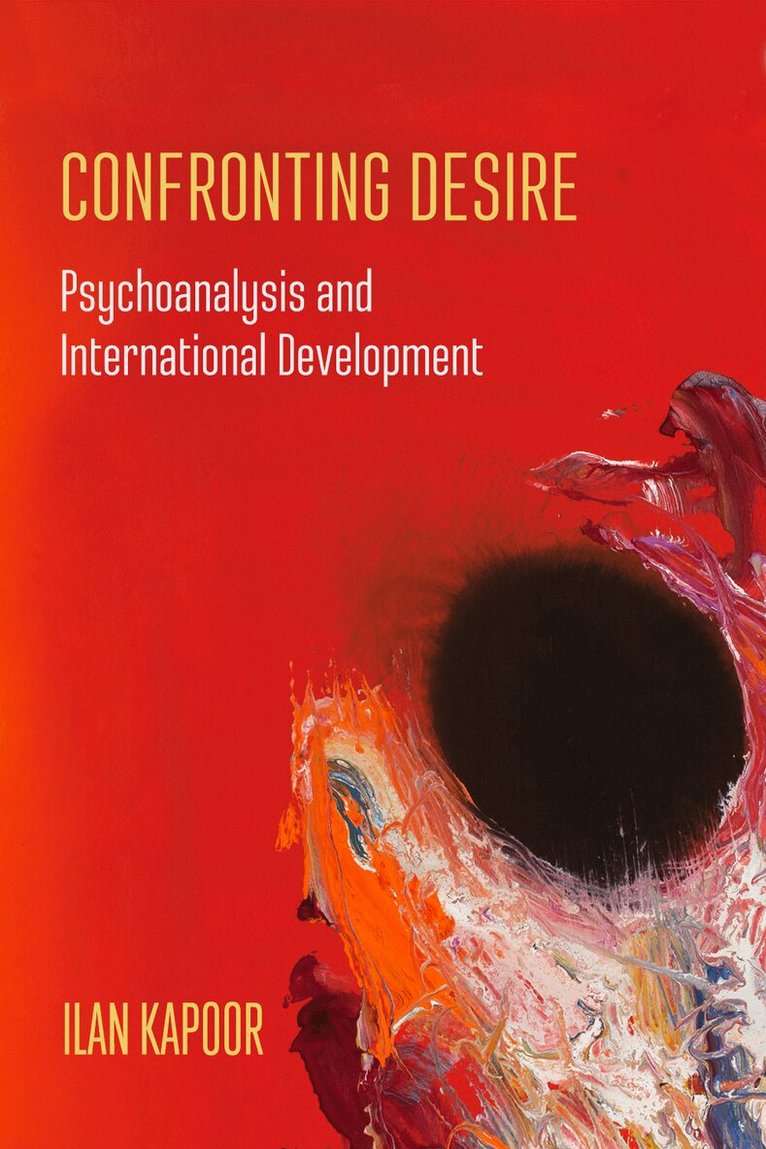
By applying psychoanalytic perspectives to key themes, concepts, and practices underlying the development enterprise, Confronting Desire offers a new way of analyzing the problems, challenges, and potentialities of international development. Ilan Kapoor makes a compelling case for examining development's unconscious desires and in the process inaugurates a new field of study: psychoanalytic development studies.Drawing from the work of Jacques Lacan and Slavoj Žižek, as well as from psychoanalytic postcolonial and feminist scholarship, Kapoor analyzes how development's unconscious desires "speak out," most often in excessive and unpredictable ways that contradict the outwardly rational declarations of its practitioners. He investigates development's many irrationalities—from obsessions about growth and poverty to the perverse seductions of racism and over-consumption. By deploying key psychoanalytic concepts—enjoyment, fantasy, antagonism, fetishism, envy, drive, perversion, and hysteria—Confronting Desire critically analyzes important issues in development—growth, poverty, inequality, participation, consumption, corruption, gender, "race," LGBTQ politics, universality, and revolution. Confronting Desire offers prescriptions for applying psychoanalysis to development theory and practice and demonstrates how psychoanalysis can provide fertile ground for radical politics and the transformation of international development.
266 kr
Skickas inom 10-15 vardagar
By applying psychoanalytic perspectives to key themes, concepts, and practices underlying the development enterprise, Confronting Desire offers a new way of analyzing the problems, challenges, and potentialities of international development. Ilan Kapoor makes a compelling case for examining development's unconscious desires and in the process inaugurates a new field of study: psychoanalytic development studies.Drawing from the work of Jacques Lacan and Slavoj Žižek, as well as from psychoanalytic postcolonial and feminist scholarship, Kapoor analyzes how development's unconscious desires "speak out," most often in excessive and unpredictable ways that contradict the outwardly rational declarations of its practitioners. He investigates development's many irrationalities—from obsessions about growth and poverty to the perverse seductions of racism and over-consumption. By deploying key psychoanalytic concepts—enjoyment, fantasy, antagonism, fetishism, envy, drive, perversion, and hysteria—Confronting Desire critically analyzes important issues in development—growth, poverty, inequality, participation, consumption, corruption, gender, "race," LGBTQ politics, universality, and revolution. Confronting Desire offers prescriptions for applying psychoanalysis to development theory and practice and demonstrates how psychoanalysis can provide fertile ground for radical politics and the transformation of international development.
1 299 kr
Skickas inom 7-10 vardagar
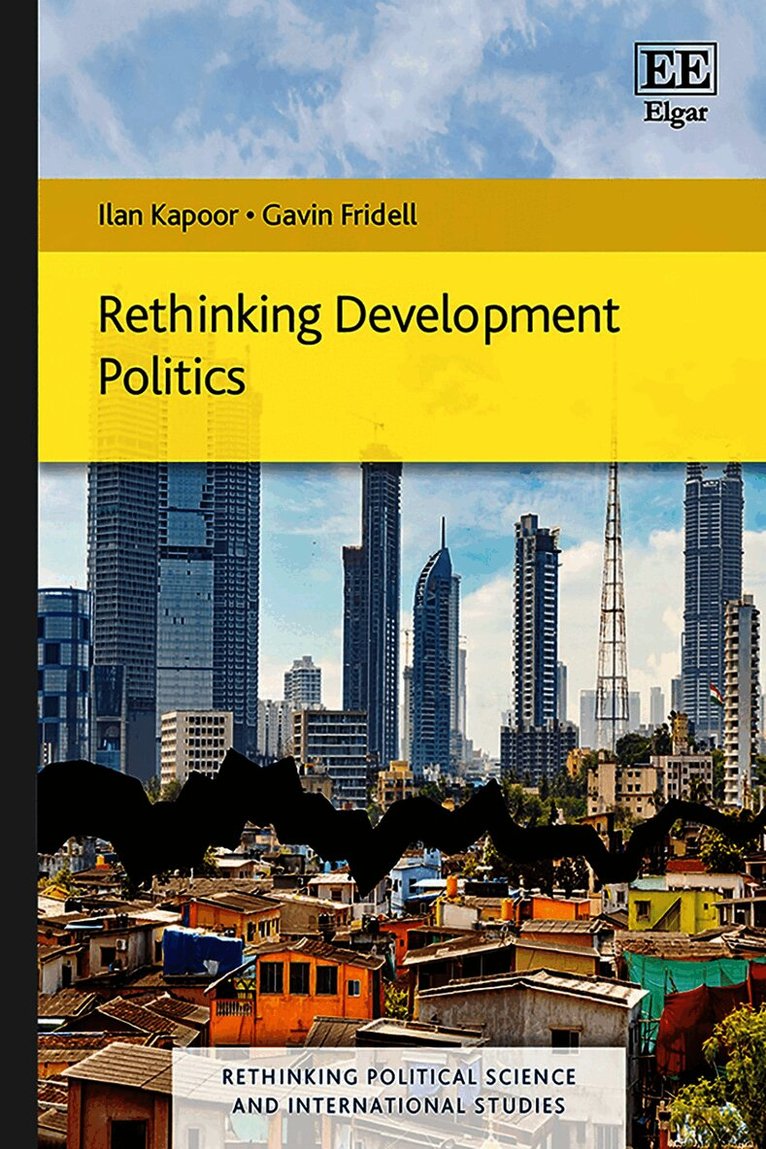
In this innovative book, Ilan Kapoor and Gavin Fridell rethink development politics psychoanalytically, investigating its unconscious. Whereas mainstream development politics is organized around stability and rationality, psychoanalysis points to disharmony and irrationality, helping to explain the development subject’s often self-defeating behaviour — for example being seduced by growth and shopping, despite being aware of the inherent perils of inequality and climate crisis.Rethinking Development Politics reassesses development in relation to three significant schools of thought: Modernization; (neo)Marxist political economy; and Postdevelopment/Decoloniality. It exposes how all three disavow the unconscious temptations of development, resulting in the rationalization of the market, the undervaluation of fantasy and fetishism, and the advocacy of an uncritical politics of authenticity. The book distinguishes the psychoanalytic approach from its predecessors by focusing on contemporary case studies, including digital and green modernization, trade, neopopulism, anti-racist training, and radical politics in present-day Iran. Crucially, these case studies speak to the extent to which the unconscious may be a political resource for reconfiguring development politics to put the subaltern first.Proposing a distinctive method of inquiry, Rethinking Development Politics will be of great interest to students, academics, and researchers in development studies, psychology, sociology, international relations, political science, and peace and conflict studies. Its critical analysis will also be of great use to global agency officials, corporate policy-makers, public policy institutions, and activist and advocacy organizations.