
Jean Moulin - Böcker
Visar alla böcker från författaren Jean Moulin. Handla med fri frakt och snabb leverans.
5 produkter
5 produkter
473 kr
Skickas
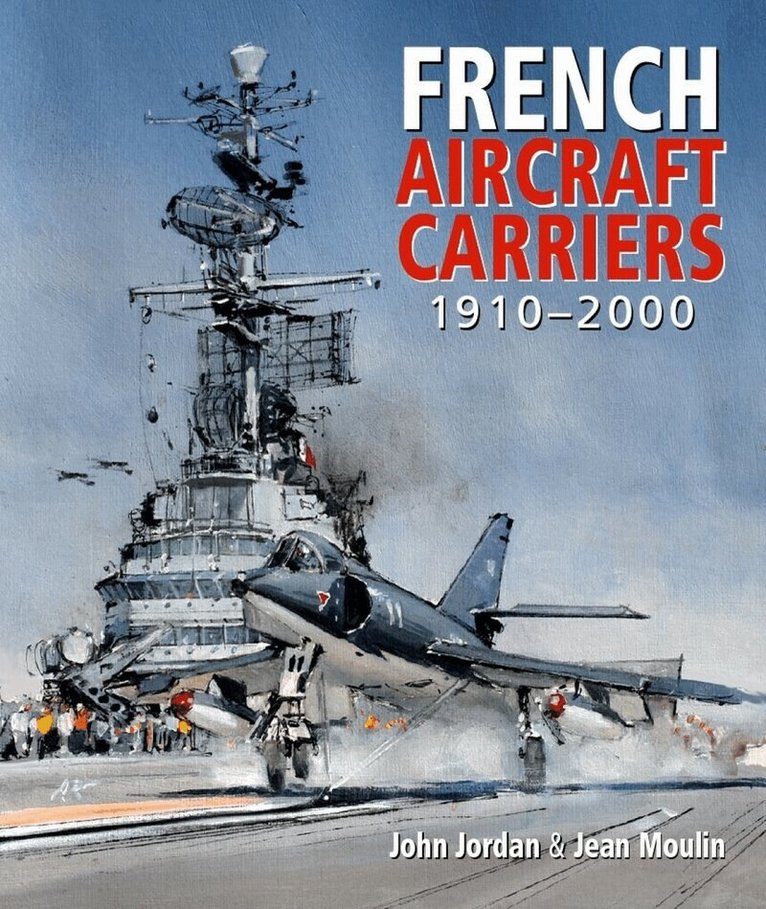
French carrier aviation traces its origins to the Foudre, a highly original ship initially designed to carry torpedo boats into action but later converted into a seaplane carrier. During the First World War this was supplemented by a number of merchant ships requisitioned to support aircraft and the former sloop Bapaume became the first French ship to launch wheeled aircraft while underway.The Washington Treaty of 1922 prevented the completion of traditional capital ships, so France, like the other major naval powers, decided to convert an incomplete battleship, the Béarn, to an experimental carrier. Between 1929 and 1936 there were fifteen ‘paper designs’, all covered in this book, but the only aviation ship added to the inter-war French navy was the highly unusual Commandant Teste, whose tactical rationale and service history is explored at length. France’s first purpose-designed carriers, Joffre and Painlevé were ordered just before the outbreak of the Second World War but the Armistice of 1940 meant that neither was ever completed.Some design work continued during the war, which culminated in the projected PA28 Clemenceau of 1948, but the ship proved too expensive and was cancelled in 1949. Instead, France acquired four second-hand ships from Britain and the USA which, as Dixmude, Arromanches, Lafayette and Bois Belleau, played a significant role in the postwar conflict in French Indochina.After budgeting and planning delays, the Marine National finally obtained its first modern indigenously built carriers with Clemenceau (1961) and Foch (1963). These important ships enjoyed long and successful careers, and their evolution and service histories form a major focus of this book. The final chapters cover developments up to the nuclear-powered Charles de Gaulle and an epilogue looks at the French Navy’s plans for future naval aviation, making this a complete history from the earliest days to the present.
- Nyhet
258 kr
Kommande
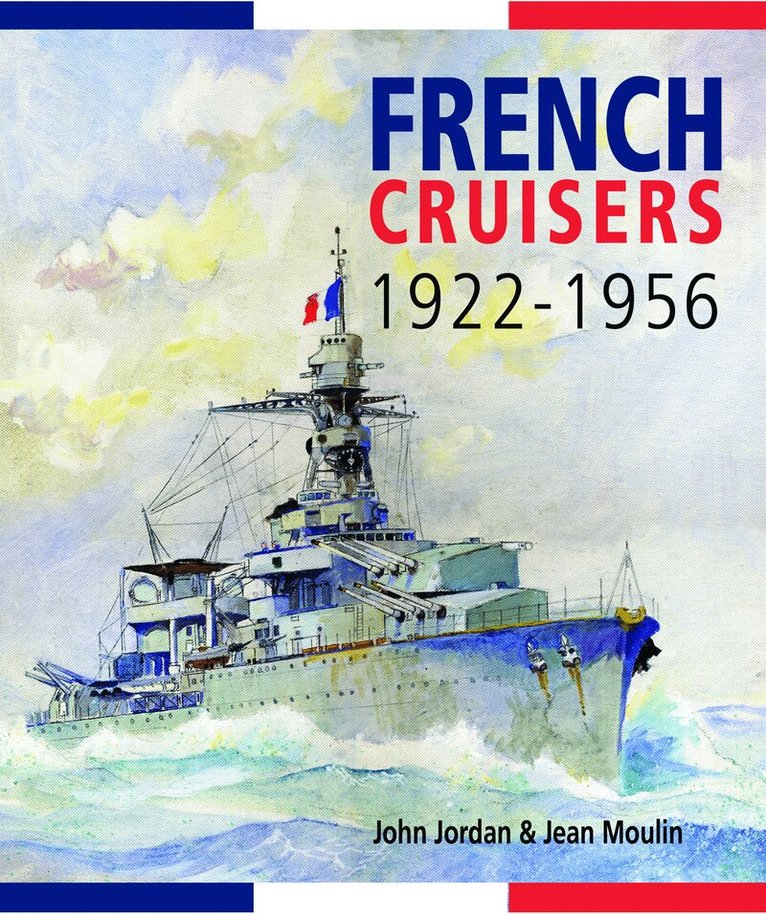
The French produced some of the most striking and innovatory interwar cruiser designs. A large amount of new information about these ships has become available over the past twenty years in France, but this book is the first to make this accessible to an English-speaking readership. Part I explains the design philosophy behind each of the classes built after 1922, and outlines the characteristics of each type, accompanied by detailed data tables and a comprehensive set of specially-drawn plans based on official documents, as well as carefully-selected photographs. Coverage includes the De Grasse, laid down in August 1939 and completed postwar as an AA cruiser, and also the heavy cruisers of the Saint Louis class intended to follow her, about which little has been published. Part II deals with the historical side, covering not only the eventful careers of these ships, but also explaining the peacetime organisation of the Marine Nationale, the complex politics of this turbulent period and their impact on the navy. Like its highly successful predecessor, French Battleships, this beautifully presented book subtly blends technical and historical analysis to produce what must become the standard reference work.
738 kr
Skickas inom 3-6 vardagar
395 kr
Tillfälligt slut
The French produced some of the most striking and innovatory interwar cruiser designs. A large amount of new information about these ships has become available over the past twenty years in France, but this book is the first to make this accessible to an English-speaking readership. Part I explains the design philosophy behind each of the classes built after 1922, and outlines the characteristics of each type, accompanied by detailed data tables and a comprehensive set of specially-drawn plans based on official documents, as well as carefully-selected photographs. Coverage includes the De Grasse, laid down in August 1939 and completed postwar as an AA cruiser, and also the heavy cruisers of the Saint Louis class intended to follow her, about which little has been published. Part II deals with the historical side, covering not only the eventful careers of these ships, but also explaining the peacetime organisation of the Marine Nationale, the complex politics of this turbulent period and their impact on the navy.Like its highly successful predecessor, French Battleships, this beautifully presented book subtly blends technical and historical analysis to produce what must become the standard reference work.
421 kr
Skickas
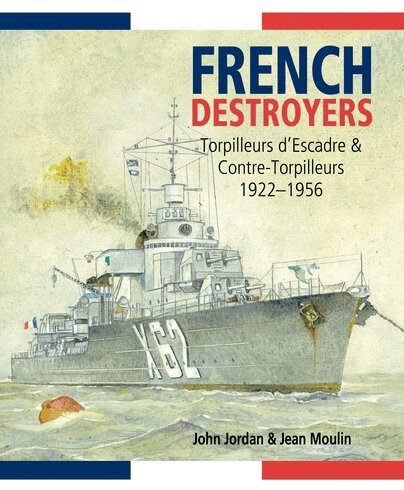
Between the wars the French produced some of the largest, and certainly the fastest, destroyers in the world. Known as Contre-Torpilleurs, these striking and innovatory super-destroyers form the core of this book, but the more conventional Torpilleurs d'Escadre are also covered. This history combines the technical and service material published in French-language monographs over the past two decades with the authors' own research from primary sources. The structure of the book follows that of the highly successful French Cruisers, with Part I devoted to the design of each of the classes built after 1922. The text is accompanied by detailed data tables and illustrated by a comprehensive set of specially-drawn plans and schemas based on official documents, as well as carefully-selected photographs from French naval sources and from private collections. Coverage runs down to the Le Hardi class, the last pre-war design. Part II deals with the historical side, covering the eventful careers of these ships before, during and after the war. This section is illustrated by maps specially drawn for the book, and by contemporary photographs.Like its highly successful predecessors, French Battleships and French Cruisers, this beautifully presented book blends technical and historical analysis to produce what must become the standard English-language reference work.