
John R. Clarke - Böcker
Visar alla böcker från författaren John R. Clarke. Handla med fri frakt och snabb leverans.
7 produkter
7 produkter
476 kr
Skickas inom 7-10 vardagar
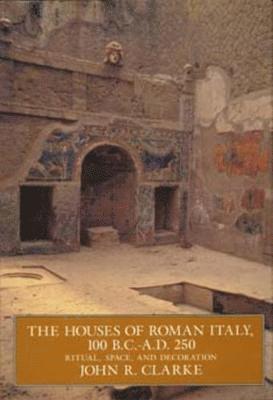
In this richly illustrated book, art historian John R. Clarke helps us see the ancient Roman house 'with Roman eyes'. Clarke presents a range of houses, from tenements to villas, and shows us how enduring patterns of Roman wall decoration tellingly bear the cultural, religious, and social imprints of the people who lived with them. In case studies of seventeen excavated houses, Clarke guides us through four centuries of Roman wall painting, mosaic, and stucco decoration, from the period of the 'Four Styles' (100 B.C. to A.D. 79) to the mid- third century. The First Style Samnite House shows its debt to public architecture in its clear integration of public and private spaces. The Villa of Oplontis asserts the extravagant social and cultural climate of the Second Style. Gem-like Third-Style rooms from the House of Lucretius Fronto reflect the refinement and elegance of Augustan tastes. The Vettii brothers' social climbing helps explain the overburdened Fourth-Style decoration of their famous house. And evidence of remodelling leads Clarke to conclude that the House of Jupiter and Ganymede became a gay hotel in the second century.In his emphasis on social and spiritual dimensions, Clarke offers a contribution to Roman art and architectural history that is both original and accessible to the general reader. The book's superb photographs not only support the author's findings but help to preserve an ancient legacy that is fast succumbing to modern deterioration resulting from pollution and vandalism.
Looking at Lovemaking
Constructions of Sexuality in Roman Art, 100 B.C. – A.D. 250
Häftad, Engelska, 2001
379 kr
Skickas inom 7-10 vardagar
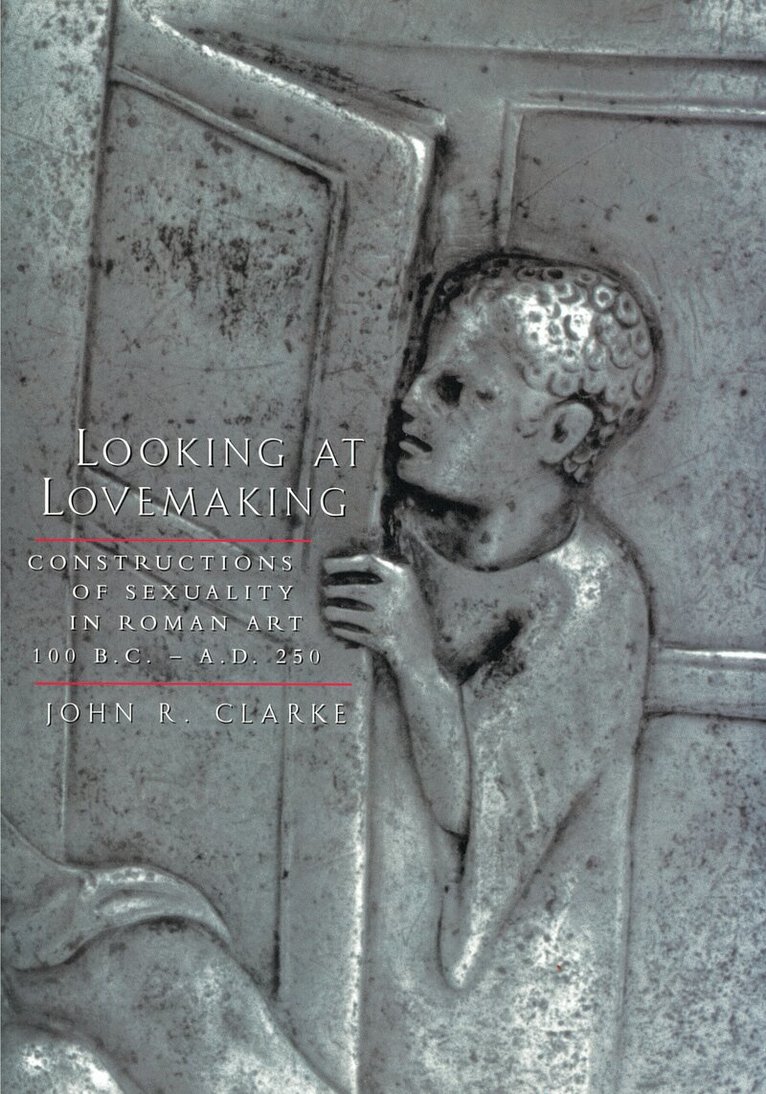
What did sex mean to the ancient Romans? In this lavishly illustrated study, John R. Clarke investigates a rich assortment of Roman erotic art to answer this question--and along the way, he reveals a society quite different from our own. Clarke reevaluates our understanding of Roman art and society in a study informed by recent gender and cultural studies, and focusing for the first time on attitudes toward the erotic among both the Roman non-elite and women. This splendid volume is the first study of erotic art and sexuality to set these works--many newly discovered and previously unpublished--in their ancient context and the first to define the differences between modern and ancient concepts of sexuality using clear visual evidence. Roman artists pictured a great range of human sexual activities--far beyond those mentioned in classical literature--including sex between men and women, men and men, women and women, men and boys, threesomes, foursomes, and more. Roman citizens paid artists to decorate expensive objects, such as silver and cameo glass, with scenes of lovemaking.Erotic works were created for and sold to a broad range of consumers, from the elite to the very poor, during a period spanning the first century B.C. through the mid-third century of our era. This erotic art was not hidden away, but was displayed proudly in homes as signs of wealth and luxury. In public spaces, artists often depicted outrageous sexual acrobatics to make people laugh. Looking at Lovemaking depicts a sophisticated, pre-Christian society that placed a high value on sexual pleasure and the art that represented it. Clarke shows how this culture evolved within religious, social, and legal frameworks that were vastly different from our own and contributes an original and controversial chapter to the history of human sexuality.
Art in the Lives of Ordinary Romans
Visual Representation and Non-Elite Viewers in Italy, 100 B.C.-A.D. 315
Häftad, Engelska, 2006
371 kr
Skickas inom 7-10 vardagar
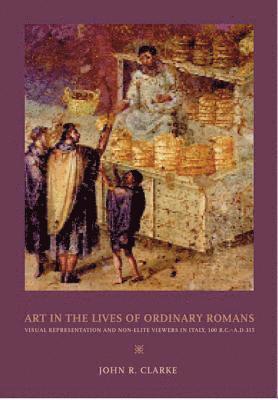
This splendidly illustrated book brings to life the ancient Romans whom modern scholarship has largely ignored: slaves, ex-slaves, foreigners, and the freeborn working poor. Though they had no access to the upper echelons of society, ordinary Romans enlivened their world with all manner of artworks. Discussing a wide range of art in the late republic and early empire--from familiar monuments to the obscure Caupona of Salvius and little-studied tomb reliefs--John R. Clarke provides a tantalizing glimpse into the lives of ordinary Roman people. Writing for a wide audience, he illuminates the dynamics of a discerning and sophisticated population, overturning much accepted wisdom about them, and opening our eyes to their astounding cultural diversity. Clarke begins by asking: How did emperors use monumental displays to communicate their policies to ordinary people? His innovative readings demonstrate how the Ara Pacis, the columns of Trajan and of Marcus Aurelius, and the Arch of Constantine announced each dynasty's program for handling the lower classes.Clarke then considers art commissioned by the non-elites themselves--the paintings, mosaics, and reliefs that decorated their homes, shops, taverns, and tombstones. In a series of paintings from taverns and houses, for instance, he uncovers wickedly funny combinations of text and image used by ordinary Romans to poke fun at elite pretensions in art, philosophy, and poetry. In addition to providing perceptive readings of many works of Roman art, this original and entertaining book demonstrates why historians must recognize, rather than erase, complexity and contradiction and asks new questions about class, culture, and social regulation that are highly relevant in today's global culture.

454 kr
Skickas inom 3-6 vardagar
Del 14 - Kelsey Museum Publication
Leisure and Luxury in the Age of Nero
The Villas of Oplontis near Pompeii
Häftad, Engelska, 2016
574 kr
Tillfälligt slut
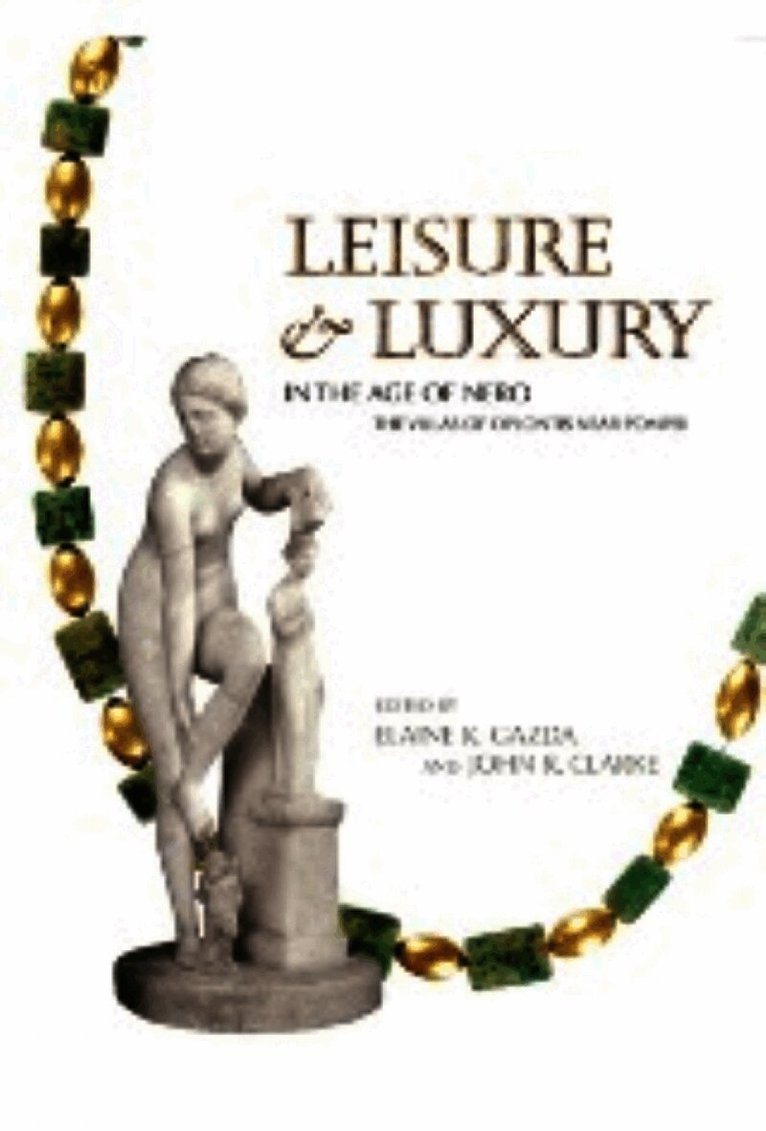
This heavily illustrated volume, like the exhibition it accompanies, documents the lavish lifestyle of ancient Rome's wealthiest citizens along the Bay of Naples until AD 79, when the eruption of Mount Vesuvius buried many surrounding towns and villas. The book presents a collection of essays by an international group of scholars who highlight and interpret the archaeological discoveries of both the Italian excavations at Villa A and Oplontis ("Villa") B from 1964 to 1991 and the ongoing Oplontis Project, a collaboration between the Archaeological Superintendency of Pompeii and the University of Texas at Austin since 2006. Many of the authors are members of the Oplontis Project team. The volume also contains a full catalogue of the objects in the exhibition. 452 illustrations.

167 kr
Skickas inom 5-8 vardagar

Uncovering the Truth of Jesus and His Mission
Uncovering the Truth of Jesus and His Mission
Häftad, Engelska, 2023
107 kr
Skickas inom 5-8 vardagar