Elaine K. Gazda - Böcker
Visar alla böcker från författaren Elaine K. Gazda. Handla med fri frakt och snabb leverans.
5 produkter
5 produkter
2 617 kr
Skickas inom 5-8 vardagar
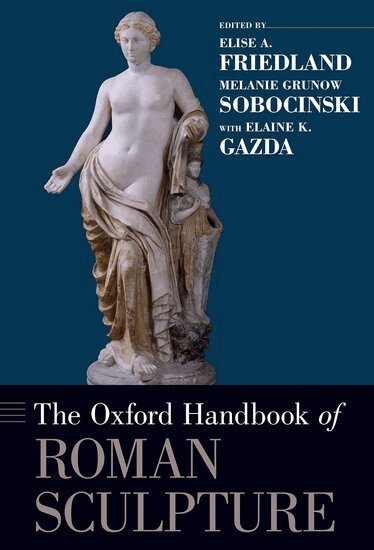
The study of Roman sculpture has been an essential part of the disciplines of Art History and Classics since the eighteenth century. From formal concerns such as Kopienkritic (copy criticism) to social readings of plebeian and patrician art and beyond, scholars have returned to Roman sculpture to answer a variety of questions about Roman art, society, and history. Indeed, the field of Roman sculptural studies encompasses not only the full chronological range of the Roman world but also its expansive geography, and a variety of artistic media, formats, sizes, and functions. Exciting new theories, methods, and approaches have transformed the specialized literature on the subject in recent decades. Rather than creating another chronological ARCH15OXH of representative examples of various periods, genres, and settings, The Oxford Handbook of Roman Sculpture synthesizes current best practices for studying this central medium of Roman art, situating it within the larger fields of art history, classical archaeology, and Roman studies. This volume fills the gap between introductory textbooks--which hide the critical apparatus from the reader--and the highly focused professional literature. The handbook conveniently presents new technical, scientific, literary, and theoretical approaches to the study of Roman sculpture in one reference volume and complements textbooks and other publications that present well-known works in the corpus. Chronologically, the volume addresses material from the Early Republican period through Late Antiquity. The Oxford Handbook of Roman Sculpture not only contributes to the field of classical art and archaeology but also provides a useful reference for classicists and historians of the ancient world.
Roman Art in the Private Sphere
New Perspectives on the Architecture and Decor of the Domus, Villa, and Insula
Häftad, Engelska, 2010
647 kr
Skickas inom 7-10 vardagar
"This is a stimulating book and should be compulsory reading for all students of Roman art."---Classical Review "[A] model exploration into the ways private décor can be used to facilitate a larger understanding of Roman art and society."---Classical WorldRoman Art in the Private Sphere presents an impressive case for the social and art historical importance of the paintings, mosaics, and sculptures that filled the private houses of the Roman elite. The six essays in this volume range from the first century BCE to the fourth century CE, and from the Italian peninsula to the Eastern Empire and North African provinces, treating works of art that belonged to every major Roman housing type: the single-family atrium houses and the insula apartment blocks in Italian cities, the dramatically sited villas of the Campanian coast and countryside, and the palatial mansions of late antique provincial aristocrats. This new edition includes a fresh contribution by editor Elaine Gazda, tracing the developments in the treatment of private Roman art since the publication of the original edition of Roman Art in the Private Sphere. Elaine K. Gazda is Professor of the History of Art and Curator of Hellenistic and Roman Antiquities at the Kelsey Museum of Archaeology, University of Michigan.
Del 1 - Kelsey Museum Publication
Karanis, An Egyptian Town in Roman Times
Discoveries of the University of Michigan Expedition to Egypt (1924-1935)
Häftad, Engelska, 2004
184 kr
Tillfälligt slut
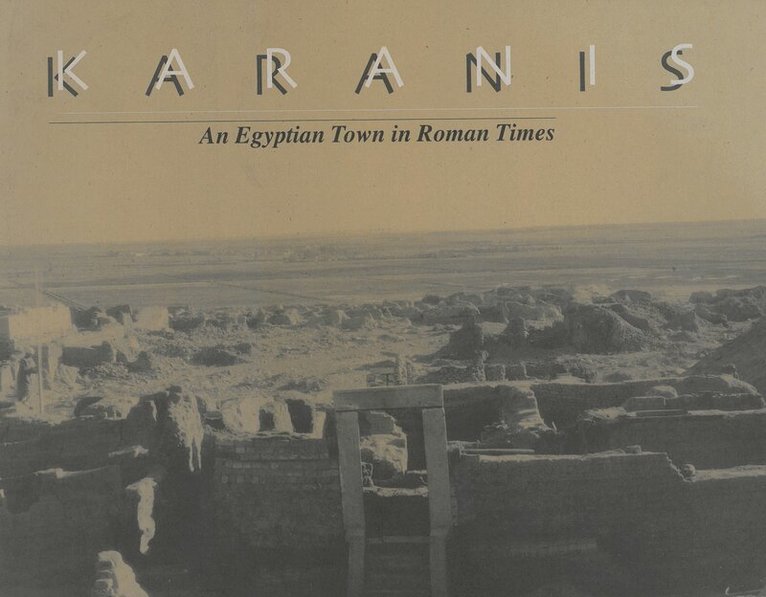
Karanis, a town in Egypt's Fayum region founded around 250 BC, housed a farming community with a diverse population and a complex material culture that lasted for hundreds of years. Ultimately abandoned and partly covered by the encroaching desert, Karanis eventually proved to be an extraordinarily rich archaeological site, yielding tens of thousands of artifacts and texts on papyrus that provide a wealth of information about daily life in the Roman-period Egyptian town. This volume tells of the history and culture of Karanis, and also provides a useful introduction to the University of Michigan's excavations between 1924 and 1935 and to the artifacts, archival records and photographs of the excavation that now form one of the major components of the collection of the Kelsey Museum of Archaeology.
Del 5 - Kelsey Museum Publication
Building a New Rome
The Roman Colony of Pisidian Antioch (25 BC-300 AD)
Häftad, Engelska, 2011
565 kr
Tillfälligt slut
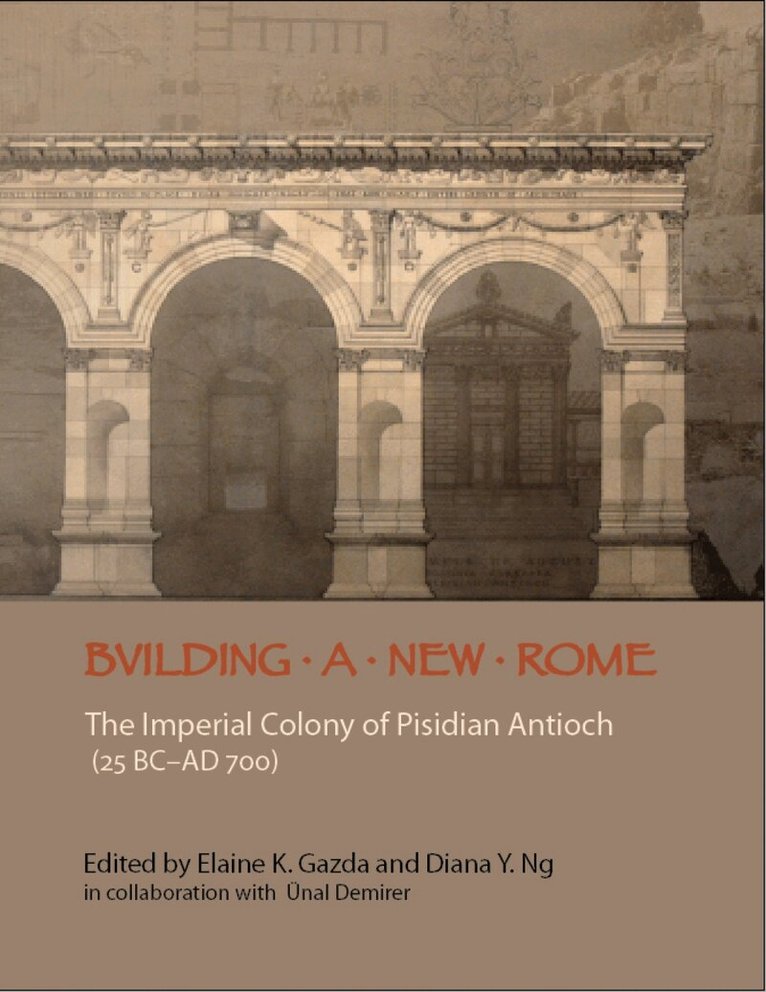
The essays in this volume bring to bear the latest scholarly and technological trends in archaeological research to shed new light on the site of Pisidian Antioch in west-central Turkey. Drawing on 3-D virtual reality technology as well as archival material from a 1924 University of Michigan expedition to the site, the authors propose new reconstructions of the city's major excavated monuments. They also evaluate these monuments in relation to the social and political imperatives of Pisidian Antioch's hybrid culture - one that overlaid a Roman imperial colony on a Hellenistic Greek city in an Anatolian region long inhabited by Phrygians and Pisidians. The study of Pisidian Antioch is thus seen in the context of recent scholarship on Rome's colonial project in the eastern empire. An accompanying DVD presents a fly-over of the virtual city created to aid in the authors' research. Includes 168 b&w illustrations and a DVD.
Del 14 - Kelsey Museum Publication
Leisure and Luxury in the Age of Nero
The Villas of Oplontis near Pompeii
Häftad, Engelska, 2016
574 kr
Tillfälligt slut
This heavily illustrated volume, like the exhibition it accompanies, documents the lavish lifestyle of ancient Rome's wealthiest citizens along the Bay of Naples until AD 79, when the eruption of Mount Vesuvius buried many surrounding towns and villas. The book presents a collection of essays by an international group of scholars who highlight and interpret the archaeological discoveries of both the Italian excavations at Villa A and Oplontis ("Villa") B from 1964 to 1991 and the ongoing Oplontis Project, a collaboration between the Archaeological Superintendency of Pompeii and the University of Texas at Austin since 2006. Many of the authors are members of the Oplontis Project team. The volume also contains a full catalogue of the objects in the exhibition. 452 illustrations.