Diana Y. Ng - Böcker
Visar alla böcker från författaren Diana Y. Ng. Handla med fri frakt och snabb leverans.
5 produkter
5 produkter
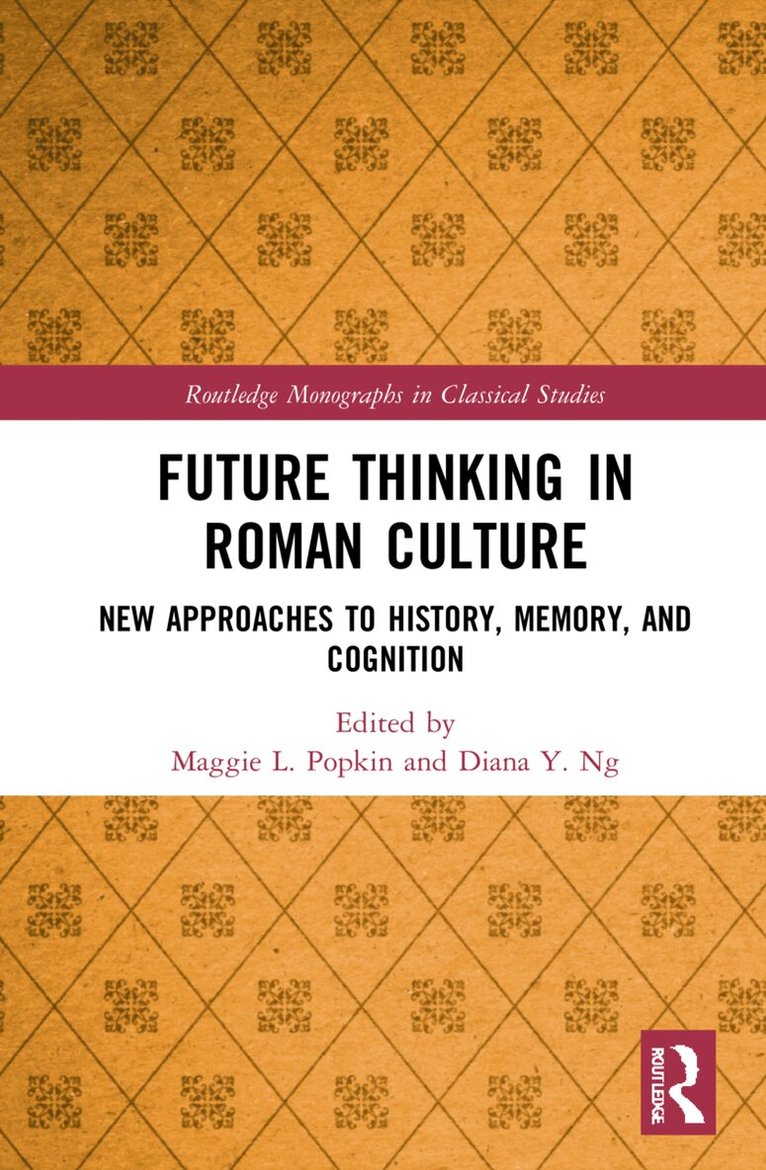
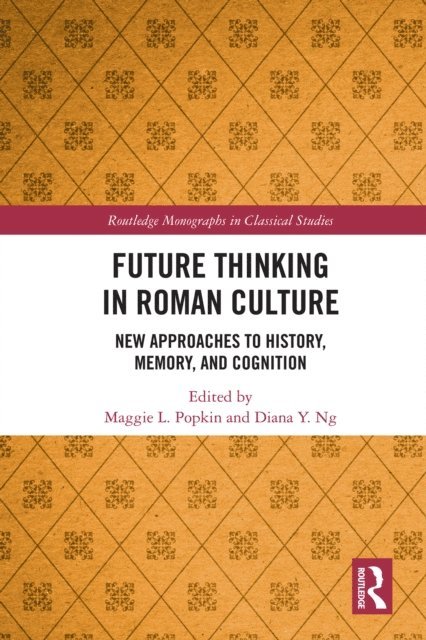
Future Thinking in Roman Culture
New Approaches to History, Memory, and Cognition
Inbunden, Engelska, 2021
2 166 kr
Skickas inom 10-15 vardagar
Future Thinking in Roman Culture is the first volume dedicated to the exploration of prospective memory and future thinking in the Roman world, integrating cutting edge research in cognitive sciences and theory with approaches to historiography, epigraphy, and material culture.This volume opens a new avenue of investigation for Roman memory studies in presenting multiple case studies of memory and commemoration as future-thinking phenomena. It breaks new ground by bringing classical studies into direct dialogue with recent research on cognitive processes of future thinking. The thematically linked but methodologically diverse contributions, all by leading scholars who have published significant work in memory studies of antiquity, both cultural and cognitive, make the volume well suited for classical studies scholars and students seeking to explore cognitive science and philosophy of mind in ancient contexts, with special appeal to those sharing the growing interest in investigating Roman conceptions of futurity and time. The chapters all deliberately coalesce around the central theme of prospection and future thinking and their impact on our understanding of Roman ritual and religion, politics, and individual motivation and intention.This volume will be an invaluable resource to undergraduate and postgraduate students of classics, art history, archaeology, history, and religious studies, as well as scholars and students of memory studies, historical and cultural cognitive studies, psychology, and philosophy.
Future Thinking in Roman Culture
New Approaches to History, Memory, and Cognition
Häftad, Engelska, 2024
578 kr
Skickas inom 10-15 vardagar
Future Thinking in Roman Culture is the first volume dedicated to the exploration of prospective memory and future thinking in the Roman world, integrating cutting edge research in cognitive sciences and theory with approaches to historiography, epigraphy, and material culture.This volume opens a new avenue of investigation for Roman memory studies in presenting multiple case studies of memory and commemoration as future-thinking phenomena. It breaks new ground by bringing classical studies into direct dialogue with recent research on cognitive processes of future thinking. The thematically linked but methodologically diverse contributions, all by leading scholars who have published significant work in memory studies of antiquity, both cultural and cognitive, make the volume well suited for classical studies scholars and students seeking to explore cognitive science and philosophy of mind in ancient contexts, with special appeal to those sharing the growing interest in investigating Roman conceptions of futurity and time. The chapters all deliberately coalesce around the central theme of prospection and future thinking and their impact on our understanding of Roman ritual and religion, politics, and individual motivation and intention.This volume will be an invaluable resource to undergraduate and postgraduate students of classics, art history, archaeology, history, and religious studies, as well as scholars and students of memory studies, historical and cultural cognitive studies, psychology, and philosophy.
Del 5 - Kelsey Museum Publication
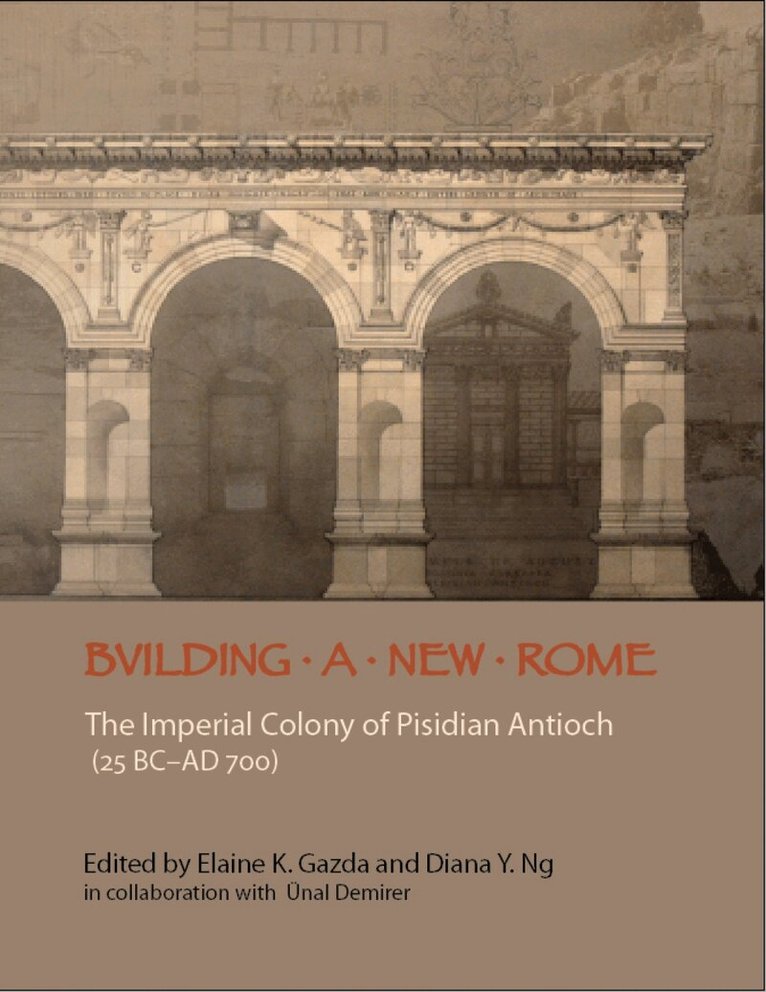
Building a New Rome
The Roman Colony of Pisidian Antioch (25 BC-300 AD)
Häftad, Engelska, 2011
565 kr
Tillfälligt slut
The essays in this volume bring to bear the latest scholarly and technological trends in archaeological research to shed new light on the site of Pisidian Antioch in west-central Turkey. Drawing on 3-D virtual reality technology as well as archival material from a 1924 University of Michigan expedition to the site, the authors propose new reconstructions of the city's major excavated monuments. They also evaluate these monuments in relation to the social and political imperatives of Pisidian Antioch's hybrid culture - one that overlaid a Roman imperial colony on a Hellenistic Greek city in an Anatolian region long inhabited by Phrygians and Pisidians. The study of Pisidian Antioch is thus seen in the context of recent scholarship on Rome's colonial project in the eastern empire. An accompanying DVD presents a fly-over of the virtual city created to aid in the authors' research. Includes 168 b&w illustrations and a DVD.
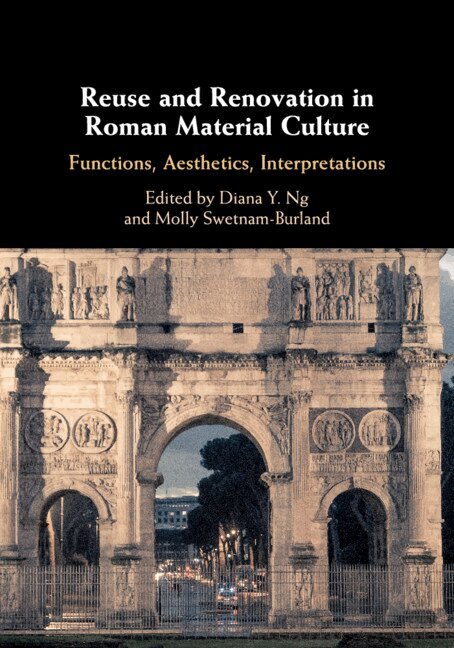
Reuse and Renovation in Roman Material Culture
Functions, Aesthetics, Interpretations
Häftad, Engelska, 2019
441 kr
Skickas inom 7-10 vardagar
This book explores the spoliation of architectural and sculptural materials during the Roman empire. Examining a wide range of materials, including imperial portraits, statues associated with master craftsmen, architectural moldings and fixtures, tombs and sarcophagi, arches and gateways, it demonstrates that secondary intervention was common well before Late Antiquity, in fact, centuries earlier than has been previously acknowledged. The essays in this volume, written by a team of international experts, collectively argue that reuse was a natural feature of human manipulation of the physical environment, rather than a sign of social pressure. Reuse often reflected appreciation for the function, form, and design of the material culture of earlier eras. Political, social, religious, and economic factors also contributed to the practice. A comprehensive overview of spoliation and reuse, this volume examines the phenomenon in Rome and throughout the Mediterranean world.
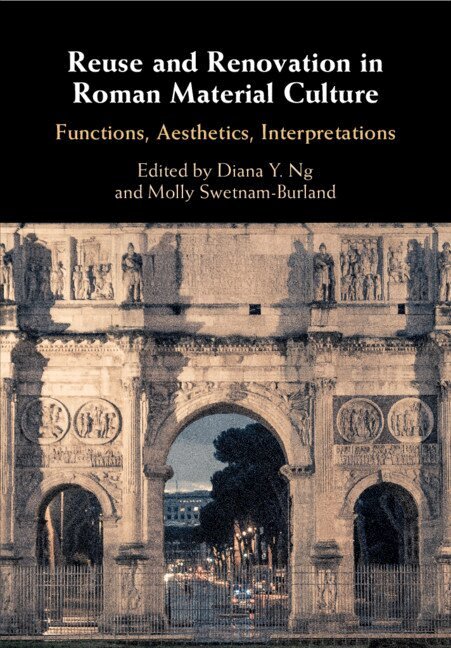
Reuse and Renovation in Roman Material Culture
Functions, Aesthetics, Interpretations
Inbunden, Engelska, 2018
1 228 kr
Skickas inom 7-10 vardagar
This book explores the spoliation of architectural and sculptural materials during the Roman empire. Examining a wide range of materials, including imperial portraits, statues associated with master craftsmen, architectural moldings and fixtures, tombs and sarcophagi, arches and gateways, it demonstrates that secondary intervention was common well before Late Antiquity, in fact, centuries earlier than has been previously acknowledged. The essays in this volume, written by a team of international experts, collectively argue that reuse was a natural feature of human manipulation of the physical environment, rather than a sign of social pressure. Reuse often reflected appreciation for the function, form, and design of the material culture of earlier eras. Political, social, religious, and economic factors also contributed to the practice. A comprehensive overview of spoliation and reuse, this volume examines the phenomenon in Rome and throughout the Mediterranean world.