
Maria Hewitt – författare
Visar alla böcker från författaren Maria Hewitt. Handla med fri frakt och snabb leverans.
12 produkter
12 produkter
629 kr
Tillfälligt slut
We all want to believe that when people get cancer, they will receive medical care of the highest quality. Even as new scientific breakthroughs are announced, though, many cancer patients may be getting the wrong care, too little care, or too much care, in the form of unnecessary procedures. How close is American medicine to the ideal of quality cancer care for every person with cancer? Ensuring Quality Cancer Care provides a comprehensive picture of how cancer care is delivered in our nation, from early detection to end-of-life issues. The National Cancer Policy Board defines quality care and recommends how to monitor, measure, and extend quality care to all people with cancer. Approaches to accountability in health care are reviewed. What keeps people from getting care? The book explains how lack of medical coverage, social and economic status, patient beliefs, physician decision-making, and other factors can stand between the patient and the best possible care. The board explores how cancer care is shaped by the current focus on evidence-based medicine, the widespread adoption of managed care, where services are provided, and who provides care.Specific shortfalls in the care of breast and prostate cancer are identified. A status report on health services research is included. Ensuring Quality Cancer Care offers wide-ranging data and information in clear context. As the baby boomers approach the years when most cancer occurs, this timely volume will be of special interest to health policy makers, public and private healthcare purchasers, medical professionals, patient advocates, researchers, and people with cancer.

570 kr
Tillfälligt slut
976 kr
Tillfälligt slut
Cancer ranks second only to heart disease as a leading cause of death in the United States, making it a tremendous burden in years of life lost, patient suffering, and economic costs. Fulfilling the Potential for Cancer Prevention and Early Detection reviews the proof that we can dramatically reduce cancer rates. The National Cancer Policy Board, part of the Institute of Medicine, outlines a national strategy to realize the promise of cancer prevention and early detection, including specific and wide-ranging recommendations. Offering a wealth of information and directly addressing major controversies, the book includes: a A detailed look at how significantly cancer could be reduced through lifestyle changes, evaluating approaches used to alter eating, smoking, and exercise habits. a An analysis of the intuitive notion that screening for cancer leads to improved health outcomes, including a discussion of screening methods, potential risks, and current recommendations. a An examination of cancer prevention and control opportunities in primary health care delivery settings, including a review of interventions aimed at improving provider performance. a Reviews of professional education and training programs, research trends and opportunities, and federal programs that support cancer prevention and early detection.This in-depth volume will be of interest to policy analysts, cancer and public health specialists, health care administrators and providers, researchers, insurers, medical journalists, and patient advocates.
546 kr
Skickas
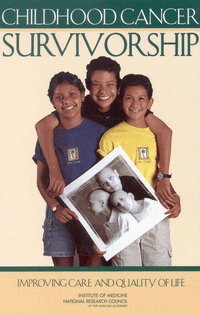
Only more recently has it been realized that the intense effort to care for and cure a child with cancer does not end with survival. Continued surveillance and a variety of interventions may, in many cases, be needed to identify and care for consequences of treatment that can appear early or only after several decades and impair survivorsa (TM) health and quality of life. The more than two-thirds of childhood cancer survivors who experience late effects -- that is, complications, disabilities, or adverse outcomes -- as a result of their disease, its treatment, or both, are the focus of this report which outlines a comprehensive policy agenda that links improved health care delivery and follow-up, investments in education and training for health care providers, and expanded research to improve the long-term outlook for this growing population now exceeding 270,000 Americans.
737 kr
Tillfälligt slut
In Meeting Psychosocial Needs of Women with Breast Cancer, the National Cancer Policy Board of the Institute of Medicine examines the psychosocial consequences of the cancer experience. The book focuses specifically on breast cancer in women because this group has the largest survivor population (over 2 million) and this disease is the most extensively studied cancer from the standpoint of psychosocial effects. The book characterizes the psychosocial consequences of a diagnosis of breast cancer, describes psychosocial services and how they are delivered, and evaluates their effectiveness. It assesses the status of professional education and training and applied clinical and health services research and proposes policies to improve the quality of care and quality of life for women with breast cancer and their families. Because cancer of the breast is likely a good model for cancer at other sites, recommendations for this cancer should be applicable to the psychosocial care provided generally to individuals with cancer.For breast cancer, and indeed probably for any cancer, the report finds that psychosocial services can provide significant benefits in quality of life and success in coping with serious and life-threatening disease for patients and their families.
870 kr
Tillfälligt slut
With the risk of more than one in three getting cancer during a lifetime, each of us is likely to experience cancer, or know someone who has survived cancer. Although some cancer survivors recover with a renewed sense of life and purpose, what has often been ignored is the toll taken by cancer and its treatmenta "on health, functioning, sense of security, and well-being. Long lasting effects of treatment may be apparent shortly after its completion or arise years later. The transition from active treatment to post-treatment care is critical to long-term health. From Cancer Patient to Cancer Survivor focuses on survivors of adult cancer during the phase of care that follows primary treatment. The book raises awareness of the medical, functional, and psychosocial consequences of cancer and its treatment. It defines quality health care for cancer survivors and identifies strategies to achieve it. The book also recommends improvements in the quality of life of cancer survivors through policies that ensure their access to psychosocial services, fair employment practices, and health insurance.This book will be of particular interest to cancer patients and their advocates, health care providers and their leadership, health insurers, employers, research sponsors, and the public and their elected representatives.
From Cancer Patient to Cancer Survivor: Lost in Transition
An American Society of Clinical Oncology and Institute of Medicine Symposium
Häftad, Engelska, 2006
550 kr
Tillfälligt slut
This report of the proceedings of a symposium held in conjunction with the release of the IOM report, From Cancer Patient to Cancer Survivor: Lost in Transition, represents an effort on the part of the American Society of Clinical Oncology (ASCO), the National Coalition for Cancer Survivorship (NCCS), and the Institute of Medicine (IOM) to further disseminate the findings and recommendations of the IOM report and to take the next step toward implementation of those recommendations. The symposium and this report serve as important vehicles to raise awareness, fill gaps that have existed in cancer patients' long-term care, and chart a course for quality care for cancer survivors and their families. More than 100 stakeholders in the cancer community, including survivors, advocates, healthcare providers, government officials, insurers and payers, and researchers participated in the symposium. This report culminates a series of work at the IOM focused on cancer survivorship. The idea to embark on a major study of cancer survivorship within the National Academies originated with the National Cancer Policy Board (NCPB).The NCPB was established in 1997 in the IOM and the National Research Council's Division of Earth and Life Studies at the request of the National Cancer Institute (NCI), the National Institutes of Health, and the President's Cancer Panel. The NCPB identified emerging policy issues in the nation's effort to combat cancer, and prepared reports that address those issues, including a series of reports on topics ranging from cancer prevention to end-of-life care.
474 kr
Skickas
Health literacy is the degree to which individuals can obtain, process, and understand the basic health information and services they need to make appropriate health decisions. According to Health Literacy: A Prescription to End Confusion (IOM, 2004), nearly half of all American adults--90 million people--have inadequate health literacy to navigate the healthcare system. To address issues raised in that report, the Institute of Medicine convened the Roundtable on Health Literacy, which brings together leaders from the federal government, foundations, health plans, associations, and private companies to discuss challenges facing health literacy practice and research and to identify approaches to promote health literacy in both the public and private sectors. On November 30, 2010, the roundtable cosponsored a workshop with the University of California, Los Angeles (UCLA), Anderson School of Management in Los Angeles. Improving Health Literacy Within a State serves as a summary of what occurred at the workshop. The workshop focused on understanding what works to improve health literacy across a state, including how various stakeholders have a role in improving health literacy.The focus of the workshop was on presentations and discussions that address (1) the clinical impacts of health literacy improvement approaches; (2) economic outcomes of health literacy implementation; and (3) how various stakeholders can affect health literacy.
Facilitating State Health Exchange Communication Through the Use of Health Literate Practices
Workshop Summary
Häftad, Engelska, 2012
450 kr
Tillfälligt slut
Implementation of the Affordable Care Act (ACA) of 2010 will result in significant changes to the U.S. health care system. Among its many provisions, the ACA will extend access to health care coverage to millions of Americans who have been previously uninsured. Many of the newly eligible health insurance consumers will be individuals of low health literacy, some speakers of English and others more comfortable using languages other than English. Health insurance terms such as "deductible," "co-insurance," and "out-of-pocket limit" are difficult to communicate even to those with moderate-to-high levels of health literacy and so health exchanges will face challenges as they attempt to communicate to the broader community. In addition to having to convey some of these basic, and yet complex, principles of insurance, state exchanges will be attempting to adapt to the many changes to enrollment and eligibility brought about by ACA.The Institute of Medicine (IOM) convened the Roundtable on Health Literacy that brings together leaders from the federal government, foundations, health plans, associations, and private companies to discuss challenges facing health literacy practice and research and to identify approaches to promote health literacy in both the public and private sectors. The roundtable sponsored a workshop in Washington, DC, on July 19, 2011, that focused on ways in which health literacy can facilitate state health insurance exchange communication with potential enrollees. The roundtable's workshop focused on four topics: (1) lessons learned from existing state insurance exchanges; (2) the impact of state insurance exchanges on consumers; (3) the relevance of health literacy to health insurance exchanges; and (4) current best practices in developing materials and communicating with consumers. Facilitating State Health Exchange Communication Through the Use of Health Literate Practices summarizes the presentations and discussion that occurred during the workshop.The report provides an overview of health insurance exchanges, presents evidence on the extent to which consumers understand underlying health insurance concepts, and describes the relevancy of health literacy to health insurance reform and how health literacy interventions can facilitate the implementation of health insurance reforms. The report also provides a review of best practices in developing materials and communicating with consumers, and concludes with reflections on the workshop presentations and discussions by members of the roundtable and its chair. Further information is provided in the appendixes, the workshop agenda (Appendix A), workshop speaker biosketches (Appendix B), and testimony provided by the organization America's Health Insurance Plans (AHIP) (Appendix C).
546 kr
Tillfälligt slut
The Institute of Medicine (IOM) Roundtable on Health Literacy focuses on bringing together leaders from the federal government, foundations, health plans, associations, and private companies to address challenges facing health literacy practice and research and to identify approaches to promote health literacy in both the public and private sectors. The roundtable serves to educate the public, press, and policy makers regarding the issues of health literacy, sponsoring workshops to discuss approaches to resolve health literacy challenges. It also builds partnerships to move the field of health literacy forward by translating research findings into practical strategies for implementation. The Roundtable held a workshop March 29, 2012, to explore the field of oral health literacy. The workshop was organized by an independent planning committee in accordance with the procedures of the National Academy of Sciences. The planning group was composed of Sharon Barrett, Benard P. Dreyer, Alice M. Horowitz, Clarence Pearson, and Rima Rudd. The role of the workshop planning committee was limited to planning the workshop.Unlike a consensus committee report, a workshop summary may not contain conclusions and recommendations, except as expressed by and attributed to individual presenters and participants. Therefore, the summary has been prepared by the workshop rapporteur as a factual summary of what occurred at the workshop.
629 kr
Tillfälligt slut
Health literacy is the degree to which individuals can obtain, process, and understand the basic health information and services they need to make appropriate health decisions. Nearly half of all American adults - 90 million people - have inadequate health literacy to navigate the health care system. Implications of Health Literacy for Public Health is the summary of a workshop convened by the Institute of Medicine Roundtable on Health Literacy in November 2013 that focused on the implications of health literacy for the mission and essential services of public health. The workshop featured the presentation of a commissioned paper on health literacy activities under way in public health organizations. Other presentations examined the implications of health literacy for the mission and essential services of public health, for example, community health and safety, disease prevention, disaster management, or health communication. This report includes the commissioned paper and summaries of the workshop presentations.
606 kr
Tillfälligt slut
The 2006 Institute of Medicine (IOM) consensus study report From Cancer Patient to Cancer Survivor: Lost in Transition made recommendations to improve the quality of care that cancer survivors receive, in recognition that cancer survivors are at risk for significant physical, psychosocial, and financial repercussions from cancer and its treatment. Since then, efforts to recognize and address the unique needs of cancer survivors have increased, including an emphasis on improving the evidence base for cancer survivorship care and identifying best practices in the delivery of high-quality cancer survivorship care. To examine progress in cancer survivorship care since the Lost in Transition report, the National Cancer Policy Forum of the National Academies of Sciences, Engineering, and Medicine held a workshop in July 2017, in Washington, DC. Workshop participants highlighted potential opportunities to improve the planning, management, and delivery of cancer survivorship care. This publication summarizes the presentations and discussions from the workshop.