
María Victoria Murillo - Böcker
Visar alla böcker från författaren María Victoria Murillo. Handla med fri frakt och snabb leverans.
9 produkter
9 produkter
572 kr
Skickas inom 5-8 vardagar
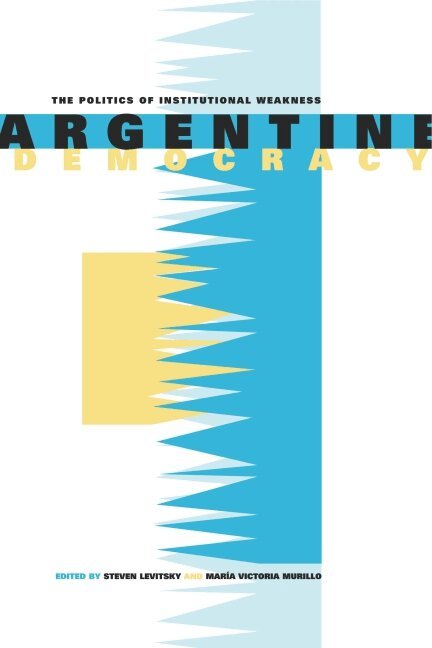
During the 1990s Argentina was the only country in Latin America to combine radical economic reform and full democracy. In 2001, however, the country fell into a deep political and economic crisis and was widely seen as a basket case. This book explores both developments, examining the links between the (real and apparent) successes of the 1990s and the 2001 collapse. Specific topics include economic policymaking and reform, executive-legislative relations, the judiciary, federalism, political parties and the party system, and new patterns of social protest. Beyond its empirical analysis, the book contributes to several theoretical debates in comparative politics. Contemporary studies of political institutions focus almost exclusively on institutional design, neglecting issues of enforcement and stability. Yet a major problem in much of Latin America is that institutions of diverse types have often failed to take root. Besides examining the effects of institutional weakness, the book also uses the Argentine case to shed light on four other areas of current debate: tensions between radical economic reform and democracy; political parties and contemporary crises of representation; links between subnational and national politics; and the transformation of state-society relations in the post-corporatist era. Besides the editors, the contributors are Javier Auyero, Ernesto Calvo, Kent Eaton, Sebastián Etchemendy, Gretchen Helmke, Wonjae Hwang, Mark Jones, Enrique Peruzzotti, Pablo T. Spiller, Mariano Tommasi, and Juan Carlos Torre.
Political Competition, Partisanship, and Policy Making in Latin American Public Utilities
Häftad, Engelska, 2009
309 kr
Skickas inom 7-10 vardagar
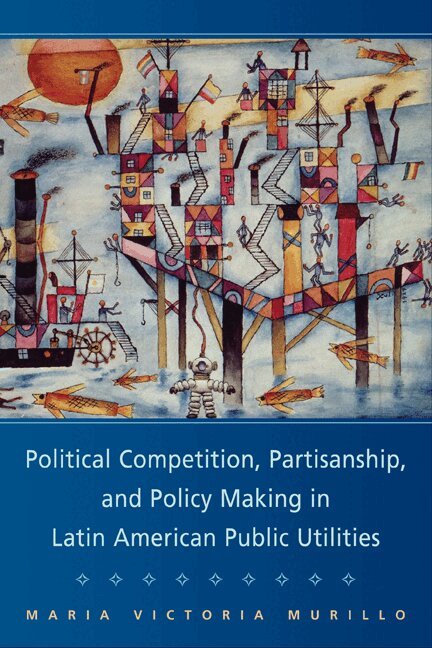
This book studies policymaking in the Latin American electricity and telecommunication sectors. Murillo's analysis of the Latin American electricity and telecommunications sectors shows that different degrees of electoral competition and the partisan composition of the government were crucial in resolving policymakers' tension between the interests of voters and the economic incentives generated by international financial markets and private corporations in the context of capital scarcity. Electoral competition by credible challengers dissuaded politicians from adopting policies deemed necessary to attract capital inflows. When electoral competition was low, financial pressures prevailed, but the partisan orientation of reformers shaped the regulatory design of market-friendly reforms. In the post-reform period, moreover, electoral competition and policymakers' partisanship shaped regulatory redistribution between residential consumers, large users, and privatized providers.
334 kr
Skickas inom 7-10 vardagar
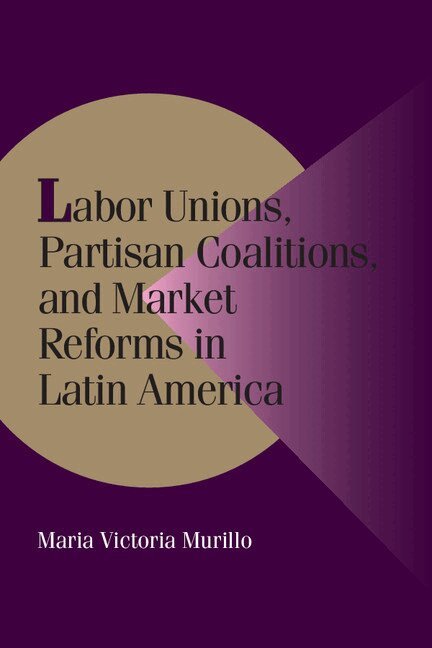
Why do labor unions resist economic restructuring and adjustment policies in some countries and in some economic sectors while they submit in other cases? And why do some labor leaders fashion more creative and effective roles for labor unions? This book addresses these critical questions in an in-depth elegant comparative study of Argentina, Mexico, and Venezuela in the 1990s. In each case, the book studies both the role of national confederations as well as individual unions in specific economic sectors in each country. It demonstrates the importance of the presence and nature of alliances between political parties and labor unions as well as the significance of competition between labor unions for the representation of the same set of workers. This work opens new horizons for appreciating the intellectual and practical importance of the variation in the interactions between workers, unions, political parties, and economic policies.
Political Competition, Partisanship, and Policy Making in Latin American Public Utilities
Inbunden, Engelska, 2009
534 kr
Skickas inom 7-10 vardagar
This book studies policymaking in the Latin American electricity and telecommunication sectors. Murillo's analysis of the Latin American electricity and telecommunications sectors shows that different degrees of electoral competition and the partisan composition of the government were crucial in resolving policymakers' tension between the interests of voters and the economic incentives generated by international financial markets and private corporations in the context of capital scarcity. Electoral competition by credible challengers dissuaded politicians from adopting policies deemed necessary to attract capital inflows. When electoral competition was low, financial pressures prevailed, but the partisan orientation of reformers shaped the regulatory design of market-friendly reforms. In the post-reform period, moreover, electoral competition and policymakers' partisanship shaped regulatory redistribution between residential consumers, large users, and privatized providers.
- Nyhet
441 kr
Kommande
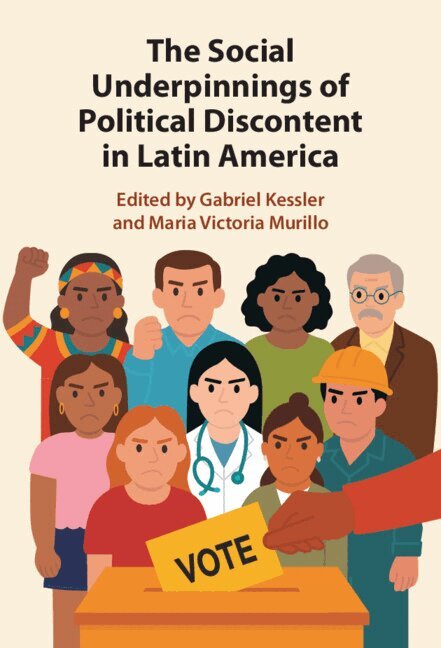
Why are Latin Americans increasingly disillusioned with democracy, even as the region has made social progress? This book examines the paradox of widespread political discontent amid improvements in poverty reduction, education, and expanded rights. It shows how rising expectations and broken promises have generated social frustration and political reactions, which take two different forms: they can target all political elites (vertical discontent) or focus on opposing political coalitions (horizontal discontent). Each form poses unique challenges for democracy. Bringing together leading scholars in sociology and political science from Latin America and the United States, the volume offers a multidisciplinary and comparative perspective on the drivers of democratic erosion. Drawing on empirical case studies and a shared analytical framework, the book sheds light on the tensions between democratic aspirations and lived experiences, making it a valuable resource for understanding the forces reshaping Latin America's political landscape and the broader erosion of democracy.
- Nyhet
1 295 kr
Kommande
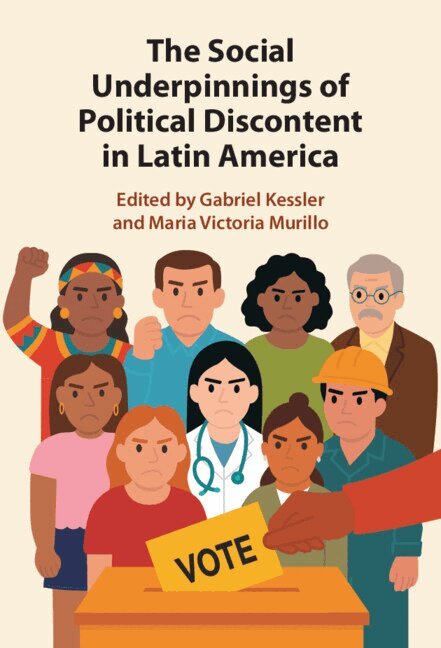
Why are Latin Americans increasingly disillusioned with democracy, even as the region has made social progress? This book examines the paradox of widespread political discontent amid improvements in poverty reduction, education, and expanded rights. It shows how rising expectations and broken promises have generated social frustration and political reactions, which take two different forms: they can target all political elites (vertical discontent) or focus on opposing political coalitions (horizontal discontent). Each form poses unique challenges for democracy. Bringing together leading scholars in sociology and political science from Latin America and the United States, the volume offers a multidisciplinary and comparative perspective on the drivers of democratic erosion. Drawing on empirical case studies and a shared analytical framework, the book sheds light on the tensions between democratic aspirations and lived experiences, making it a valuable resource for understanding the forces reshaping Latin America's political landscape and the broader erosion of democracy.
Non-Policy Politics
Richer Voters, Poorer Voters, and the Diversification of Electoral Strategies
Inbunden, Engelska, 2019
1 166 kr
Skickas inom 7-10 vardagar
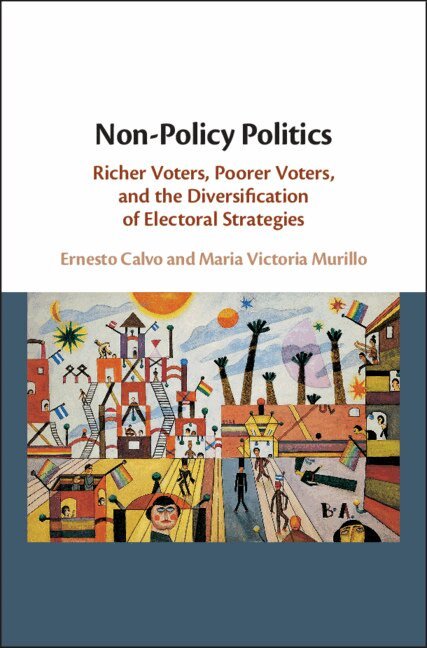
Calvo and Murillo consider the non-policy benefits that voters consider when deciding their vote. While parties advertise policies, they also deliver non-policy benefits in the form of competent economic management, constituency service, and patronage jobs. Different from much of the existing research, which focuses on the implementation of policy or on the delivery of clientelistic benefits, this book provides a unified view of how politicians deliver broad portfolios of policy and non-policy benefits to their constituency. The authors' theory shows how these non-policy resources also shape parties' ideological positions and which type of electoral offers they target to poorer or richer voters. With exhaustive empirical work, both qualitative and quantitative, the research documents how linkages between parties and voters shape the delivery of non-policy benefits in Argentina and Chile.

Understanding Institutional Weakness
Power and Design in Latin American Institutions
Häftad, Engelska, 2019
234 kr
Skickas inom 7-10 vardagar
This Element introduces the concept of institutional weakness, arguing that weakness or strength is a function of the extent to which an institution actually matters to social, economic or political outcomes. It then presents a typology of three forms of institutional weakness: insignificance, in which rules are complied with but do not affect the way actors behave; non-compliance, in which state elites either choose not to enforce the rules or fail to gain societal cooperation with them; and instability, in which the rules are changed at an unusually high rate. The Element then examines the sources of institutional weakness.
Non-Policy Politics
Richer Voters, Poorer Voters, and the Diversification of Electoral Strategies
Häftad, Engelska, 2019
410 kr
Skickas inom 7-10 vardagar
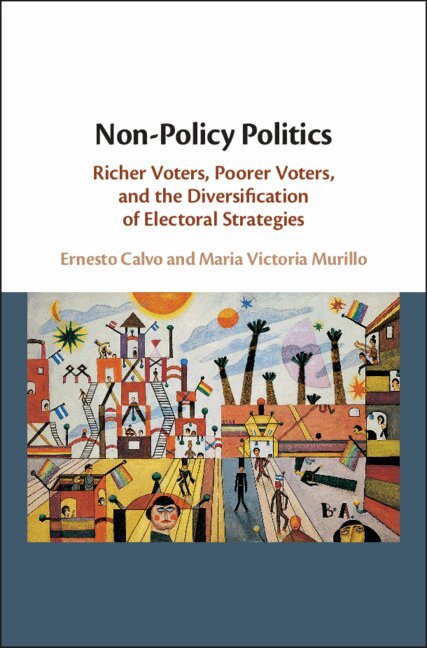
Calvo and Murillo consider the non-policy benefits that voters consider when deciding their vote. While parties advertise policies, they also deliver non-policy benefits in the form of competent economic management, constituency service, and patronage jobs. Different from much of the existing research, which focuses on the implementation of policy or on the delivery of clientelistic benefits, this book provides a unified view of how politicians deliver broad portfolios of policy and non-policy benefits to their constituency. The authors' theory shows how these non-policy resources also shape parties' ideological positions and which type of electoral offers they target to poorer or richer voters. With exhaustive empirical work, both qualitative and quantitative, the research documents how linkages between parties and voters shape the delivery of non-policy benefits in Argentina and Chile.