
Mohan Matthen - Böcker
Visar alla böcker från författaren Mohan Matthen. Handla med fri frakt och snabb leverans.
7 produkter
7 produkter
873 kr
Skickas inom 7-10 vardagar
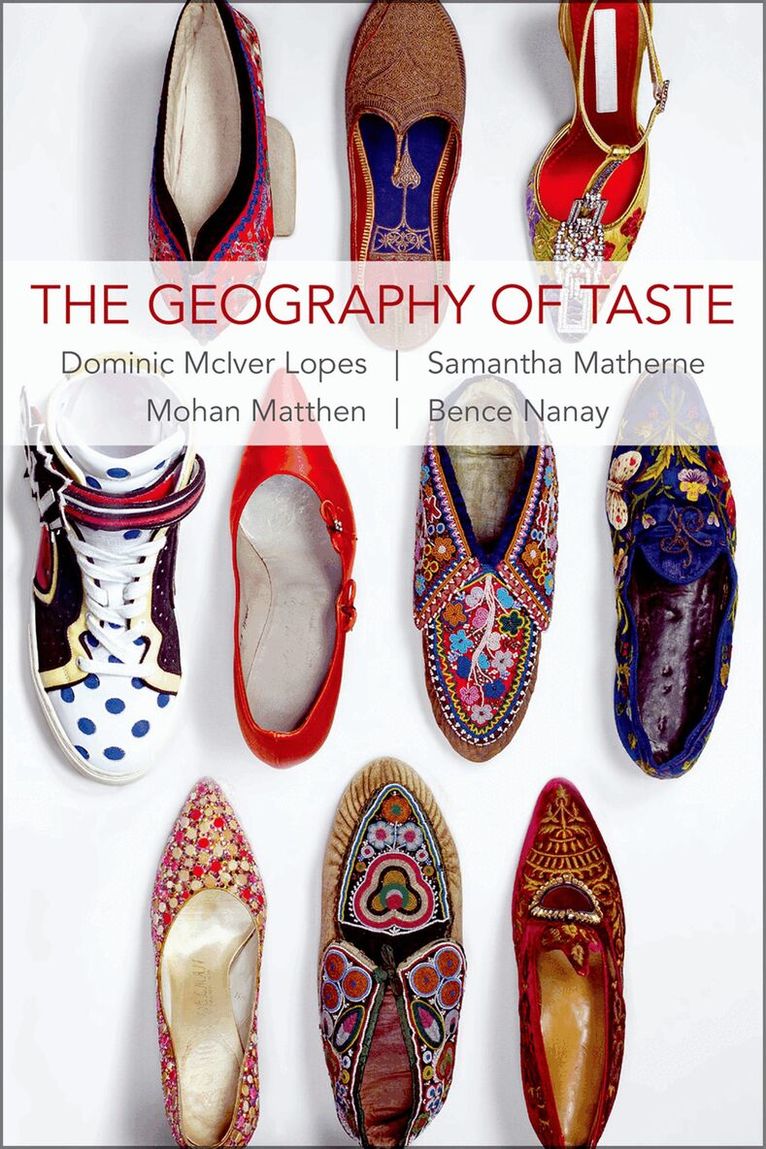
This is an open access title available under the terms of a CC BY-NC-ND 4.0 license. It is free to read at Oxford Academic and offered as a free PDF download from OUP and selected open access locations.Wherever on the globe anyone sets foot, they find people immersed in matters aesthetic. In UNESCO's definition, there can be no culture that lacks an aesthetic life. Aesthetic life is in this sense a cultural universal. At the same time, aesthetic engagement has a geography. While all cultures have an aesthetic, no single aesthetic belongs to all cultures. The rules of aesthetic engagement vary by culture.How should aesthetics proceed if we take this fact of aesthetic diversity, rather than the presumption of aesthetic universality as our starting point? How should we theorize the cultural origins and cultural basis of aesthetic diversity? How should we think about the value and normativity of aesthetic diversity? To model what the turn toward diversity might look like in aesthetic inquiry, the four authors of this book each defend a different account of aesthetic diversity, and together they engage in a collective dialogue about these issues. The Geography of Taste will interest students in aesthetics courses as well as others interested in novel, global approaches to aesthetics.
349 kr
Skickas inom 5-8 vardagar
This is an open access title available under the terms of a CC BY-NC-ND 4.0 license. It is free to read at Oxford Academic and offered as a free PDF download from OUP and selected open access locations.Wherever on the globe anyone sets foot, they find people immersed in matters aesthetic. In UNESCO's definition, there can be no culture that lacks an aesthetic life. Aesthetic life is in this sense a cultural universal. At the same time, aesthetic engagement has a geography. While all cultures have an aesthetic, no single aesthetic belongs to all cultures. The rules of aesthetic engagement vary by culture.How should aesthetics proceed if we take this fact of aesthetic diversity, rather than the presumption of aesthetic universality as our starting point? How should we theorize the cultural origins and cultural basis of aesthetic diversity? How should we think about the value and normativity of aesthetic diversity? To model what the turn toward diversity might look like in aesthetic inquiry, the four authors of this book each defend a different account of aesthetic diversity, and together they engage in a collective dialogue about these issues. The Geography of Taste will interest students in aesthetics courses as well as others interested in novel, global approaches to aesthetics.
703 kr
Skickas inom 5-8 vardagar
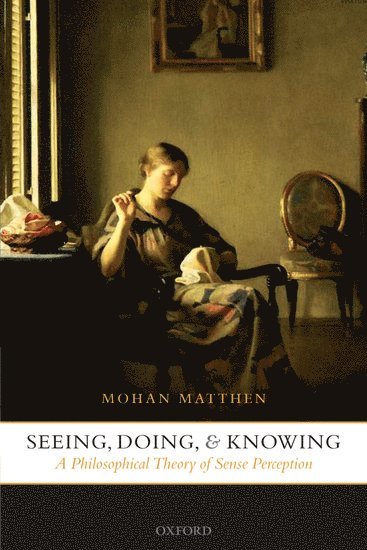
Seeing, Doing, and Knowing is an original and comprehensive philosophical treatment of sense perception as it is currently investigated by cognitive neuroscientists. Its central theme is the task-oriented specialization of sensory systems across the biological domain. Sensory systems are automatic sorting machines; they engage in a process of classification. Human vision sorts and orders external objects in terms of a specialized, proprietary scheme of categories - colours, shapes, speeds and directions of movement, etc. This 'Sensory Classification Thesis' implies that sensation is not a naturally caused image from which an organism must infer the state of the world beyond; it is more like an internal communication, a signal concerning the state of the world issued by a sensory system, in accordance with internal conventions, for the use of an organism's other systems. This is why sensory states are both easily understood and persuasive.Sensory classification schemes are purpose-built to serve the knowledge-gathering and pragmatic needs of particular types of organisms. They are specialized: a bee or a bird does not see exactly what a human does. The Sensory Classification Thesis helps clarify this specialization in perceptual content and supports a new form of realism about the deliverances of sensation: 'Pluralistic Realism' is based on the idea that sensory systems coevolve with an organism's other systems; they are not simply moulded to the external world. The last part of the book deals with reference in vision. Cognitive scientists now believe that vision guides the limbs by means of a subsystem that links up with the objects of physical manipulation in ways that bypass sensory categories. In a novel extension of this theory, Matthen argues that 'motion-guiding vision' is integrated with sensory classification in conscious vision. This accounts for the quasi-demonstrative form of visual states: 'This particular object is red', and so on. He uses this idea to cast new light on the nature of perceptual objects, pictorial representation, and the visual representation of space.
1 932 kr
Skickas inom 5-8 vardagar
Seeing, Doing, and Knowing is an original and comprehensive philosophical treatment of sense perception as it is currently investigated by cognitive neuroscientists. Its central theme is the task-oriented specialization of sensory systems across the biological domain. Sensory systems are automatic sorting machines; they engage in a process of classification. Human vision sorts and orders external objects in terms of a specialized, proprietary scheme of categories - colours, shapes, speeds and directions of movement, etc. This 'Sensory Classification Thesis' implies that sensation is not a naturally caused image from which an organism must infer the state of the world beyond; it is more like an internal communication, a signal concerning the state of the world issued by a sensory system, in accordance with internal conventions, for the use of an organism's other systems. This is why sensory states are both easily understood and persuasive.Sensory classification schemes are purpose-built to serve the knowledge-gathering and pragmatic needs of particular types of organisms. They are specialized: a bee or a bird does not see exactly what a human does. The Sensory Classification Thesis helps clarify this specialization in perceptual content and supports a new form of realism about the deliverances of sensation. This 'Pluralistic Realism' is based on the idea that sensory systems coevolve with an organism's other systems; they are not simply moulded to the external world. The last part of the book deals with reference in vision. Cognitive scientists now believe that vision guides the limbs by means of a subsystem that links up with the objects of physical manipulation in ways that bypass sensory categories. In a novel extension of this theory, Matthen argues that 'motion-guiding vision' is integrated with sensory classification in conscious vision. This accounts for the quasi-demonstrative form of visual states: 'This particular object is red', and so on. He uses this idea to cast new light on the nature of perceptual objects, pictorial representation, and the visual representation of space.
2 106 kr
Skickas inom 5-8 vardagar
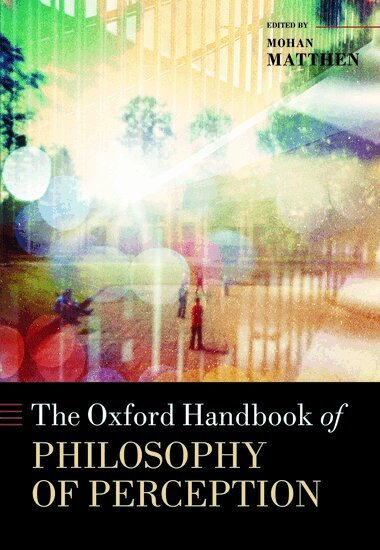
The Oxford Handbook of Philosophy of Perception is a survey by leading philosophical thinkers of contemporary issues and new thinking in philosophy of perception. It includes sections on the history of the subject, introductions to contemporary issues in the epistemology, ontology and aesthetics of perception, treatments of the individual sense modalities and of the things we perceive by means of them, and a consideration of how perceptual information is integrated and consolidated. New analytic tools and applications to other areas of philosophy are discussed in depth. Each of the forty-five entries is written by a leading expert, some collaborating with younger figures; each seeks to introduce the reader to a broad range of issues. All contain new ideas on the topics covered; together they demonstrate the vigour and innovative zeal of a young field. The book is accessible to anybody who has an intellectual interest in issues concerning perception.
1 801 kr
Skickas inom 5-8 vardagar
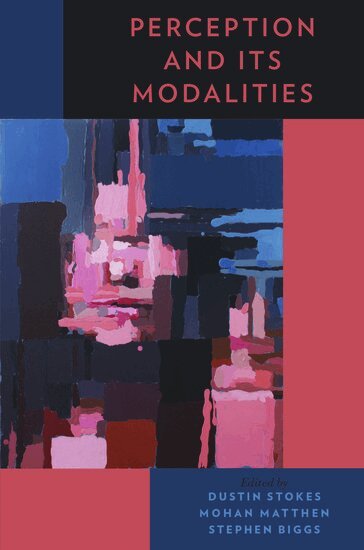
This volume is about the many ways we perceive. In nineteen new essays, philosophers and cognitive scientists explore the nature of the individual senses, how and what they tell us about the world, and how they interrelate. They consider how the senses extract perceptual content from receptoral information and what kinds of objects we perceive and whether multiple senses ever perceive a single event. Questions pertaining to how many senses we have, what makes one sense distinct from another, and whether and why distinguishing senses may be useful feature prominently. Contributors examine the extent to which the senses act in concert, rather than as discrete modalities, and whether this influence is epistemically pernicious, neutral, or beneficial. Many of the essays engage with the idea that it is unduly restrictive to think of perception as a collation of contents provided by individual sense modalities. Rather, contributors contend that to understand perception properly we need to build into our accounts the idea that the senses work together. In doing so, they aim to develop better paradigms for understanding the senses and thereby to move toward a better understanding of perception.
625 kr
Skickas inom 5-8 vardagar
This volume is about the many ways we perceive. In nineteen new essays, philosophers and cognitive scientists explore the nature of the individual senses, how and what they tell us about the world, and how they interrelate. They consider how the senses extract perceptual content from receptoral information and what kinds of objects we perceive and whether multiple senses ever perceive a single event. Questions pertaining to how many senses we have, what makes one sense distinct from another, and whether and why distinguishing senses may be useful feature prominently. Contributors examine the extent to which the senses act in concert, rather than as discrete modalities, and whether this influence is epistemically pernicious, neutral, or beneficial. Many of the essays engage with the idea that it is unduly restrictive to think of perception as a collation of contents provided by individual sense modalities. Rather, contributors contend that to understand perception properly we need to build into our accounts the idea that the senses work together. In doing so, they aim to develop better paradigms for understanding the senses and thereby to move toward a better understanding of perception.