
Nigel Cave - Böcker
Visar alla böcker från författaren Nigel Cave. Handla med fri frakt och snabb leverans.
10 produkter
10 produkter

152 kr
Tillfälligt slut
This volume covers the battlefields of Arras around Vimy Ridge dealing with the activities of the French and the British and the start of the Battle of Arras. Vimy Ridge gives a balanced view of the fighting by detailed descriptions of various units and individuals.

119 kr
Skickas
The tiny French hamlet of Serre, the norther nmost part of the front for the July 1st 1916 attack is the subject of the fifth of the Battleground Europe series. Thre e other battles at Serre are also covered. '
173 kr
Skickas
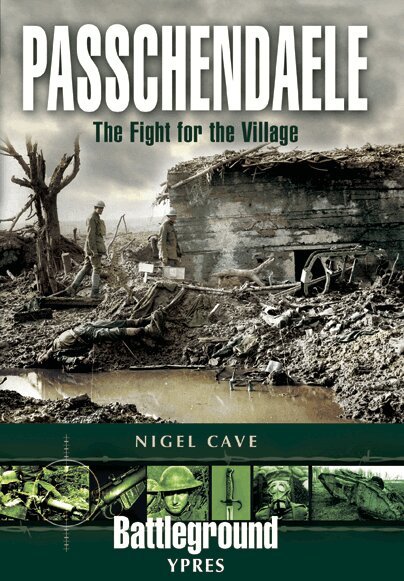
The British offensive, which became known as Passchendaele, got underway on 31 July, 1917 with the objective of capturing fifteen miles of territory.The attack quickly lost momentum and, it was not until finally in November that the line managed to advance seven miles.With winter setting in, the British troops were subjected to some of the worst conditions they had ever faced. During the attack 265,000 were either killed or injured.This battlefield guide gives details of the attacks whilst guiding the reader through the battlefield as it stands today.With illustrated maps and then and now photographs it will appeal to those visiting the area as well as armchair historians.

163 kr
Skickas
The shell-ravaged landscape of Hill 60, some three miles to the south east of Ypres, conceals beneath it a labyrinth of tunnels and underground workings. This small area saw horrendous fighting in the early years of the war as the British and Germans struggled to control its dominant view over Ypres.
130 kr
Tillfälligt slut
This wood featured significantly in the First and Third Battles of Ypres and was the scene of numerous deeds of heroism, such as that which won young Lieutenant-Colonel Philip Bent the VC. The courage of individuals and units from Britain and Australia is described in this latest edition to the series covering Ypres.
Both Sides of the Wire - Disaster at Dawn
Somme 1916: Preliminaries and First Moves
Inbunden, Engelska, 2018
414 kr
Kommande
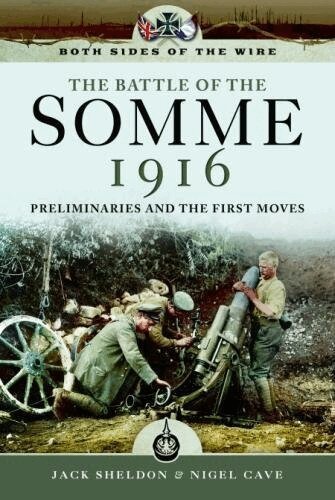
Both Sides of the Wire is the first in a new series of battlefield guides that looks at the fighting on the Western Front, chiefly in the sectors in which the British Expeditionary Force was engaged. In these books, Nigel Cave and Jack Sheldon will look at engagements from both the allied and German perspective; at the end of each chapter there will be a tour section so that readers can place themselves in the best vantage points to follow the action that is described on the ground and which is directly related to the narrative account that will form the bulk of each chapter. This book deals with the Somme up to and including the first day or two of the infantry assault on 1 July. In addition to the familiar British sector, the authors intend to cover those parts of the Somme battlefield that were (largely) fought over by the French. Although there is much to see of the French Sector, it is generally poorly served by published guides despite the fact that there are numerous signs of the Great War of the ground, many accessible to the public.With the concentration on 1st July and the subsequent months, there is relatively little about what happened on the Somme from the establishment of the line there in October 1914 to the summer 1916 offensive. For example, this involved extensive mine warfare, of which very few traces remain, but for which there is excellent contemporary mapping and some useful accounts. Because of the considerable amount of literature already available on the British sector of the Somme, the authors will be concentrating on particular aspects - areas selected include: Gommecourt (56th London Division); Serre (the French attacks of June 1915); the Heidenkopf; raids prior to I July around Beaumont Hamel; the Schwaben Redoubt, the German defence plan and what happened on the day; the Glory Hole and the fighting there from December 1914; the area around King George s Hill, near Fricourt; the attacks and counter attacks at Montauban on 1 - 3 July 1916; a very successful limited German assault at Feuilleres in January 1916; the line at Dompierre and Fey, in particular mine warfare (and also some coverage of the brief tenure of the line in this area by the British in the autumn of 1915).The book is aimed at anyone with an interest in the war, in the Somme in particular and, whilst acting as a guide, it will also be of value to those who cannot get to the Somme themselves, with the authors aiming at a more balanced understanding of what happened and explaining the outcomes at the various locations.
388 kr
Kommande
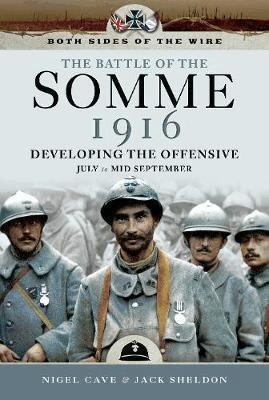
After the initial anticipation of great results for the Allied offensive that opened on 1 July, the French and the British had to consider their next moves. Haig made the fateful decision to reinforce perceived success at the centre and south of the British line (although Joffre, rightly, wished to continue the pressure at Thiepval). The result was a series of minor (if expensive) operations to provide a suitable base line for the next major British assault along the Bazentin Ridge, running approximately from east of Longueval to west of Bazentin le Petit Wood. Thus Ovillers, Mametz Wood and Tr nes Wood became prominent in Britain s military history. The French soon began to appreciate that the great success south of the river on 1 July was not going to achieve much more unless the front was extended southwards (impractical, given pressure at Verdun and limited manpower resources); or if advances could be made north of the river that would outflank the Germans to the south.Meanwhile Falkenhayn continued to believe in the imminence of British offensive action further north, in French Flanders, despite the fact that he was reassured time and again that there was no evidence for this and that in any case such an eventuality could be contained with reduced resources. Eventually the offensive in Verdun was halted, in late August Falkenhayn was removed after he had presided over increasing friction at the highest level on the Somme front amongst senior commanders; Ludendorff and Hindenburg took over and the genius of German defensive measures, Lo berg, arrived on the scene. This book covers actions at Ovillers, Pozi res (notably involving the Australians) Mametz, Delville Wood (South Africa s first great war time action in Europe), the bitter fighting at High Wood, all leading up to the great attack on the Somme on 15 September. This was the third such major effort by the British army and the first time since 1 July that the Allies had attacked simultaneously in strength. The book then looks at aspects of the fighting associated with this attack, in particular the role of the New Zealand Division and of the Guards Division around Les Boeufs.It then concentrates on the Anglo French boundary area (Guillemont and Combles) before considering French activity at Maurepas, Cl ry, Biaches and La Maisonette and the extension of the French front on 3 September, with fighting at Soy court, Lihons and Vermandovillers. The book ends with a review of the situation both sides found themselves in mid September, before the action continued its relentless grind at extraordinary cost in men and materiel.

355 kr
Kommande
_Happy Days in France and Flanders_ was written by Benedict Williamson within three years of the end of the First World War. It is a viivid account of his experiences, starting with the trauma of working in a Casualty Clearing Station during the Battle of Messines 1917\. He was transferred to an infantry battalion, the 1/5th West Riding regiment (Duke of Wellington's), with whom he served for the rest of the war. He saw action in Nieuport and has particularly vivid accounts of the fighting associated with Operation _Strandfest,_ a very successful pre-emptive strike by the Germans. During the Battle of Passchendaele he was involved in the fighting on the Menin Road. His division was caught up in the opening of the German offensive on the Somme in the spring of 1918, describing the desperate days of the retreat and the fighting that held the Germans west of Albert. His battalion took part in the Advance to victory and was involved in the capture of Lille and Tournai. There is a chapter on his ministrations to a soldier who was shot at dawn in September 1918.In this completely new and revised edition, there are a number of new features.There is an extended biographical essay on this fascinating man. Notes on some of the characters who are named in the original text are provided. Maps are incorporated into the text for the first time and there is a black and white plate section.Army chaplains received considerable attention during the centenary years, particularly Roman Catholic ones. Benedict Williamson was an articulate man and a shrewd observer of the War; his contribution to the literature of the war is significant and _Happy Days _is worthy of this major revision by a well known authority on the Great War.

152 kr
Tillfälligt slut
These three Battleground Europe books on Ypres 1914 mark the centenary of the final major battle of the 1914 campaign on the Western Front. Although fought over a relatively small area and short time span, the fighting was even more than usually chaotic and the stakes were extremely high. Authors Nigel Cave and Jack Sheldon combine their respective expertise to tell the story of the men - British, French, Indian and German - who fought over the unremarkable undulating ground that was to become firmly placed in British national conscience ever afterwards. When, in October 1914, the newly created German Fourth Army attacked west to seize crossings over the Yser, prior to sweeping south in an attempt to surround the BEF, two things prevented it. To the north, it was the efforts of the Belgian army, reinforced by French troops, coupled with controlled flooding of the polders but, further south, the truly heroic defence of Langemarck, for three days by the BEF and then by the French army, was of decisive importance. The village stood as a bulwark against any further advance to the river or the town of Ypres.Here the German regiments bled to death in the face of resolute Allied defence and any remaining hope of forcing a decision in the west turned to dust.
152 kr
Skickas
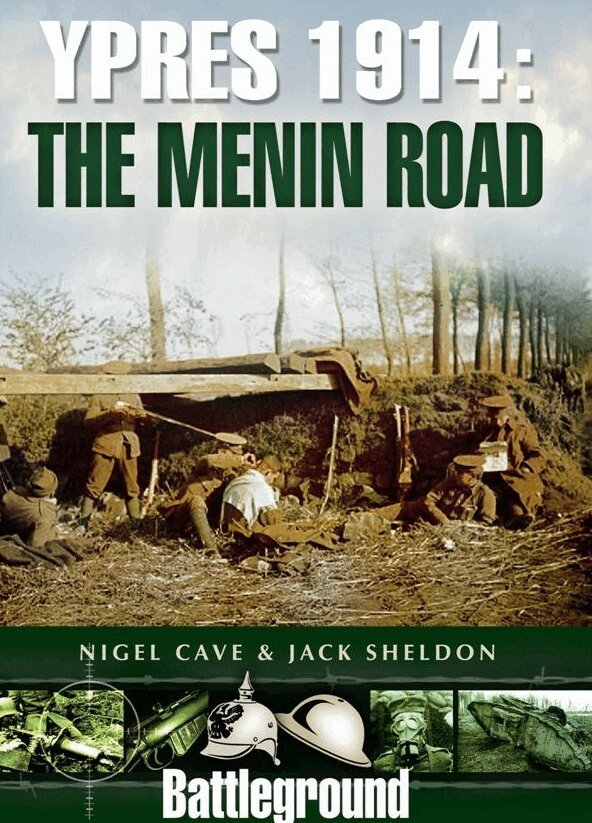
These three Battleground Europe books on Ypres 1914 mark the centenary of the final major battle of the 1914 campaign on the Western Front. Although fought over a relatively small area and short time span, the fighting was even more than usually chaotic and the stakes were extremely high. Authors Nigel Cave and Jack Sheldon combine their respective expertise to tell the story of the men - British, French, Indian and German - who fought over the unremarkable undulating ground that was to become firmly placed in British national conscience ever afterwards. The most direct route to Ypres for the advancing German columns in October 1914 was along the axis of the Menin Road. It was here that the Old Contemptibles of the BEF earned their legendary heroic status as they fought off increasingly desperate German assaults day after day, whilst place names such as Zandvoorde, Polygon Wood and Gheluvelt were first etched into the British national consciousness. Bent and battered by the German storm, dressed in rags and short of food, equipment and ammunition, the regiments of the old professional army stood their ground against huge odds.When, on 11th November, they finally halted the Prussian Guards around Polygon Wood, virtually within sight of Ypres, they were reduced to one thin firing line.The BEF was at its last gasp, but it had inflicted a crushing defeat on the German army.