
Peter Winn – författare
Visar alla böcker från författaren Peter Winn. Handla med fri frakt och snabb leverans.
7 produkter
7 produkter
292 kr
Skickas inom 7-10 vardagar
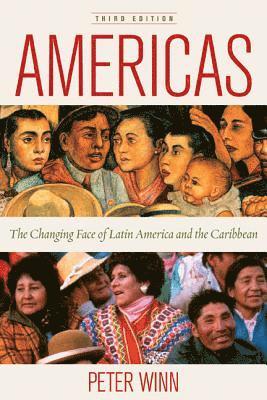
Stunning in its sweep, Americas is the most authoritative history available of contemporary Latin America and the Caribbean. From Mexico to Tierra del Fuego, and from Cuba to Trinidad and Tobago, Americas examines the historical, demographic, political, social, cultural, religious, and economic trends in the region. For this new edition Peter Winn has provided a new preface and made revisions throughout to include the most up-to-date information on changes and developments in Latin America since the last revised edition of 1999.
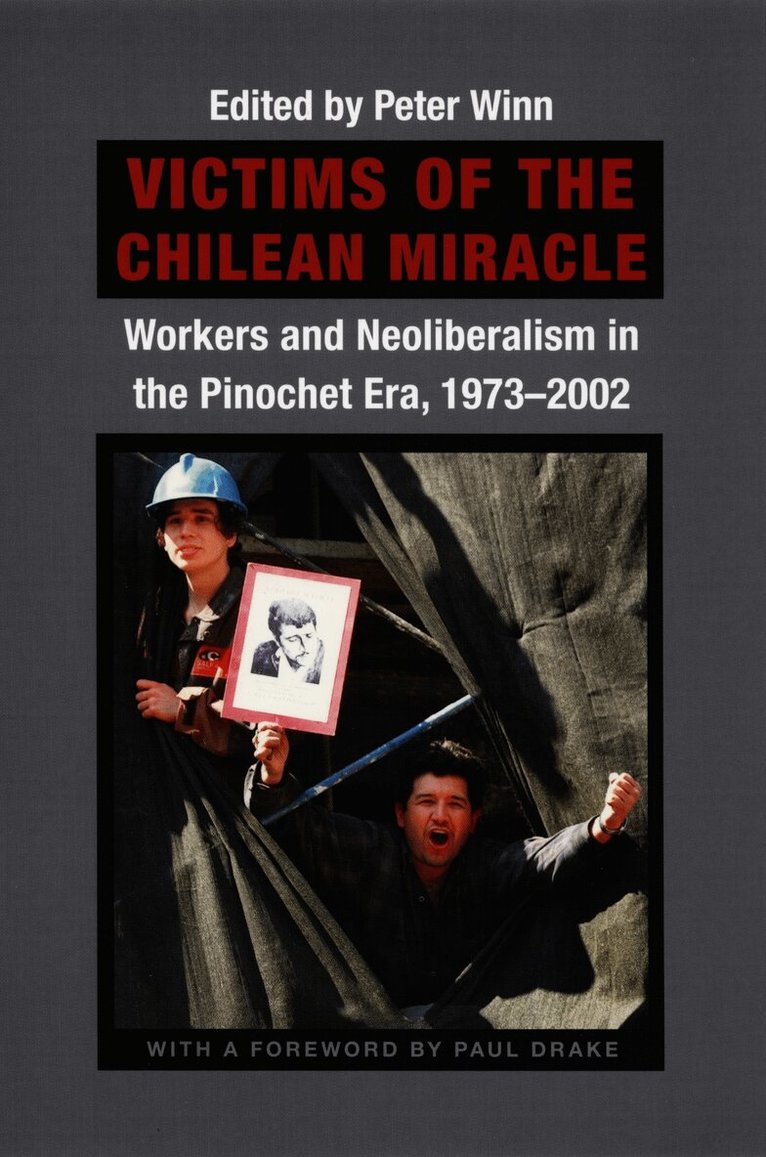
Victims of the Chilean Miracle
Workers and Neoliberalism in the Pinochet Era, 1973–2002
Inbunden, Engelska, 2004
1 694 kr
Skickas inom 7-10 vardagar
Chile was the first major Latin American nation to carry out a complete neoliberal transformation. Its policies-encouraging foreign investment, privatizing public sector companies and services, lowering trade barriers, reducing the size of the state, and embracing the market as a regulator of both the economy and society-produced an economic boom that some have hailed as a “miracle” to be emulated by other Latin American countries. But how have Chile’s millions of workers, whose hard labor and long hours have made the miracle possible, fared under this program? Through empirically grounded historical case studies, this volume examines the human underside of the Chilean economy over the past three decades, delineating the harsh inequities that persist in spite of growth, low inflation, and some decrease in poverty and unemployment.Implemented in the 1970s at the point of the bayonet and in the shadow of the torture chamber, the neoliberal policies of Augusto Pinochet’s dictatorship reversed many of the gains in wages, benefits, and working conditions that Chile’s workers had won during decades of struggle and triggered a severe economic crisis. Later refined and softened, Pinochet’s neoliberal model began, finally, to promote economic growth in the mid-1980s, and it was maintained by the center-left governments that followed the restoration of democracy in 1990. Yet, despite significant increases in worker productivity, real wages stagnated, the expected restoration of labor rights faltered, and gaps in income distribution continued to widen. To shed light on this history and these ongoing problems, the contributors look at industries long part of the Chilean economy-including textiles and copper-and industries that have expanded more recently-including fishing, forestry, and agriculture. They not only show how neoliberalism has affected Chile’s labor force in general but also how it has damaged the environment and imposed special burdens on women. Painting a sobering picture of the two Chiles-one increasingly rich, the other still mired in poverty-these essays suggest that the Chilean miracle may not be as miraculous as it seems.Contributors.Paul DrakeVolker FrankThomas KlubockRachel SchurmanJoel StillermanHeidi TinsmanPeter Winn
Victims of the Chilean Miracle
Workers and Neoliberalism in the Pinochet Era, 1973–2002
Häftad, Engelska, 2004
416 kr
Skickas inom 7-10 vardagar
Chile was the first major Latin American nation to carry out a complete neoliberal transformation. Its policies-encouraging foreign investment, privatizing public sector companies and services, lowering trade barriers, reducing the size of the state, and embracing the market as a regulator of both the economy and society-produced an economic boom that some have hailed as a “miracle” to be emulated by other Latin American countries. But how have Chile’s millions of workers, whose hard labor and long hours have made the miracle possible, fared under this program? Through empirically grounded historical case studies, this volume examines the human underside of the Chilean economy over the past three decades, delineating the harsh inequities that persist in spite of growth, low inflation, and some decrease in poverty and unemployment.Implemented in the 1970s at the point of the bayonet and in the shadow of the torture chamber, the neoliberal policies of Augusto Pinochet’s dictatorship reversed many of the gains in wages, benefits, and working conditions that Chile’s workers had won during decades of struggle and triggered a severe economic crisis. Later refined and softened, Pinochet’s neoliberal model began, finally, to promote economic growth in the mid-1980s, and it was maintained by the center-left governments that followed the restoration of democracy in 1990. Yet, despite significant increases in worker productivity, real wages stagnated, the expected restoration of labor rights faltered, and gaps in income distribution continued to widen. To shed light on this history and these ongoing problems, the contributors look at industries long part of the Chilean economy-including textiles and copper-and industries that have expanded more recently-including fishing, forestry, and agriculture. They not only show how neoliberalism has affected Chile’s labor force in general but also how it has damaged the environment and imposed special burdens on women. Painting a sobering picture of the two Chiles-one increasingly rich, the other still mired in poverty-these essays suggest that the Chilean miracle may not be as miraculous as it seems.Contributors.Paul DrakeVolker FrankThomas KlubockRachel SchurmanJoel StillermanHeidi TinsmanPeter Winn
338 kr
Skickas inom 10-15 vardagar
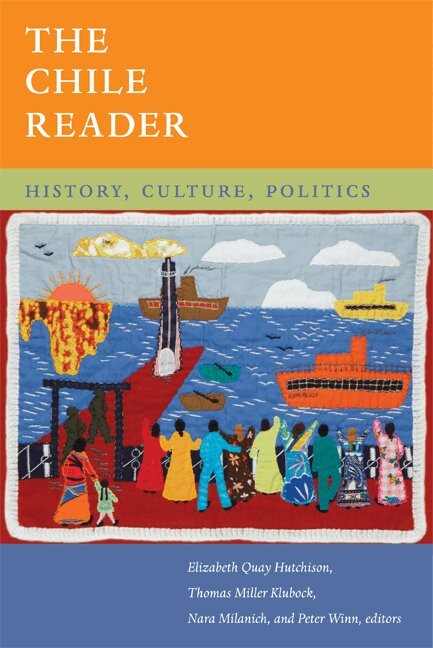
The Chile Reader makes available a rich variety of documents spanning more than five hundred years of Chilean history. Most of the selections are by Chileans; many have never before appeared in English. The history of Chile is rendered from diverse perspectives, including those of Mapuche Indians and Spanish colonists, peasants and aristocrats, feminists and military strongmen, entrepreneurs and workers, and priests and poets. Among the many selections are interviews, travel diaries, letters, diplomatic cables, cartoons, photographs, and song lyrics.Texts and images, each introduced by the editors, provide insights into the ways that Chile's unique geography has shaped its national identity, the country's unusually violent colonial history, and the stable but autocratic republic that emerged after independence from Spain. They shed light on Chile's role in the world economy, the social impact of economic modernization, and the enduring problems of deep inequality. The Reader also covers Chile's bold experiments with reform and revolution, its subsequent descent into one of Latin America's most ruthless Cold War dictatorships, and its much-admired transition to democracy and a market economy in the years since dictatorship.
1 202 kr
Skickas inom 10-15 vardagar
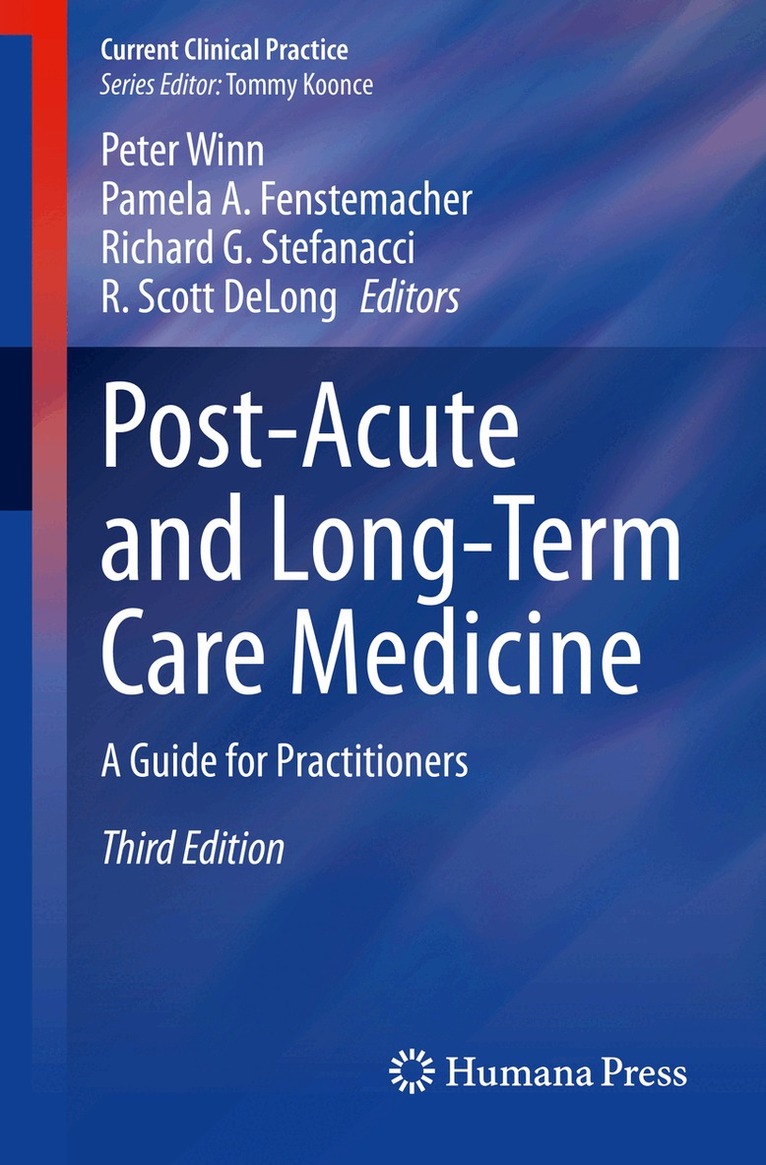
This book addresses current issues surrounding hospital admissions and readmissions and the practice of post-acute and long-term care (LTC). Now in its fully revised and expanded third edition, it contains the most up-to-date knowledge and regulations pertinent to practice in Post-Acute and Long-Term Care Medicine. Post-Acute and Long-Term Medicine is divided into four main sections. The first section is an introduction to long-term care. It includes chapters on home health care, assisted living and residential care, department of veteran affairs and nursing facilities, among others. The second section focuses on clinical medicine in post-acute and long-term care and contains chapters on common clinical conditions, preventing hospital admissions and readmissions, palliative care, weight and nutrition and wound care. The third section details psychosocial aspects of post-acute and long-term care. Chapters in this section describe dementia, delirium, depression, ethical and legal issues and caring for families. The fourth and final section centers on special issues in post-acute and long-term care. This section focuses on documentation and coding, medication management and rehabilitation and maximizing function. The outbreak of COVID-19 has led to two very important new chapters in this section. One chapter discusses challenges and opportunities in post-acute long-term care that have arisen during the pandemic. Another new chapter talks about the importance of virtual care and telemedicine in post-acute and long-term care amidst the COVID-19 outbreak. Written by experts in the field, many of whom have worked within AMDA – The Society for Post-acute and Long-term Care Medicine - to create and disseminate a knowledge base for post-acute and LTC, this is a valuable resource for clinicians and educators seeking to maximize the care and living experience of residents in post-acute and long-term care settings.

653 kr
Skickas inom 5-8 vardagar
1 433 kr
Tillfälligt slut
This book addresses current issues surrounding hospital readmissions and the practice of post-acute and long-term care (LTC). The book is divided into four sections that cover: types of care, which include community care, nursing facility care, and teamwork;