
Philip James - Böcker
Visar alla böcker från författaren Philip James. Handla med fri frakt och snabb leverans.
17 produkter
17 produkter
1 374 kr
Skickas inom 5-8 vardagar
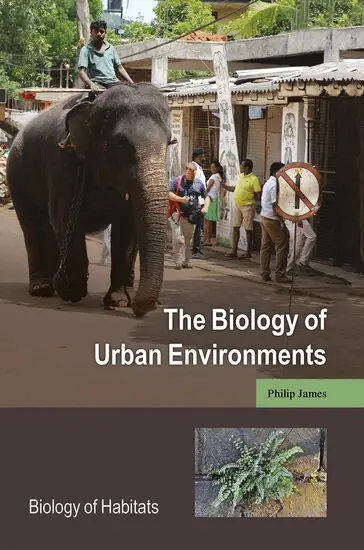
How do plants, animals, and humans manage to survive and adapt to the urban environment? This book provides a comprehensive coverage of biological matters related to urban environments presenting both the conceptual and theoretical underpinnings, and practical examples required to understand and address the challenges presented by this novel environment. The Biology of Urban Environments focusses on urban denizens: species (both domesticated and non-domesticated) that live for all or part of their life cycle in towns and cities. The biology of household plants and companion animals is discussed alongside that of species that have become feral or have not been domesticated. Temporal and spatial distribution patterns are set out and generalizations are made while exceptions are also discussed. The various strategies used and the genotypic, phenotypic, and behavioural adaptions of plants and animals in the face of the challenges presented by urban environments are explained. The final two chapters contain a discussion of the impacts of urban environments on human biology and suggestions on how this understanding might be used to address the increasing human health burden associated with illnesses that are characteristic of urbanites in the early twenty-first century.
777 kr
Skickas
How do plants, animals, and humans manage to survive and adapt to the urban environment? This book provides a comprehensive coverage of biological matters related to urban environments presenting both the conceptual and theoretical underpinnings, and practical examples required to understand and address the challenges presented by this novel environment. The Biology of Urban Environments focusses on urban denizens: species (both domesticated and non-domesticated) that live for all or part of their life cycle in towns and cities. The biology of household plants and companion animals is discussed alongside that of species that have become feral or have not been domesticated. Temporal and spatial distribution patterns are set out and generalizations are made while exceptions are also discussed. The various strategies used and the genotypic, phenotypic, and behavioural adaptions of plants and animals in the face of the challenges presented by urban environments are explained. The final two chapters contain a discussion of the impacts of urban environments on human biology and suggestions on how this understanding might be used to address the increasing human health burden associated with illnesses that are characteristic of urbanites in the early twenty-first century.
2 454 kr
Skickas inom 5-8 vardagar
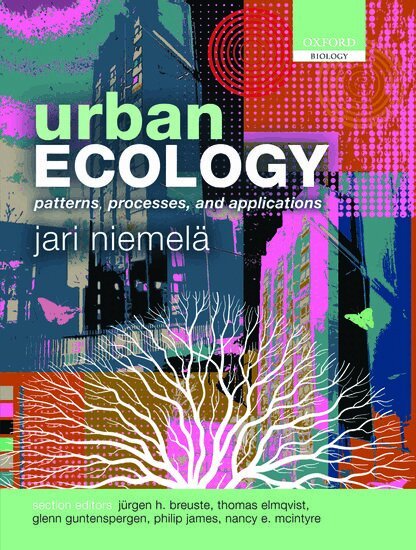
Urbanization is a global phenomenon that is increasingly challenging human society. It is therefore crucially important to ensure that the relentless expansion of cities and towns proceeds sustainably. Urban ecology, the interdisciplinary study of ecological patterns and processes in towns and cities, is a rapidly developing field that can provide a scientific basis for the informed decision-making and planning needed to create both viable and sustainable cities. Urban Ecology brings together an international team of leading scientists to discuss our current understanding of all aspects of urban environments, from the biology of the organisms that inhabit them to the diversity of ecosystem services and human social issues encountered within urban landscapes. The book is divided into five sections with the first describing the physical urban environment. Subsequent sections examine ecological patterns and processes within the urban setting, followed by the integration of ecology with social issues. The book concludes with a discussion of the applications of urban ecology to land-use planning. The emphasis throughout is on what we actually know (as well as what we should know) about the complexities of social-ecological systems in urban areas, in order to develop urban ecology as a rigorous scientific discipline.
781 kr
Skickas inom 5-8 vardagar
Urbanization is a global phenomenon that is increasingly challenging human society. It is therefore crucially important to ensure that the relentless expansion of cities and towns proceeds sustainably. Urban ecology, the interdisciplinary study of ecological patterns and processes in towns and cities, is a rapidly developing field that can provide a scientific basis for the informed decision-making and planning needed to create both viable and sustainable cities. Urban Ecology brings together an international team of leading scientists to discuss our current understanding of all aspects of urban environments, from the biology of the organisms that inhabit them to the diversity of ecosystem services and human social issues encountered within urban landscapes. The book is divided into five sections with the first describing the physical urban environment. Subsequent sections examine ecological patterns and processes within the urban setting, followed by the integration of ecology with social issues. The book concludes with a discussion of the applications of urban ecology to land-use planning. The emphasis throughout is on what we actually know (as well as what we should know) about the complexities of social-ecological systems in urban areas, in order to develop urban ecology as a rigorous scientific discipline.
1 525 kr
Tillfälligt slut
Urban Ecology: An Introduction seeks to open the reader’s mind and eyes to the way in which nature permeates everyday urban living, and how it has to be understood, cared for, and managed in order to make our towns and cities healthier places to visit and in which to live and work. The authors examine how nature can improve our physical and mental health, the air we breathe and the waters we use, as well as boosting our enjoyment of parks and gardens. Urban Ecology sets out the science that underlies the changing natural scene and the tools used to ensure that cities become both capable of adapting to climate change and more beautiful and resilient.The book begins with a discussion of the nature of urban places and the role of nature in towns and cities. Part 1 looks at the context and content of urban ecology, its relationship to other foci of interest within ecology and other environmental sciences, and the character of city landscapes and ecosystems. In Part 2 the authors set out the physical and chemical components of urban ecosystems and ecological processes, including urban weather and climate, urban geomorphology and soils, urban hydrology and urban biogeochemical cycles. In Part 3 urban habitats, urban flora and fauna, and the effects of, deliberate and inadvertent human action on urban biota are examined. Part 4 contains an exploration of the identification and assessment of ecosystem services in urban areas, emphasising economic evaluation, the importance of urban nature for human health and well-being, and restoration ecology and creative conservation. Finally, in Part 5 the tasks for urban ecologists in optimising and sustaining urban ecosystems, providing for nature in cities, adapting to climate change and in developing the urban future in a more sustainable manner are set out.Within the 16 chapters of the book – in which examples from around the world are drawn upon - the authors explore current practice and future alternatives, set out procedures for ecological assessment and evaluation, suggest student activities and discussion topics, provide recommended reading and an extensive bibliography. The book contains more than 150 tables and over 150 photographs and diagrams.
2 357 kr
Skickas inom 10-15 vardagar
Voluntary Organizations and Public Sector Delivery examines how aspects of voluntary sector employment are affected by its engagement with the growing trend to the market-based outsourcing in the delivery of public services within industrialized countries. The volume draws together a team of well-recognized academic contributors from the UK, Canada, Australia and the United States to explore how the process of outsourcing is impacting the internal and external labor markets of voluntary organizations, and the implications for the policy objectives underlying the externalization of the delivery of public services to them.These themes of change in employment are covered in depth in the UK with dedicated chapters exploring, workforce patterns and skill needs, HR policies and practices, recruitment and selection, graduate recruitment, unionization, pay and conditions and psychological contracts in organizations. The book also contains a significant international comparative dimension with individual chapter analysis of employment issues in Australia, Canada and the United States, as well as an Anglo-German comparison.
1 953 kr
Skickas inom 10-15 vardagar
This fully revised second edition reflects the great expansion in urban ecology research, action, and teaching since 2015. Urban ecology provides an understanding of urban ecosystems and uses nature-based techniques to enhance habitats and alleviate poor environmental conditions.Already the home to the majority of the world’s people, urban areas continue to grow, causing ecological changes throughout the world. To help students of all professions caring for urban areas and the people, animals, and plants that live in them, the authors set out the environmental and ecological science of cities, linkages between urban nature and human health, urban food production in cities, and how we can value urban nature. The authors explore our responsibilities for urban nature and greening, ecological management techniques, and the use of nature-based solutions to achieve a better, more sustainable urban future and ensure that cities can climate change and become more beautiful and more sustainable places in which to live.This text provides the student and the practitioner with a critical scientific overview of urban ecology that will be a key source of data and ideas for studies and for sound urban management.
563 kr
Skickas inom 10-15 vardagar
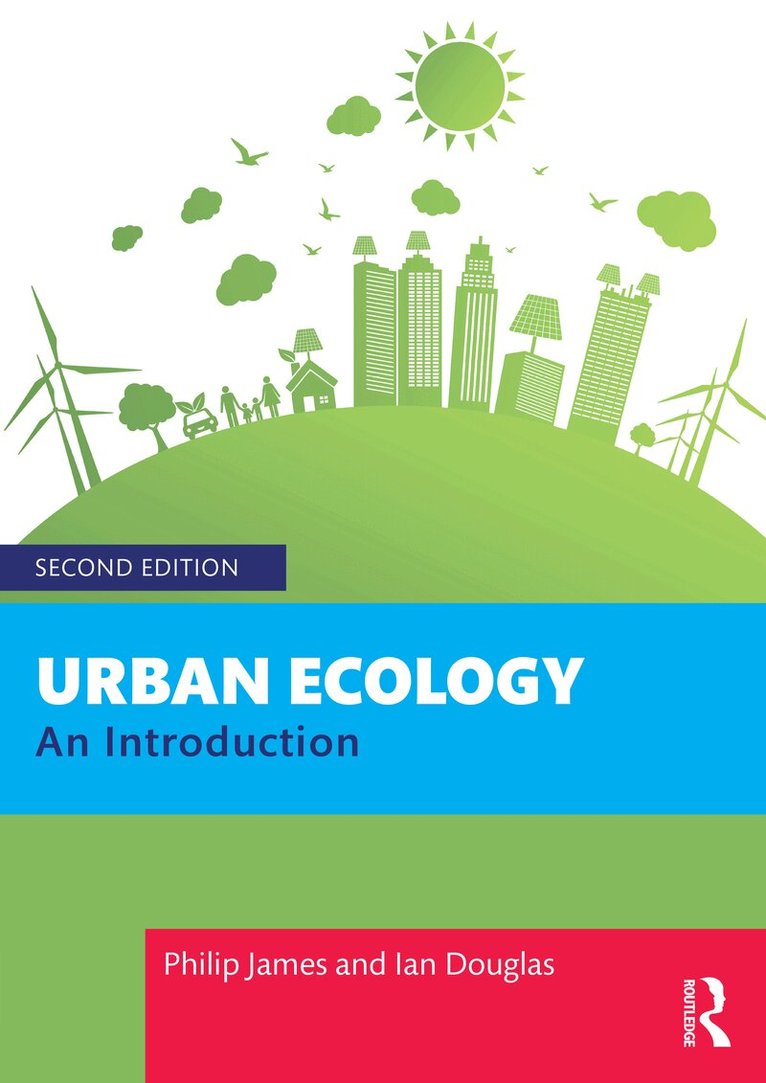
This fully revised second edition reflects the great expansion in urban ecology research, action, and teaching since 2015. Urban ecology provides an understanding of urban ecosystems and uses nature-based techniques to enhance habitats and alleviate poor environmental conditions.Already the home to the majority of the world’s people, urban areas continue to grow, causing ecological changes throughout the world. To help students of all professions caring for urban areas and the people, animals, and plants that live in them, the authors set out the environmental and ecological science of cities, linkages between urban nature and human health, urban food production in cities, and how we can value urban nature. The authors explore our responsibilities for urban nature and greening, ecological management techniques, and the use of nature-based solutions to achieve a better, more sustainable urban future and ensure that cities can climate change and become more beautiful and more sustainable places in which to live.This text provides the student and the practitioner with a critical scientific overview of urban ecology that will be a key source of data and ideas for studies and for sound urban management.
593 kr
Skickas inom 10-15 vardagar
Voluntary Organizations and Public Sector Delivery examines how aspects of voluntary sector employment are affected by its engagement with the growing trend to the market-based outsourcing in the delivery of public services within industrialized countries. The volume draws together a team of well-recognized academic contributors from the UK, Canada, Australia and the United States to explore how the process of outsourcing is impacting the internal and external labor markets of voluntary organizations, and the implications for the policy objectives underlying the externalization of the delivery of public services to them.These themes of change in employment are covered in depth in the UK with dedicated chapters exploring, workforce patterns and skill needs, HR policies and practices, recruitment and selection, graduate recruitment, unionization, pay and conditions and psychological contracts in organizations. The book also contains a significant international comparative dimension with individual chapter analysis of employment issues in Australia, Canada and the United States, as well as an Anglo-German comparison.
- Nyhet

2 258 kr
Kommande
The text sets out the fundamentals that underpin ecology – the study of the relations between organisms of the same of different species and between organisms and the abiotic (non-living) environment. In other words, it is the study of where we live.The structure of the book follows the classical style followed by most educators teaching this subject. It is divided into seven chapters which could be the basis of a semester’s learning. Non-specialist, jargon-free language is used throughout with technical words and phrases explained in the text and in a glossary. Each chapter begins with an overview of the key themes covered and ends with suggestions for further, self-directed study. Chapter 1 is an introduction to the subject and contains outlines of how the subject has developed, its relevance today, and the skills required by an ecologist. Chapters 2 – 7 address, in turn, the abiotic (non-living) environment, adaptations of organisms to their abiotic environment, population ecology, community ecology, ecosystem ecology, and landscape ecology. Cross-cutting themes such as behavioural ecology, aquatic ecology, and terrestrial ecology are woven throughout these chapters. Relevant case studies, based on twenty-first century global challenges (changing climate, urbanisation, the biodiversity crisis, and the spread of invasive non-native species) and ecological ways of tackling these issues (nature-based solutions and species and habitat conservation (including rewilding)), are presented in relevant chapters.In Ecology: The Basics the author synthesises ecological understanding to provide a foundation for first- and second-year undergraduates who are approaching ecology for the first time or are looking to refresh their knowledge. Ecology: The Basics also serves as a foundation for those coming to ecology as part of their higher-level studies, or who wish to be more informed about ecology as part of their life-long learning journey.The text sets out the fundamentals that underpin ecology – the study of the relations between organisms of the same of different species and between organisms and the abiotic (non-living) environment. In other words, it is the study of where we live.
- Nyhet
327 kr
Kommande
The text sets out the fundamentals that underpin ecology – the study of the relations between organisms of the same of different species and between organisms and the abiotic (non-living) environment. In other words, it is the study of where we live.The structure of the book follows the classical style followed by most educators teaching this subject. It is divided into seven chapters which could be the basis of a semester’s learning. Non-specialist, jargon-free language is used throughout with technical words and phrases explained in the text and in a glossary. Each chapter begins with an overview of the key themes covered and ends with suggestions for further, self-directed study. Chapter 1 is an introduction to the subject and contains outlines of how the subject has developed, its relevance today, and the skills required by an ecologist. Chapters 2 – 7 address, in turn, the abiotic (non-living) environment, adaptations of organisms to their abiotic environment, population ecology, community ecology, ecosystem ecology, and landscape ecology. Cross-cutting themes such as behavioural ecology, aquatic ecology, and terrestrial ecology are woven throughout these chapters. Relevant case studies, based on twenty-first century global challenges (changing climate, urbanisation, the biodiversity crisis, and the spread of invasive non-native species) and ecological ways of tackling these issues (nature-based solutions and species and habitat conservation (including rewilding)), are presented in relevant chapters.In Ecology: The Basics the author synthesises ecological understanding to provide a foundation for first- and second-year undergraduates who are approaching ecology for the first time or are looking to refresh their knowledge. Ecology: The Basics also serves as a foundation for those coming to ecology as part of their higher-level studies, or who wish to be more informed about ecology as part of their life-long learning journey.The text sets out the fundamentals that underpin ecology – the study of the relations between organisms of the same of different species and between organisms and the abiotic (non-living) environment. In other words, it is the study of where we live.

210 kr
Skickas

285 kr
Skickas

248 kr
Skickas inom 5-8 vardagar

391 kr
Skickas inom 5-8 vardagar

231 kr
Skickas inom 5-8 vardagar
712 kr
Skickas inom 10-15 vardagar
This highly practical manual presents an ideal introductionto adolescent substance use. It offers invaluable guidance forall professionals involved with adolescents including socialworkers, health and social care professionals, youth workers, family supportworkers, teachers, counsellors, mental health teams, A&E staff,police and probation officers. The approach these practitionerstake in dealing with the problem has considerable influenceover outcomes.It succinctly covers a wealth of information on key matters suchas counselling, treatment options, motives for substance abuse,sexual and mental health, policy development, ethical and legalconsiderations, and the important role of the family.Adolescents and Substance Use provides a user-friendlyfoundation for effective, evidence-based practice.