
Philipp Hacker - Böcker
Visar alla böcker från författaren Philipp Hacker. Handla med fri frakt och snabb leverans.
7 produkter
7 produkter
1 737 kr
Skickas inom 5-8 vardagar
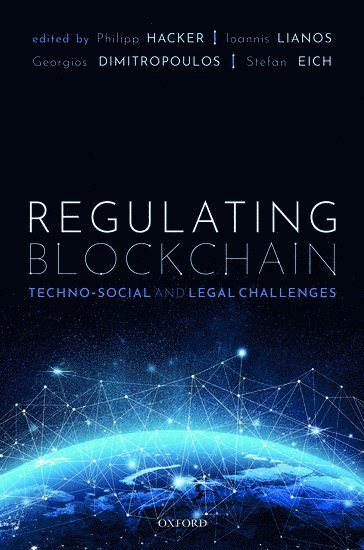
Less than a decade after the Financial Crisis, we are witnessing the fast emergence of a new financial order driven by three different, yet interconnected, dynamics: first, the rapid application of technology - such as big data, machine learning, and distributed computing - to banking, lending, and investing, in particular with the emergence of virtual currencies and digital finance; second, a disintermediation fuelled by the rise of peer-to-peer lending platforms and crowd investment which challenge the traditional banking model and may, over time, lead to a transformation of the way both retail and corporate customers bank; and, third, a tendency of de-bureaucratisation under which new platforms and technologies challenge established organisational patterns that regulate finance and manage the money supply.These changes are to a significant degree driven by the development of blockchain technology. The aim of this book is to understand the technological and business potential of the blockchain technology and to reflect on its legal challenges. The book mainly focuses on the challenges blockchain technology has so far faced in its first application in the areas of virtual money and finance, as well as those that it will inevitably face (and is partially already facing, as the SEC Investigative Report of June 2017 and an ongoing SEC securities fraud investigation show) as its domain of application expands in other fields of economic activity such as smart contracts and initial coin offerings. The book provides an unparalleled critical analysis of the disruptive potential of this technology for the economy and the legal system and contributes to current thinking on the role of law in harvesting and shaping innovation.

1 378 kr
Skickas inom 7-10 vardagar
Choice is a key concept of our time. It is a foundational mechanism for every legal order in societies that are, politically, constituted as democracies and, economically, built on the market mechanism. Thus, choice can be understood as an atomic structure that grounds core societal processes. In recent years, however, the debate over the right way to theorize choice - for example, as a rational or a behavioral type of decision making - has intensified. This collection provides an in-depth discussion of the promises and perils of specific types of theories of choice. It shows how the selection of a specific theory of choice can make a difference for concrete legal questions, in particular in the regulation of the digital economy or in choosing between market, firm, or network. In its first part, the volume provides an accessible overview of the current debates about rational versus behavioral approaches to theories of choice. The remainder of the book structures the vast landscape of theories of choice along with three main types: individual, collective, and organizational decision making. As theories of choice proliferate and become ever more sophisticated, however, the process of choosing an adequate theory of choice becomes increasingly intricate. This volume addresses this selection problem for the various legal arenas in which individual, organizational, and collective decisions matter. By drawing on economic, technological, political, and legal points of view, the volume shows which theories of choice are at the disposal of the legally relevant decision-maker, and how they can be operationalized for the solution of concrete legal problems.The editors acknowledge the kind support of the Fritz Thyssen Foundation for an exploratory conference on the subject of the book.
- Nyhet
1 868 kr
Kommande
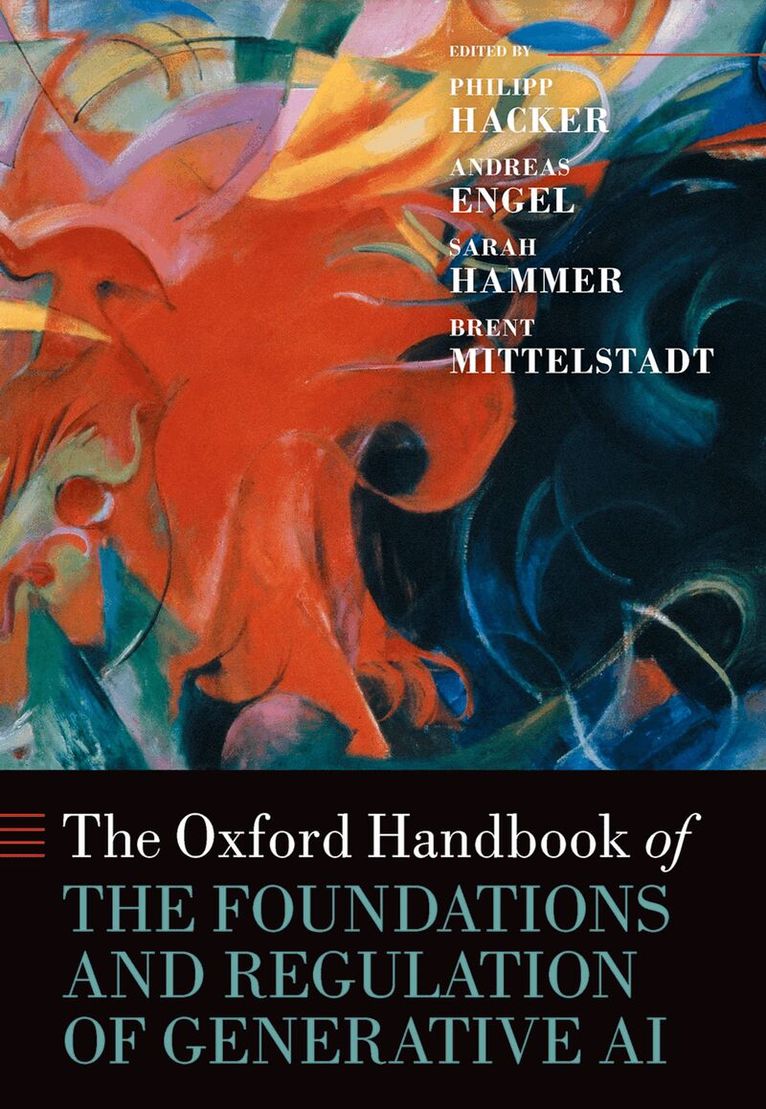
Generative AI technology holds immense transformative potential, with applications spanning from text generation to image creation and scientific discovery. Yet, its rapid development and adoption have introduced significant legal and ethical concerns, such as potential cybersecurity risks, misinformation, unsustainability, and algorithmic discrimination. The Oxford Handbook of the Foundations and Regulation of Generative AI offers theoretical insights and practical recommendations for ensuring the responsible development and application of this emerging technology.Edited and written by leading scholars in law, AI ethics, economics, and computer science, this Handbook brings together a global team of experts to examine the foundational principles and regulatory challenges posed by generative AI systems. The Handbook introduces core technical concepts-including explainable AI (XAI), agentic AI safety, and prompting-and discusses pressing legal and ethical concerns such as AI bias, consumer protection, platform and worker rights, data protection, copyright, and liability for AI-generated speech. The volume also considers how generative AI is transforming industries, from business and legal practice to healthcare, finance, and cybersecurity. Finally, it concludes with in-depth analyses of AI regulation in various jurisdictions, including the EU, US, China, Brazil, India, and Australia. Interdisciplinary in scope and global in coverage, this Handbook is an essential resource for anyone seeking to understand and navigate the evolving landscape of generative AI. It provides an accessible entry point for students, while offering the depth and rigor needed to inform practice, policy, and advanced research.

Del 67 - Studien zum Privatrecht
Verhaltensökonomik und Normativität
Die Grenzen des Informationsmodells im Privatrecht und seine Alternativen
Inbunden, Tyska, 2017
2 471 kr
Tillfälligt slut
Verhaltensökonomisch basierte Regulierung, von 'Nudging' bis 'Debiasing', hat längst auch Deutschland und Europa erreicht. Doch die Implikationen der Verhaltensökonomik für Normsetzung sind nicht immer so eindeutig, wie sie auf den ersten Blick erscheinen mögen: Auf empirischer Ebene herrscht Unsicherheit über den tatsächlichen Rationalitätsgrad von Marktakteuren; auf normativer Ebene Unklarheit darüber, welche rechtspolitischen Ziele mithilfe der neuen Techniken verfolgt werden sollen.Philipp Hacker nimmt sich dieser Herausforderungen an, begründet entscheidungstheoretisch die Relevanz der Verhaltensökonomik für das Privatrecht und macht sich für ihren Einsatz zur Steigerung von Fairness in Marktkontexten stark, besonders im Verbraucher- und Kapitalmarktrecht. Auf dieser Grundlage erfährt das Informationsmodell, das zentrale europäische Regulierungsparadigma, eine Neukonzeption.

Del 244 - Jus Privatum
Datenprivatrecht
Neue Technologien im Spannungsfeld von Datenschutzrecht und BGB
Inbunden, Tyska, 2020
1 778 kr
Skickas inom 3-6 vardagar
Das neue unionale Datenschutzrecht ist, entgegen mancher Befürchtung, kein law of everything. Vielmehr müssen unterschiedliche Rechtsmaterien ineinandergreifen, um eine sachgerechte Regelungsstruktur im Schnittbereich von Datenschutzrecht und Privatrecht aufzubauen. Philipp Hacker bestimmt das Verhältnis dieser Rechtsmaterien, insbesondere von DS-GVO und BGB. Denn die Verschränkung unterschiedlicher Technologieformen fordert mehr denn je ein rechtsbereichsübergreifendes Verständnis von juristischer Dogmatik und ein interdisziplinär fundiertes Konzept von Regulierung. Auf Basis des geltenden Rechts entwirft er ein integriertes Marktordnungsrecht für digitale Austauschverhältnisse. Die Untersuchung schließt mit Reformperspektiven, die aufzeigen, wie die informierte Einwilligung durch eine technologische ersetzt werden kann, um eine privatautonome Gestaltung von Rechtsverhältnissen unter den Bedingungen der digitalen Wirtschaft zu ermöglichen.Die Arbeit wurde mit dem Wissenschaftspreis der Deutschen Stiftung für Recht und Informatik 2020 ausgezeichnet.
Del 19 - MPI Studies on Intellectual Property and Competition Law
FairEconomy
Crises, Culture, Competition and the Role of Law
Inbunden, Engelska, 2013
1 064 kr
Skickas inom 10-15 vardagar
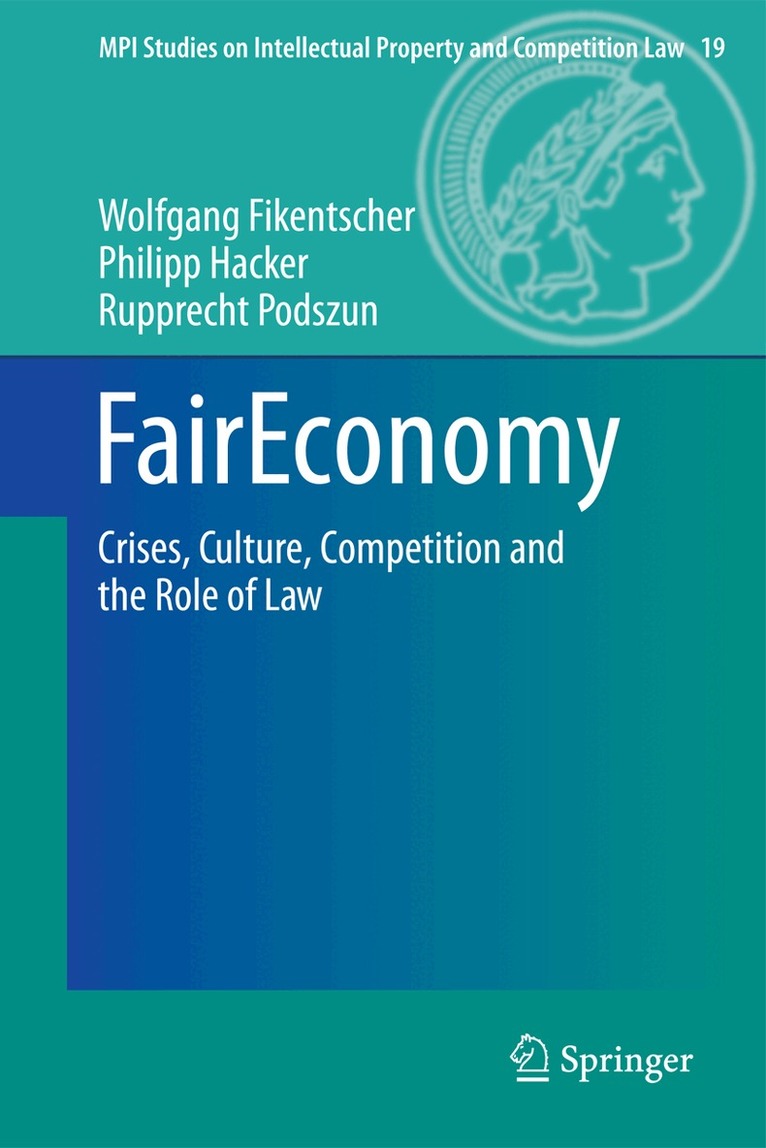
FairEconomy is a concept for a free and fair market economy. In response to the financial and economic crises of the past years, the authors develop fundamental ideas of how a market economy works, what rules markets need and who safeguards fairness and equal opportunity in such an economy. The book sets out the design of a sustainable market order: Going back to the very roots of doing business it offers a fascinating insight into the cultural and anthropological premises of the market economy. Fairness and free competition can be identified as key elements of successful markets, sometimes neglected in politics and business. Legal rules need to ensure that fairness and economic freedom work. The same holds true for the relationship of risk and liability that has been overlooked in the banking sector. The ideas of a FairEconomy, sketched in this book, are fit to become a reality: The authors point to institutions and mechanisms that could integrate the concept into global law. They place their trust less upon ever-larger institutions and more on private entitlement and enforcement at the global, regional, and local levels.
Del 19 - MPI Studies on Intellectual Property and Competition Law
FairEconomy
Crises, Culture, Competition and the Role of Law
Häftad, Engelska, 2015
1 064 kr
Skickas inom 10-15 vardagar
FairEconomy is a concept for a free and fair market economy. In response to the financial and economic crises of the past years, the authors develop fundamental ideas of how a market economy works, what rules markets need and who safeguards fairness and equal opportunity in such an economy. The book sets out the design of a sustainable market order: Going back to the very roots of doing business it offers a fascinating insight into the cultural and anthropological premises of the market economy. Fairness and free competition can be identified as key elements of successful markets, sometimes neglected in politics and business. Legal rules need to ensure that fairness and economic freedom work. The same holds true for the relationship of risk and liability that has been overlooked in the banking sector. The ideas of a FairEconomy, sketched in this book, are fit to become a reality: The authors point to institutions and mechanisms that could integrate the concept into global law. They place their trust less upon ever-larger institutions and more on private entitlement and enforcement at the global, regional, and local levels.