
Visar resultat för..."Adam Hook, Alan Gilliland, Adam Hook, Alan Gilliland"
12 produkter
12 produkter
184 kr
Skickas inom 7-10 vardagar
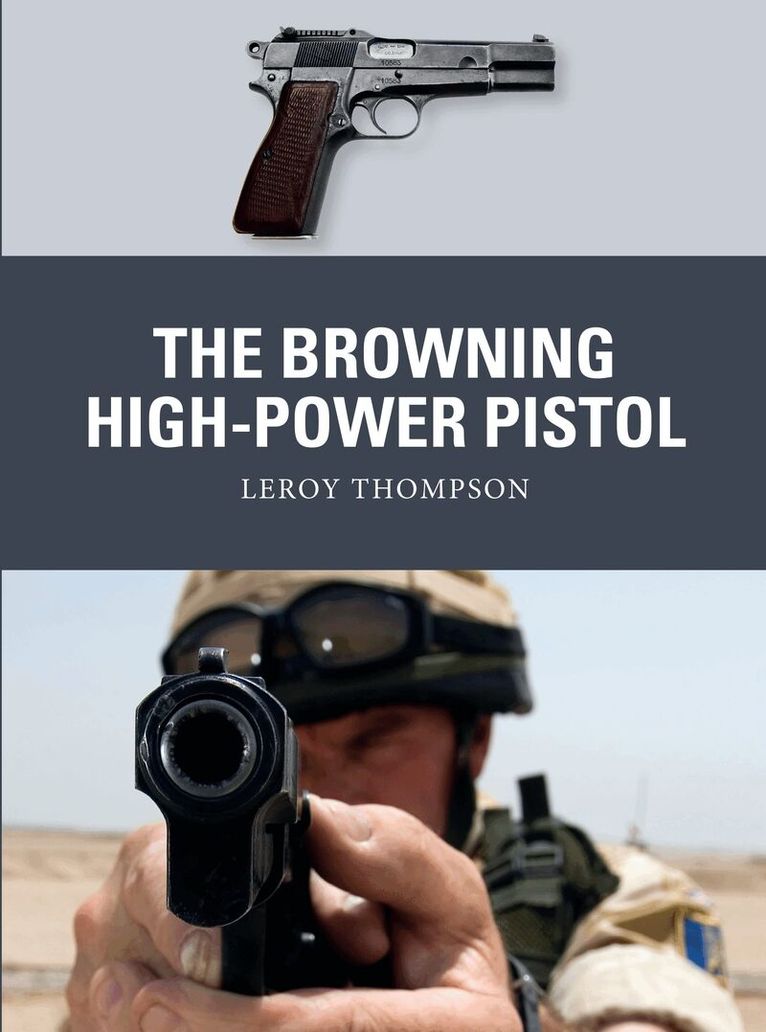
Making its debut in 1935, the Browning High-Power was the world’s most widely used military pistol for much of the 20th century.Military and law-enforcement agencies in more than 90 countries have issued the High-Power and it has seen combat in conflicts from World War II through to the ‘War on Terror’. After conquering Belgium, Nazi Germany produced more than 300,000 High-Powers for use by the Waffen-SS, Fallschirmjäger and others, and after 1945 the High-Power became standard for most NATO-armed forces as well as scores of others.Chambered for the 9×19mm Luger cartridge, John Browning’s High-Power improved on the classic Colt M1911 design, especially in its use of a far simpler takedown system. The pistol’s innovative 13-round magazine, designed by Dieudonné Saive, staggered the cartridges for higher capacity without unduly increasing the grip size. During its 82-year production run at Fabrique Nationale (FN) in Belgium, the design evolved slightly, but a 2017 High-Power was still easily recognizable as a descendant of the original model. Packed with gripping material including detailed technical specifications, contemporary photographs and highly accurate artist’s renditions, this title is a comprehensive and informative guide to the world’s most iconic semi-automatic pistol.
187 kr
Skickas inom 10-15 vardagar
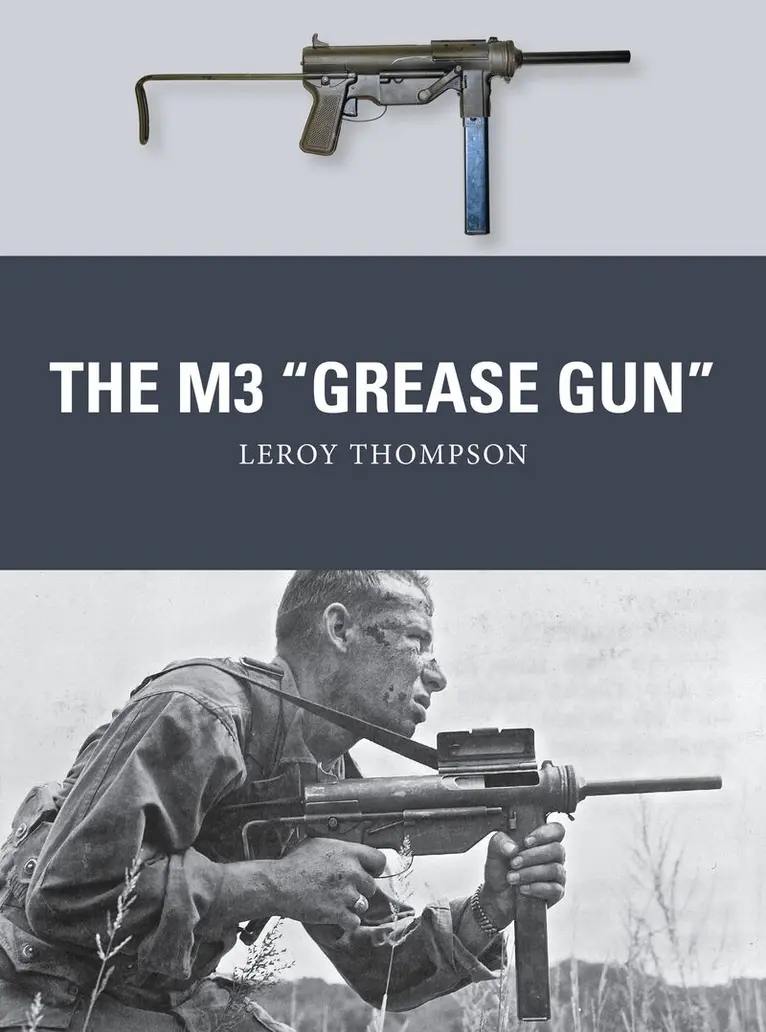
Influenced by the German MP 40 and the British Sten, the .45-caliber M3 “Grease Gun” served as the primary US submachine gun for almost a half-century.Designed to replace the expensive Thompson SMG, the M3 was issued to airborne troops and others during World War II thanks to its compact design with sliding wire stock. An improved variant, the M3A1, was favored by armored crews right up to the beginning of the 1990s, seeing service in 1991’s Operation Desert Storm. In Korea and Vietnam, reconnaissance troops and special-operations forces were at times armed with the M3A1 – also available in a suppressed version – and it was the first SMG issued to the US counterterrorist unit Delta Force.Featuring full-color artwork, first-hand accounts, and archive and close-up photographs, this engaging study examines how the deadly M3 provided US forces with close-range automatic firepower during World War II and for many decades afterwards.

187 kr
Skickas inom 10-15 vardagar
Entering service in 1931, the 9x19mm Suomi KP/-31 submachine gun saw extensive combat with Finnish troops during their fight against Soviet forces in 1939–44.It was also manufactured under licence in Switzerland, Denmark and Sweden, and remained in Finnish service until the 1980s, an indication of its durability. Rugged and accurate, the Suomi was a favourite with Finnish ski troops who would strike from ambush, cutting down Soviet troops, then skiing away into the woods.Initially used by the Finns as a light machine gun at infantry squad level, it eventually became a dedicated submachine gun, and since it had been designed to be more accurate than the typical SMG, it was often even used as a sniping weapon, or to supplement longer-ranged rifles such as the Mosin-Nagant.Featuring first-hand accounts and specially commissioned colour artwork, this is the story of one of World War II’s most distinctive and respected infantry weapons.
187 kr
Skickas inom 10-15 vardagar
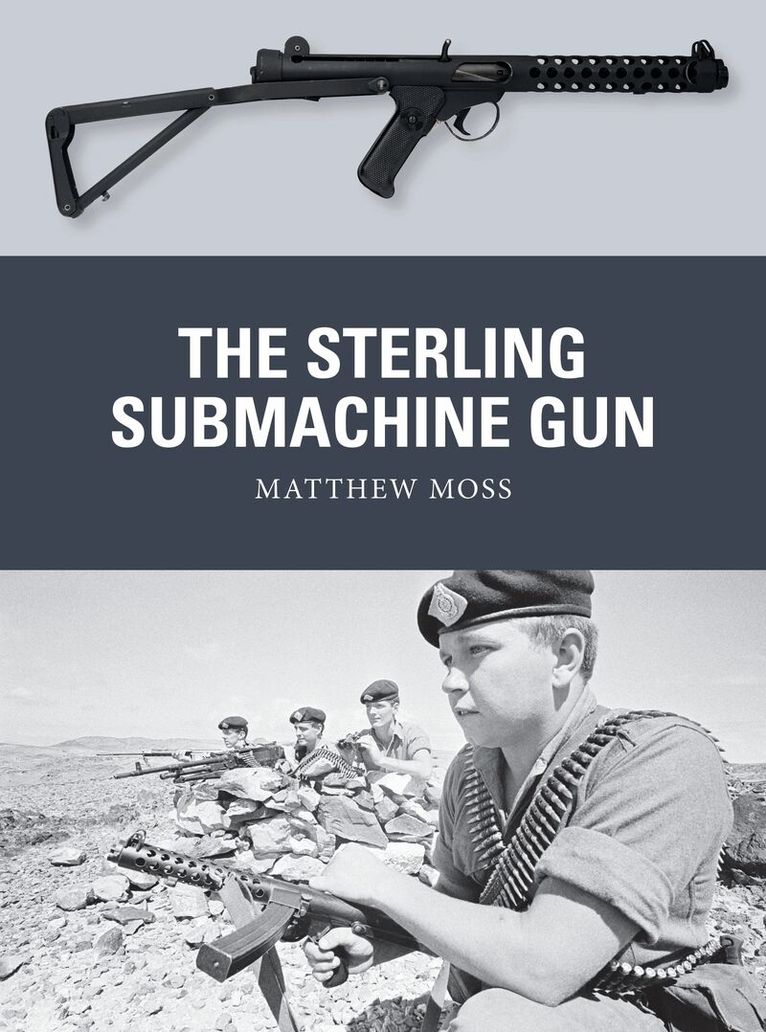
Designed by a motorcycle racer turned small-arms engineer, George Patchett, the submachine gun that eventually became known as the Sterling was developed during World War II.Some suggest it first saw action during Operation Infatuate with No. 4 Commando, before becoming fully adopted by the British Army in 1953 as the Sterling Machine Carbine (L2A1). It was centre stage for many of Britain’s post-colonial conflicts from Malaya to Kenya and from Yemen to Northern Ireland. The silenced L34A1 Sterling-Patchett entered service in 1966 and first saw action deep in the jungles of Vietnam in the hands of the elite special forces of Australia, New Zealand and the United States during prisoner snatches and reconnaissance patrols.Employing first-hand accounts and painstaking technical analysis, this engaging account features carefully selected archive photography and specially commissioned colour artwork depicting the submachine gun that armed British and other forces for nearly 60 years.
162 kr
Skickas inom 7-10 vardagar
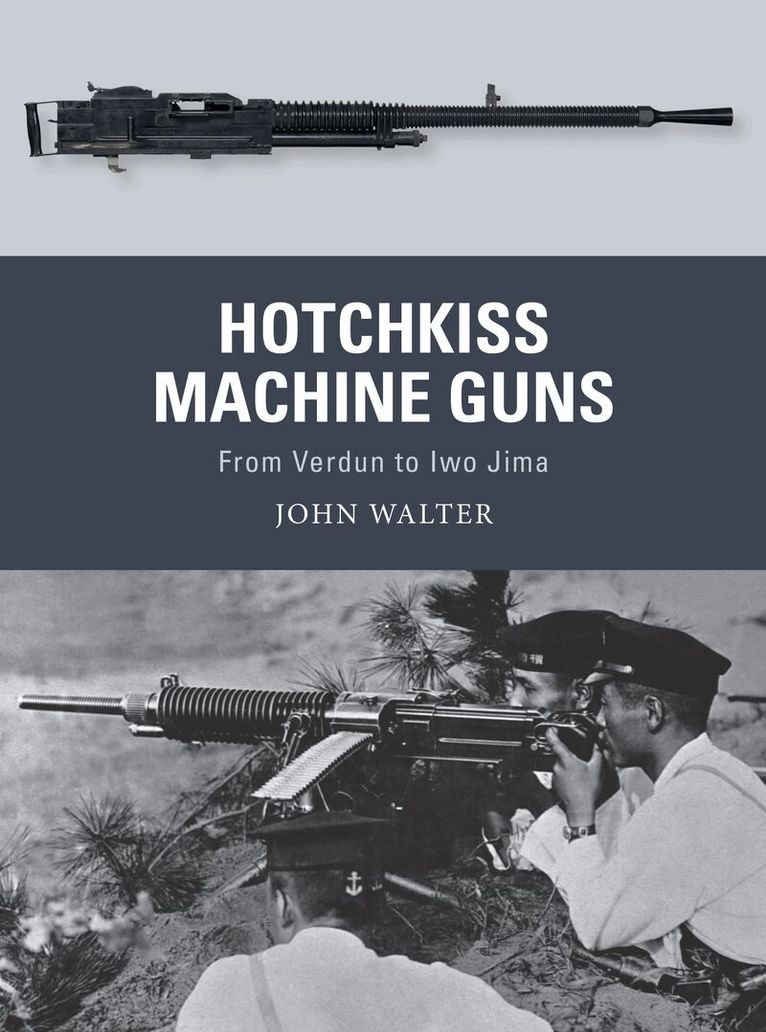
The air-cooled Hotchkiss machine gun was the first to function effectively by tapping propellant gas from the bore as the gun fired.Although the Hotchkiss would be overshadowed by the water-cooled Maxim and Vickers Guns, it proved successful enough to develop the Modèle Portative: a man-portable version which, it was hoped, could move with infantrymen as they advanced. Later mounted on tanks and aircraft, it became the first automatic weapon to obtain a ‘kill’ in aerial combat. This is an illustrated overview of the Odkolek-Hotchkiss system, from World War I to Japan and the Pacific island landings. Here, a succession of derivatives found favour in theatres of operations in which water-cooling could be more of a liability than an asset, such as the ‘Woodpecker’ – the Type 92 Hotchkiss, with its characteristically slow rate of fire – which cut swathes through the US ranks. Supported by contemporary photographs and full-colour illustrations, this title explores the exciting and eventful history of the first successful gas-operated machine gun.
161 kr
Skickas
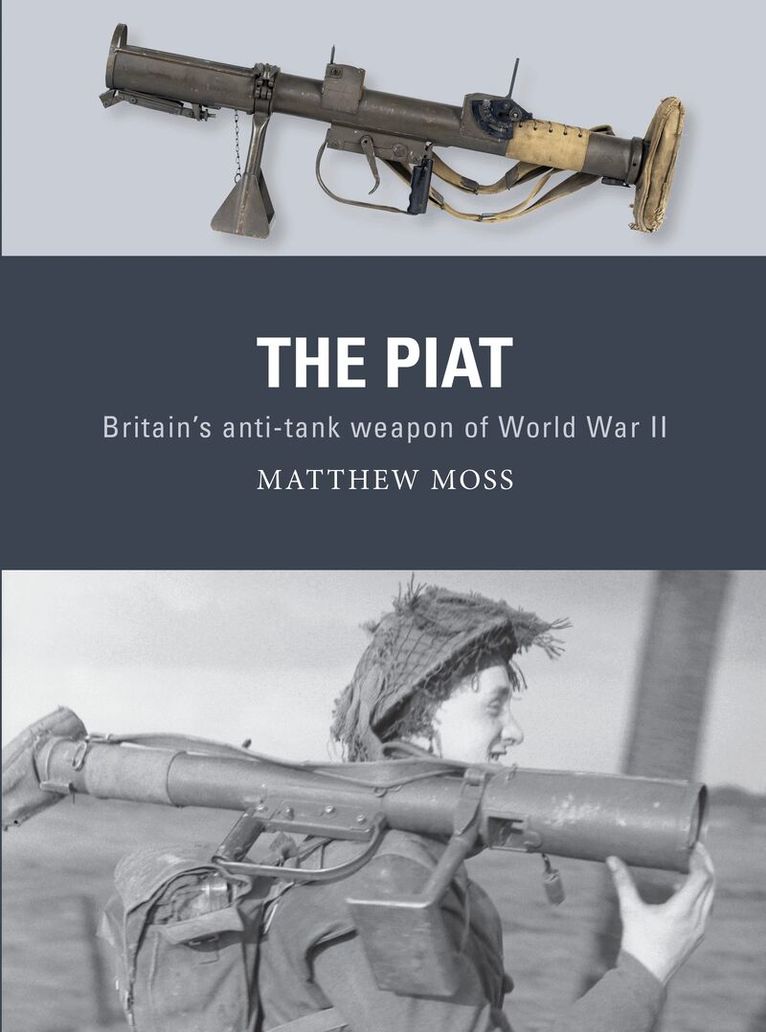
Designed in 1942, Britain’s innovative Projector, Infantry, Anti-Tank (PIAT) provided British and Commonwealth troops with a much-needed means of taking on Germany’s formidable Panzers.Replacing the inadequate Boys anti-tank rifle, it was conceived in the top-secret World War II research and development organization known colloquially as ‘Churchill’s Toyshop’, alongside other ingenious weapons such as the sticky bomb, the limpet mine and the time-pencil fuse.The PIAT's limited effective range meant that troops required nerves of steel to get close enough to an enemy tank to ensure a direct hit, often approaching to within 50ft of the target, and no fewer than six Victoria Crosses were won during World War II by soldiers operating PIATs. A front-line weapon in every theatre of the conflict in which Commonwealth troops fought, from Europe to the Far East, the PIAT remained in service after 1945, seeing action during the Greek Civil War, the Arab–Israeli conflict and the Korean War.This illustrated study combines detailed research with expert analysis to reveal the full story of the design, development and deployment of this revolutionary weapon.
162 kr
Skickas inom 7-10 vardagar
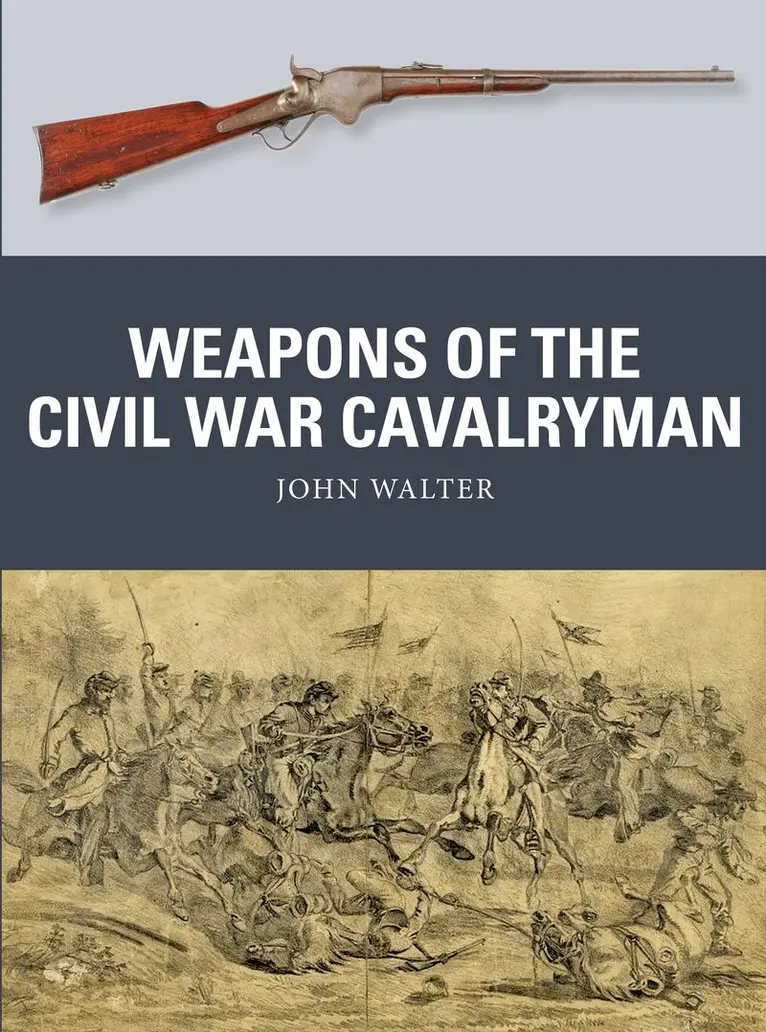
During the American Civil War, the mounted soldiers fighting on both sides of the conflict carried a wide array of weapons, from sabers and lances to carbines, revolvers, and other firearms.Though some sections of the cavalry placed their trust in the sabre, the advent of viable breechloading carbines -- especially repeaters such as the Spencer -- was to transform warfare within little more than a decade of General Lee’s final surrender at Appomattox. However, output struggled to keep up with unprecedented demands on manufacturing technology and distribution in areas where communication was difficult and in states whose primary aim was to equip their own men rather than contribute to the arming of Federal or Confederate regiments.In addition, the almost unparalleled losses of men and equipment ensured that almost any firearm, effectual or not, was pressed into service. Consequently, the sheer variety of weaponry carried reflected the mounted soldiers’ various roles in different theatres of operation, but also the availability -- or otherwise -- of weapons, notably on the Confederate side.Fully illustrated, this study assesses the effectiveness of the many different weapons arming the Civil War cavalryman and analyses the strengths and weaknesses of the decisions made after 1865 concerning the armament of the US cavalry.
162 kr
Skickas inom 7-10 vardagar
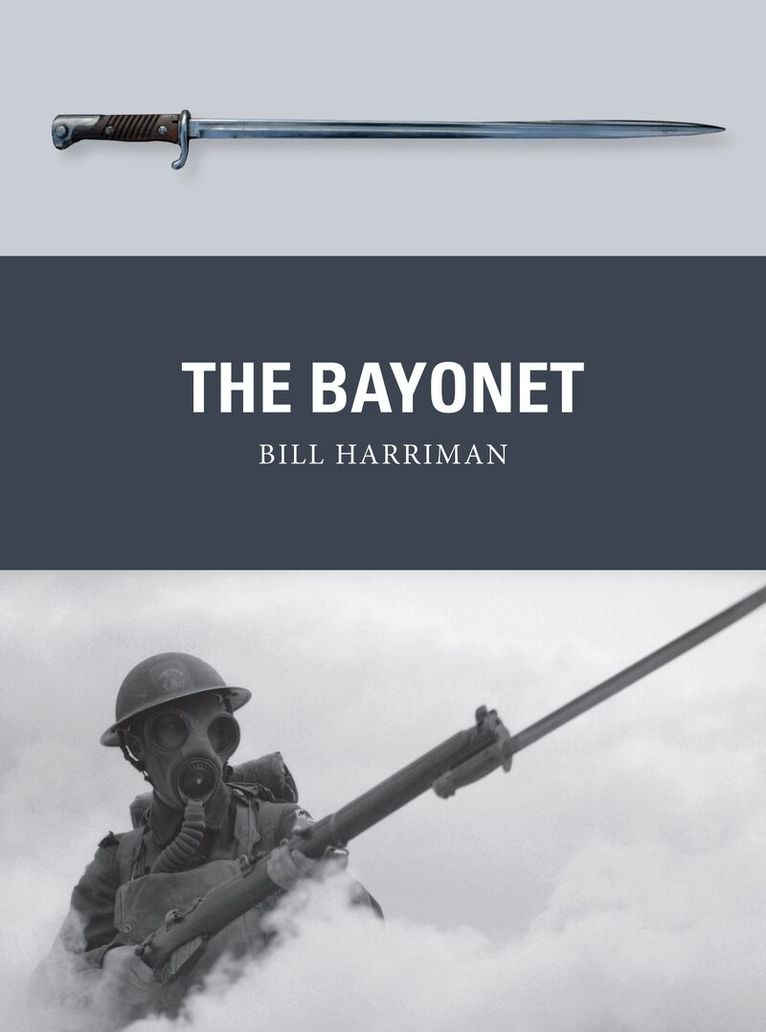
Although muskets delivered devastating projectiles at comparatively long ranges, their slow rate of fire left the soldier very vulnerable while reloading, and early muskets were useless for close-quarter fighting.The development of the flintlock musket produced a much less cumbersome and faster-firing firearm, which could be used for close combat with a short knife stuck into its muzzle. However, the musket could not be loaded or fired while the plug bayonet was in place. The socket bayonet solved this problem and the musket/bayonet combination became the universal infantry weapon from c.1700 to c.1870.The perfection of the small-bore magazine rifle in the 1890s saw the bayonet lose its tactical importance, a trend that continued in the world wars. Its potential usefulness continued to be recognized from the 1950s, but its blade was often combined with an item with some additional function, most notably a wire-cutter.Ultimately, for all its fearsome reputation as a visceral, close-quarter fighting weapon, the bayonet's greatest impact was actually as a psychological weapon. Featuring full-colour artwork as well as archive and close-up photographs, this is the absorbing story of the complementary weapon to every soldier’s firearm from the army of Louis XIV to modern-day forces in all global theatres of conflict.
186 kr
Skickas
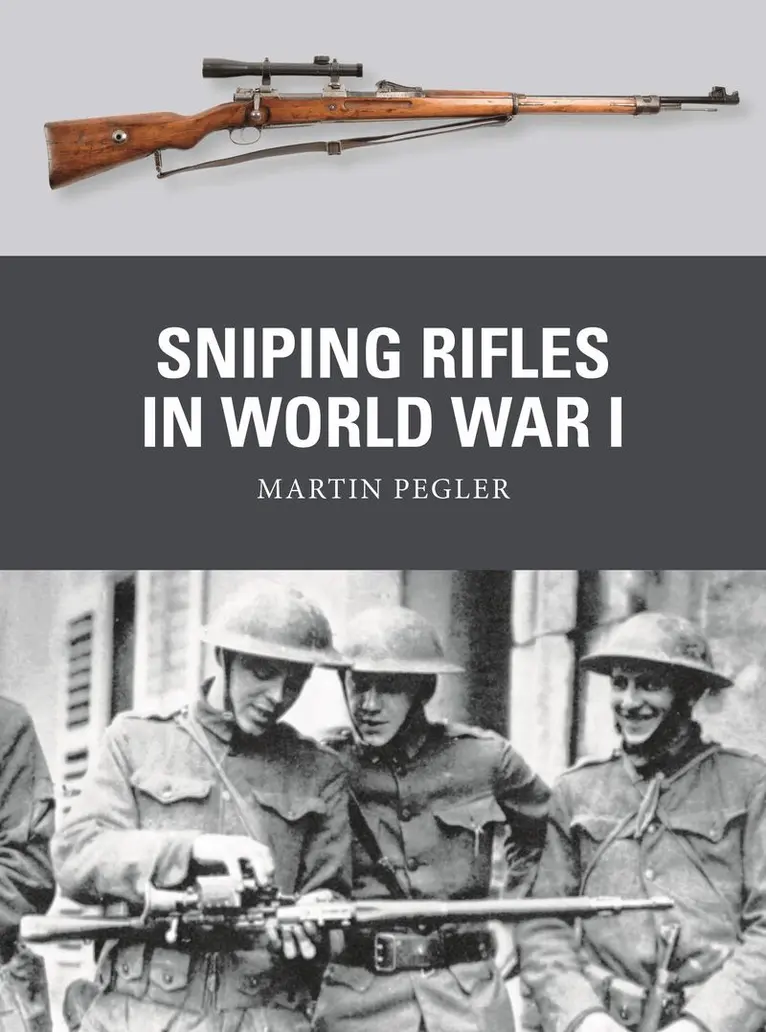
While Germany and Austria-Hungary were well-equipped with sniping rifles in 1914, their Allied opponents were not.Although military sharpshooting had existed since the 18th century, in 1914 only the German and Austro-Hungarian armies fielded trained snipers armed with scoped rifles. Thus upon the outbreak of World War I, the Allied armies found themselves on the receiving end of a shooting war to which they had no means of response. Only the Canadians brought a dedicated sniping rifle into the trenches, but in small numbers.For the British, although production of a suitable rifle and scope were settled on quickly, the establishment of sniper training was difficult and its success was mostly due to the efforts of a handful of dedicated officers. The French eventually introduced a competent scoped rifle and a sniper training system, as did the Italians. Entering the war in 1917, the Americans experienced rifle shortages but were able to build on their pre-1914 efforts to find a suitable sniping weapon. The country that suffered most grievously was Russia; Russian troops fielded no snipers at all and suffered accordingly.Featuring full-colour artwork, carefully chosen archive images and photographs of the sniping rifles and accessories used in the trenches, this is the inside story of the rifles carried by snipers of all the major powers during World War I.
173 kr
Skickas inom 7-10 vardagar
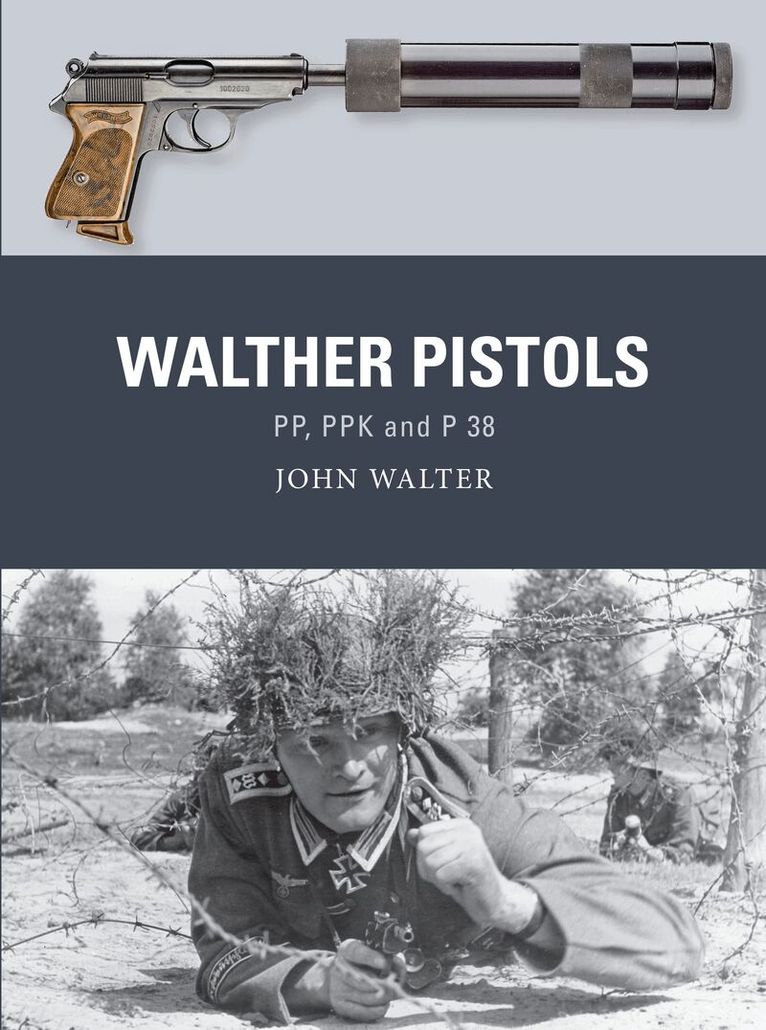
While the PP and PPK were intended for police work, the Walther P 38 was produced for the Germany military; all three pistols have garnered a formidable international reputation since the 1930s.The innovative Walther PP (Polizeipistole), a double-action semi-automatic pistol intended for the law-enforcement market, became available in 1929 and went on to arm the police of several European countries in the 1930s. Its smaller cousin the PPK, more readily concealed for undercover work but with reduced magazine capacity, was produced from 1931. Intended to replace the P 08 Luger, the Walther P 38 was issued from 1940 and equipped the armed forces of Germany and other countries during and after World War II, but never entirely replaced the Luger in German service.All three pistols went on to have lengthy and varied service across the world after 1945. Both the PP and the PPK remain in production today, while the P 38 re-emerged as the P1 and equipped West German forces from 1963 until 2004, when it was replaced by the P8.In this study, noted authority John Walter assesses the origins, development, use and legacy of these three high-profile semi-automatic pistols, alongside other Walther variants, such as the tiny .25 ACP Modell 9.
184 kr
Skickas inom 7-10 vardagar
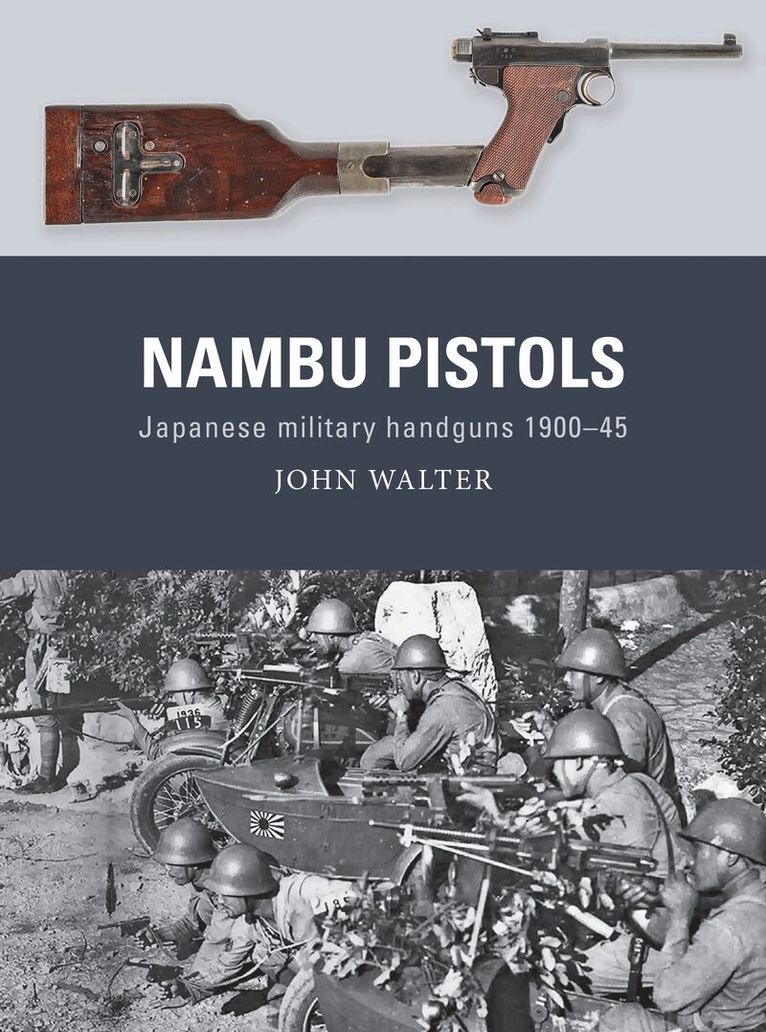
This is the absorbing story of the handguns credited to Nambu Kijiro, the principal personal-defence weapons of the Imperial forces.Featuring full-color artwork and carefully chosen photographs, this book charts the origins, development, combat use, and legacy of the Nambu pistols. Cutaway artwork reveals the inner workings of these important handguns, while specially commissioned battlescenes depict them in use in action.Influenced by the German C 96 and other semi-automatic pistols, the first Nambu model was never accepted for universal issue, being confined largely to purchase by Japanese officers. Adopted in 1925, the 14th Year Type was to become the best-known of these handguns, serving in every campaign undertaken by the Japanese in the 1930s and then throughout World War II. It served alongside the bizarrely conceived Type 94, intended as the weapon of airmen, tank crew, and anyone to whom its compact dimensions were useful.When World War II ended, thousands of Nambu pistols arrived in America with US veterans of World War II, while others were carried by insurgents and other armed groups across South East Asia for decades after 1945. Fully illustrated, this is the engrossing story of these distinctive pistols, from their origins to their legacy.
184 kr
Skickas inom 7-10 vardagar
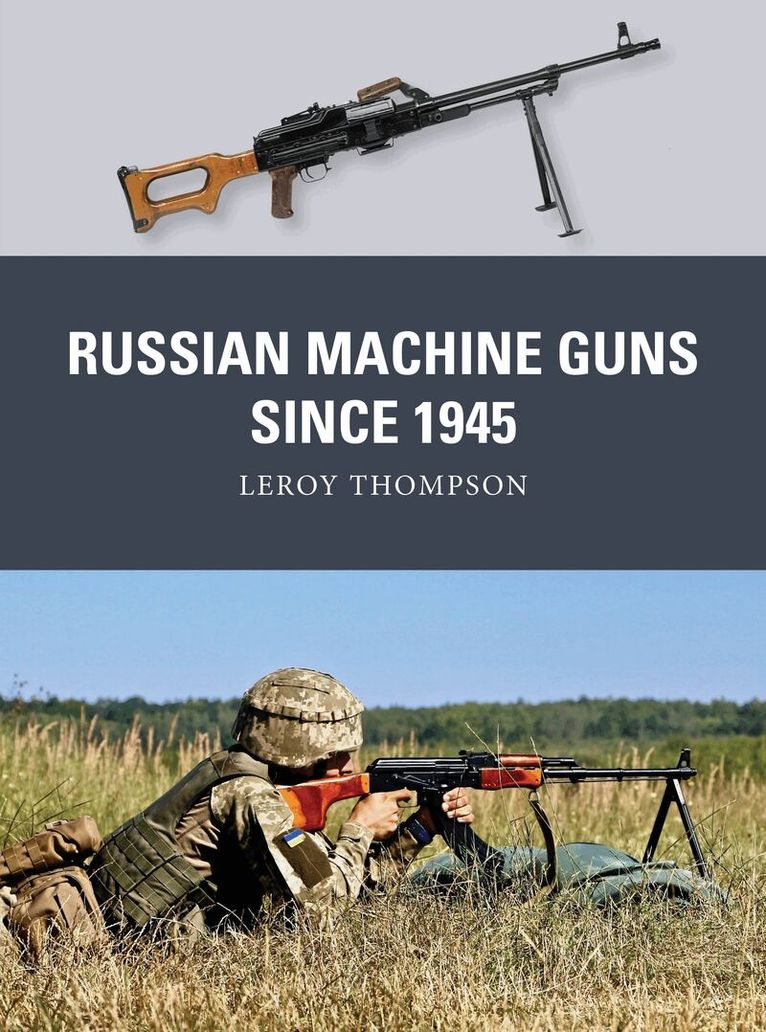
Written by a noted authority, this fully illustrated study describes and depicts the machine guns equipping Soviet and Russian troops after 1945.Following the USSR’s victory in World War II, the Soviet armed forces adopted a succession of new or improved machine guns. At squad level, the 7.62mm RPD and RP-46 light machine guns replaced the DPM, themselves being supplanted by the RPK from 1961. Firing the lighter 5.45×39mm cartridge, the RPK-74 was issued from 1974 and remains in use today. The 5.45mm RPK-16 entered Russian service in 2018.Having served alongside the 7.62mm PM M1910 Maxim during World War II, the 7.62mm SG-43 medium machine gun was updated as the SGM before being supplanted by the 7.62mm PK general-purpose machine gun, issued from 1961. The improved PKM made its debut in 1969 and still equips Russian troops today, being joined by the PKP in 2001 and the AEK-999 in 2008.First issued in 1938, the formidable 12.7mm DShK heavy machine gun remains in Russian service today as the DShkM. It was joined by the 14.5mm KPV from 1949, the 12.7mm NSV from 1971 and the 12.7mm Kord from 1998.In this illustrated survey, Leroy Thompson investigates the origins, development, combat use and legacy of all of these machine guns since 1945, from the start of the Cold War to the 2020s, casting light on their battlefield effectiveness and tactical influence.
Letar du efter digitala böcker?
E-böcker och ljudböcker handlar du än så länge på vår tidigare sajt.