
Uppsala Studies in Egyptology - Böcker
Visar alla böcker i serien Uppsala Studies in Egyptology. Handla med fri frakt och snabb leverans.
6 produkter
6 produkter
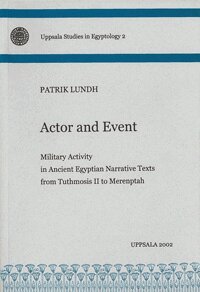
Actor and event : military activity in ancient Egyptian narrative texts from Tuthmosis II to Merenptah
Häftad, Engelska, 2002
273 kr
Skickas inom 5-8 vardagar
This study treats the function of the military writings of ancient Egypt, from Tuthmosis II to Merenptah (c. 1492-1203 B.C.), using the terms Actor and Event. The texts are analyzed in terms of four categories. The Dominion Records, consists of texts in which the focus is on the disruption of the king's control, expressed in terms of a rebellion. The monuments on which these texts are inscribed are in found in two contexts, either in areas that define the borders of .Egypt, or in temples, emphasizing the king's dominion as part of the reciprocal relationship between the king and the god. The king's participation in one or several military campaign(s) is the focus of the Expedition Records. The Achievement Records describe a variety of royal achievements., nonmilitary as well as military. The texts credit the king's ability to act to the god, motivating the placement of the Achievement Reports in a temple context. The Reciprocity Records presents the reciprocal interchange between the king and the god, describing the gifts given by the king in exchange for his accomplishments.
273 kr
Skickas inom 5-8 vardagar
277 kr
265 kr
Skickas inom 5-8 vardagar
Del 6 - Uppsala Studies in Egyptology
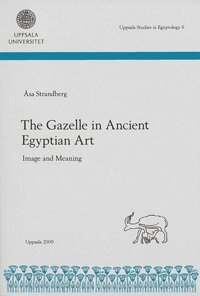
The gazelle in ancient Egyptian art : image and meaning
Häftad, Engelska, 2009
273 kr
Skickas inom 5-8 vardagar
Del 7 - Uppsala Studies in Egyptology
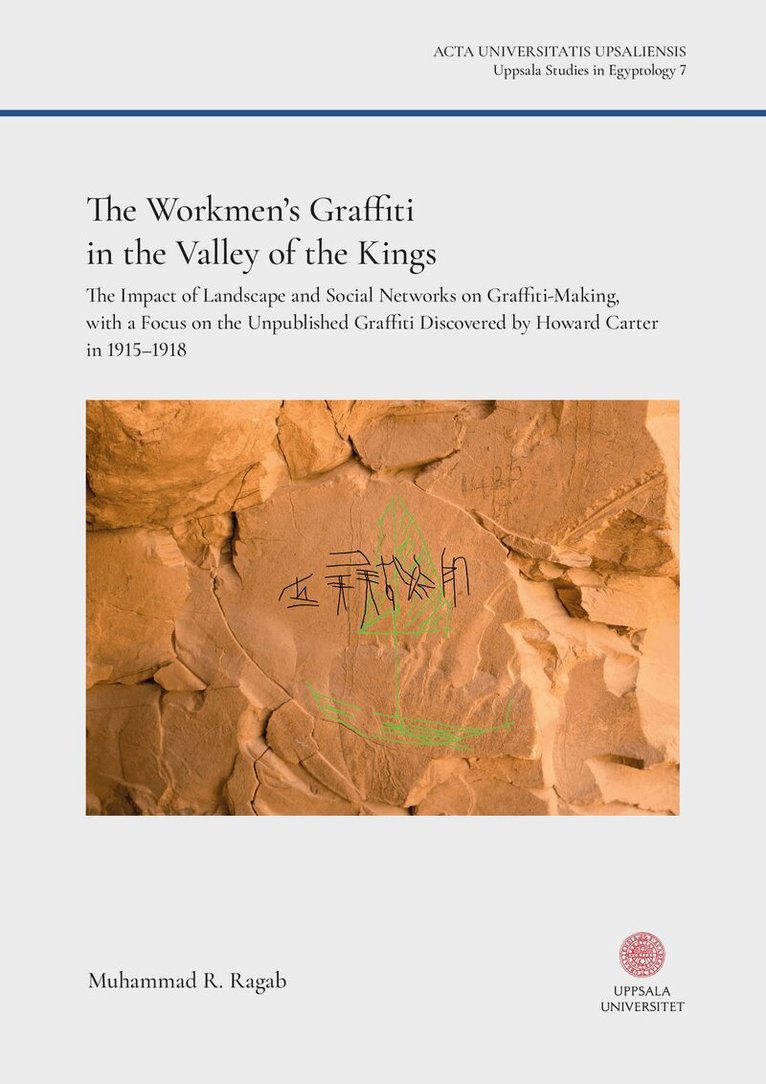
The Workmen’s Graffiti in the Valley of the Kings : The Impact of Landscape and Social Networks on Graffiti-making, with a Focus on the Unpublished Graffiti Discovered by Howard Carter in 1915–1918
Storpocket, Engelska, 2024
326 kr
Tillfälligt slut
Graffiti have the power to transform a space within a given landscape into a meaningful place. This study undertakes an in-depth analysis of more than 4000 graffiti created by the workmen of Deir el-Medina in the Theban Mountain during the New Kingdom (c. 1550–1050 BCE), with a particular emphasis on the Valley of the Kings. Additionally, the research contributes to the existing documentation by publishing graffiti numbers 1406–1526, identified as ‘Carter Graffiti’ in the Valley of the Kings. Significantly, these graffiti have not been previously published, addressing a notable gap in scholarly knowledge.Acknowledging that the documentation of unpublished graffiti surveyed by Howard Carter from 1915 to 1918 served primarily an exploratory and documentary purpose, this study seizes the opportunity for extensive, on-site examination and analysis. The principal objective is to elucidate the evolution of graffiti-making practices and the multifaceted roles of these informal inscriptions, particularly within the Deir el-Medina community context. To achieve this aim, the research employs three case studies, undertaking the following endeavours:to employ spatial analysis related theories, including post-phenomenology, to understand the influence of the landscape on the making of graffiti. This includes investigating the spatial and environmental factors that influenced the selection of locations of graffiti and patterns of their making;to apply place-making and place-marking related theories to understand how graffiti transformed spaces into meaningful places;to employ the social network analysis theory as a lens to understand the influence of social relations among graffiti writers on the graffiti-making process. This approach aims to unravel the intricate dynamics and impact of social networks on the making of graffiti within the historical and spatial context of the Valley of the Kings;to examine and analyse the content and context of the graffiti created by the Deir el-Medina community within the Valley of the Kings. This investigation considers the diachronic (historical evolution over time), diatopic (spatial distribution), and socio-stratigraphic (social layers) dimensions. This includes the examination of the characteristics of particular graffiti, such as self-presentation, updated self-presentations in graffiti, and their role in social dynamics and the appropriation of the landscape. The analysis of content also involves investigation of patterns and motivations behind selecting specific locations and the potential influence of earlier graffiti on later creations.This study contributes to a deeper understanding of how the ancient Egyptians employed graffiti as a medium for engaging in discourse not only with their immediate surroundings and landscape but also with their contemporaries and, possibly, posterity. It endeavours to illuminate the diverse functions and significances of graffiti in the lives of the Deir el-Medina community members and beyond.