A. Asa Eger - Böcker
Visar alla böcker från författaren A. Asa Eger. Handla med fri frakt och snabb leverans.
5 produkter
5 produkter
580 kr
Skickas inom 10-15 vardagar
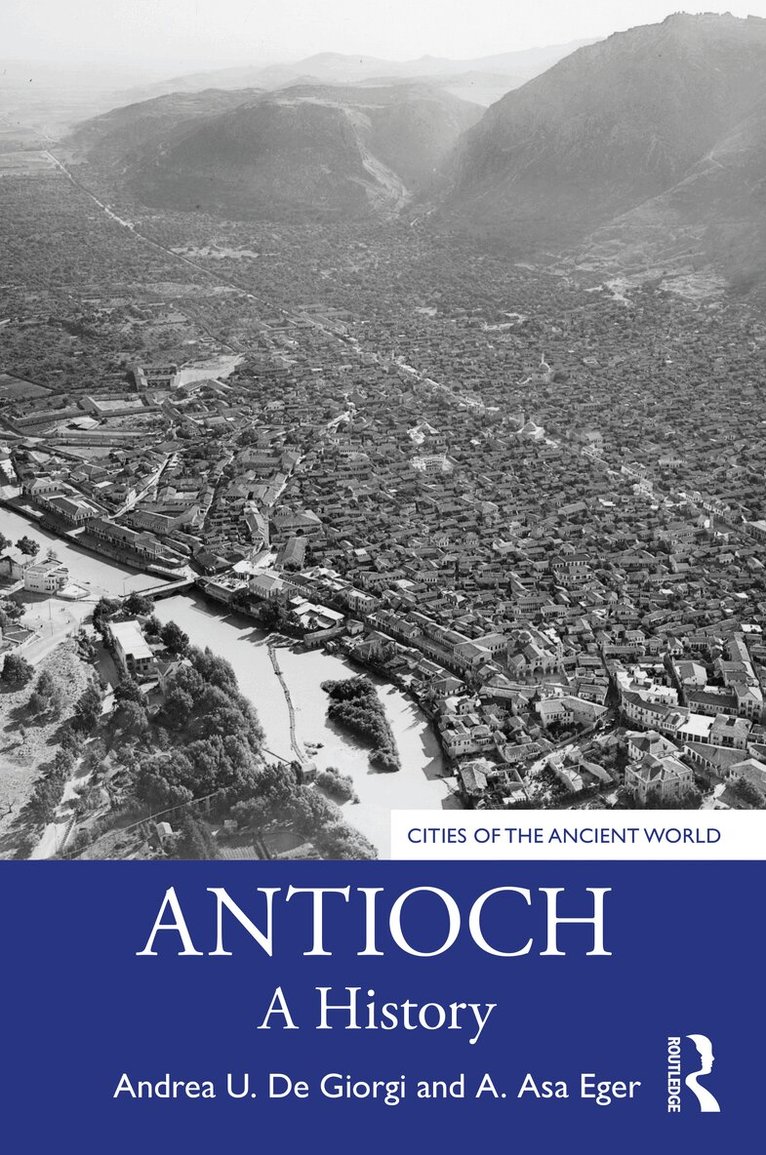
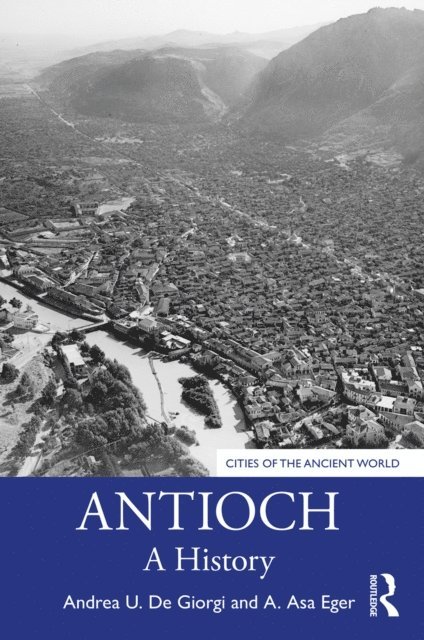
Winner of ASOR's 2022 G. Ernest Wright Award for the most substantial volume dealing with archaeological material, excavation reports and material culture from the ancient Near East and Eastern Mediterranean. This is a complete history of Antioch, one of the most significant major cities of the eastern Mediterranean and a crossroads for the Silk Road, from its foundation by the Seleucids, through Roman rule, the rise of Christianity, Islamic and Byzantine conquests, to the Crusades and beyond.Antioch has typically been treated as a city whose classical glory faded permanently amid a series of natural disasters and foreign invasions in the sixth and seventh centuries CE. Such studies have obstructed the view of Antioch’s fascinating urban transformations from classical to medieval to modern city and the processes behind these transformations. Through its comprehensive blend of textual sources and new archaeological data reanalyzed from Princeton’s 1930s excavations and recent discoveries, this book offers unprecedented insights into the complete history of Antioch, recreating the lives of the people who lived in it and focusing on the factors that affected them during the evolution of its remarkable cityscape. While Antioch’s built environment is central, the book also utilizes landscape archaeological work to consider the city in relation to its hinterland, and numismatic evidence to explore its economics. The outmoded portrait of Antioch as a sadly perished classical city par excellence gives way to one in which it shines as brightly in its medieval Islamic, Byzantine, and Crusader incarnations. Antioch: A History offers a new portal to researching this long-lasting city and is also suitable for a wide variety of teaching needs, both undergraduate and graduate, in the fields of classics, history, urban studies, archaeology, Silk Road studies, and Near Eastern/Middle Eastern studies. Just as importantly, its clarity makes it attractive for, and accessible to, a general readership outside the framework of formal instruction.
2 151 kr
Skickas inom 10-15 vardagar
Winner of ASOR's 2022 G. Ernest Wright Award for the most substantial volume dealing with archaeological material, excavation reports and material culture from the ancient Near East and Eastern Mediterranean. This is a complete history of Antioch, one of the most significant major cities of the eastern Mediterranean and a crossroads for the Silk Road, from its foundation by the Seleucids, through Roman rule, the rise of Christianity, Islamic and Byzantine conquests, to the Crusades and beyond.Antioch has typically been treated as a city whose classical glory faded permanently amid a series of natural disasters and foreign invasions in the sixth and seventh centuries CE. Such studies have obstructed the view of Antioch’s fascinating urban transformations from classical to medieval to modern city and the processes behind these transformations. Through its comprehensive blend of textual sources and new archaeological data reanalyzed from Princeton’s 1930s excavations and recent discoveries, this book offers unprecedented insights into the complete history of Antioch, recreating the lives of the people who lived in it and focusing on the factors that affected them during the evolution of its remarkable cityscape. While Antioch’s built environment is central, the book also utilizes landscape archaeological work to consider the city in relation to its hinterland, and numismatic evidence to explore its economics. The outmoded portrait of Antioch as a sadly perished classical city par excellence gives way to one in which it shines as brightly in its medieval Islamic, Byzantine, and Crusader incarnations. Antioch: A History offers a new portal to researching this long-lasting city and is also suitable for a wide variety of teaching needs, both undergraduate and graduate, in the fields of classics, history, urban studies, archaeology, Silk Road studies, and Near Eastern/Middle Eastern studies. Just as importantly, its clarity makes it attractive for, and accessible to, a general readership outside the framework of formal instruction.
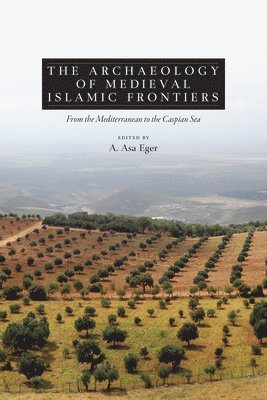
Archaeology of Medieval Islamic Frontiers
From the Mediterranean to the Caspian Sea
Inbunden, Engelska, 2019
717 kr
Tillfälligt slut
The Archaeology of Medieval Islamic Frontiers demonstrates that different areas of the Islamic polity previously understood as “minor frontiers” were, in fact, of substantial importance to state formation. Contributors explore different conceptualizations of “border,” the importance of which previously went unrecognized, examining frontiers in regions including the Magreb, the Mediterranean, Egypt, Nubia, and the Caucasus through a combination of archaeological and documentary evidence. Chapters highlight the significance of these respective regions to the emergence of new sociopolitical, cultural, and economic practices within the Islamic world. These studies successfully overcome the dichotomy of civilization’s center and peripheries in academic discourse by presenting the actual dynamics of identity formation and the definition, both spatial and cultural, of boundaries. The Archaeology of Medieval Islamic Frontiers is a rare combination of a new reading of written evidence with results from archaeological studies that will modify established opinions on the character of the Islamic frontiers and stimulate similar studies for other regions. The book will be relevant to medieval Islamic studies as well as to research in the medieval world in general. Contributors:Karim Alizadeh, Jana Eger, Kathryn J. Franklin, Renata Holod, Tarek Kahlaoui, Anthony J. Lauricella, Ian Randall, Giovanni R. Ruffini, Tasha Vorderstrasse
Islamic-Byzantine Frontier
Interaction and Exchange Among Muslim and Christian Communities
Inbunden, Engelska, 2014
1 754 kr
Skickas inom 10-15 vardagar
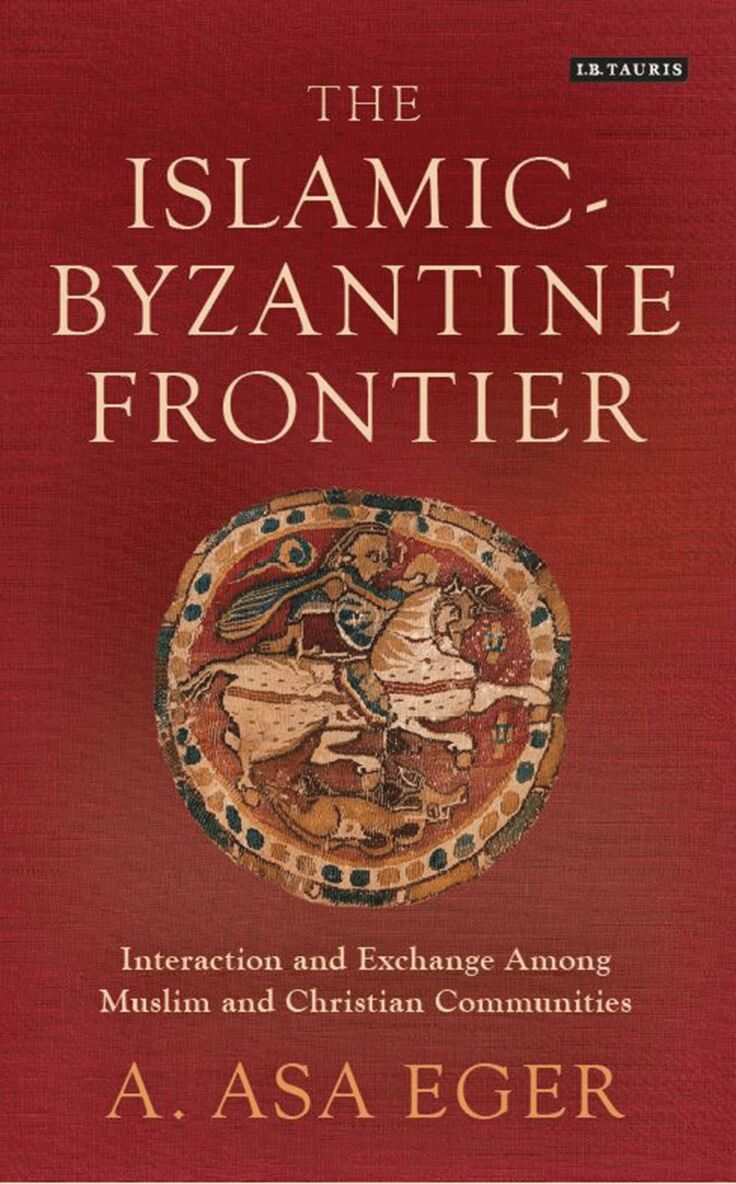
The retreat of the Byzantine army from Syria in around 650 CE, in advance of the approaching Arab armies, is one that has resounded emphatically in the works of both Islamic and Christian writers, and created an enduring motif: that of the Islamic-Byzantine frontier. For centuries, Byzantine and Islamic scholars have evocatively sketched a contested border: the annual raids between the two, the line of fortified fortresses defending Islamic lands, the no-man's land in between and the birth of jihad. In their early representations of a Muslim-Christian encounter, accounts of the Islamic-Byzantine frontier are charged with significance for a future 'clash of civilizations' that often envisions a polarised world. A. Asa Eger examines the two aspects of this frontier: its physical and ideological ones. By highlighting the archaeological study of the real and material frontier, as well as acknowledging its ideological military and religious implications, he offers a more complex vision of this dividing line than has been traditionally disseminated.With analysis grounded in archaeological evidence as well the relevant historical texts, Eger brings together a nuanced exploration of this vital element of medieval history.In this way, Eger's volume contributes to a more complex vision of the frontier than traditional historical views by bringing to the fore the layers of a real ecological frontier of settlement and interaction. For Eger, exposing the settlements and communities of the frontier constitutes a crucial gesture for understanding the interaction of two civilizations in a contested yet connected world. This work is thus vital for students of not only the medieval period and Byzantine and Islamic studies, but also for readers attempting to understand the ways in which frontiers and borders shape the construction of identity while functioning outside the traditionally understood state.
Islamic-Byzantine Frontier
Interaction and Exchange Among Muslim and Christian Communities
Häftad, Engelska, 2016
368 kr
Skickas inom 10-15 vardagar
The retreat of the Byzantine army from Syria in around 650 CE, in advance of the approaching Arab armies, is one that has resounded emphatically in the works of both Islamic and Christian writers, and created an enduring motif: that of the Islamic-Byzantine frontier. For centuries, Byzantine and Islamic scholars have evocatively sketched a contested border: the annual raids between the two, the line of fortified fortresses defending Islamic lands, the no-man's land in between and the birth of jihad. In their early representations of a Muslim-Christian encounter, accounts of the Islamic-Byzantine frontier are charged with significance for a future 'clash of civilizations' that often envisions a polarised world. A. Asa Eger examines the two aspects of this frontier: its physical and ideological ones. By highlighting the archaeological study of the real and material frontier, as well as acknowledging its ideological military and religious implications, he offers a more complex vision of this dividing line than has been traditionally disseminated. With analysis grounded in archaeological evidence as well the relevant historical texts, Eger brings together a nuanced exploration of this vital element of medieval history.