• Fri frakt över 249 kr
  • •
  • Snabba leveranser
  • •
  • Billiga böcker
Kundservice

Du är på sajten för privatpersoner.

Företag, bibliotek eller offentlig verksamhet?

Du handlar på classic.bokus.com, där alla dina funktioner finns intakta.
Till classic.bokus.com
Bokus logotyp. Gå till startsidan.
  • Erbjudanden
  • Nyheter
  • Student
  • Topplistor
  • Barn & ungdom
  • Bokus Play
  • E-böcker
  • Pocketböcker
  • Spel & pussel

10% rabatt på allt med kod: NYSTART10 →

Sidfot

Mina sidor

    Hjälp

    • Kundservice
    • Vanliga frågor och svar
    • Frakt och leverans
    • Retur vid ångerrätt
    • Reklamera vara
    • Betalning
    • Köpvillkor
    • Allmänna villkor
    • Information om webbplatsens tillgänglighet

    Om Bokus

    • Om oss
    • Pressrum
    • För studenter
    • För företag
    • För bibliotek och offentlig verksamhet
    • För leverantörer
    • Hållbarhet

    Populärt

    • Aktuella erbjudanden
    • Presentkort
    • Studentlitteratur
    • Nya böcker
    • Topplistor
    • Signerade böcker
    • Engelska böcker

    Inspiration

    • Boktips
    • BookTok
    • Populära bokserier
    • Barnbokskaraktärer
    • Populära författare
    Logotyp för Bokus
    Följ oss på Facebook (extern länk)Följ oss på Instagram (extern länk)Följ oss på YouTube (extern länk)Följ oss på TikTok (extern länk)
    bokus @ CookiesAnpassa cookiesIntegritetspolicyKöpvillkor
    Till Citymail hemsida (extern länk)Till Budbee hemsida (extern länk)Till Postnord hemsida (extern länk)Till Schenker hemsida (extern länk)Till Early Bird hemsida (extern länk)Till Walleys hemsida (extern länk)
    1. Historia och arkeologi
    2. Historia
    3. Europas historia
    4. Medeltiden

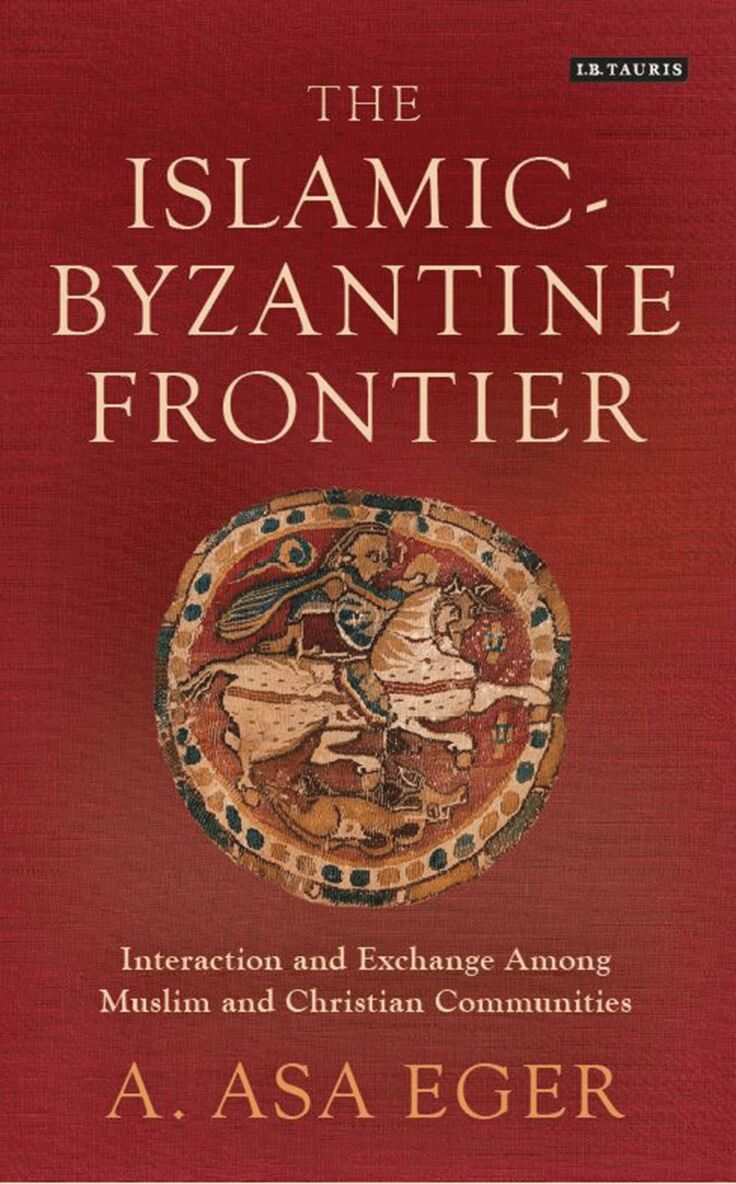
    Islamic-Byzantine Frontier

    Interaction and Exchange Among Muslim and Christian Communities

    AvA. Asa Eger

    Inbunden, Engelska, 2014

    1 867 kr

    Beställningsvara. Skickas inom 10-15 vardagar. Fri frakt över 249 kr.

    Fler format och utgåvor

    E-bok

    420 kr

    E-bok

    408 kr

    Häftad

    382 kr

    Beskrivning

    The retreat of the Byzantine army from Syria in around 650 CE, in advance of the approaching Arab armies, is one that has resounded emphatically in the works of both Islamic and Christian writers, and created an enduring motif: that of the Islamic-Byzantine frontier. For centuries, Byzantine and Islamic scholars have evocatively sketched a contested border: the annual raids between the two, the line of fortified fortresses defending Islamic lands, the no-man's land in between and the birth of jihad. In their early representations of a Muslim-Christian encounter, accounts of the Islamic-Byzantine frontier are charged with significance for a future 'clash of civilizations' that often envisions a polarised world. A. Asa Eger examines the two aspects of this frontier: its physical and ideological ones. By highlighting the archaeological study of the real and material frontier, as well as acknowledging its ideological military and religious implications, he offers a more complex vision of this dividing line than has been traditionally disseminated.With analysis grounded in archaeological evidence as well the relevant historical texts, Eger brings together a nuanced exploration of this vital element of medieval history.In this way, Eger's volume contributes to a more complex vision of the frontier than traditional historical views by bringing to the fore the layers of a real ecological frontier of settlement and interaction. For Eger, exposing the settlements and communities of the frontier constitutes a crucial gesture for understanding the interaction of two civilizations in a contested yet connected world. This work is thus vital for students of not only the medieval period and Byzantine and Islamic studies, but also for readers attempting to understand the ways in which frontiers and borders shape the construction of identity while functioning outside the traditionally understood state.

    Produktinformation

    • Utgivningsdatum:2014-11-18
    • Mått:138 x 216 x 43 mm
    • Vikt:664 g
    • Format:Inbunden
    • Språk:Engelska
    • Antal sidor:432
    • Förlag:Bloomsbury Publishing PLC
    • ISBN:9781780761572

    Utforska kategorier

    • Medeltiden inom Historia och arkeologi
    • Mellanösterns historia inom Historia och arkeologi
    • Socialhistoria och kulturhistoria inom Historia och arkeologi

    Mer om författaren

    A. Asa Eger is Assistant Professor in the Department of History at the University of North Carolina, Greensboro. He holds a PhD in Islamic Archaeology from the University of Chicago.

    Recensioner i media

    This is a long-awaited and much-needed contribution to the study of the Byzantine-Islamic frontier that will force a step-change in approaches to the study of the region as well as to the study of medieval frontier societies and their archaeology. The author is to be congratulated on a clear, concise and well-argued analysis of complex textual and archaeological data.' John Haldon, Shelby Cullom Davis '30 Professor of European History, and Professor of Byzantine History and Hellenic Studies, Princeton University. The Islamic-Byzantine Frontier is a well-constructed, original, and convincing book that challenges conventional opinions on the Islamic-Byzantine frontier, and in doing so raises important theoretical and methodological questions on understanding the dynamics of frontier zones in general. His study further weakens the conventional view of frontiers as sparsely populated, marginal, and disconnected peripheries. The "core and periphery" model for explaining the geopolitical patterning of settlements has never seemed so outdated, given the compelling argumentation presented in Dr Eger's ground-breaking study.' Alan Walmsley, Professor of Islamic Archaeology and Art, University of Copenhagen; 'Eger is to be credited with questioning previous assumptions' - Unnamed reviewer, Today's Zaman;

    Innehållsförteckning

    • Introduction: Islamic Frontiers Real and ImaginedPart I: The Syro-Anatolian ThughurChapter 1: The Central Thughur: The Two AmuqsChapter 3: The Central Thughur: The Steppe and the RiverChapter 3: The Eastern ThughurChapter 4: The Jazira (Balikh and Khabur River Valleys)Chapter 5: The Western Thughur: Crossroads of CiliciaPart II: Hydraulic Villages and Fortified Castles: A Narrative of SettlementChapter 6: Upland Settlements in the Late Roman Period (Fourth to Seventh Centuries)Chapter 7: Hydraulic Villages in the Early Islamic Period (Seventh to Tenth Centuries)Chapter 8: Pastoralism on the Byzantine Frontier (Seventh to Tenth Centuries)Chapter 9: Fortified Castles of the Middle Islamic/Byzantine Period (Tenth to Fourteenth Centuries)Chapter 10: Frontier or Frontiers: Social and Environmental InteractionsConclusion: Dismantling and Rebuilding the Frontier