A. Cockburn – författare
Visar alla böcker från författaren A. Cockburn. Handla med fri frakt och snabb leverans.
5 produkter
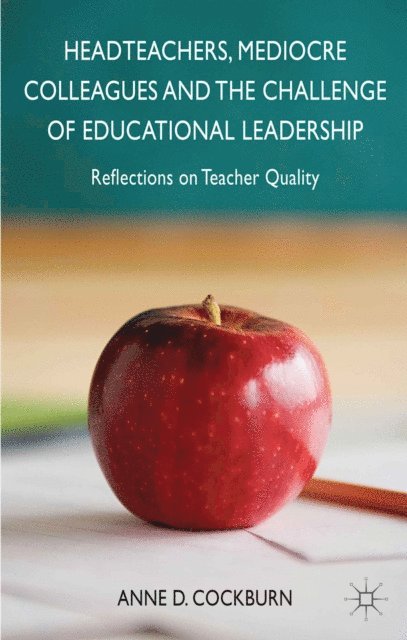
Headteachers, Mediocre Colleagues and the Challenges of Educational Leadership
Reflections on Teacher Quality
Av A. Cockburn
Inbunden, 2013
537 kr
Lägg i varukorg
A unique collection of headteachers' voices discussing leading and managing mediocre teachers and their colleagues. It explores the dilemmas they face as they cope with teachers' personal and professional lives, aging colleagues, accountability and government directives and provides significant …
Headteachers, Mediocre Colleagues and the Challenges of Educational Leadership
Reflections on Teacher Quality
Av A. Cockburn
E-bok, 2013
741 kr
Lägg i varukorg
A unique collection of headteachers'' voices discussing leading and managing mediocre teachers and their colleagues. It explores the dilemmas they face as they cope with teachers'' personal and professional lives, aging colleagues, accountability and government directives and provides significant …
Headteachers, Mediocre Colleagues and the Challenges of Educational Leadership
Reflections on Teacher Quality
Av A. Cockburn
Häftad, 2013
537 kr
Lägg i varukorg
A unique collection of headteachers' voices discussing leading and managing mediocre teachers and their colleagues. It explores the dilemmas they face as they cope with teachers' personal and professional lives, aging colleagues, accountability and government directives and provides significant …
Nongenotoxic Carcinogenesis
Av L. Smith, A. Cockburn
E-bok, 2013
739 kr
Lägg i varukorg
"What is a nongenotoxic carcinogen?" This question recurred through out the Ernst Schering Research Foundation Workshop on nongeno toxic carcinogenesis, underlining the complexity of the topic. The clarity of the view that all carcinogens act by mutating DNA, origin ally advocated by Bruce Ames …
Nongenotoxic Carcinogenesis
Av A. Cockburn, L. Smith
Häftad, 2012
569 kr
Lägg i varukorg
"What is a nongenotoxic carcinogen?" This question recurred through out the Ernst Schering Research Foundation Workshop on nongeno toxic carcinogenesis, underlining the complexity of the topic. The clarity of the view that all carcinogens act by mutating DNA, origin ally advocated by Bruce Ames …