A. Fung – författare
Visar alla böcker från författaren A. Fung. Handla med fri frakt och snabb leverans.
14 produkter
14 produkter
1 377 kr
Läs direkt efter köp
New Zealand schools have experienced unprecedented change during the lastdecade. Radicalrestructuringoftheframeworksforbothcurriculumand qualificationsfollowedamovementtowards self-managementin 1989. The curriculum framework, consisting of seven essential learning areas, has been progressively introduced with completionnotexpecteduntil 2002. Thenew Qualifications Framework, based on unit standards, was launched in 1994. The introduction of unit standards signalled an emphatic movement towards the use of internal assessment for awarding qualifications at the seniorsecondaryschoollevel. Eachcoursehadunitstandardsdefined,which described the outcomes and the performance criteria that would be used to determine whether or not the standard had been achieved. Approximately five to eight standards would be used for each full year course and each standard had a number of credits associated with it. The plan, which has since been modified, was for these credits to contribute to a National Certificate of Educational Achievement, at years 12 and 13, and other, subject specific, National Certificates. Secondary schools were faced with the task of recording and reporting 1 unit standardresults to theNew Zealand Qualifications Authority . This, by itself, was not a major issue as the significant suppliers of CSIS had modules availablewhichsatisfiedthis need. Atthistimeamodelwasbeingpresented to school audiences demonstrating how the recording, reporting and evaluation ofassessment data, relating to the curriculumframework, could be relatively straight forward IF there was a common assessment ‘currency’ across the school. This model was converted into software form for demonstration purposes.
E-bok
PDF, Engelska, 20131 459 kr
Läs direkt efter köp
This book is for both specialist and generalist. For Information Technology (IT) and Educational Management (EM) researchers, it brings together the latest information and analysis of ITEM projects in eleven countries. But the issues raised by this collection of papers are so important for schools, school systems and the future of education that it is essential reading not only for researchers but also for teachers, administrators and all concerned with the planning and governance of our education systems. New technologies may improve our lives in two ways: by enabling us to do things better (accomplishing what we do already more efficiently) and by enabling us to do better things (accomplishing new things that we were not able to do before). Sometimes "doing things better" merges into "doing better things". Thus in the 19th century the coming of the railway enabled our forbears to accomplish their existing journies in less time and in greater comfort. But it also opened up the prospect of new journies to more distant places, and led ultimately to far-reaching changes in lifestyles in new, commuter settlements far from the old city centres. So it is in the present day with Information Technology in Educational Management. Some of the papers in this volume focus on specialist tasks, for example how to develop a computer-based decision-support system to help those drawing up school timetables. Others address situations in which the power of the technology offers us the potential to change radically what we do.
E-bok
PDF, Engelska, 20121 328 kr
Läs direkt efter köp
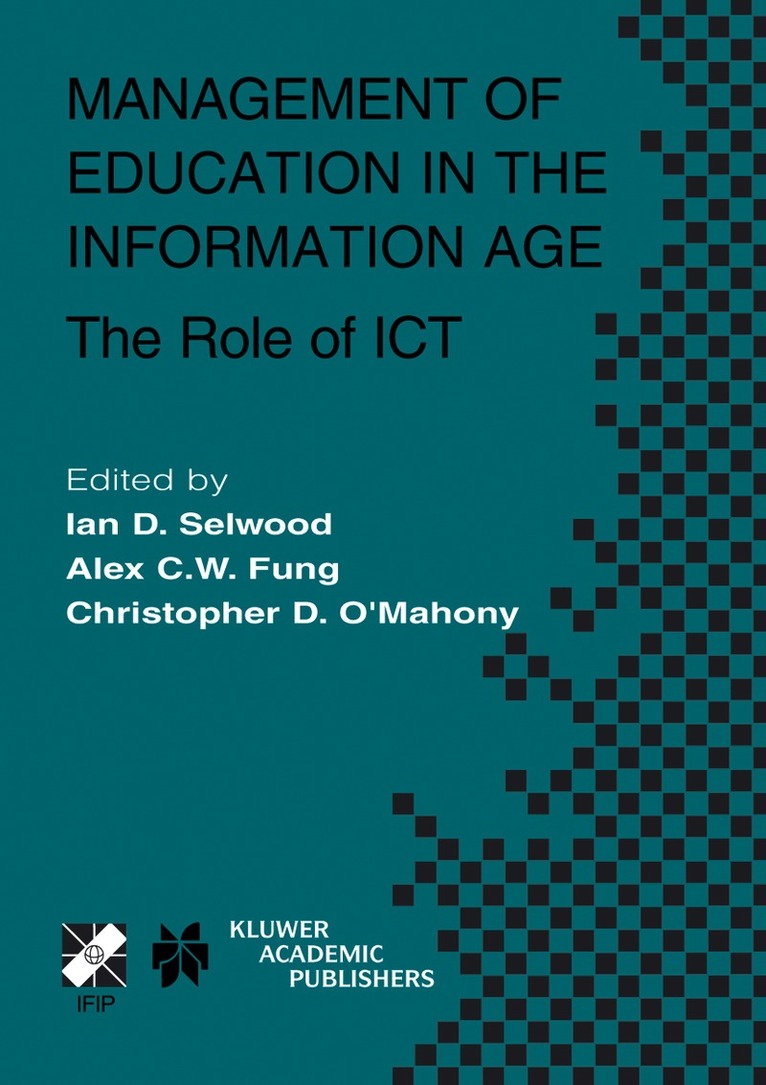
At two previous conferences of Working Group 3. 7, the evaluation of the implementation of computerised school information systems (SISs) in Hong Kong and The Netherlands were presented. Here, we will present the results of similar research in England. The rationale for these studies was to fill the gap in our knowledge on this important type of computer use in schools, and, by that, to gain insight into the factors that prove to promote successful SIS implementation. In England SIMS (School Information Management System) has the largest market share of computerised school administration systems. SIMS is a modular but integrated system in that once entered, data is available between modules. Briefly, SIMS consists of about twenty modules that support the work of clerical staff and school managers and teachers (for details see Wild & Walker 2001). 2. RESEARCH QUESTIONS AND RESEARCH FRAMEWORK The following questions were addressed: - The extent of, and ways in which SIMS was used in schools; - The user opinion on the quality of SIMS; The nature and effects of the implementation process, and the characteristics of the schools into which SIMS was introduced; - Factors affecting the degree of SIMS use. The variables relating to the above issues that were investigated in this study fell into five distinct categories according to Visscher''s model (see Figure 1), i. e. , features of SIMS use, the implementation process, school organisation, and the intendedlunintended effects. The study assumed possible interrelationships between all these variable groups.
Inbunden, Engelska, 1997
1 056 kr
Skickas inom 10-15 vardagar
This book is for both specialist and generalist. For Information Technology (IT) and Educational Management (EM) researchers, it brings together the latest information and analysis of ITEM projects in eleven countries. But the issues raised by this collection of papers are so important for schools, school systems and the future of education that it is essential reading not only for researchers but also for teachers, administrators and all concerned with the planning and governance of our education systems. New technologies may improve our lives in two ways: by enabling us to do things better (accomplishing what we do already more efficiently) and by enabling us to do better things (accomplishing new things that we were not able to do before). Sometimes "doing things better" merges into "doing better things". Thus in the 19th century the coming of the railway enabled our forbears to accomplish their existing journies in less time and in greater comfort. But it also opened up the prospect of new journies to more distant places, and led ultimately to far-reaching changes in lifestyles in new, commuter settlements far from the old city centres. So it is in the present day with Information Technology in Educational Management. Some of the papers in this volume focus on specialist tasks, for example how to develop a computer-based decision-support system to help those drawing up school timetables. Others address situations in which the power of the technology offers us the potential to change radically what we do.
Inbunden, Engelska, 2001
1 056 kr
Skickas inom 10-15 vardagar
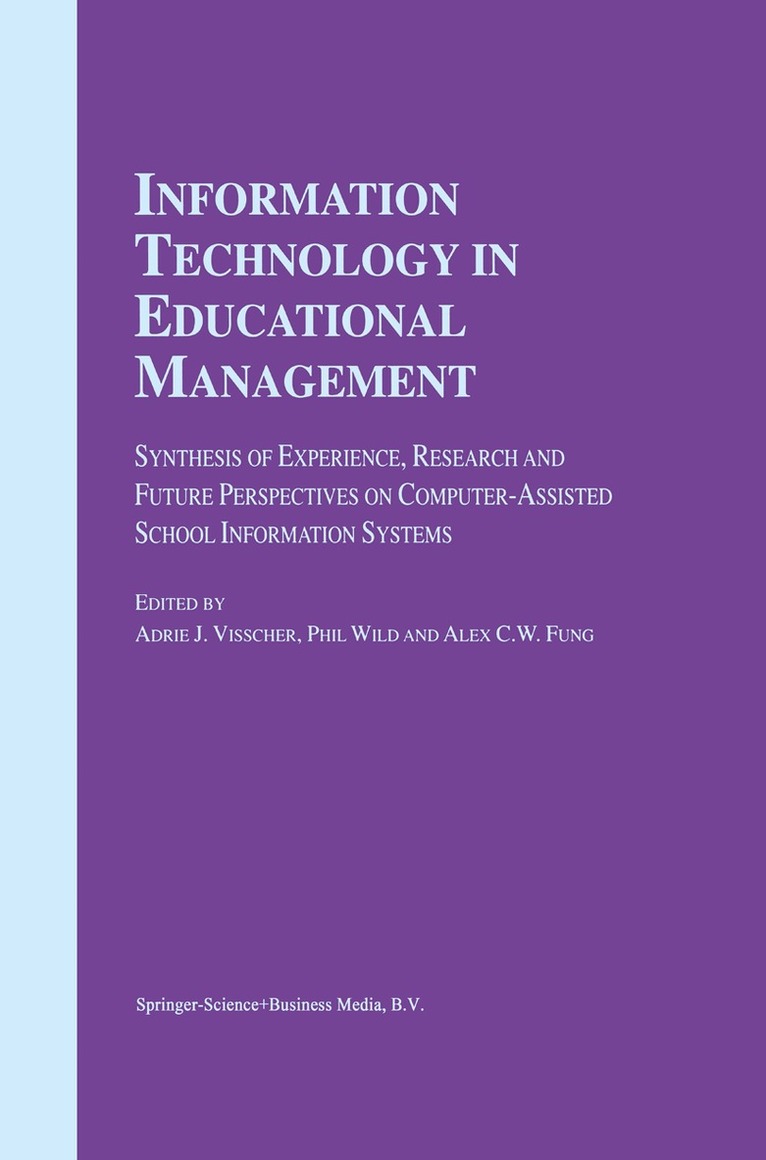
Although a few books are available on the use of computers in the school office, this book is the first one addressing the topic of computer-assisted school information systems (SISs) for an international audience, based on both practical and scientific international collaborative research. This book: - analyzes the nature of SISs, their intended benefits and history; - presents the development strategies and the characteristics of three SISs that are widely used in various parts of the world; - reviews what has been learned from the research over the last decade to inform successful design and implementation of SISs; - presents exciting perspectives on the future of SISs from experts, vendors, and users; and - reflects on what needs to be done to promote the full utilization of SISs by clerical and managerial school staff through better system design, user support, and continuing research. The book has been written for an international audience of students, researchers, system designers and implementers, practitioners and policy-makers in developing as well as in developed countries.It will also be of benefit to professionals in the field of school administration and school management to help them promote better use of SIS in their own context by learning from the experience of others.
1 056 kr
Skickas inom 10-15 vardagar
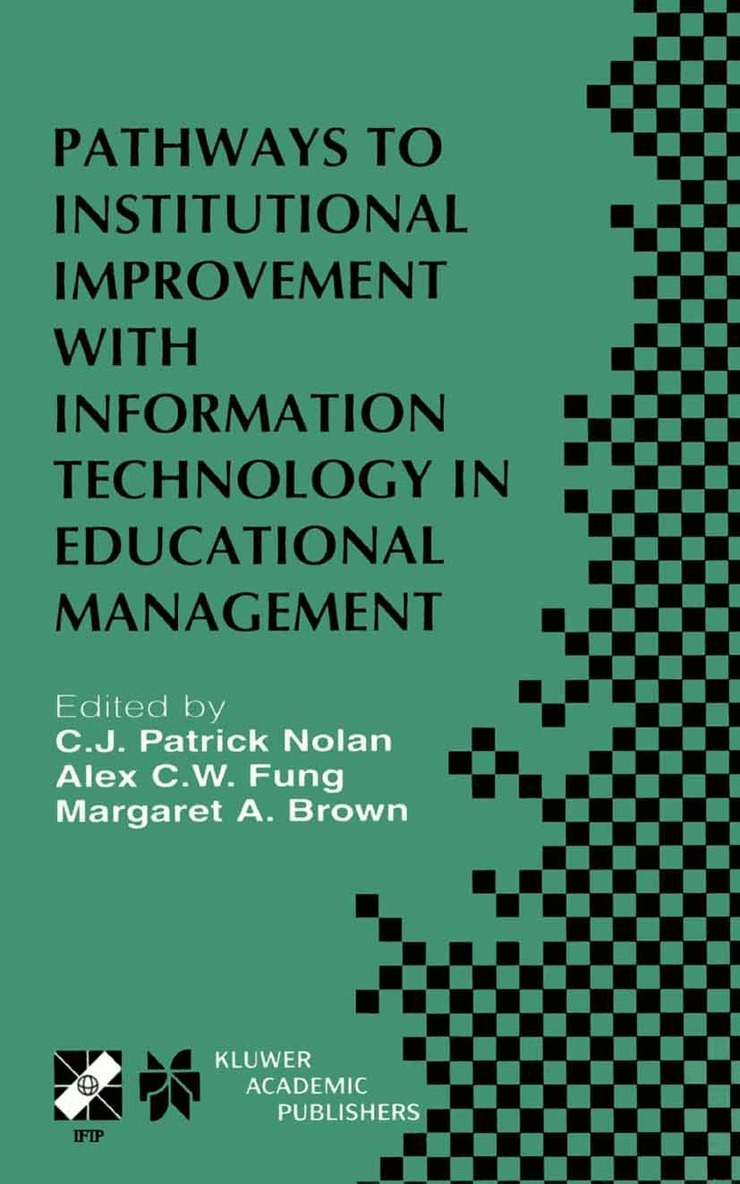
This volume presents findings and insights from contemporary thinking and research about alternative and new ways that computerized information systems might be designed and used to support the improvement of educational institutions. Many pathways are identified although expansion of access to and use of computerised systems by a much broader range of professionals than in the past is vital to the success of improvement initiatives. The contents are in four sections: models for supporting and enhancing professional practice; computerized school information system models and designs; evaluation of system effects; and making a difference through training and professional development. This title should be of interest to a wide range of educational professionals, researchers and system designers. The contents suggest, in particular, ways that educational professionals might revise their understandings of how computerized systems may in the future be designed and used to support key institutional processes, policy and strategy development, professional and executive decisions, and institutional planning and programme review.This book contains the selected proceedings of the Fourth International Working Conference on Information Technology in Educational Management, which was sponsored by the International Federation for Information Processing (IFIP) and held in Auckland, New Zealand, in July 2000.
Inbunden, Engelska, 2003
1 056 kr
Skickas inom 10-15 vardagar
At two previous conferences of Working Group 3. 7, the evaluation of the implementation of computerised school information systems (SISs) in Hong Kong and The Netherlands were presented. Here, we will present the results of similar research in England. The rationale for these studies was to fill the gap in our knowledge on this important type of computer use in schools, and, by that, to gain insight into the factors that prove to promote successful SIS implementation. In England SIMS (School Information Management System) has the largest market share of computerised school administration systems. SIMS is a modular but integrated system in that once entered, data is available between modules. Briefly, SIMS consists of about twenty modules that support the work of clerical staff and school managers and teachers (for details see Wild & Walker 2001). 2. RESEARCH QUESTIONS AND RESEARCH FRAMEWORK The following questions were addressed: - The extent of, and ways in which SIMS was used in schools; - The user opinion on the quality of SIMS; The nature and effects of the implementation process, and the characteristics of the schools into which SIMS was introduced; - Factors affecting the degree of SIMS use. The variables relating to the above issues that were investigated in this study fell into five distinct categories according to Visscher's model (see Figure 1), i. e. , features of SIMS use, the implementation process, school organisation, and the intendedlunintended effects. The study assumed possible interrelationships between all these variable groups.
Del 120 - IFIP Advances in Information and Communication Technology
Management of Education in the Information Age
The Role of ICT
Häftad, Engelska, 2012
1 056 kr
Skickas inom 10-15 vardagar
At two previous conferences of Working Group 3. 7, the evaluation of the implementation of computerised school information systems (SISs) in Hong Kong and The Netherlands were presented. Here, we will present the results of similar research in England. The rationale for these studies was to fill the gap in our knowledge on this important type of computer use in schools, and, by that, to gain insight into the factors that prove to promote successful SIS implementation. In England SIMS (School Information Management System) has the largest market share of computerised school administration systems. SIMS is a modular but integrated system in that once entered, data is available between modules. Briefly, SIMS consists of about twenty modules that support the work of clerical staff and school managers and teachers (for details see Wild & Walker 2001). 2. RESEARCH QUESTIONS AND RESEARCH FRAMEWORK The following questions were addressed: - The extent of, and ways in which SIMS was used in schools; - The user opinion on the quality of SIMS; The nature and effects of the implementation process, and the characteristics of the schools into which SIMS was introduced; - Factors affecting the degree of SIMS use. The variables relating to the above issues that were investigated in this study fell into five distinct categories according to Visscher's model (see Figure 1), i. e. , features of SIMS use, the implementation process, school organisation, and the intendedlunintended effects. The study assumed possible interrelationships between all these variable groups.
644 kr
Skickas inom 5-8 vardagar
1 119 kr
Skickas inom 10-15 vardagar
This book is for both specialist and generalist. For Information Technology (IT) and Educational Management (EM) researchers, it brings together the latest information and analysis of ITEM projects in eleven countries. But the issues raised by this collection of papers are so important for schools, school systems and the future of education that it is essential reading not only for researchers but also for teachers, administrators and all concerned with the planning and governance of our education systems. New technologies may improve our lives in two ways: by enabling us to do things better (accomplishing what we do already more efficiently) and by enabling us to do better things (accomplishing new things that we were not able to do before). Sometimes "doing things better" merges into "doing better things". Thus in the 19th century the coming of the railway enabled our forbears to accomplish their existing journies in less time and in greater comfort. But it also opened up the prospect of new journies to more distant places, and led ultimately to far-reaching changes in lifestyles in new, commuter settlements far from the old city centres. So it is in the present day with Information Technology in Educational Management. Some of the papers in this volume focus on specialist tasks, for example how to develop a computer-based decision-support system to help those drawing up school timetables. Others address situations in which the power of the technology offers us the potential to change radically what we do.
629 kr
Skickas inom 5-8 vardagar
1 119 kr
Skickas inom 10-15 vardagar
The introduction of unit standards signalled an emphatic movement towards the use of internal assessment for awarding qualifications at the seniorsecondaryschoollevel. Approximately five to eight standards would be used for each full year course and each standard had a number of credits associated with it.
Häftad, Engelska, 2010
1 060 kr
Skickas inom 10-15 vardagar
Although a few books are available on the use of computers in the school office, this book is the first one addressing the topic of computer-assisted school information systems (SISs) for an international audience, based on both practical and scientific international collaborative research. This book: analyzes the nature of SISs, their intended benefits and history; presents the development strategies and the characteristics of three SISs that are widely used in various parts of the world; reviews what has been learned from the research over the last decade to inform successful design and implementation of SISs; presents exciting perspectives on the future of SISs from experts, vendors, and users; and reflects on what needs to be done to promote the full utilization of SISs by clerical and managerial school staff through better system design, user support, and continuing research. The book has been written for an international audience of students, researchers, system designers and implementers, practitioners and policy-makers in developing as well as in developed countries. It will also be of benefit to professionals in the field of school administration and school management to help them promote better use of SIS in their own context by learning from the experience of others.
E-bok
PDF, Engelska, 20131 328 kr
Läs direkt efter köp
Although a few books are available on the use of computers in the school office, this book is the first one addressing the topic of computer-assisted school information systems (SISs) for an international audience, based on both practical and scientific international collaborative research. This book: analyzes the nature of SISs, their intended benefits and history; presents the development strategies and the characteristics of three SISs that are widely used in various parts of the world; reviews what has been learned from the research over the last decade to inform successful design and implementation of SISs; presents exciting perspectives on the future of SISs from experts, vendors, and users; and reflects on what needs to be done to promote the full utilization of SISs by clerical and managerial school staff through better system design, user support, and continuing research. The book has been written for an international audience of students, researchers, system designers and implementers, practitioners and policy-makers in developing as well as in developed countries. It will also be of benefit to professionals in the field of school administration and school management to help them promote better use of SIS in their own context by learning from the experience of others.