
A. K. Sandoval-Strausz – författare
Visar alla böcker från författaren A. K. Sandoval-Strausz. Handla med fri frakt och snabb leverans.
3 produkter
3 produkter

Inbunden, Engelska, 2025
956 kr
Skickas inom 5-8 vardagar
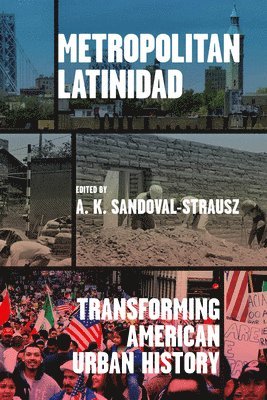
A wide-ranging collection of essays that centers Latinos in the history of American cities and suburbs. Latino urban history has been underappreciated not only in its own right but for the centrality of its narratives to urban history as a field. A scholarly discipline that has long scrutinized economics, politics, and the built environment has too often framed race as literally Black and white. This has resulted in a fundamental misunderstanding of the full social canvas of American cities since at least the early twentieth century. Traversing metropolitan areas like Atlanta, Chicago, El Paso, Fort Worth, Los Angeles, Miami, and New York, this collection of essays brings together both established and emerging scholars, including long-time urbanists and academics working in the fields of Latino, borderlands, political, landscape, and religious history. Organized at different scales—including city, suburb, neighborhood, and hemisphere—this impressive body of work challenges long-standing narratives about metropolitan America. The contributors—Llana Barber, Mauricio Castro, Eduardo Contreras, Sandra I. Enríquez, Monika Gosin, Cecilia Sánchez Hill, Felipe Hinojosa, Michael Innis-Jiménez, Max Krochmal, Becky M. Nicolaides, Pedro A. Regalado, Iliana Yamileth Rodriguez, and Thomas J. Sugrue—engage a diverse range of subjects, such as urban rebellions, the suburbanization of Latinos, affordable housing, labor, the built environment, transnationalism, place-making, and religious life. The scholars also explore race within Latino communities, as well as the role that political and economic dynamics have played in creating Latino urban spaces. After reading this book, you will never see American cities the same way again.
Häftad, Engelska, 2025
296 kr
Skickas inom 5-8 vardagar
A wide-ranging collection of essays that centers Latinos in the history of American cities and suburbs. Latino urban history has been underappreciated not only in its own right but for the centrality of its narratives to urban history as a field. A scholarly discipline that has long scrutinized economics, politics, and the built environment has too often framed race as literally Black and white. This has resulted in a fundamental misunderstanding of the full social canvas of American cities since at least the early twentieth century. Traversing metropolitan areas like Atlanta, Chicago, El Paso, Fort Worth, Los Angeles, Miami, and New York, this collection of essays brings together both established and emerging scholars, including long-time urbanists and academics working in the fields of Latino, borderlands, political, landscape, and religious history. Organized at different scales—including city, suburb, neighborhood, and hemisphere—this impressive body of work challenges long-standing narratives about metropolitan America. The contributors—Llana Barber, Mauricio Castro, Eduardo Contreras, Sandra I. Enríquez, Monika Gosin, Cecilia Sánchez Hill, Felipe Hinojosa, Michael Innis-Jiménez, Max Krochmal, Becky M. Nicolaides, Pedro A. Regalado, Iliana Yamileth Rodriguez, and Thomas J. Sugrue—engage a diverse range of subjects, such as urban rebellions, the suburbanization of Latinos, affordable housing, labor, the built environment, transnationalism, place-making, and religious life. The scholars also explore race within Latino communities, as well as the role that political and economic dynamics have played in creating Latino urban spaces. After reading this book, you will never see American cities the same way again.
Inbunden, Engelska, 2017
730 kr
Skickas inom 10-15 vardagar
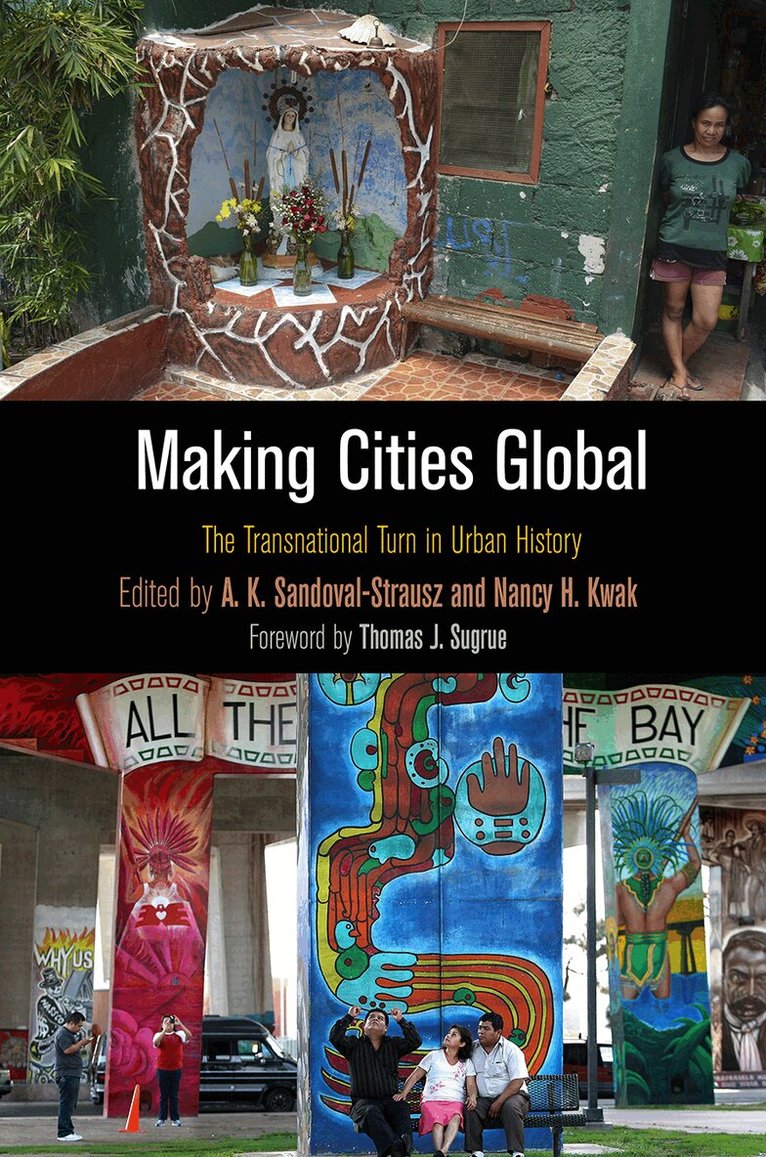
In recent decades, hundreds of millions of people across the world have moved from rural areas to metropolitan regions, some of them crossing national borders on the way. While urbanization and globalization are proceeding with an intensity that seems unprecedented, these are only the most recent iterations of long-term transformations-cities have for centuries served as vital points of contact between different peoples, economies, and cultures. Making Cities Global explores the intertwined development of urbanization and globalization using a historical approach that demonstrates the many forms transnationalism has taken, each shaped by the circumstances of a particular time and place. It also emphasizes that globalization has not been persistent or automatic-many people have been as likely to resist or reject outside connections as to establish or embrace them.The essays in the collection revolve around three foundational themes. The first is an emphasis on connections among the United States, East and Southeast Asia, Latin America, and South Asia. Second, contributors ground their studies of globalization in the built environments and everyday interactions of the city, because even world-spanning practices must be understood as people experience them in their neighborhoods, workplaces, stores, and streets. Last is a fundamental concern with the role powerful empires and nation-states play in the emergence of globalizing and urbanizing processes.Making Cities Global argues that combining urban history with a transnational approach leads to a richer understanding of our increasingly interconnected world. In order to achieve prosperity, peace, and sustainability in metropolitan areas in the present and into the future, we must understand their historical origins and development.Contributors: Erica Allen-Kim, Leandro Benmergui, Matt Garcia, Richard Harris, Carola Hein, Nancy Kwak, Carl Nightingale, Amy C. Offner, Margaret O'Mara, Nikhil Rao, A. K. Sandoval-Strausz, Arijit Sen, Thomas J. Sugrue.