A. Nicolas – Författare
Visar alla böcker från författaren A. Nicolas. Handla med fri frakt och snabb leverans.
9 produkter
9 produkter
1 589 kr
Skickas inom 10-15 vardagar
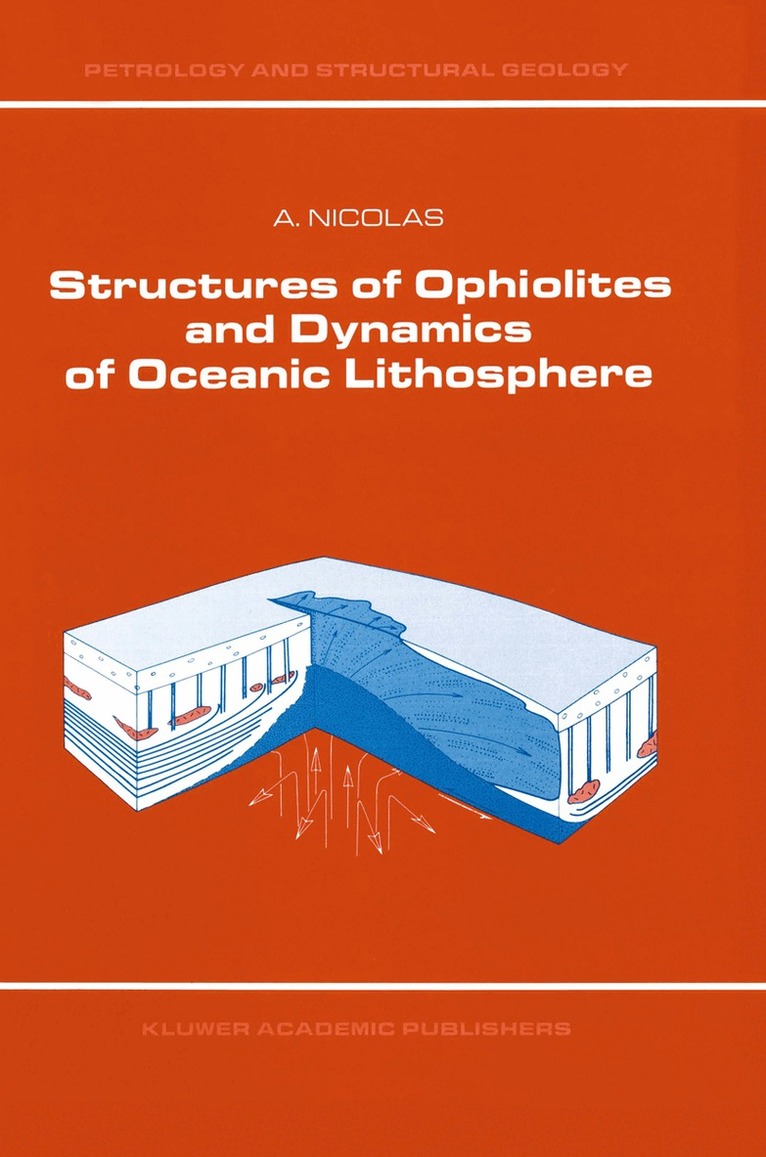
1.1. HISTORICAL DEVELOPMENT OF THE OPHIOLITE CONCEPT. Ophiolite, Greek for 'the snake stone', appears to have received its first written definition by Brongniart (1813) as a serpentine matrix containing various minerals. Later in 1821 and 1827, Brongniart determined that volcanic and gabbroic rocks were also present, associated with cherts, and he ascribed an igneous origin to the ophiolite. Amstutz (1980) gives an excellent exegesis of these early contributions and traces the further use of the term and concept of ophiolite. This concept had been forged in the western Alps and Apennines where, thanks to talented Italian geologists, in particular A. Sismonda, B. Gastaldi, V. Novarese and S. Franchi, the study on metamorphic ophiolites (the 'pietre verdi') has rapidly progressed. At the tum of the century the association of radiolarite, diabase, gabbro (euphotide), and serpentinite-peridotite was clearly identified, even through their metamorphic transformations.In 1902, Franchi developed the hypothesis introduced earlier by Lotti (1886), of a submarine outflow to explain the 'pietre verdi' association, on the basis of the attribution of the variolites and metamorphic prasinites to an hypabyssal volcanism, also responsible for the formation of radiolarites. Thus, before the popular work of Steinmann in 1927, the various components constituting an ophiolite had been identified and its hypabyssal origin proposed. As recalled by Amstutz (1980), the so-called 'Steinmann trinity', which consists of the association of radiolarites, diabases and serpentinites, was more completely and better defined in these earlier works.
630 kr
Skickas inom 10-15 vardagar
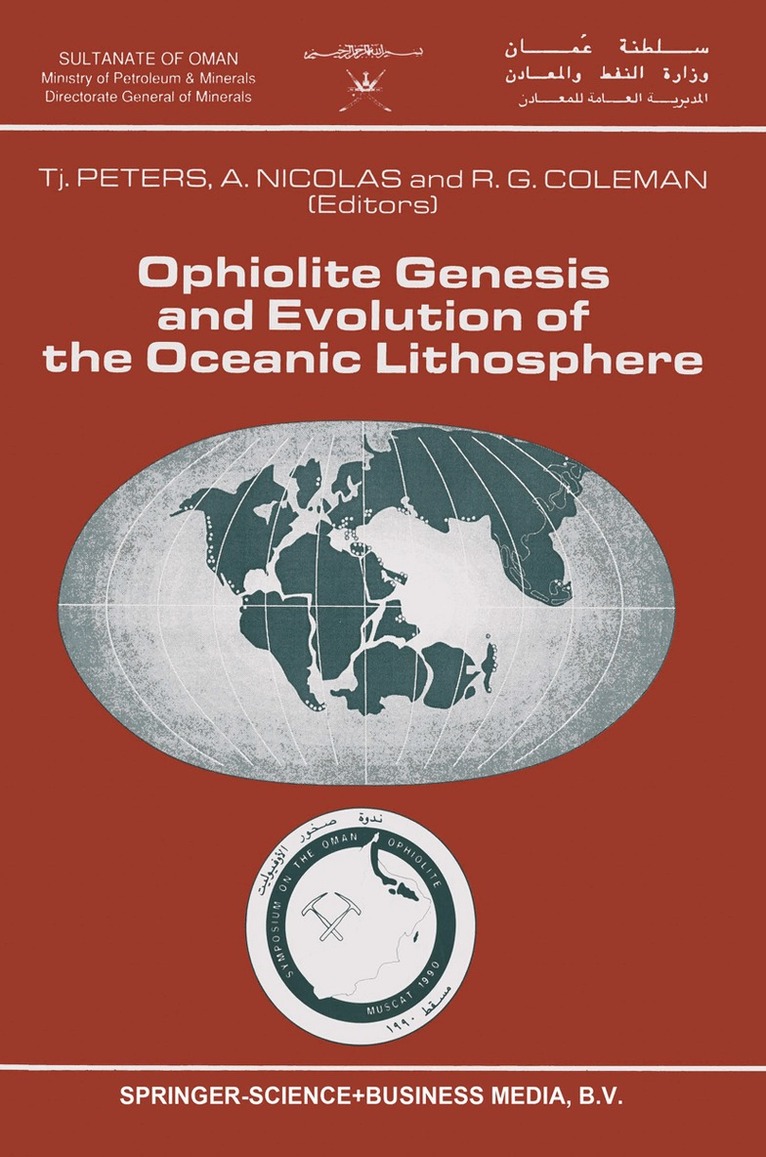
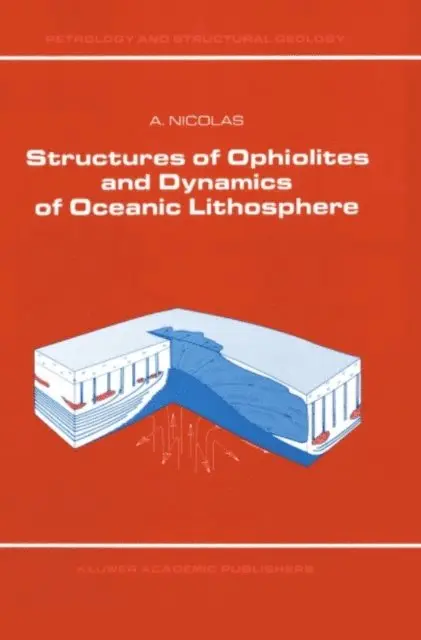
Ophiolites are key sources of information regarding the genesis and evolution of oceanic lithosphere. Over the past decades, the geological ~tudy of ophio- lites has provided a wealth of insight into lithospheric processes and has proved to be an indispensible prerequisite to interpreting geophysical and other investigations of the crust underlying recent oceans. The Oman Ophiol- ite offers the most complete and structurally undisturbed sections of the oceanic crust in vast, clean exposures. It is, therefore, most fortunate for the scientific community that Mhd. Kassim, Director General of Minerals and Dr. Hilal Al Azri, Director of the Geological Survey, took upon themselves the task of organizing in Oman an international meeting on ophiolites. Having planned for an attendance of only 100 to 150 persons, the logistics of the organizing committee were put to a severe test by th~ 300 participants who eventually arrived from 27 countries. The 14 field trips, most of which were conducted twice, provided the participants with an excellent introduc- tion to the geology of Oman, the ophIolite sequence, and re~ated phenomena.
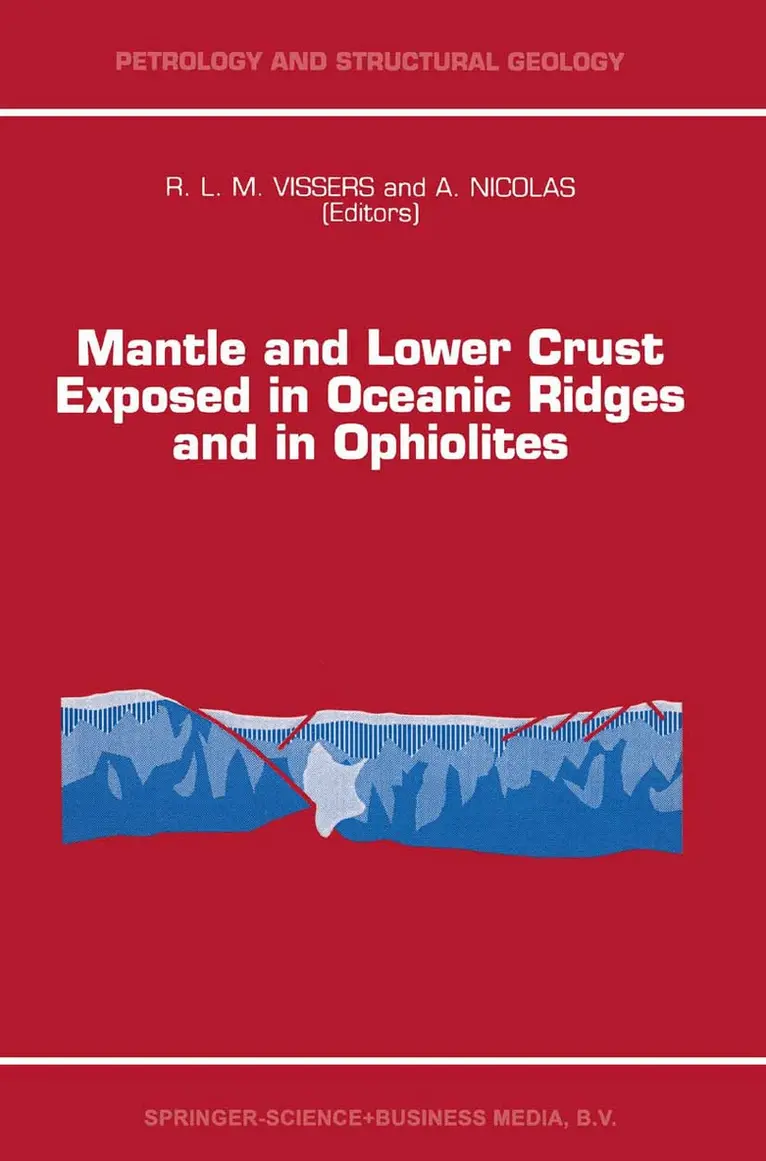
Mantle and Lower Crust Exposed in Oceanic Ridges and in Ophiolites
Contributions to a Specialized Symposium of the VII EUG Meeting, Strasbourg, Spring 1993
Inbunden, Engelska, 1995
1 062 kr
Skickas inom 10-15 vardagar
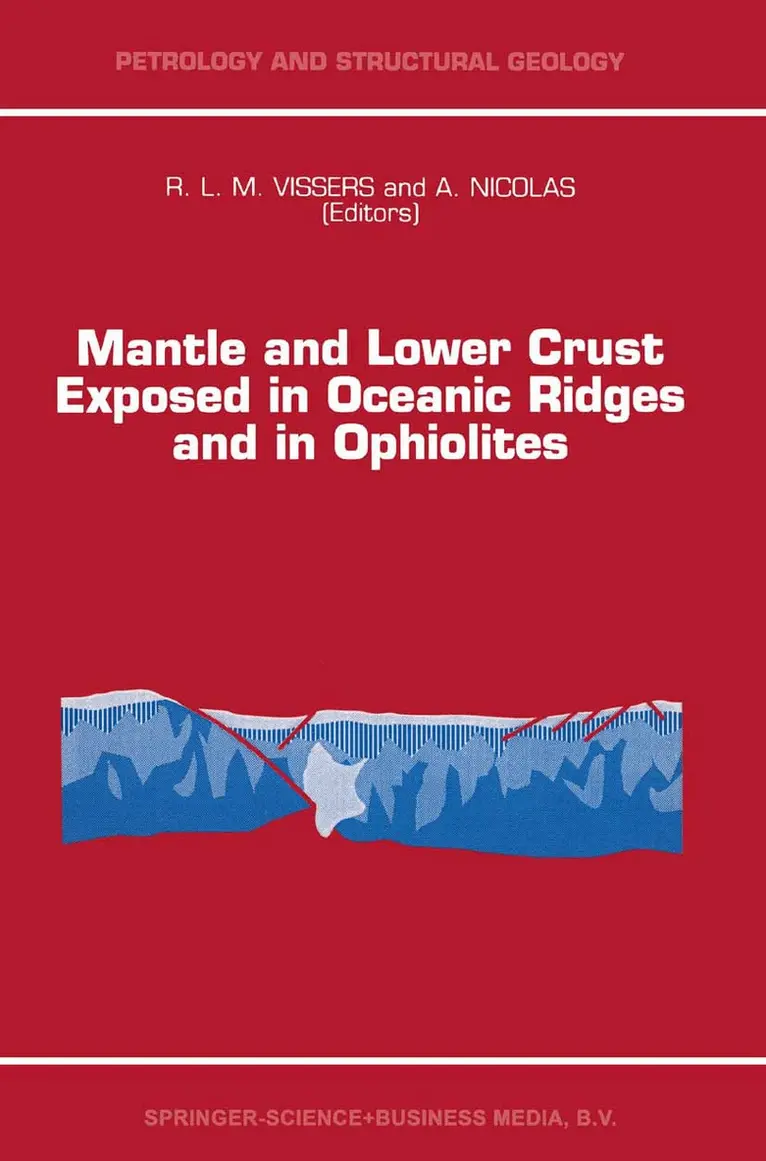
The processes involved in accretion taking place at oceanic ridges are approached in this text via petrological and structural analysis of oceanic rocks in present-day oceanic ridges, combined with similar studies based on ophiolites, and includes present cases of slow and fast oceanic spreading and inferred analogues in ophiolites. A complementary model study of cyclic oceanic activity reconciles the extreme cases of slowly and rapidly spreading ridges. In essence, based as it is on the analysis of "real rocks", this book on mantle-crust interactions reinforces the well-known contrast between processes taking place at slow and fast oceanic ridges. It contains useful information for scientists interested in the nature and generation of the ocean floor in present-day oceanic ridges and in their ophiolite counterparts.
374 kr
Skickas inom 5-8 vardagar
1 062 kr
Skickas inom 10-15 vardagar
Physicists attempt to reduce natural phenomena to their essential dimensions by means of simplification and approximation and to account for them by defining natural laws. Paradoxically, whilst there is a critical need in geology to reduce the overwhelming field information to its essentials, it often re mains in an over-descriptive state. This prudent attitude of geologists is dictated by the nature of the subjects being consi dered, as it is often difficult to derive the significant parame ters from the raw data. It also follows from the way that geolo gical work is carried out. Geologists proceed, as in a police investigation, by trying to reconstruct past conditions and events from an analysis of the features preserved in rocks. In physics all knowledge is based on experiment but in the Earth Sciences experimental evidence is of very limited scope and is difficult to interpret. The geologist's cautious approach in accepting evidence gained by modelling and quantification is sometimes questionable when it is taken too far. It shuts out potentially fruitful lines of advance; for instance when refu sing order of magnitude calculations, it risks being drowned in anthropomorphic speculation. Happily nowadays, many more studies tend to separate and order the significant facts and are carried out with numerical constraints, which although they are approxi mate in nature, limit the range of hypotheses and thus give rise to new models.
1 062 kr
Skickas inom 10-15 vardagar
Physicists attempt to reduce natural phenomena to their essential dimensions by means of simplification and approximation and to account for them by defining natural laws. Paradoxically, whilst there is a critical need in geology to reduce the overwhelming field information to its essentials, it often re mains in an over-descriptive state. This prudent attitude of geologists is dictated by the nature of the subjects being consi dered, as it is often difficult to derive the significant parame ters from the raw data. It also follows from the way that geolo gical work is carried out. Geologists proceed, as in a police investigation, by trying to reconstruct past conditions and events from an analysis of the features preserved in rocks. In physics all knowledge is based on experiment but in the Earth Sciences experimental evidence is of very limited scope and is difficult to interpret. The geologist's cautious approach in accepting evidence gained by modelling and quantification is sometimes questionable when it is taken too far. It shuts out potentially fruitful lines of advance; for instance when refu sing order of magnitude calculations, it risks being drowned in anthropomorphic speculation. Happily nowadays, many more studies tend to separate and order the significant facts and are carried out with numerical constraints, which although they are approxi mate in nature, limit the range of hypotheses and thus give rise to new models.
Mantle and Lower Crust Exposed in Oceanic Ridges and in Ophiolites
Contributions to a Specialized Symposium of the VII EUG Meeting, Strasbourg, Spring 1993
Häftad, Engelska, 2010
1 062 kr
Skickas inom 10-15 vardagar
The processes involved in accretion taking place at oceanic ridges are approached here via petrological and structural analysis of oceanic rocks in present-day oceanic ridges, combined with similar studies based on ophiolites, and includes present cases of slow and fast oceanic spreading and inferred analogues in ophiolites. A complementary model study of cyclic oceanic activity reconciles the extreme cases of slowly and rapidly spreading ridges. In essence, based as it is on the analysis of 'real rocks', this book on mantle-crust interactions reinforces the well-known contrast between processes taking place at slow and fast oceanic ridges. Audience: Contains valuable information for scientists interested in the nature and generation of the ocean floor in present-day oceanic ridges and in their ophiolite counterparts.
Ophiolite Genesis and Evolution of the Oceanic Lithosphere
Proceedings of the Ophiolite Conference, held in Muscat, Oman, 7–18 January 1990
Häftad, Engelska, 2012
534 kr
Skickas inom 10-15 vardagar
Ophiolites are key sources of information regarding the genesis and evolution of oceanic lithosphere. Over the past decades, the geological ~tudy of ophio- lites has provided a wealth of insight into lithospheric processes and has proved to be an indispensible prerequisite to interpreting geophysical and other investigations of the crust underlying recent oceans. The Oman Ophiol- ite offers the most complete and structurally undisturbed sections of the oceanic crust in vast, clean exposures. It is, therefore, most fortunate for the scientific community that Mhd. Kassim, Director General of Minerals and Dr. Hilal Al Azri, Director of the Geological Survey, took upon themselves the task of organizing in Oman an international meeting on ophiolites. Having planned for an attendance of only 100 to 150 persons, the logistics of the organizing committee were put to a severe test by th~ 300 participants who eventually arrived from 27 countries. The 14 field trips, most of which were conducted twice, provided the participants with an excellent introduc- tion to the geology of Oman, the ophIolite sequence, and re~ated phenomena.
1 589 kr
Skickas inom 10-15 vardagar
1.1. HISTORICAL DEVELOPMENT OF THE OPHIOLITE CONCEPT. Ophiolite, Greek for 'the snake stone', appears to have received its first written definition by Brongniart (1813) as a serpentine matrix containing various minerals. Later in 1821 and 1827, Brongniart determined that volcanic and gabbroic rocks were also present, associated with cherts, and he ascribed an igneous origin to the ophiolite. Amstutz (1980) gives an excellent exegesis of these early contributions and traces the further use of the term and concept of ophiolite. This concept had been forged in the western Alps and Apennines where, thanks to talented Italian geologists, in particular A. Sismonda, B. Gastaldi, V. Novarese and S. Franchi, the study on metamorphic ophiolites (the 'pietre verdi') has rapidly progressed. At the tum of the century the association of radiolarite, diabase, gabbro (euphotide), and serpentinite-peridotite was clearly identified, even through their metamorphic transformations.In 1902, Franchi developed the hypothesis introduced earlier by Lotti (1886), of a submarine outflow to explain the 'pietre verdi' association, on the basis of the attribution of the variolites and metamorphic prasinites to an hypabyssal volcanism, also responsible for the formation of radiolarites. Thus, before the popular work of Steinmann in 1927, the various components constituting an ophiolite had been identified and its hypabyssal origin proposed. As recalled by Amstutz (1980), the so-called 'Steinmann trinity', which consists of the association of radiolarites, diabases and serpentinites, was more completely and better defined in these earlier works.