A. Paterson – författare
Visar alla böcker från författaren A. Paterson. Handla med fri frakt och snabb leverans.
6 produkter
6 produkter
Inbunden, Engelska, 1982
1 496 kr
Skickas inom 10-15 vardagar
Inbunden, Engelska, 1995
1 082 kr
Skickas inom 10-15 vardagar
Inbunden, Engelska, 1995
1 620 kr
Skickas inom 10-15 vardagar
Häftad, Engelska, 2012
545 kr
Skickas inom 10-15 vardagar
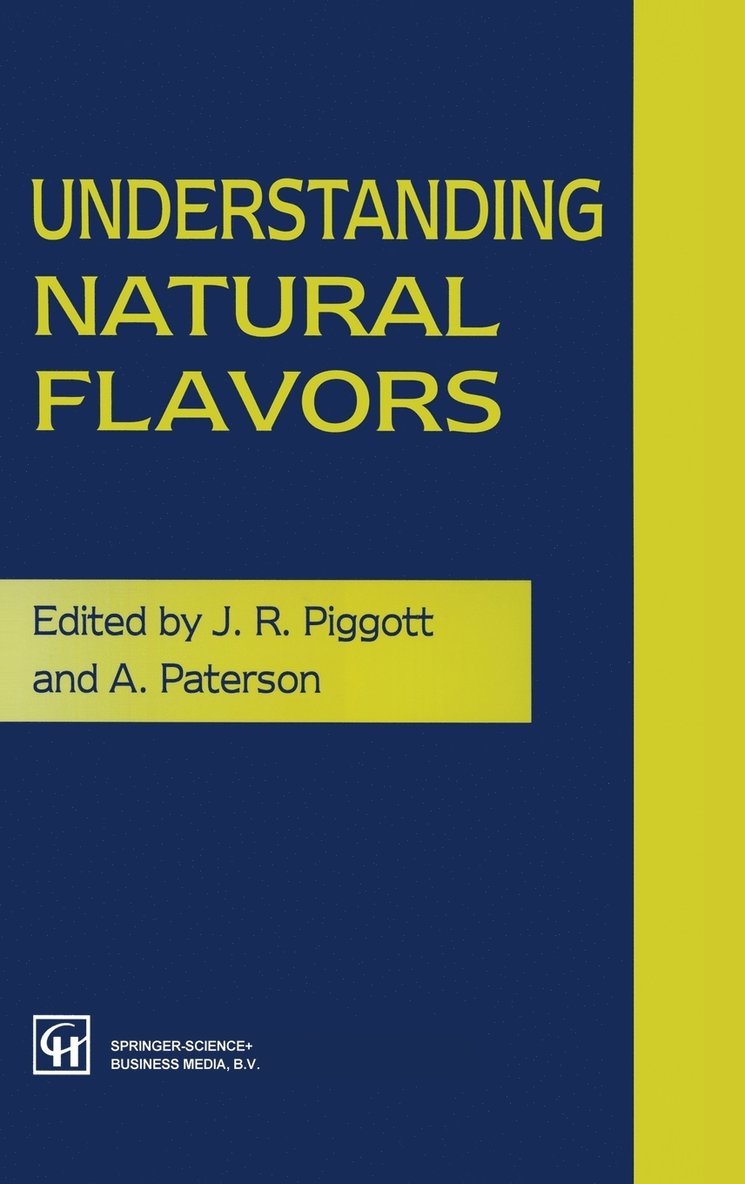
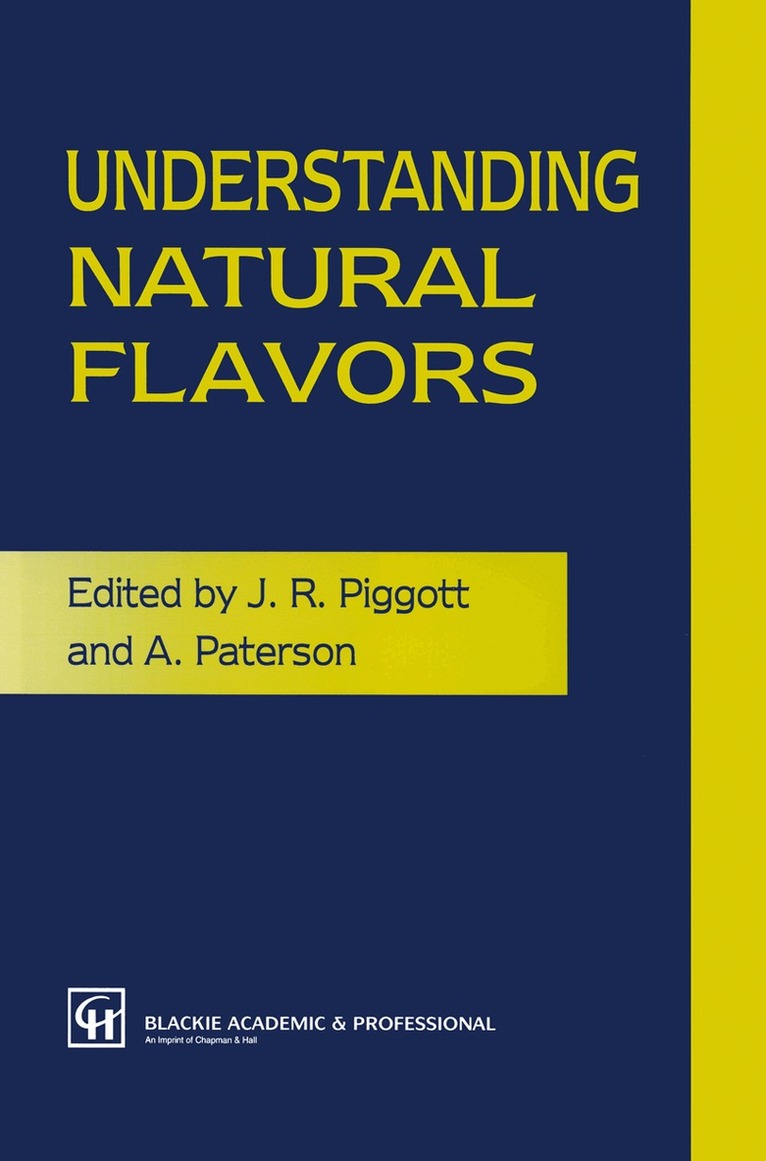
There has been increasing interest in recent years in the concept and production of natural foods. Advertising claims that food is natural, without additives or artificial ingredients, have taken on great importance in marketing. Consumption of food that can be considered natural is currently central to the sophisticated lifestyle. However, there is only a limited published literature on what constitutes natural food flavours. Much of the flavour and fragrance industry has worked on development of synthetic or 'nature-identical' flavours which represent a chemist's simu lation of the natural character. As marketing claims become more strident it is necessary to gain a better understanding of natural food flavours in order to safeguard food quality and for prevention of fraud. There have been great advances recently in analytical chemistry, and partly as a result of this progress there seems to be a never-ending increase in the number of volatile compounds identified in foods. Unfortunately, this has not always been matched by an equal increase in the understanding of how these volatile compounds arise, or how they contribute to the sensation which we call flavour. Throughout the development of Western society, quality of food, particularly flavour, has been highly regarded. The amateur or professional cook with the skills to optimize and maintain standards in flavour has been held in the highest respect.
E-bok
PDF, Engelska, 2013687 kr
Läs direkt efter köp
There has been increasing interest in recent years in the concept and production of natural foods. Advertising claims that food is natural, without additives or artificial ingredients, have taken on great importance in marketing. Consumption of food that can be considered natural is currently central to the sophisticated lifestyle. However, there is only a limited published literature on what constitutes natural food flavours. Much of the flavour and fragrance industry has worked on development of synthetic or ''nature-identical'' flavours which represent a chemist''s simu lation of the natural character. As marketing claims become more strident it is necessary to gain a better understanding of natural food flavours in order to safeguard food quality and for prevention of fraud. There have been great advances recently in analytical chemistry, and partly as a result of this progress there seems to be a never-ending increase in the number of volatile compounds identified in foods. Unfortunately, this has not always been matched by an equal increase in the understanding of how these volatile compounds arise, or how they contribute to the sensation which we call flavour. Throughout the development of Western society, quality of food, particularly flavour, has been highly regarded. The amateur or professional cook with the skills to optimize and maintain standards in flavour has been held in the highest respect.
E-bok
Engelska, 20092 424 kr
Läs direkt efter köp
This important book investigates the environmental legal frameworks, court structures and relevant jurisprudence of nineteen countries, representing legal systems and legal cultures from a diverse array of countries situated across the globe. In doing so, it distils comparative trends, new developments, and best practices in adjudication endeavours, highlighting the benefits and shortcomings of the judicial approach to environmental governance.