Louis J. Kotzé - Böcker
Visar alla böcker från författaren Louis J. Kotzé. Handla med fri frakt och snabb leverans.
13 produkter
13 produkter
Sustaining Life on Earth
Environmental and Human Health through Global Governance
Häftad, Engelska, 2007
808 kr
Skickas inom 10-15 vardagar
As global warming, famine, and environmental catastrophes have become daily news items, achieving a sustainable environment to maintain the future of life on Earth has become a global concern. Sustaining Life on Earth is an important contribution toward assessing such problems and making the Earth hospitable to life for generations to come. With an interdisciplinary team of international scholars, this masterfully edited collection approaches the problems facing sustainability from a perspective of global governance. To date, powerful economic forces have misguided decision-making processes in favor of short-term gain rather than long-term sustainability. As global awareness has increased and individual citizens have begun to alter their lifestyles to be more environmentally conscious, it is also necessary for governing bodies to take these concerns seriously.Sustaining Life on Earth makes the case that, for all the recent neo-liberal emphasis on the autonomous individual, humanity has collective problems, and it is only through collective action that solutions will be found. It shows that the global community is beginning to acknowledge the interdependencies among population, affluence, and technology. In the book, analysts from many disciplines advance solutions that could shift us away from growth-bound status quo development approaches toward more ecologically responsible and socially equitable ways of living. They suggest ways to move forward that would ensure health and well-being for all in both present and future generations. While success necessarily entails many changes at all levels, the book highlights one soft-law instrument that reflects many of the values and principles necessary to set humanity onto a sustainable path: The Earth Charter of 2002.Sustaining Life on Earth is a ground-breaking contribution to the burgeoning study of sustainability. Designed for a general non-specialist readership in the first year of university or beyond, this book will be of intere
Compliance and Enforcement in Environmental Law
Toward More Effective Implementation
Häftad, Engelska, 2012
879 kr
Skickas inom 7-10 vardagar
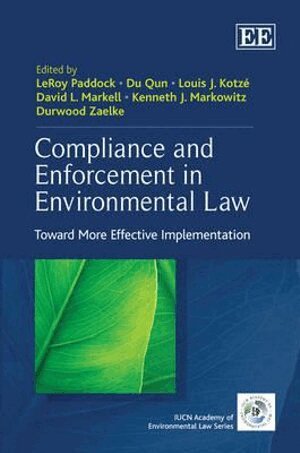
Compliance and enforcement are critical elements of assuring that international environmental treaties and domestic environmental laws actually produce desired environmental outcomes. This timely work provides a comprehensive worldwide perspective on how to assure compliance with and enforcement of environmental laws more effectively. Bringing together both leading academics and environmental professionals from 15 countries, the book addresses a range of key issues including the enforcement of multilateral agreements, compliance strategies and tools, the role of courts and citizens, protection of natural resources, and compliance issues related to economic instruments. This comprehensive resource will strongly appeal to environmental enforcement professionals working for governments or international organizations, who are seeking new ideas for compliance and enforcement programs. Academics researching environmental law and international affairs will also find this book valuable.
618 kr
Skickas inom 7-10 vardagar
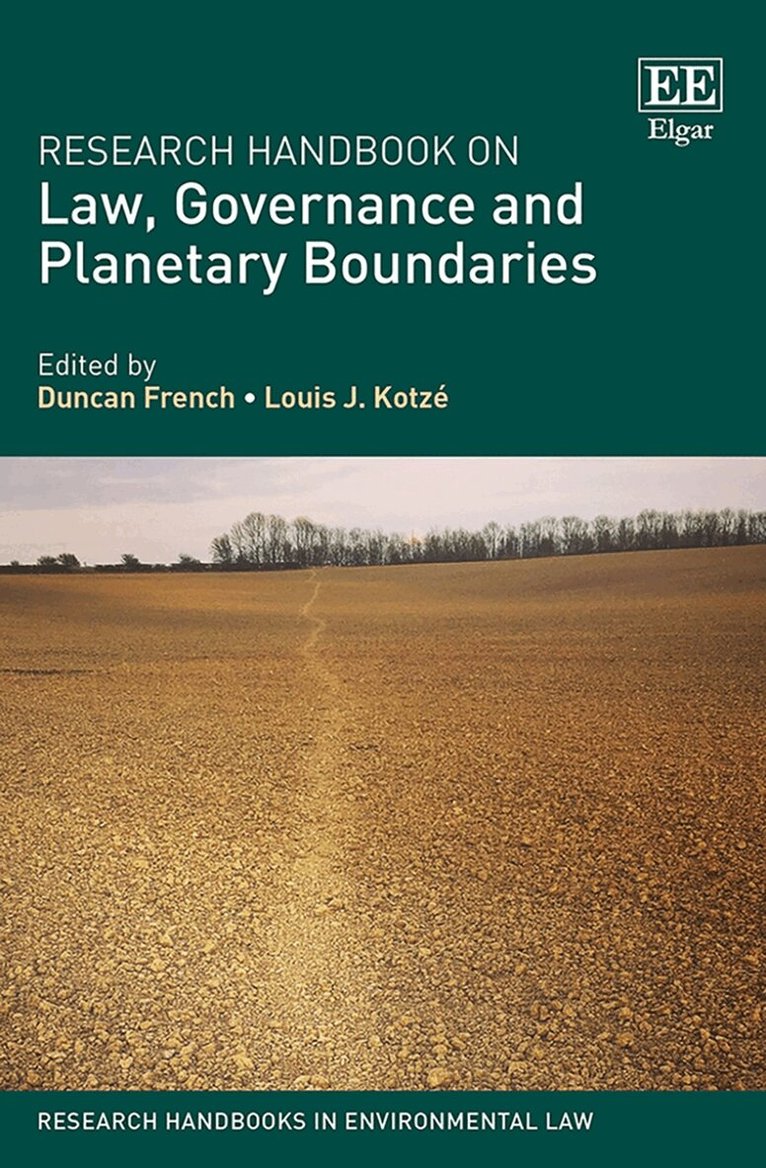
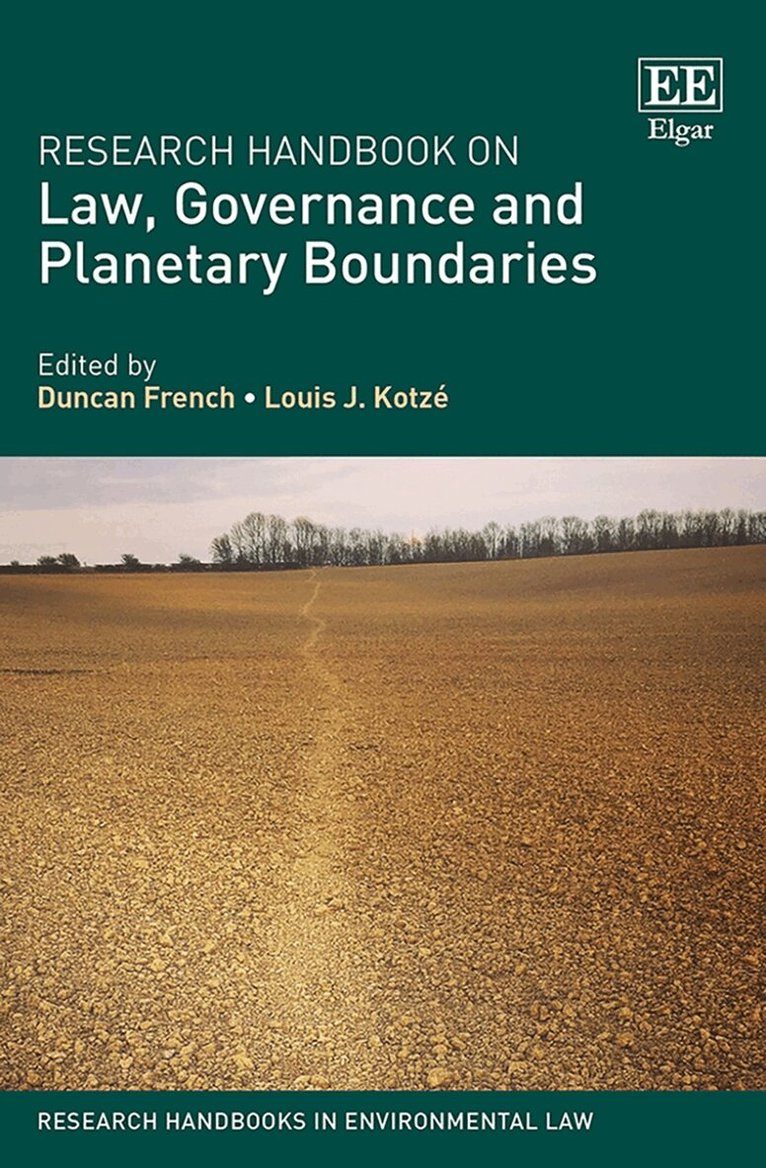
This comprehensive Research Handbook is the first study to link law and Earth system science through the epistemic lens of the planetary boundaries framework. It critically examines the legal and governance aspects of the framework, considering not only each planetary boundary, but also a range of systemic issues, including the ability of law to keep us within the planetary boundaries’ safe operating space.The expert contributors investigate the current and potential role of law in relation to the complex task and regulatory challenges of governing the Earth system. They explore three thematic areas: the overarching legal, ethical and governance dimensions of the planetary boundaries; their diverse international law dimensions and the challenges they raise for international law; and the extent to which the law already provides for some of the aspects illuminated by each planetary boundary, alongside opportunities for legal reform.Lawyers, Earth system scientists and governance experts will benefit from the mapping of the next stage of international environmental law included in the chapters. The book will also be a key resource for regulators, legislators and policy-makers looking for an in-depth study of the relationship between law and each of the nine planetary boundaries.
1 174 kr
Skickas inom 10-15 vardagar
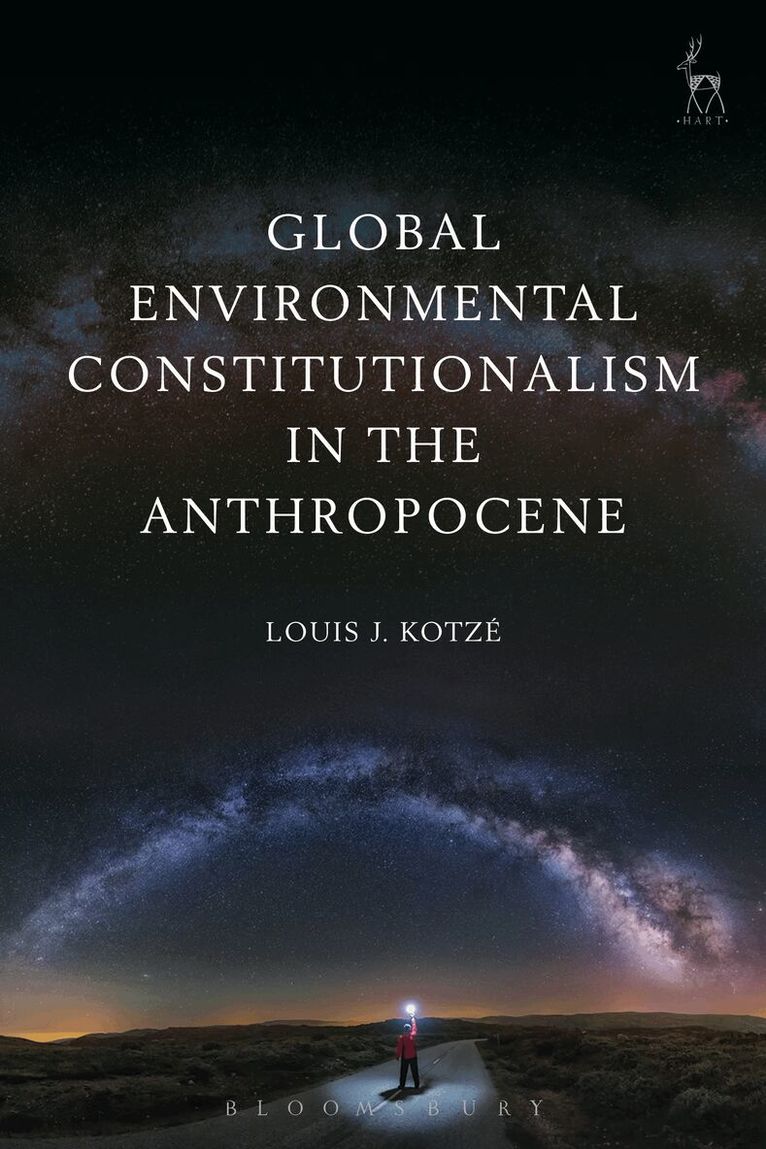
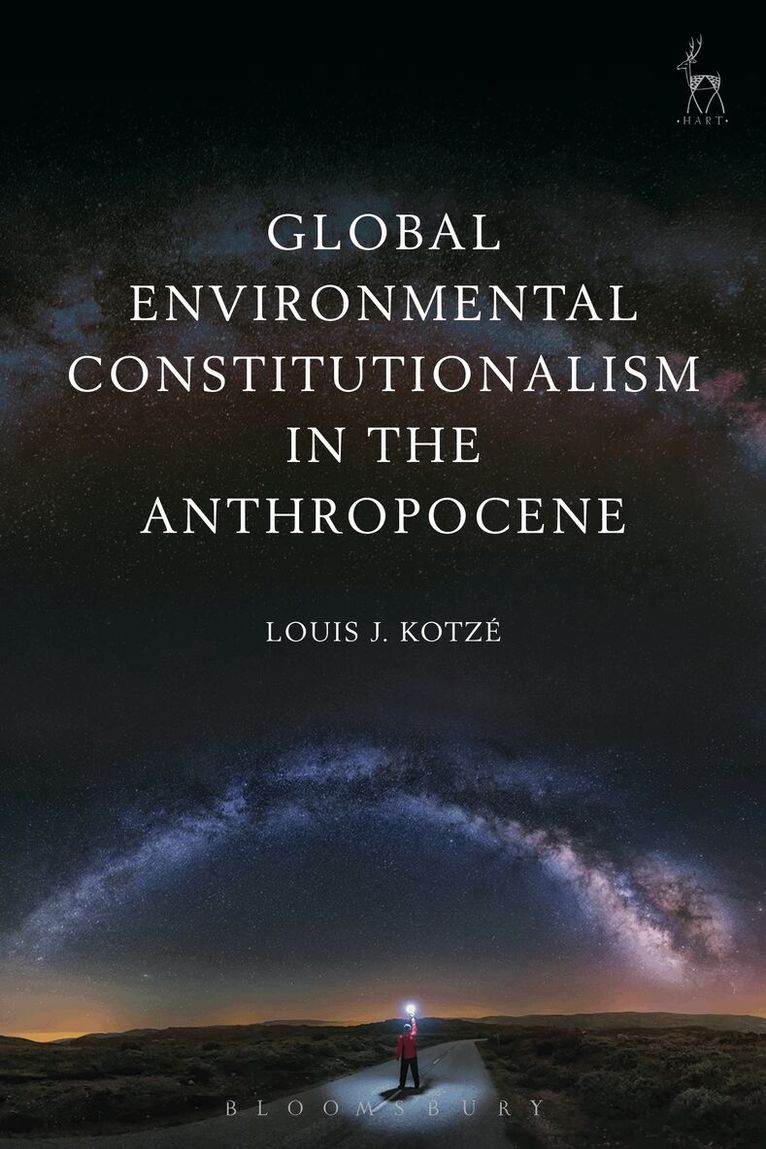
There is persuasive evidence suggesting we are on the brink of human-induced ecological disaster that could change life on Earth as we know it. There is also a general consensus among scientists about the pace and extent of global ecological decay, including a realisation that humans are central to causing the global socio-ecological crisis. This new epoch has been called the Anthropocene. Considering the many benefits that constitutional environmental protection holds out in domestic legal orders, it is likely that a constitutionalised form of global environmental law and governance would be better able to counter the myriad exigencies of the Anthropocene. This book seeks to answer this central question: from the perspective of the Anthropocene, what is environmental constitutionalism and how could it be extrapolated to formulate a global framework? In answering this question, this book offers the first systematic conceptual framework for global environmental constitutionalism in the epoch of the Anthropocene.
449 kr
Skickas inom 10-15 vardagar
There is persuasive evidence suggesting we are on the brink of human-induced ecological disaster that could change life on Earth as we know it. There is also a general consensus among scientists about the pace and extent of global ecological decay, including a realisation that humans are central to causing the global socio-ecological crisis. This new epoch has been called the Anthropocene. Considering the many benefits that constitutional environmental protection holds out in domestic legal orders, it is likely that a constitutionalised form of global environmental law and governance would be better able to counter the myriad exigencies of the Anthropocene. This book seeks to answer this central question: from the perspective of the Anthropocene, what is environmental constitutionalism and how could it be extrapolated to formulate a global framework? In answering this question, this book offers the first systematic conceptual framework for global environmental constitutionalism in the epoch of the Anthropocene.
1 521 kr
Kommande
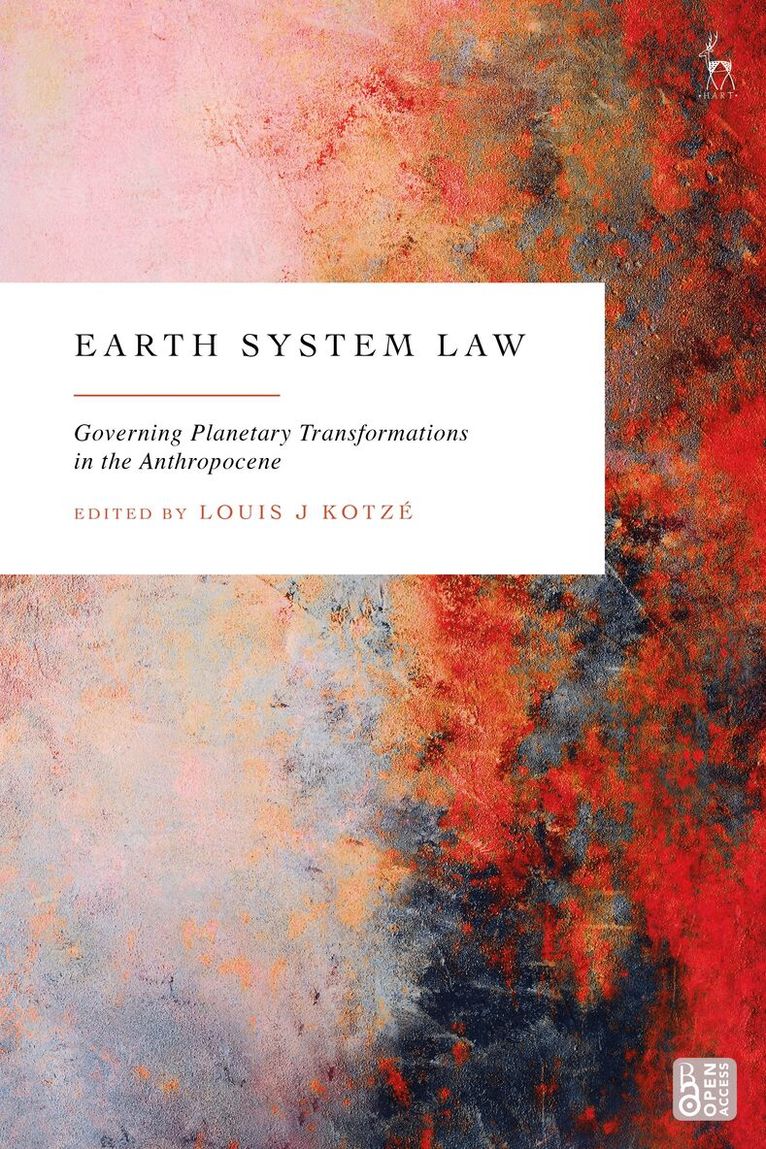
Written by leading experts, this open access book provides the first comprehensive and critical exploration of Earth system law. Environmental law, as it stands, does not meet the challenge of governing the many complex planetary transformations of the Anthropocene. Earth system law marks a new legal paradigm—replacing the fragmented, human-centred, state-based approach with an integrated, Earth-centred approach to planetary governance, purpose-built for our turbulent epoch. The book offers innovative proposals for legal principles, actors, institutions, and ethics designed to safeguard the stability and integrity of Earth’s life-support systems. It also delivers the first full stocktake of the Earth system law framework and its scholarship, coupled with a forward-looking research and implementation agenda. Earth System Law is for all those who are frustrated by the persistent inability of environmental law to address the interconnected governance challenges of the Anthropocene—and for those ready to help shape the next legal frontier. Researchers, students, practitioners, and policymakers alike will find here both the vision and the tools to rethink law for a human-dominated planet.The ebook editions of this book are available open access under a CC BY-NC-ND 4.0 licence on bloomsburycollections.com. Open access was funded by the Bloomsbury Open Collections Library Collective.
3 175 kr
Skickas inom 7-10 vardagar
Bringing together leading international scholars in the field, this authoritative Handbook combines critical and doctrinal scholarship to illuminate some of the challenging tensions in the legal relationships between humans and the environment, and human rights and environment law.The accomplished contributors provide researchers and students with a rich source of reflection and engagement with the topic. Split into five parts, the book covers epistemologies, core values and closures, constitutionalisms, universalisms and regionalisms, with a final concluding section exploring major challenges and alternative futures.An essential resource for students and scholars of human rights law, the volume will also be of significant interest to those in the fields of environmental and constitutional law.Contributors: S. Adelman, U. Beyerlin, K. Bosselmann, D.R Boyd, P.D. Burdon, L. Code, L. Collins, S. Coyle, C.G Gonzalez, E. Grant, A. Grear, E. Hey, C.J. Iorns Magallanes, B. Jessup, A. Jones, A. A. Khavari, L.J. Kotzé, R. Lyster, K. Morrow, A. Philippopoulos-Mihalopoulos, W. Scholtz, P. Simons, S. Thériault, F. Venter
1 997 kr
Skickas inom 7-10 vardagar
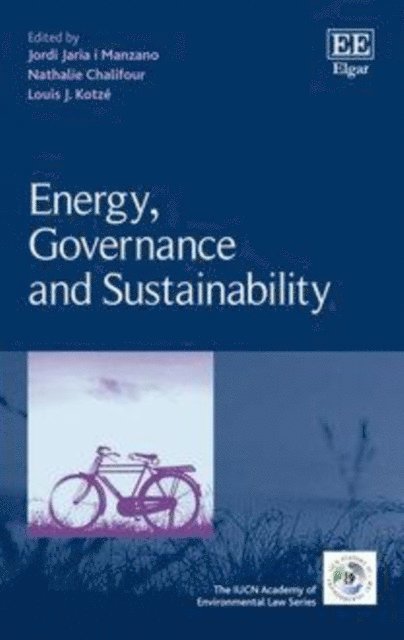
'In summary, the book provides an interesting mix of energy topics and perspectives that appears somewhat eclectic at first glance. . . . the book is a very useful and scholarly addition to the literature on energy governance and is recommended reading for all those who need to be better informed on the challenges and some of the solutions available at the current time.'- David Grinlinton, Journal of Energy & Natural Resources LawThis timely book makes an original and in-depth contribution to the debate about how to transform our energy governance systems into ones that support a fair, safe and sustainable society. It combines perspectives from leading scholars to provide a global outlook on alternative approaches to energy governance and innovative experiences. Taken as a whole, it offers a unique overview of some of the innovative and novel ways in which law can support the shift to sustainable and equitable energy systems.The first section lays the conceptual and theoretical foundations for alternative approaches to energy governance, including its constitutional foundations, the role of human rights, and an environmentally just system that seeks universal access to energy for all. The second section showcases concrete innovative experiences in energy governance from around the globe, including smart cities, the role of the courts, energy efficiency of buildings and the harnessing of energy from waste. Finally, the authors consider the social justice dimension, discussing the exploitation of energy resources by multinational companies in developing countries and the importance of agricultural production, distribution and consumption in energy transformation. This unique overview of state-of-the-art approaches to transformation of energy governance is vital reading for policy makers and both legal and non-legal scholars concerned with energy law, sustainability and justice, and global governance.Contributors: K. Bosselmann, J. Bowie, N. Chalifour, E. Daly, T. Daya-Winterbottom, C. Derani, A. Guerry, J. Jaria I Manzano, L. Kotzé, E. Le Gal, L. Lin-Heng, M. Low, J.R. May, E.C. Okonkwo, R.L. Ottinger, C. Pappalardo, T. Parejo-Navajas, M.P. Samonte Solis, M.K. Scanlan, J. Wentz
1 923 kr
Skickas inom 7-10 vardagar
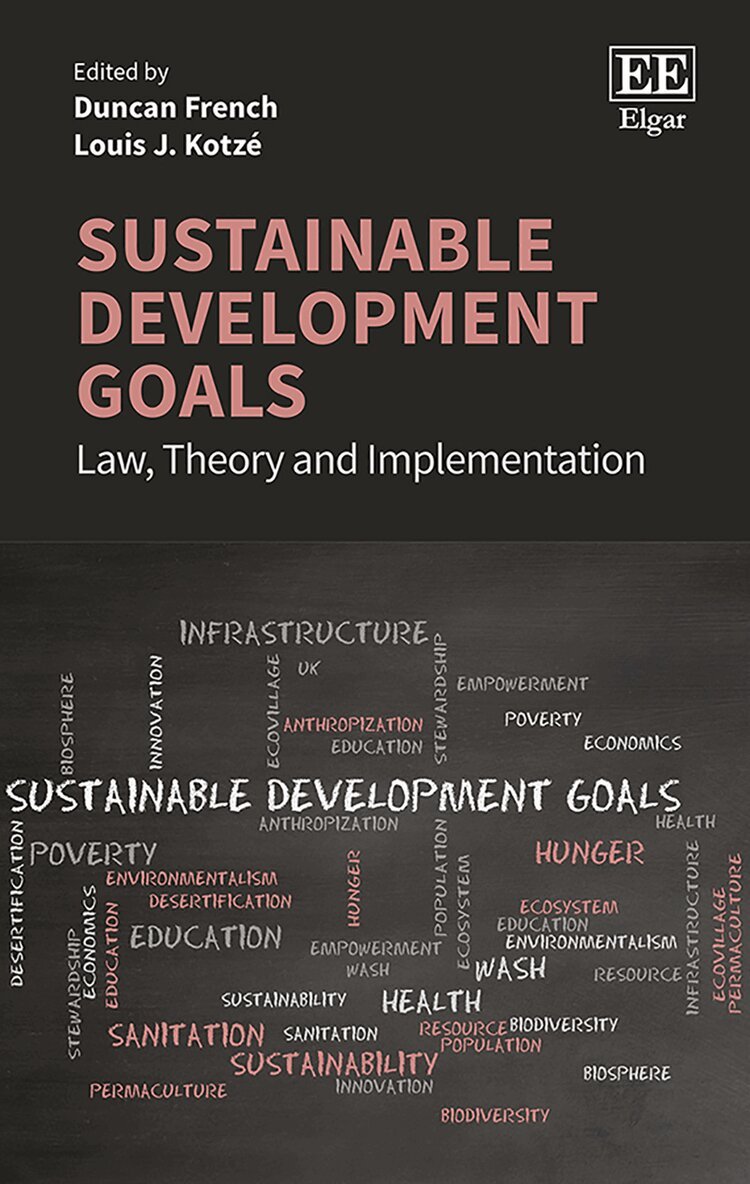
Building on the previously established Millennium Development Goals, which ran from 2000-2015, the 2015 Sustainable Development Goals (SDGs) provide the UN with a roadmap for development until 2030. This topical book explores the associated legal and normative implications of these SDGs, which in themselves are not legally binding.The 17 goals and 169 targets of the SDGs cover areas as crucial as poverty reduction, climate change, clean water and access to justice. Combining both thematic and goal-specific analysis, expert contributors establish the relevance not just of international law, but also of a broader range of normative frameworks including constitutional norms, domestic regulatory law and human rights. Connecting the SDGs to wider debates in international law and politics, this book ultimately demonstrates that law has an important constitutive and instrumental role to play in both implemention and analysis.The first of its kind to offer a specific focus on the relationship between law and the SDGs, this much-needed book will prove invaluable for scholars in the field of international sustainable development. Its insightful observations will also provide food for thought for both related international organizations and national government officials.Contributors include: S. Adelman, H. Aust, M. Barnard, L. Collins, N. Cooper, A. du Plessis, D. French, L. Kotzé, G. Long, O. McIntyre , K. Morrow, N. Sánchez Castillo-Winckels, W. Scholtz, N. Soininen
605 kr
Skickas inom 7-10 vardagar
'In summary, the book provides an interesting mix of energy topics and perspectives that appears somewhat eclectic at first glance. . . . the book is a very useful and scholarly addition to the literature on energy governance and is recommended reading for all those who need to be better informed on the challenges and some of the solutions available at the current time.'- David Grinlinton, Journal of Energy & Natural Resources LawThis timely book makes an original and in-depth contribution to the debate about how to transform our energy governance systems into ones that support a fair, safe and sustainable society. It combines perspectives from leading scholars to provide a global outlook on alternative approaches to energy governance and innovative experiences. Taken as a whole, it offers a unique overview of some of the innovative and novel ways in which law can support the shift to sustainable and equitable energy systems.The first section lays the conceptual and theoretical foundations for alternative approaches to energy governance, including its constitutional foundations, the role of human rights, and an environmentally just system that seeks universal access to energy for all. The second section showcases concrete innovative experiences in energy governance from around the globe, including smart cities, the role of the courts, energy efficiency of buildings and the harnessing of energy from waste. Finally, the authors consider the social justice dimension, discussing the exploitation of energy resources by multinational companies in developing countries and the importance of agricultural production, distribution and consumption in energy transformation. This unique overview of state-of-the-art approaches to transformation of energy governance is vital reading for policy makers and both legal and non-legal scholars concerned with energy law, sustainability and justice, and global governance.Contributors: K. Bosselmann, J. Bowie, N. Chalifour, E. Daly, T. Daya-Winterbottom, C. Derani, A. Guerry, J. Jaria I Manzano, L. Kotzé, E. Le Gal, L. Lin-Heng, M. Low, J.R. May, E.C. Okonkwo, R.L. Ottinger, C. Pappalardo, T. Parejo-Navajas, M.P. Samonte Solis, M.K. Scanlan, J. Wentz
3 088 kr
Skickas inom 7-10 vardagar
This comprehensive Research Handbook is the first study to link law and Earth system science through the epistemic lens of the planetary boundaries framework. It critically examines the legal and governance aspects of the framework, considering not only each planetary boundary, but also a range of systemic issues, including the ability of law to keep us within the planetary boundaries’ safe operating space.The expert contributors investigate the current and potential role of law in relation to the complex task and regulatory challenges of governing the Earth system. They explore three thematic areas: the overarching legal, ethical and governance dimensions of the planetary boundaries; their diverse international law dimensions and the challenges they raise for international law; and the extent to which the law already provides for some of the aspects illuminated by each planetary boundary, alongside opportunities for legal reform.Lawyers, Earth system scientists and governance experts will benefit from the mapping of the next stage of international environmental law included in the chapters. The book will also be a key resource for regulators, legislators and policy-makers looking for an in-depth study of the relationship between law and each of the nine planetary boundaries.
Compliance and Enforcement in Environmental Law
Toward More Effective Implementation
Inbunden, Engelska, 2011
2 852 kr
Skickas inom 7-10 vardagar
Compliance and enforcement are critical elements of assuring that international environmental treaties and domestic environmental laws actually produce desired environmental outcomes. This timely work provides a comprehensive worldwide perspective on how to assure compliance with and enforcement of environmental laws more effectively. Bringing together both leading academics and environmental professionals from 15 countries, the book addresses a range of key issues including the enforcement of multilateral agreements, compliance strategies and tools, the role of courts and citizens, protection of natural resources, and compliance issues related to economic instruments. This comprehensive resource will strongly appeal to environmental enforcement professionals working for governments or international organizations, who are seeking new ideas for compliance and enforcement programs. Academics researching environmental law and international affairs will also find this book valuable.
Del 19 - Legal Aspects of Sustainable Development
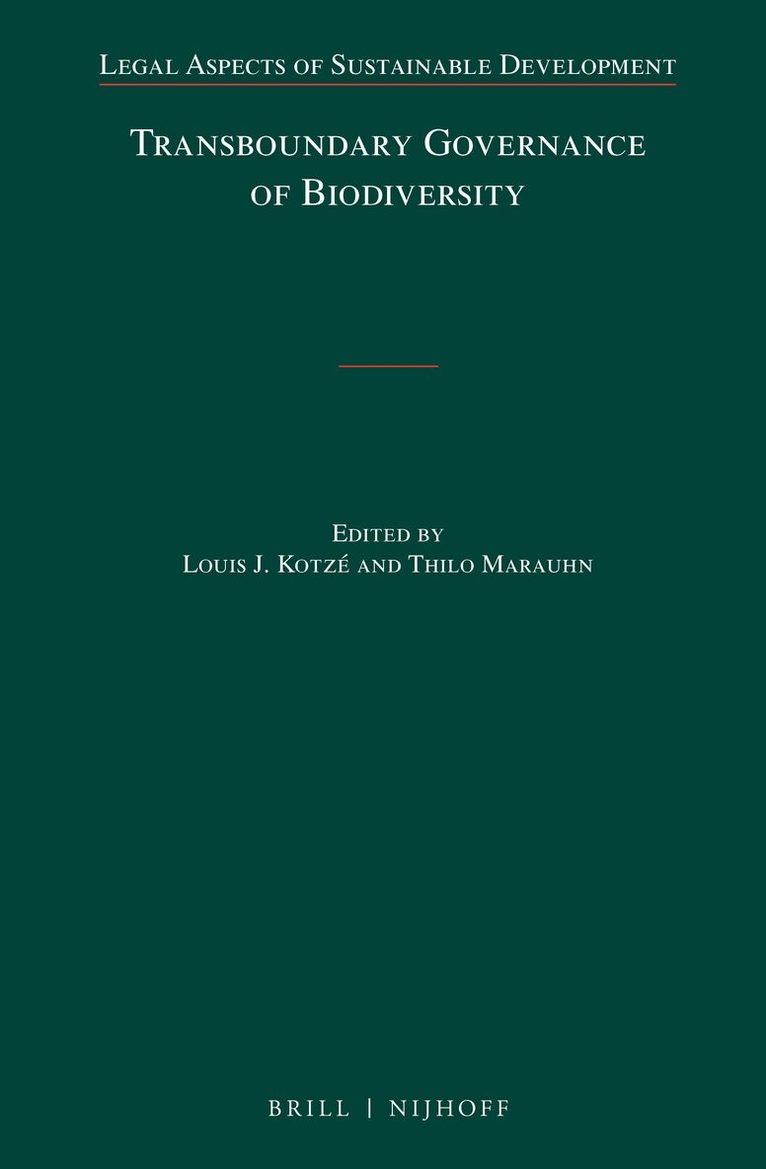
Transboundary Governance of Biodiversity
Inbunden, Engelska, 2014
2 636 kr
Skickas inom 5-8 vardagar
Transboundary Governance of Biodiversity compiles critical analysis of the regulatory frameworks applicable to the transboundary governance of biodiversity by specialists from Europe and Africa. Drawing on their vast experience as lawyers, political scientists and natural resource management experts, they provide a critique and contemporary perspectives on what has become one of the most challenging aspects of global environmental governance in the Anthropocene: effective biodiversity conservation in times of unprecedented environmetal crises. With a unique North-South focus and a legal focus infused by multi-disciplinary regulatory dimensions, this peer-reviewed publication offers a comprehensive analysis of international and regional environmental law frameworks applicable to the transboundary governance of biodiversity.