A. Sinclair – författare
Visar alla böcker från författaren A. Sinclair. Handla med fri frakt och snabb leverans.
8 produkter
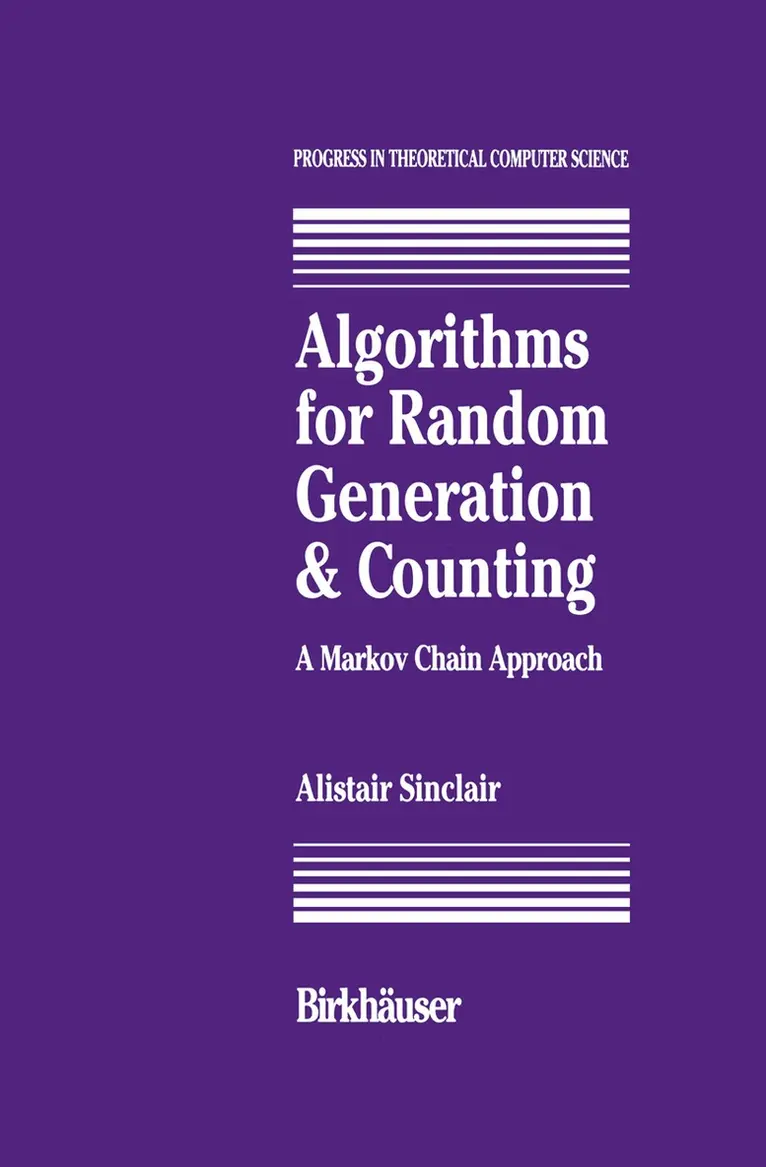
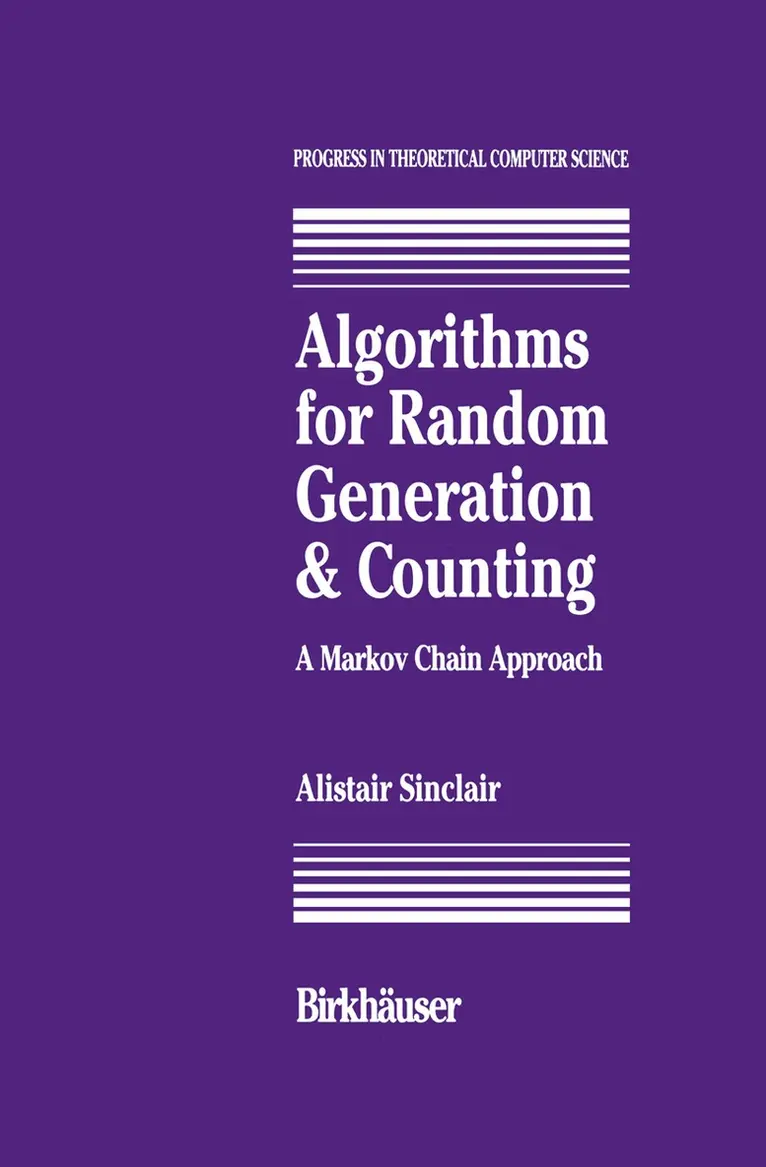
Algorithms for Random Generation and Counting: A Markov Chain Approach
Av A. Sinclair
Inbunden, 1993
1096 kr
Lägg i varukorg
This monograph is a slightly revised version of my PhD thesis [86], com pleted in the Department of Computer Science at the University of Edin burgh in June 1988, with an additional chapter summarising more recent developments. Some of the material has appeared in the form of papers [50,88]. The …
Reminiscences of the Life and Labours of Dugald Buchanan, Formerly Teacher and Evangelist at Rannock
Av Dugald Buchanan, A Sinclair
Inbunden, 2023
396 kr
Lägg i varukorg
Reminiscences of the Life and Labours of Dugald Buchanan, Formerly Teacher and Evangelist at Rannock
Av Dugald Buchanan, A Sinclair
Häftad, 2023
252 kr
Lägg i varukorg
Algorithms for Random Generation and Counting: A Markov Chain Approach
Av A. Sinclair
E-bok, 2012
1416 kr
Lägg i varukorg
This monograph is a slightly revised version of my PhD thesis [86], com pleted in the Department of Computer Science at the University of Edin burgh in June 1988, with an additional chapter summarising more recent developments. Some of the material has appeared in the form of papers [50,88]. The …
Algorithms for Random Generation and Counting: A Markov Chain Approach
Av A. Sinclair
Häftad, 2012
1096 kr
Lägg i varukorg
This monograph is a slightly revised version of my PhD thesis [86], com pleted in the Department of Computer Science at the University of Edin burgh in June 1988, with an additional chapter summarising more recent developments. Some of the material has appeared in the form of papers [50,88]. The …
Child's Conception of Language
Av W. J. M. Levelt, R. J. Jarvella m. fl.
E-bok, 2013
734 kr
Lägg i varukorg
It is obvious that the growing child manifests an increasing understanding of his language and facility to use it. A major part of the child lan guage literature is concerned with the child''s developing linguistic and communicative competence. Scattered evidence also shows, however, that children …
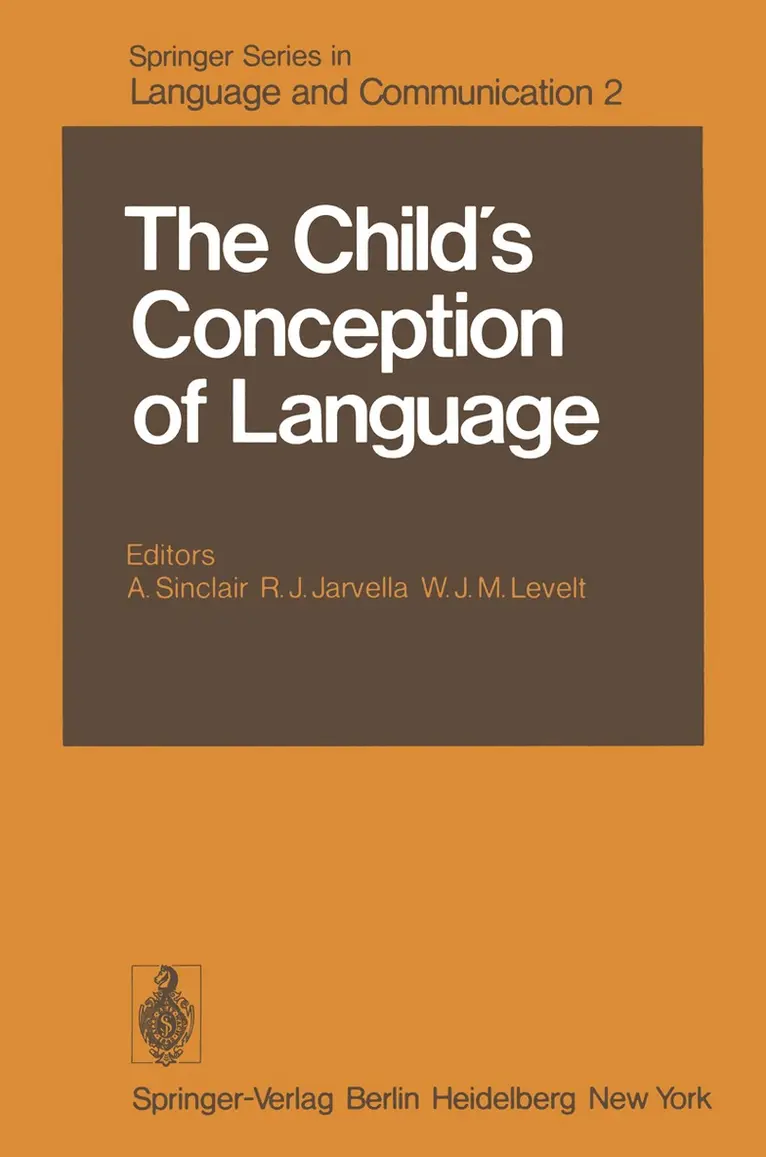
Child’s Conception of Language
Av A. Sinclair, R. J. Jarvella m. fl.
Häftad, 2011
552 kr
Lägg i varukorg
It is obvious that the growing child manifests an increasing understanding of his language and facility to use it. A major part of the child lan guage literature is concerned with the child's developing linguistic and communicative competence. Scattered evidence also shows, however, that children …