Aaron Ezroj - Böcker
Visar alla böcker från författaren Aaron Ezroj. Handla med fri frakt och snabb leverans.
3 produkter
3 produkter
1 766 kr
Skickas inom 10-15 vardagar
As the world plans for economic recovery following the global COVID-19 pandemic, major economies are looking to comprehensive strategies for addressing carbon risks and identifying green finance opportunities. Since Bank of England Governor Mark Carney and Michael Bloomberg began tackling climate change as a financial concern, the international financial community has been developing sophisticated analytical tools that will enable the success of comprehensive efforts to address carbon risks and identify green finance opportunities.This timely publication offers a cutting-edge analysis of the financial aspects of climate change. It discusses the most important analytical tools, their origin, how they work, where they can go, and how they fit into a larger strategy. First, reporting frameworks can allow companies to see how well they are addressing carbon risks, in particular with respect to the recommendations of the Task Force on Climate-related Financial Disclosures. Second, by quantifying how much greenhouse gas companies emit into the atmosphere as a direct or indirect result of their operations, carbon footprint calculations can help identify carbon risks with particular companies, especially within supply chains. Third, brown taxonomies can help investors identify current carbon risks by classifying fossil fuel assets in a systematic manner. Fourth, green taxonomies can help investors identify current green finance opportunities by classifying sustainable activities in a systematic manner. Fifth, scenario analysis for assets can help investors identify future carbon risks and green finance opportunities. Finally, stress testing for liabilities can help insurers and banks address future carbon risks and better inform policymakers.Scholars, policymakers, and business professionals will find this book informative. They will gain a comprehensive understanding of the analytical tools supporting efforts to address carbon risks and identify green finance opportunities. This will hopefully make these individuals more successful in their personal endeavors to build a more sustainable and resilient economy for future generations.
616 kr
Skickas inom 10-15 vardagar
As the world plans for economic recovery following the global COVID-19 pandemic, major economies are looking to comprehensive strategies for addressing carbon risks and identifying green finance opportunities. Since Bank of England Governor Mark Carney and Michael Bloomberg began tackling climate change as a financial concern, the international financial community has been developing sophisticated analytical tools that will enable the success of comprehensive efforts to address carbon risks and identify green finance opportunities.This timely publication offers a cutting-edge analysis of the financial aspects of climate change. It discusses the most important analytical tools, their origin, how they work, where they can go, and how they fit into a larger strategy. First, reporting frameworks can allow companies to see how well they are addressing carbon risks, in particular with respect to the recommendations of the Task Force on Climate-related Financial Disclosures. Second, by quantifying how much greenhouse gas companies emit into the atmosphere as a direct or indirect result of their operations, carbon footprint calculations can help identify carbon risks with particular companies, especially within supply chains. Third, brown taxonomies can help investors identify current carbon risks by classifying fossil fuel assets in a systematic manner. Fourth, green taxonomies can help investors identify current green finance opportunities by classifying sustainable activities in a systematic manner. Fifth, scenario analysis for assets can help investors identify future carbon risks and green finance opportunities. Finally, stress testing for liabilities can help insurers and banks address future carbon risks and better inform policymakers.Scholars, policymakers, and business professionals will find this book informative. They will gain a comprehensive understanding of the analytical tools supporting efforts to address carbon risks and identify green finance opportunities. This will hopefully make these individuals more successful in their personal endeavors to build a more sustainable and resilient economy for future generations.
2 077 kr
Kommande
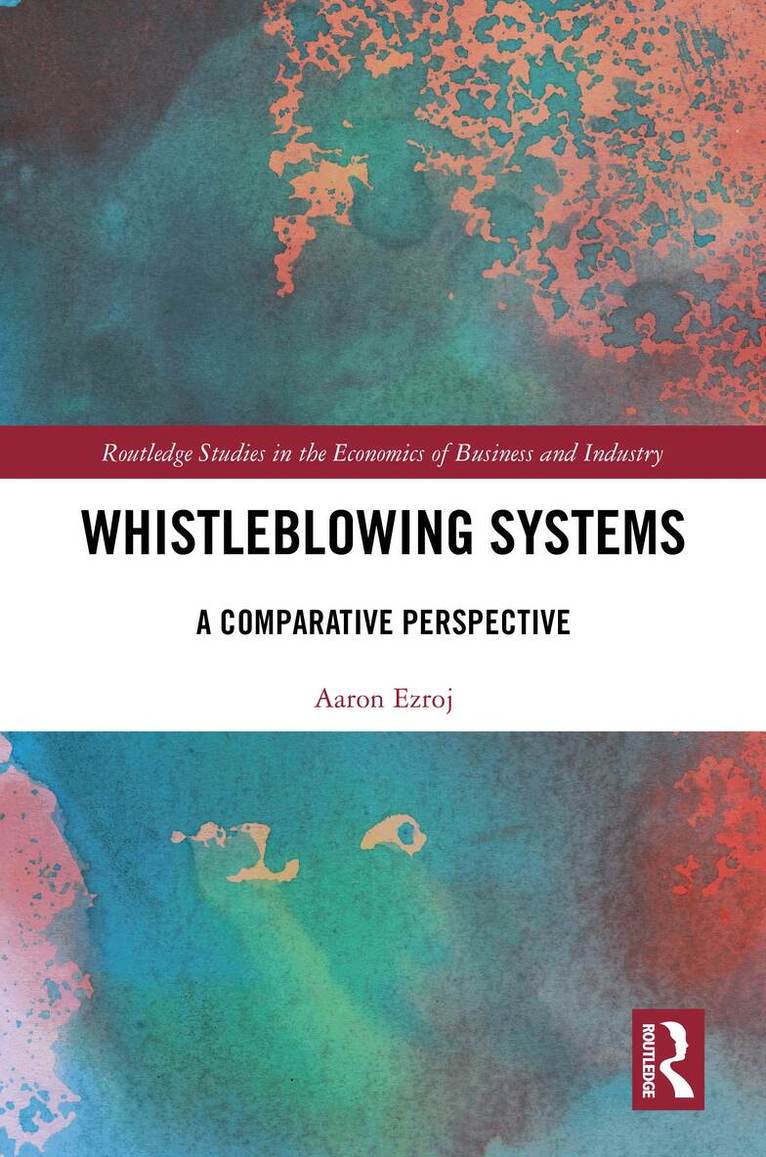
This book provides a comparative perspective of whistleblowing systems across the world. It begins with a discussion of the emergence of whistleblowing systems, identifying landmark events such as President Abraham Lincoln’s signing of the False Claims Act and the European Union’s implementation of the EU Whistleblowing Directive. Next, it provides comprehensive chapters specific to the following industries: banking; accounting; insurance; trade and logistics; engineering, government contracting and funding; healthcare; and cybersecurity. The industry‑specific chapters provide pertinent information to employers, employees, academics, government policymakers and attorneys. Finally, it concludes with a discussion of design components that make whistleblowing systems successful and assesses where there are likely to be future developments. Readers will learn from detailed examples from the United States, Europe, South Africa, South Korea, Singapore, Australia and New Zealand. Properly functioning whistleblowing systems are not only important morally, but they also ensure that banking, money and international finance will thrive. This book will find an audience among researchers, scholars, policymakers and professionals.