Aaron Kuecker - Böcker
Visar alla böcker från författaren Aaron Kuecker. Handla med fri frakt och snabb leverans.
6 produkter
6 produkter
Spirit and the 'Other'
Social Identity, Ethnicity and Intergroup Reconciliation in Luke-Acts
Inbunden, Engelska, 2011
2 183 kr
Skickas inom 5-8 vardagar
In this title, Kuecker uses social identity theory to examine the interface between the Holy Spirit and ethnicity in "Luke-Acts". Kuecker uses an artillery of social identity theory to demonstrate that in "Luke"'s narrative the Spirit is the central figure in the formation of a new social identity. In his argumenation, Kuecker provides extended exegetical treatments of "Luke" 1-4 and "Acts" 1-15. He shows that "Luke" 1-4 establishes a foundation for "Luke"'s understanding of the relationship between human identity, the Spirit, and the 'other' - especially as it relates to the distribution of in-group benefits beyond group boundaries. With regard to "Acts" 1-15, Kuecker shows that the Spirit acts whenever human identity is in question in order to transform communities and individuals via the formation of a new social identity. Kuecker argues that "Luke" depicts this Spirit-formed social identity as a different way of being human in community, relative to the normative identity processes of other groups in his narrative.This transformed identity produces profound expressions of interethnic reconciliation in "Luke-Acts" expressed through reformed economic practice, impressive intergroup hospitality, and a reoriented use of ethnic language. Formerly the "Journal for the Study of the New Testament Supplement", this is a book series that explores the many aspects of New Testament study including historical perspectives, social-scientific and literary theory, and theological, cultural and contextual approaches. "The Early Christianity in Context" series, a part of "JSNTS", examines the birth and development of early Christianity up to the end of the third century CE. The series places Christianity in its social, cultural, political and economic context. European Seminar on Christian Origins and "Journal for the Study of the Historical Jesus Supplement" are also part of "JSNTS".
Spirit and the 'Other'
Social Identity, Ethnicity and Intergroup Reconciliation in Luke-Acts
Häftad, Engelska, 2013
619 kr
Skickas inom 5-8 vardagar
Kuecker uses an artillery of social identity theory to demonstrate that in Luke's narrative the Spirit is the central figure in the formation of a new social identity. In his argumenation Kuecker provides extended exegetical treatments of Luke 1-4 and Acts 1-15. He shows that Luke 1-4 establishes a foundation for Luke's understanding of the relationship between human identity, the Spirit, and the 'other' - especially as it relates to the distribution of in-group benefits beyond group boundaries. With regard to Acts 1-15, Kuecker shows that the Spirit acts whenever human identity is in question in order to transform communities and individuals via the formation of a new social identity.Kuecker argues that Luke depicts this Spirit-formed social identity as a different way of being human in community, relative to the normative identity processes of other groups in his narrative. This transformed identity produces profound expressions of interethnic reconciliation in Luke-Acts expressed through reformed economic practice, impressive intergroup hospitality, and a reoriented use of ethnic language.
2 648 kr
Skickas inom 5-8 vardagar
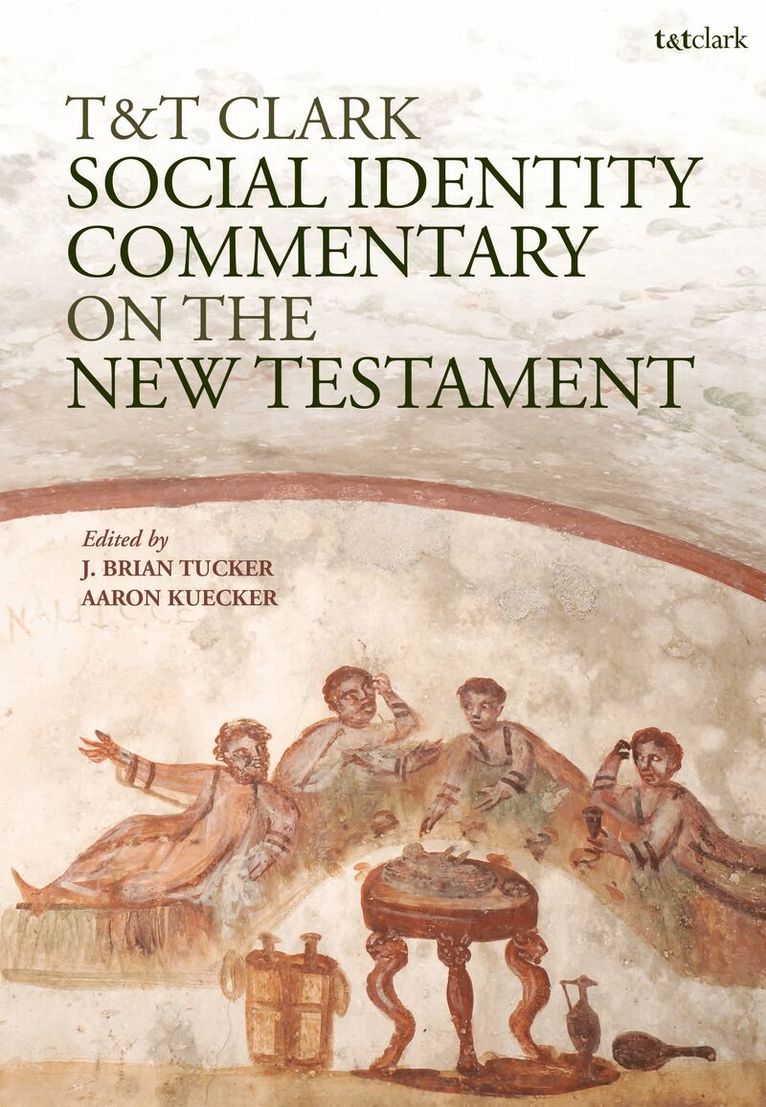
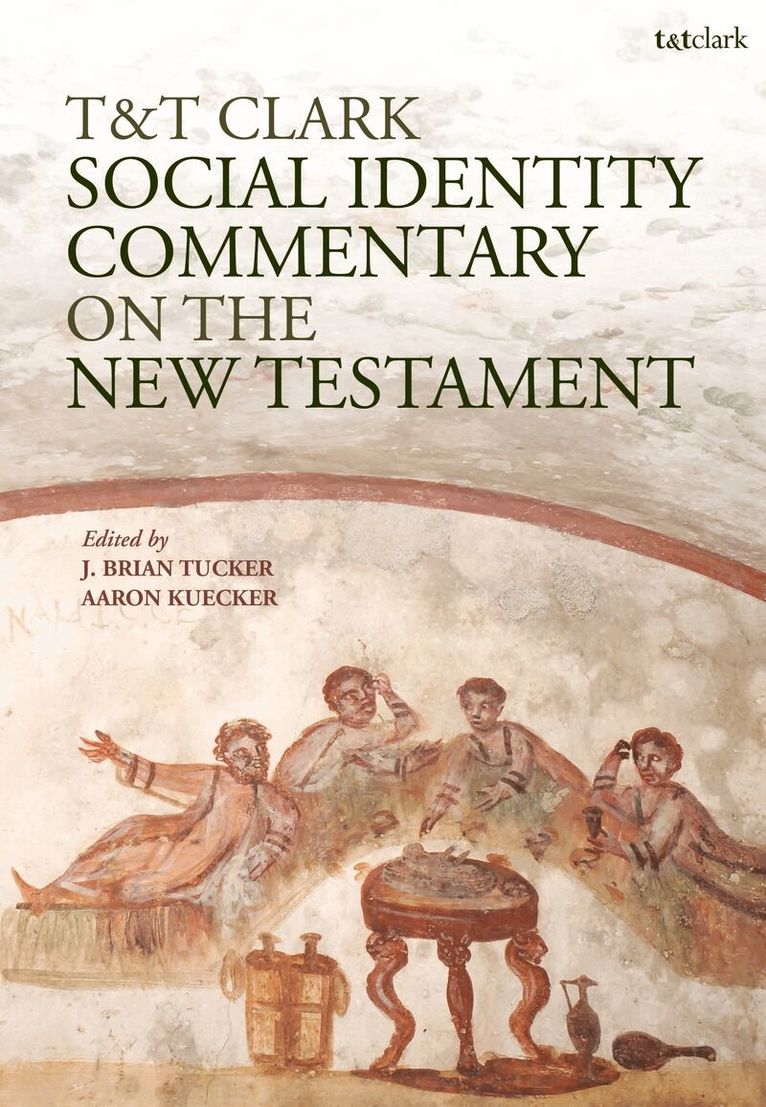
The T & T Clark Social Identity Commentary on the New Testament is a one-of-a-kind comprehensive Bible resource that highlights the way the NT seeks to form the social identity of the members of the earliest Christ-movement. By drawing on the interpretive resources of social-scientific theories—especially those related to the formation of identity—interpreters generate new questions that open fruitful identity-related avenues into the text. It provides helpful introductions to each NT book that focus on various social dimensions of the text as well as a commentary structure that illuminates the text as a work of social influence. The commentary offers methodologically informed discussions of difficult and disputed passages and highlights cultural contexts in theoretically informed ways—drawing on resources from social anthropology, historical sociology, or social identity theory. The innovative but careful scholarship of these writers, most of whom have published monographs on some aspect of social identity within the New Testament, brings to the fore often overlooked social and communal aspects inherent in the NT discourse. The net result is a more concrete articulation of some of the every-day lived experiences of members of the Christ-movement within the Roman Empire, while also offering further insight into the relationship between existing and new identities that produced diverse expressions of the Christ-movement during the first century. The SICNT shows that identity-formation is at the heart of the NT and it offers insights for leaders of faith communities addressing these issues in contemporary contexts.
572 kr
Skickas inom 5-8 vardagar
William S. Campbell provides a comprehensive commentary on Paul’s most challenging letter. In conversation with reception history and previous scholarship, he emphasizes the contextuality of Romans as a letter to Rome, using social identity theory combined with historical, literary and theological perspectives to arrive at a coherent reading of the entire letter. Because Paul has never visited Rome and is not the founder of the Christ-movement there, Campbell argues that his guidance and teaching are formulated more cautiously than in his other letters. Yet the long list of people who had previous links with him and his mission to the ‘gentiles’ demonstrates that Paul is well-informed about the situation in Rome and addresses issues that have arisen.With Christ the Messianic Time is beginning, but there was some lack of clarity in Rome about the implications of this for Jews and gentiles. Rather than ethne in Christ replacing Israel, as some in Rome possibly concluded, Campbell stresses that Paul affirms the irrevocable calling of Israel, and that simultaneously the identity of ethne in Christ is also called alongside the people Israel; thus, the integrity of the identity of both is affirmed as indispensable for God’s purpose now revealed in Christ. Campbell fully demonstrates how Paul in Romans achieves this by the social and theological intertwining of the message of the gospel.
712 kr
Skickas inom 5-8 vardagar
The T & T Clark Social Identity Commentary on the New Testament is a one-of-a-kind comprehensive Bible resource that highlights the way the NT seeks to form the social identity of the members of the earliest Christ-movement. By drawing on the interpretive resources of social-scientific theories—especially those related to the formation of identity—interpreters generate new questions that open fruitful identity-related avenues into the text. It provides helpful introductions to each NT book that focus on various social dimensions of the text as well as a commentary structure that illuminates the text as a work of social influence. The commentary offers methodologically informed discussions of difficult and disputed passages and highlights cultural contexts in theoretically informed ways—drawing on resources from social anthropology, historical sociology, or social identity theory. The innovative but careful scholarship of these writers, most of whom have published monographs on some aspect of social identity within the New Testament, brings to the fore often overlooked social and communal aspects inherent in the NT discourse. The net result is a more concrete articulation of some of the every-day lived experiences of members of the Christ-movement within the Roman Empire, while also offering further insight into the relationship between existing and new identities that produced diverse expressions of the Christ-movement during the first century. The SICNT shows that identity-formation is at the heart of the NT and it offers insights for leaders of faith communities addressing these issues in contemporary contexts.
649 kr
Kommande
Paul’s first letter to the Corinthians deals with key aspects of the formation of the Christian community at Corinth. Paul uses his correspondence with the Corinthians to address issues of morality, of community structure, of ritual and of religious behaviour. The letter is a key document for understanding the development of Christianity and for understanding Christianity in its earliest context.In this Social Identity Commentary, J. Brian Tucker provides a comprehensive coverage of the issues and concerns related to 1 Corinthians from the perspective of social identity. Tucker outlines his interpretation of the theoretical issues concerned, and then applies this to provide a clear overview of historical and critical issues related to the study of 1 Corinthians. This provides a clear engagement with the text that will serve as a useful resource for scholars, students, clergy, and people interested in the formation and purpose of the letter.