Aaron Pelttari - Böcker
Visar alla böcker från författaren Aaron Pelttari. Handla med fri frakt och snabb leverans.
6 produkter
6 produkter
361 kr
Skickas inom 10-15 vardagar
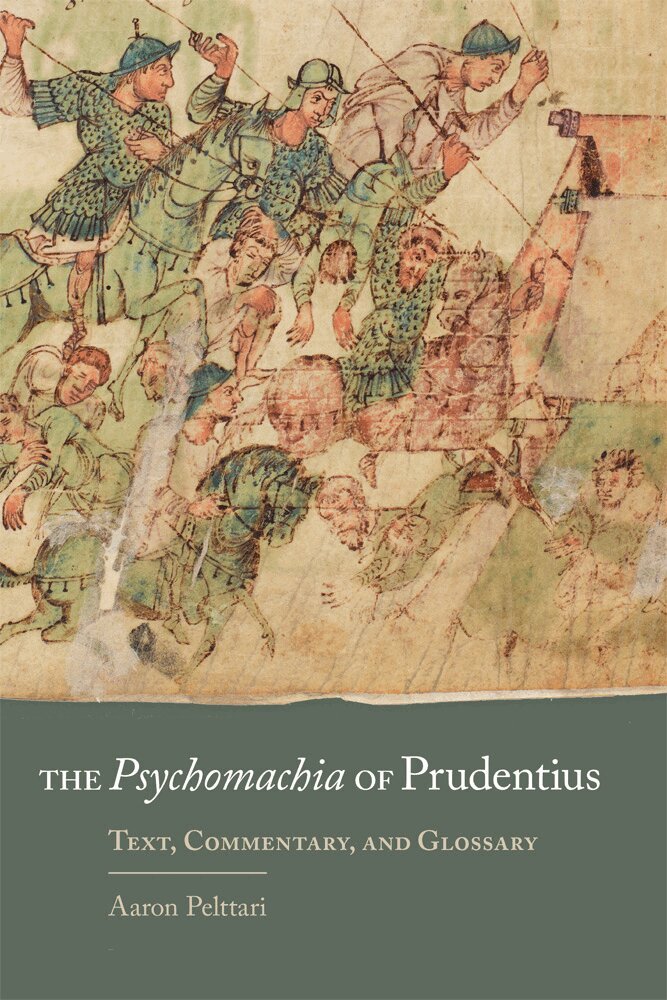
Prudentius (b. 348 c.e.), one of the greatest Latin poets of late antiquity, was also a devoted Christian. His allegorical masterpiece, Psychomachia, combines epic language and theological speculation to offer a powerful vision of Roman and Christian triumphalism. Yet this important work - one of the most popular and influential poems of the Middle Ages - is unfamiliar to most contemporary students of Latin. This edition, featuring the first full-length English commentary on the poem, makes Psychomachia accessible to modern learners.In his wide-ranging introduction, Aaron Pelttari examines the life of Prudentius, the world of late antiquity, and the structure of Psychomachia, along with its aims, reception, and manuscript transmission. The Latin text includes an apparatus criticus, and the corresponding commentary covers points of textual, grammatical, literary, and historical interest. Following the commentary are two appendices: an explanation of the poem's meter, and a glossary of rhetorical and literary terms. A bibliography and a complete Latin-to-English glossary round out the volume. Ten illustrations enrich the text by showcasing medieval illuminations and early editions of the poem.Ideally suited for intermediate and advanced students of Latin, this volume is also useful for instructors and scholars, who will welcome its lucid interpretation of the poem and expert guidance on difficult passages. With its concise yet carefully considered format, The Psychomachia of Prudentius will be a welcome addition to scholarship on late antique Latin literature.
1 117 kr
Skickas inom 3-6 vardagar
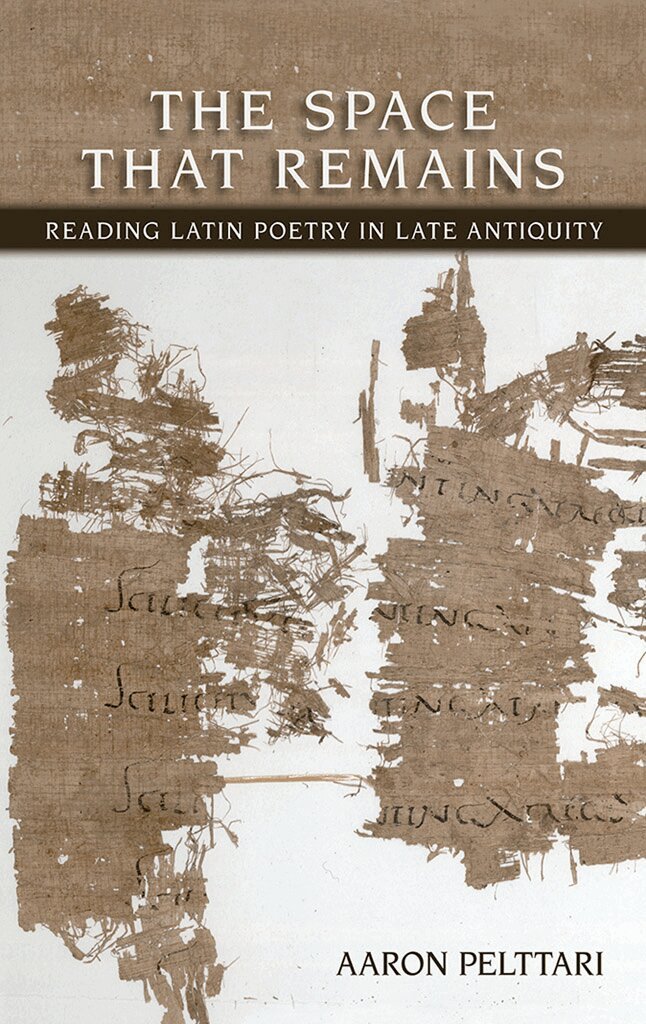
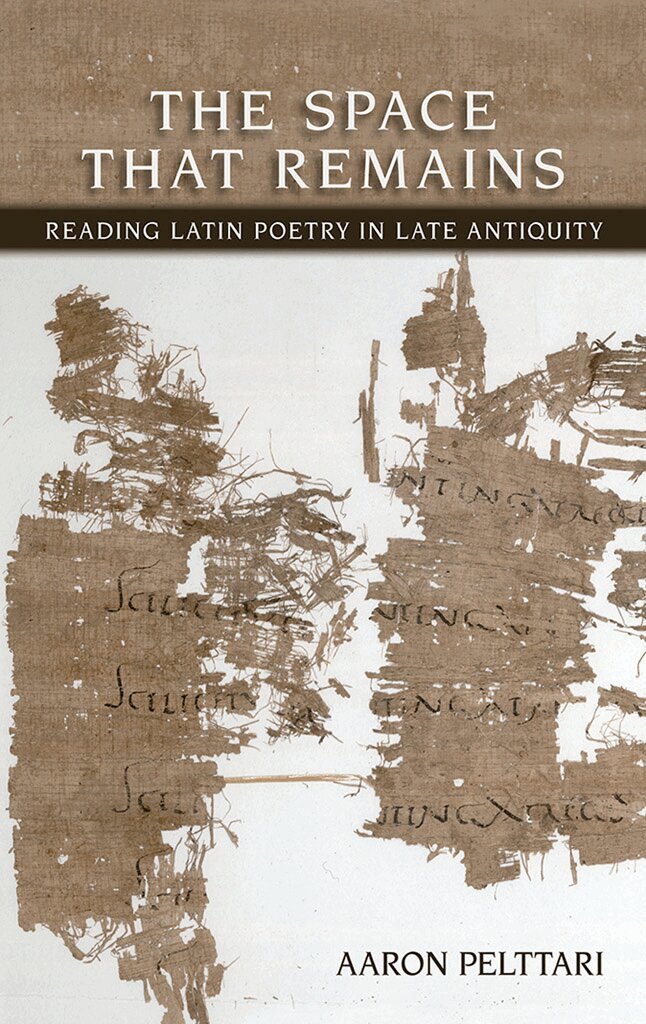
In The Space That Remains, Aaron Pelttari offers the first systematic study of the major fourth-century poets since Michael Robert's foundational The Jeweled Style. It is the first book to give equal attention to both Christian and Pagan poetry and the first to take seriously the issue of readership.As Pelttari shows, the period marked a turn towards forms of writing that privilege the reader's active involvement in shaping the meaning of the text. In the poetry of Ausonius, Claudian, and Prudentius we can see the increasing importance of distinctions between old and new, ancient and modern, forgotten and remembered. The strange traditionalism and verbalism of the day often concealed a desire for immediacy and presence. We can see these changes most clearly in the expectations placed upon readers. The space that remains is the space that the reader comes to inhabit, as would increasingly become the case in the literature of the Latin Middle Ages.
7 030 kr
Tillfälligt slut
Histories of Latin literature have often treated the period from the second to the seventh centuries as an epilogue to the main action - and yet the period includes such towering figures as Apuleius, Claudian, Prudentius, Augustine, Jerome, Boethius, and Isidore. The Cambridge History of Later Latin Literature, with fifty chapters by forty-one scholars, is the first book to treat the immensely diverse literature of these six centuries together in such generous detail. The book shows authors responding to momentous changes, and sometimes shaping or resisting them: the rise of Christianity, the introduction of the codex book, and the end of the western Roman Empire. The contributors' accounts of late antique Latin literature do not shy away from controversy, but are always clear, succinct, and authoritative. Students and scholars wanting to explore unfamiliar areas of Late Antiquity will find their starting point here.
2 346 kr
Skickas inom 7-10 vardagar
Histories of Latin literature have often treated the period from the second to the seventh centuries as an epilogue to the main action - and yet the period includes such towering figures as Apuleius, Claudian, Prudentius, Augustine, Jerome, Boethius, and Isidore. The Cambridge History of Later Latin Literature, with fifty chapters by forty-one scholars, is the first book to treat the immensely diverse literature of these six centuries together in such generous detail. The book shows authors responding to momentous changes, and sometimes shaping or resisting them: the rise of Christianity, the introduction of the codex book, and the end of the western Roman Empire. The contributors' accounts of late antique Latin literature do not shy away from controversy, but are always clear, succinct, and authoritative. Students and scholars wanting to explore unfamiliar areas of Late Antiquity will find their starting point here.
2 346 kr
Skickas inom 7-10 vardagar
Histories of Latin literature have often treated the period from the second to the seventh centuries as an epilogue to the main action - and yet the period includes such towering figures as Apuleius, Claudian, Prudentius, Augustine, Jerome, Boethius, and Isidore. The Cambridge History of Later Latin Literature, with fifty chapters by forty-one scholars, is the first book to treat the immensely diverse literature of these six centuries together in such generous detail. The book shows authors responding to momentous changes, and sometimes shaping or resisting them: the rise of Christianity, the introduction of the codex book, and the end of the western Roman Empire. The contributors' accounts of late antique Latin literature do not shy away from controversy, but are always clear, succinct, and authoritative. Students and scholars wanting to explore unfamiliar areas of Late Antiquity will find their starting point here.
315 kr
Skickas inom 10-15 vardagar
In The Space That Remains, Aaron Pelttari offers the first systematic study of the major fourth-century poets since Michael Robert's foundational The Jeweled Style. It is the first book to give equal attention to both Christian and Pagan poetry and the first to take seriously the issue of readership.As Pelttari shows, the period marked a turn towards forms of writing that privilege the reader's active involvement in shaping the meaning of the text. In the poetry of Ausonius, Claudian, and Prudentius we can see the increasing importance of distinctions between old and new, ancient and modern, forgotten and remembered. The strange traditionalism and verbalism of the day often concealed a desire for immediacy and presence. We can see these changes most clearly in the expectations placed upon readers. The space that remains is the space that the reader comes to inhabit, as would increasingly become the case in the literature of the Latin Middle Ages.