Gavin Kelly - Böcker
Visar alla böcker från författaren Gavin Kelly. Handla med fri frakt och snabb leverans.
9 produkter
9 produkter
799 kr
Skickas inom 5-8 vardagar
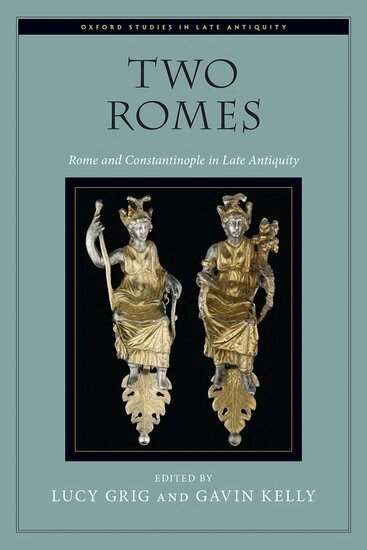
The city of Constantinople was named New Rome or Second Rome very soon after its foundation in AD 324; over the next two hundred years it replaced the original Rome as the greatest city of the Mediterranean. In this unified essay collection, prominent international scholars examine the changing roles and perceptions of Rome and Constantinople in Late Antiquity from a range of different disciplines and scholarly perspectives. The seventeen chapters cover both the comparative development and the shifting status of the two cities. Developments in politics and urbanism are considered, along with the cities' changing relationships with imperial power, the church, and each other, and their evolving representations in both texts and images. These studies present important revisionist arguments and new interpretations of significant texts and events. This comparative perspective allows the neglected subject of the relationship between the two Romes to come into focus while avoiding the teleological distortions common in much past scholarship. An introductory section sets the cities, and their comparative development, in context. Part Two looks at topography, and includes the first English translation of the Notitia of Constantinople. The following section deals with politics proper, considering the role of emperors in the two Romes and how rulers interacted with their cities. Part Four then considers the cities through the prism of literature, in particular through the distinctively late antique genre of panegyric. The fifth group of essays considers a crucial aspect shared by the two cities: their role as Christian capitals. Lastly, a provocative epilogue looks at the enduring Roman identity of the post-Heraclian Byzantine state. Thus, Two Romes not only illuminates the study of both cities but also enriches our understanding of the late Roman world in its entirety.
1 531 kr
Skickas inom 5-8 vardagar
The city of Constantinople was named New Rome or Second Rome very soon after its foundation in AD 324; over the next two hundred years it replaced the original Rome as the greatest city of the Mediterranean. In this unified essay collection, prominent international scholars examine the changing roles and perceptions of Rome and Constantinople in Late Antiquity from a range of different disciplines and scholarly perspectives. The seventeen chapters cover both the comparative development and the shifting status of the two cities. Developments in politics and urbanism are considered, along with the cities' changing relationships with imperial power, the church, and each other, and their evolving representations in both texts and images. These studies present important revisionist arguments and new interpretations of significant texts and events. This comparative perspective allows the neglected subject of the relationship between the two Romes to come into focus while avoiding the teleological distortions common in much past scholarship. An introductory section sets the cities, and their comparative development, in context. Part Two looks at topography, and includes the first English translation of the Notitia of Constantinople. The following section deals with politics proper, considering the role of emperors in the two Romes and how rulers interacted with their cities. Part Four then considers the cities through the prism of literature, in particular through the distinctively late antique genre of panegyric. The fifth group of essays considers a crucial aspect shared by the two cities: their role as Christian capitals. Lastly, a provocative epilogue looks at the enduring Roman identity of the post-Heraclian Byzantine state. Thus, Two Romes not only illuminates the study of both cities but also enriches our understanding of the late Roman world in its entirety.
644 kr
Skickas inom 7-10 vardagar
Ammianus Marcellinus is usually regarded as our most important source for the history of the second half of the fourth century AD, while his literary qualities are neglected. This book demonstrates what a subtle and manipulative writer Ammianus is; attention is paid particularly to his rich and variegated intertextuality with earlier classical literature and history. Questioning the prevailing interest in the historian's life as the key to his work, Dr Kelly evaluates the historiographical function of the vivid and thrilling autobiographical passages. The range of Ammianus' allusions is surveyed, including his use of classical examples, his relationship with historical source-texts and the workings of internal echoes within the history. His interactions with other texts are seen as carefully controlled and meaningful; and both his allusive techniques and writing in general, it is argued, are better viewed as reflecting a classical, rather than a late antique, aesthetic.
1 189 kr
Skickas inom 7-10 vardagar
Ammianus Marcellinus is usually regarded as our most important source for the history of the second half of the fourth century AD, while his literary qualities are neglected. This book demonstrates what a subtle and manipulative writer Ammianus is; attention is paid particularly to his rich and variegated intertextuality with earlier classical literature and history. Questioning the prevailing interest in the historian's life as the key to his work, Dr Kelly evaluates the historiographical function of the vivid and thrilling autobiographical passages. The range of Ammianus' allusions is surveyed, including his use of classical examples, his relationship with historical source-texts and the workings of internal echoes within the history. His interactions with other texts are seen as carefully controlled and meaningful; and both his allusive techniques and writing in general, it is argued, are better viewed as reflecting a classical, rather than a late antique, aesthetic.
7 030 kr
Tillfälligt slut
Histories of Latin literature have often treated the period from the second to the seventh centuries as an epilogue to the main action - and yet the period includes such towering figures as Apuleius, Claudian, Prudentius, Augustine, Jerome, Boethius, and Isidore. The Cambridge History of Later Latin Literature, with fifty chapters by forty-one scholars, is the first book to treat the immensely diverse literature of these six centuries together in such generous detail. The book shows authors responding to momentous changes, and sometimes shaping or resisting them: the rise of Christianity, the introduction of the codex book, and the end of the western Roman Empire. The contributors' accounts of late antique Latin literature do not shy away from controversy, but are always clear, succinct, and authoritative. Students and scholars wanting to explore unfamiliar areas of Late Antiquity will find their starting point here.
2 346 kr
Skickas inom 7-10 vardagar
Histories of Latin literature have often treated the period from the second to the seventh centuries as an epilogue to the main action - and yet the period includes such towering figures as Apuleius, Claudian, Prudentius, Augustine, Jerome, Boethius, and Isidore. The Cambridge History of Later Latin Literature, with fifty chapters by forty-one scholars, is the first book to treat the immensely diverse literature of these six centuries together in such generous detail. The book shows authors responding to momentous changes, and sometimes shaping or resisting them: the rise of Christianity, the introduction of the codex book, and the end of the western Roman Empire. The contributors' accounts of late antique Latin literature do not shy away from controversy, but are always clear, succinct, and authoritative. Students and scholars wanting to explore unfamiliar areas of Late Antiquity will find their starting point here.
204 kr
Skickas inom 7-10 vardagar
"A wise and wide-ranging reminder of the things we should have been talking about when we were talking about Brexit."—Stephanie Flanders, Head of Bloomberg Economics"With the national debate bogged down in the messy process of negotiating the UK’s exit from and future relationship with the EU, this book is a timely look at the bigger question: what kind of country do we want to be after Brexit and how do we make it happen? Sharp, clear writing on the most important question of our time, by some of the smartest people around."—Sarah O'Connor, investigations correspondent and columnist, Financial Times"This excellent collection of astute and forward-looking essays, from some of Britain’s leading commentators and academics, offers much-needed perspective on the emerging trends in our economy, society and politics which are reshaping the UK in fundamental ways. It is an indispensable read for those interested in understanding what these dynamics mean for public policy now, and in decades to come."—Michael Kenny, Professor of Public Policy, University of CambridgeBrexit represents a critical juncture in British politics. In this new collection, leading economists, political scientists, historians and public policy experts analyse what the Brexit decision might mean for Britain’s economy, society and politics. Anticipating the challenges of the 2020s, the authors explore how Britain might change in the aftermath of the current Brexit storm. The contributions analyse the future of the British economic model, migration and the labour market, the UK’s constitution and political parties, the politics of housing, the challenge of generational conflict, tax and public spending, the prospects for the City and the future of UK trade. It is essential reading for anyone interested in how today’s Brexit decision will shape the future of the country.
2 346 kr
Skickas inom 7-10 vardagar
Histories of Latin literature have often treated the period from the second to the seventh centuries as an epilogue to the main action - and yet the period includes such towering figures as Apuleius, Claudian, Prudentius, Augustine, Jerome, Boethius, and Isidore. The Cambridge History of Later Latin Literature, with fifty chapters by forty-one scholars, is the first book to treat the immensely diverse literature of these six centuries together in such generous detail. The book shows authors responding to momentous changes, and sometimes shaping or resisting them: the rise of Christianity, the introduction of the codex book, and the end of the western Roman Empire. The contributors' accounts of late antique Latin literature do not shy away from controversy, but are always clear, succinct, and authoritative. Students and scholars wanting to explore unfamiliar areas of Late Antiquity will find their starting point here.
1 177 kr
Skickas inom 10-15 vardagar
Theoretical writing on the company and company law has been dominated in recent years by economics. This collection of essays by a distinguished team of authors drawn from a variety of disciplines seeks to build on the insights of this economic analysis and broaden understanding by examining the company in a wider historical,legal, political, and sociological context. Issues discussed include the attitudes of political parties in the UK to the company, the rise of the non-executive director, institutional activism and stakeholder protection, and the evolution of the nexus of contracts theory of the company. There is also a strong comparative theme, with discussions of the political and sociological context of corporate governance in France, Germany, and Japan, together with developments at the European level.