Abikal Borah - Böcker
Visar alla böcker från författaren Abikal Borah. Handla med fri frakt och snabb leverans.
3 produkter
3 produkter
1 218 kr
Kommande
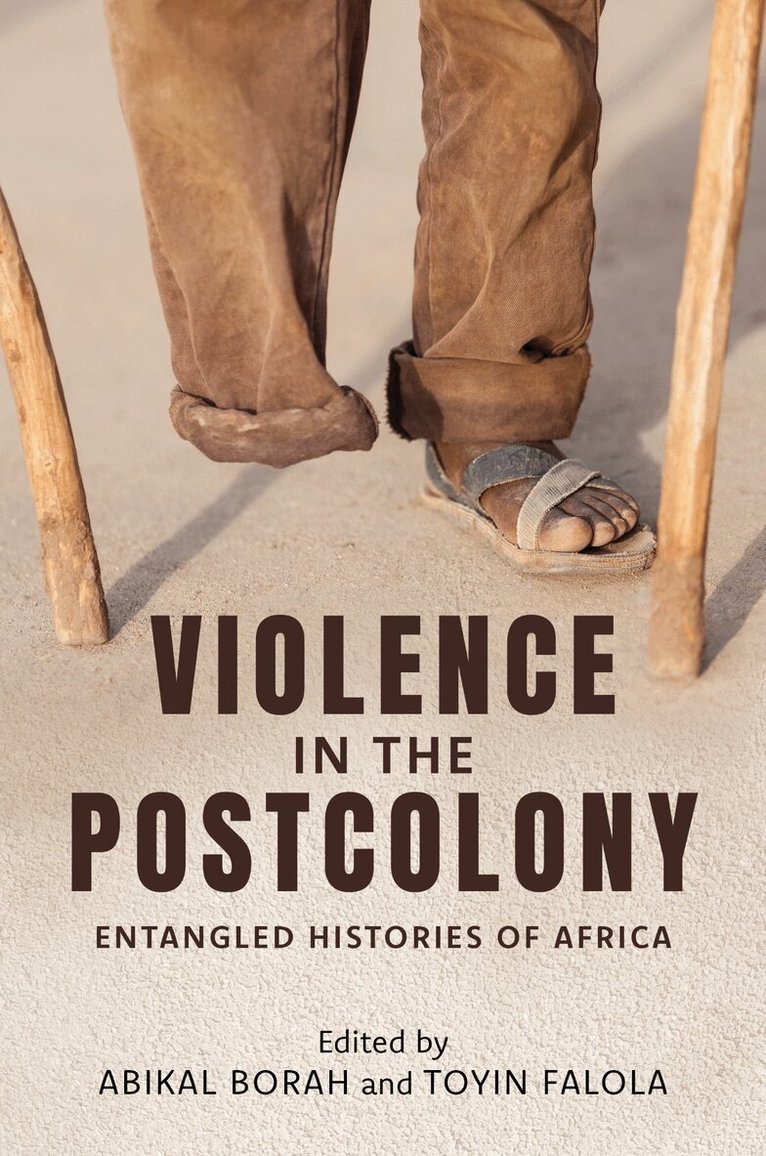
Where present-day media has depicted violent conditions in Africa as a spectacle born out of political instability, postcolonial scholars have discussed violence as a dialectic of law and disorder, a regime structured by the biopolitical state, or as a performative tool used to challenge ethical and political norms. While the latter approaches rely on historical trajectories of violence, popular and academic discourse's shared emphasis on the state often loses sight of Africans' social histories and lived experiences of violence.Violence in the Postcolony expands this discussion, presenting a set of microhistories, ethnographic accounts, and analyses of cultural forms to reflect on the postcolonial condition of Africa. Ambitious and expansive in its scope and scale, it brings together original contributions from a group of eminent scholars and includes case studies from North, West, and Southern Africa, as well as the African Great Lakes region. Through multidisciplinary frameworks, the contributors offer new lenses for examining entangled histories of violence, revealing the social and everyday processes that inform manifestations of violence and critiquing African subjectivities and lifeworlds produced through experiences of violence. Excavating histories of collective memory, the violence of belonging, colonial onomacide, the interplay between violence and sacredness, the everyday struggle for space, political violence, population displacement, xenophobia, and the lifeworld of génocidaires, this collection unfolds layered meanings of human suffering. Through careful examination of the dynamics and logics of violence in its different forms, Violence in the Postcolony is an essential and timely invitation to embrace new avenues of inquiry into Africa's past and present.
604 kr
Kommande
Where present-day media has depicted violent conditions in Africa as a spectacle born out of political instability, postcolonial scholars have discussed violence as a dialectic of law and disorder, a regime structured by the biopolitical state, or as a performative tool used to challenge ethical and political norms. While the latter approaches rely on historical trajectories of violence, popular and academic discourse's shared emphasis on the state often loses sight of Africans' social histories and lived experiences of violence.Violence in the Postcolony expands this discussion, presenting a set of microhistories, ethnographic accounts, and analyses of cultural forms to reflect on the postcolonial condition of Africa. Ambitious and expansive in its scope and scale, it brings together original contributions from a group of eminent scholars and includes case studies from North, West, and Southern Africa, as well as the African Great Lakes region. Through multidisciplinary frameworks, the contributors offer new lenses for examining entangled histories of violence, revealing the social and everyday processes that inform manifestations of violence and critiquing African subjectivities and lifeworlds produced through experiences of violence. Excavating histories of collective memory, the violence of belonging, colonial onomacide, the interplay between violence and sacredness, the everyday struggle for space, political violence, population displacement, xenophobia, and the lifeworld of génocidaires, this collection unfolds layered meanings of human suffering. Through careful examination of the dynamics and logics of violence in its different forms, Violence in the Postcolony is an essential and timely invitation to embrace new avenues of inquiry into Africa's past and present.
1 619 kr
Skickas inom 10-15 vardagar
Imagining Vernacular Histories is centered on the idea of engaging with indigenous African cosmologies that signal at pluriversality. In conversation with Toyin Falola’s reading of the African pluriverse and his exploration of the idea of “ritual archives,” the contributors to this volume rethink the historical archive in search of vernacular histories. Simultaneously, they recognize the contributions from various other disciplines in pluralizing the term vernacular. The book brings together a wide range of topics, such as reflections on African historiography; the relationship between memory, history and literature; gender relations; and the construction of historical archives. While appropriating Falola’s conception of vernacular histories, the contributors collectively argue that pluriversality and ritual archives can potentially rescue African historical and creative scholarship from the sustained practices of epistemicide. Simultaneously, Imagining Vernacular Histories focuses on the emerging interdisciplinary conversations on constructing the pluriverse as well as on the geopolitics of knowledge production. Through a critical appreciation of Falola’s engagement with the ideas of postcoloniality, decolonizing epistemologies, and pluriversality, this book locates his scholarship in relation to postcolonial theory emerging from the Global South.