
A.C. Graham – författare
Visar alla böcker från författaren A.C. Graham. Handla med fri frakt och snabb leverans.
3 produkter
3 produkter
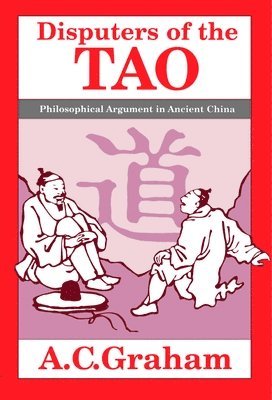
Häftad, Engelska, 1999
417 kr
Skickas inom 5-8 vardagar
"A history of Chinese philosophy in the so-called Axial Period (the period of classical Greek and Indian philosophy), during which time China evolved the characteristic ways of thought that sustained both its empire and its culture for over 2000 years. It is comprehensive, lucid, almost simple in its presentation, yet backed up with incomparable authority amid a well-honed discretion that unerringly picks out the core of any theme. Garlanded with tributes even before publication, it has redrawn the map of its subject and will be the one essential guide for any future exploration. For anyone interested in the affinities between ancient Chinese and modern Western philosophy, there is no better introduction."Contemporary Review
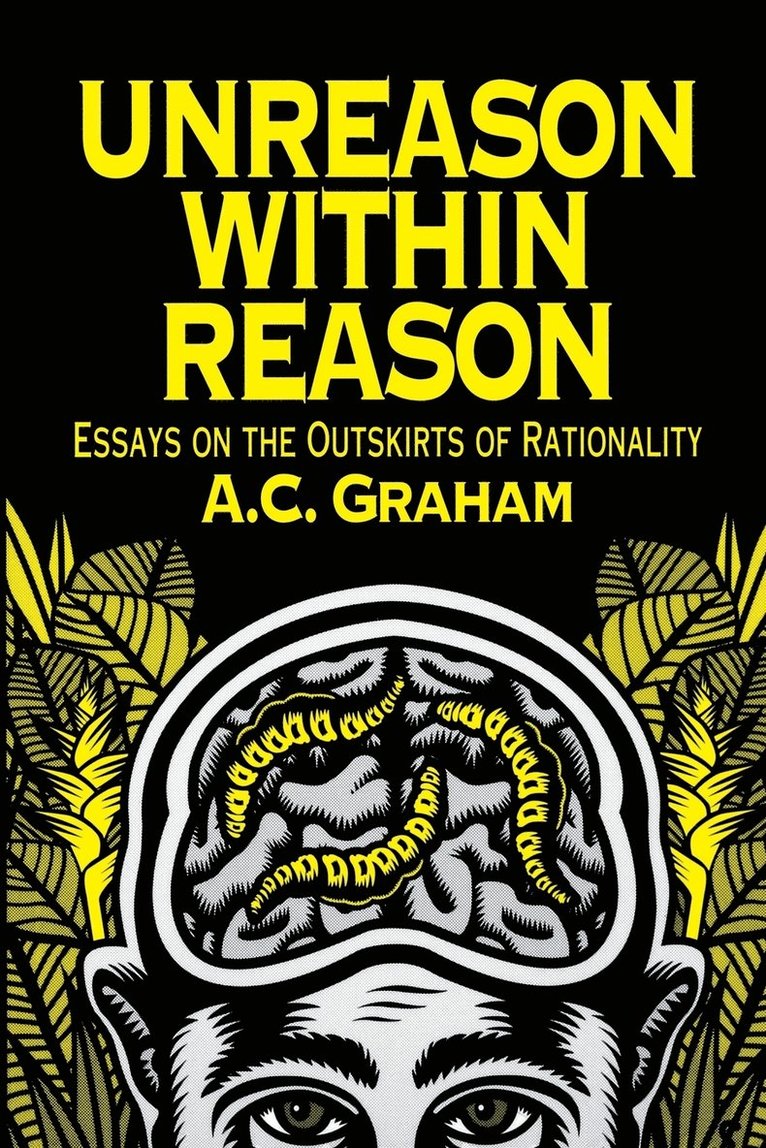
Häftad, Engelska, 1999
189 kr
Skickas inom 5-8 vardagar
The Western tradition has tended to identify thinking with the purely logical, excluding other kinds of thinking (such as thinking by analogy, correlation, imaginative simulation) from philosophy, without denying their indispensability in the conduct of life. The central argument of "Unreason Within Reason" is that it is this endeavour to detach the logical from other kinds of thinking which has led to the present crisis of rationality, in which reason seems everywhere to be undermining its own foundations. The concepts from which logical thinking starts are inescapably rooted in the spontaneous correlation of the similar/contrasting and contiguous/remote which, according to Jakobsonian linguistics, structures the sentences analysed by logic. Logical thinking can turn back on itself to criticise the correlations, but cannot detach itself to replace them by logically impregnable foundations. The still-viable type of rationalism is a variant on Popper's "critical rationalism" which does not, like Popper's, relegate the non-logical element in thought to the psychology of knowledge.No mode of thinking - poetic, mythic, mystical - is inherently irrational; the function of the logical is not to replace them but to test them. Graham finds this approach relevant to the fact/value and egoism/altruism problems in moral philosophy and to the epistemological problem of conflicting conceptual schemes, as well as to situating myth and mysticism in relation to philosophy and to the development of a variety of perspectivism clearly distinguishable from relativism. Special attention is paid to Nietzsche and Bataille, as representative critics of rationalism, and to Chinese philosophy, as a tradition which has not isolated the logical from other kinds of thinking.
Inbunden, Engelska, 2003
540 kr
Skickas inom 5-8 vardagar
The Canons and other later writings of the school of Mo-tzu, dating from about 300 B.C., contain nearly all that survives of the logic of ancient China, and its optics and mechanics, the only organized set of geometrical definitions, and the only fully rationalized system of ethics. They represent the high point of abstract rationality in traditional Chinese civilization, and are crucial documents for any inquiry into its achievements and limitations in logic and science. Unfortunately their formidable textual difficulties have hitherto made it impossible to use them with any confidence, and English translations of Mo-tzu, have omitted them. Western sinologists have generally ignored this rich material with the result that they have been forced to draw their conclusions about Chinese logic from the almost negligible remains of the Sophists. The present work begins with a general account of the school of Mo-tzu, its social basis as a movement of craftsmen, its isolated place in the Chinese tradition, and the nature of its later contributions to logic, ethics and science. The relation of Mohist thinking to the structure of the Chinese language is also discussed. The textual problems of the later writings, the grammar and style, the technical terminology, the significance of stock examples, and the overall organization of the documents, are then explored in detail. With the investigation of these preliminary questions, the possibilities of interpretation are confined within controllable limits. The edited and annotated Chinese text follows, with an English translation and commentary, a glossary, and a photographic reproduction of the unemended text from the Taoist Patrology.