A.D. Morrison-Low - Böcker
Visar alla böcker från författaren A.D. Morrison-Low. Handla med fri frakt och snabb leverans.
4 produkter
4 produkter
2 316 kr
Skickas inom 10-15 vardagar
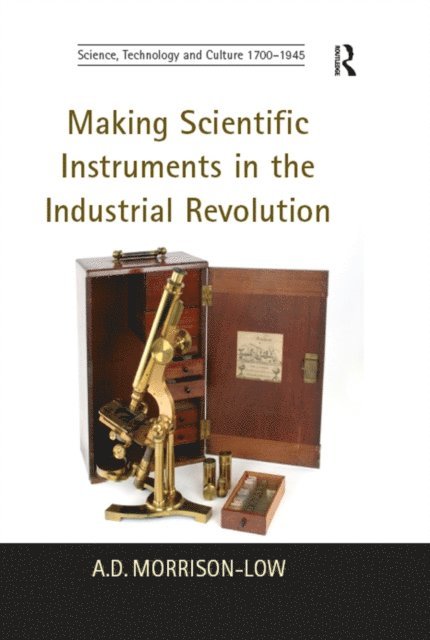
At the start of the Industrial Revolution, it appeared that most scientific instruments were made and sold in London, but by the time of the Great Exhibition in 1851, a number of provincial firms had the self-confidence to exhibit their products in London to an international audience. How had this change come about, and why? This book looks at the four main, and two lesser, English centres known for instrument production outside the capital: Birmingham, Liverpool, Manchester and Sheffield, along with the older population centres in Bristol and York. Making wide use of new sources, Dr Morrison-Low, curator of history of science at the National Museums of Scotland, charts the growth of these centres and provides a characterisation of their products. New information is provided on aspects of the trade, especially marketing techniques, sources of materials, tools and customer relationships. From contemporary evidence, she argues that the principal output of the provincial trade (with some notable exceptions) must have been into the London marketplace, anonymously, and at the cheaper end of the market. She also discusses the structure and organization of the provincial trade, and looks at the impact of new technology imported from other closely-allied trades. By virtue of its approach and subject matter the book considers aspects of economic and business history, gender and the family, the history of science and technology, material culture, and patterns of migration. It contains a myriad of stories of families and firms, of entrepreneurs and customers, and of organizations and arms of government. In bringing together this wide range of interests, Dr Morrison-Low enables us to appreciate how central the making, selling and distribution of scientific instruments was for the Industrial Revolution.
847 kr
Skickas inom 10-15 vardagar
At the start of the Industrial Revolution, it appeared that most scientific instruments were made and sold in London, but by the time of the Great Exhibition in 1851, a number of provincial firms had the self-confidence to exhibit their products in London to an international audience. How had this change come about, and why? This book looks at the four main, and two lesser, English centres known for instrument production outside the capital: Birmingham, Liverpool, Manchester and Sheffield, along with the older population centres in Bristol and York. Making wide use of new sources, Dr Morrison-Low, curator of history of science at the National Museums of Scotland, charts the growth of these centres and provides a characterisation of their products. New information is provided on aspects of the trade, especially marketing techniques, sources of materials, tools and customer relationships. From contemporary evidence, she argues that the principal output of the provincial trade (with some notable exceptions) must have been into the London marketplace, anonymously, and at the cheaper end of the market. She also discusses the structure and organization of the provincial trade, and looks at the impact of new technology imported from other closely-allied trades. By virtue of its approach and subject matter the book considers aspects of economic and business history, gender and the family, the history of science and technology, material culture, and patterns of migration. It contains a myriad of stories of families and firms, of entrepreneurs and customers, and of organizations and arms of government. In bringing together this wide range of interests, Dr Morrison-Low enables us to appreciate how central the making, selling and distribution of scientific instruments was for the Industrial Revolution.
Del 2 - Scientific Instruments and Collections
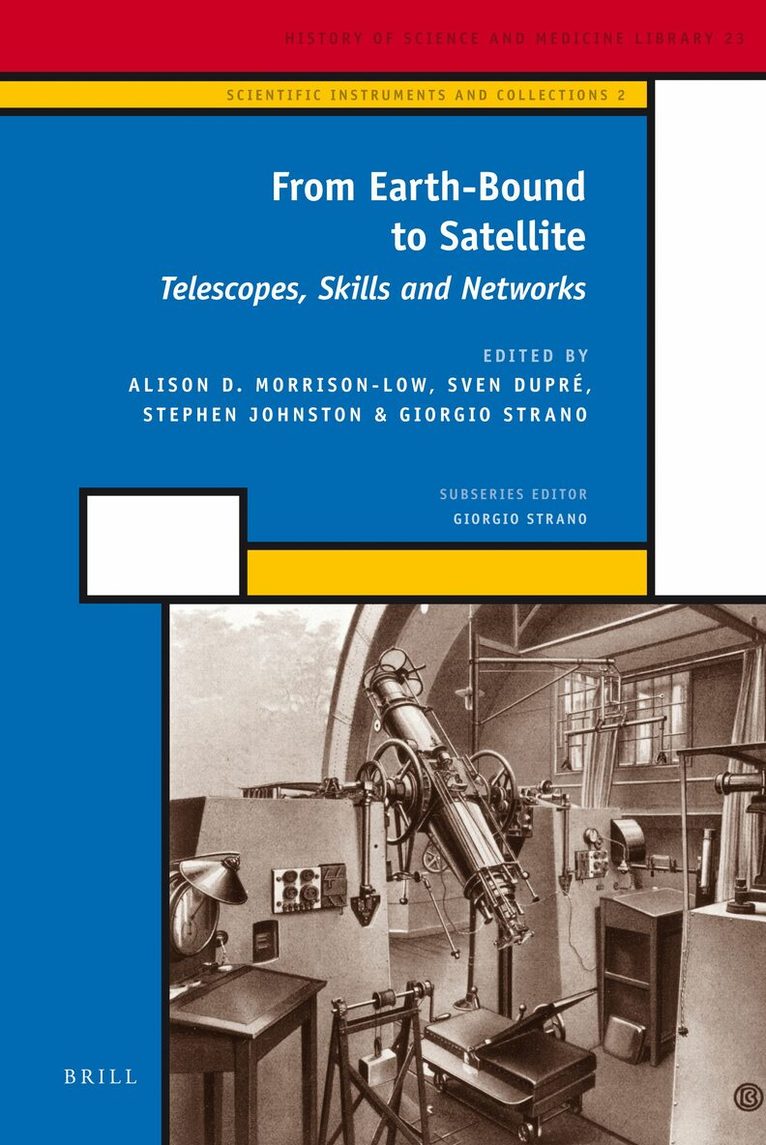
From Earth-Bound to Satellite
Telescopes, Skills and Networks
Inbunden, Engelska, 2011
2 109 kr
Skickas inom 5-8 vardagar
The volume forms a part of the celebrations marking the anniversary of the invention of the telescope. From its Renaissance beginnings to yesterday’s Cold War, the essays contributed here throw a spotlight on a number of significant episodes in the continuing adventures of this well-loved instrument, which has played a crucial role in Man’s thinking about his position – literally and philosophically – in the universe. Drawn from various conferences held by the Scientific Instrument Commission of the International Union of the History and Philosophy of Science between 2007 and 2009, these papers make a substantial contribution to our current knowledge about this fascinating optical instrument.
Del 5 - Scientific Instruments and Collections
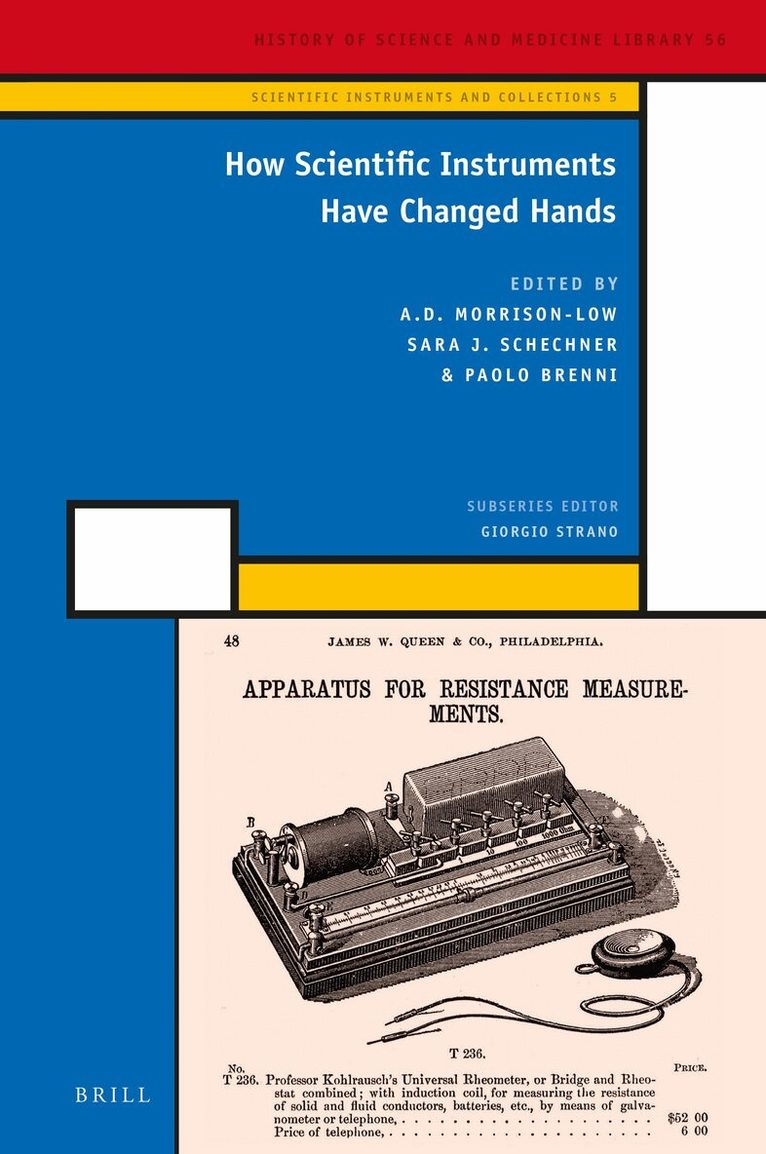
How Scientific Instruments Have Changed Hands
Inbunden, Engelska, 2016
2 381 kr
Skickas inom 5-8 vardagar
This collection of essays discusses the marketing of scientific and medical instruments from the eighteenth century to the First World War. The evidence presented here is derived from sources as diverse as contemporary trade literature, through newspaper advertisements, to rarely-surviving inventories, and from the instruments themselves. The picture may not yet be complete, but it has been acknowledged that it is more complex than sketched out twenty-five or even fifty years ago. Here is a collection of case-studies from the United Kingdom, the Americas and Europe showing instruments moving from maker to market-place, and, to some extent, what happened next.Contributors are: Alexi Baker, Paolo Brenni, Laura Cházaro, Gloria Clifton, Peggy Aldrich Kidwell, Richard L. Kremer, A.D. Morrison-Low, Joshua Nall, Sara J. Schechner, and Liba Taub.