Adalaide Morris – författare
Visar alla böcker från författaren Adalaide Morris. Handla med fri frakt och snabb leverans.
5 produkter
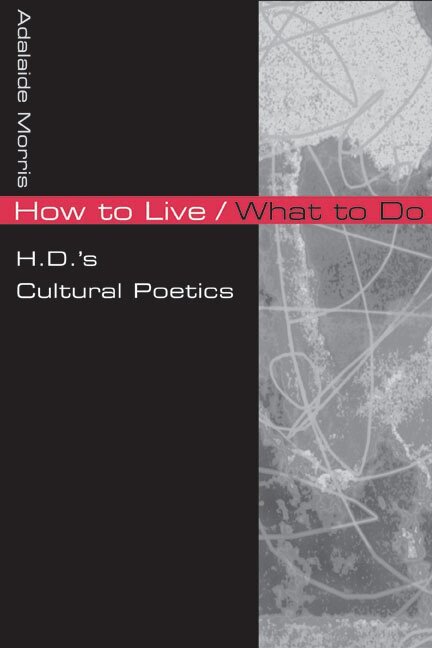
How to Live/What to Do
H.D.'s Cultural Poetics
Häftad, 2008
444 kr
Lägg i varukorg
The writing of H.D. is so linguistically rich and multilayered in structure that it has had almost as many interpretations as it has interpreters, from Freudians to feminists, from classicists to postmodernists. In How to Live/What to Do, however, Adalaide Morris removes the work of this iconic …
Sound States
Innovative Poetics and Acoustical Technologies
Häftad, 1998
692 kr
Lägg i varukorg
By investigating the relationship between acoustical technologies and twentieth-century experimental poetics, this collection, with an accompanying compact disc, aims to 'turn up the volume' on printed works and rethink the way we read, hear, and talk about literary texts composed after telephones, …
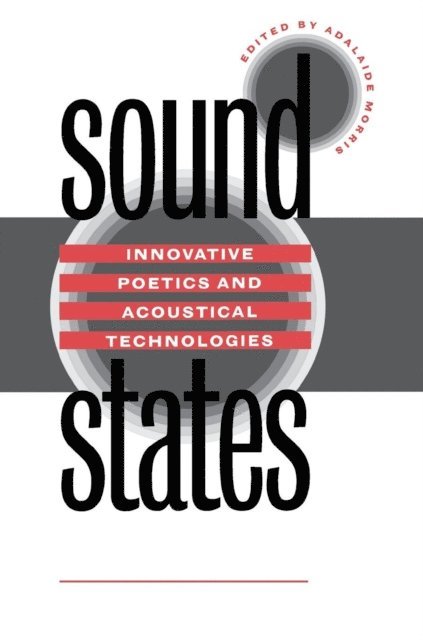
Sound States
Innovative Poetics and Acoustical Technologies
E-bok, 2018
598 kr
Lägg i varukorg
By investigating the relationship between acoustical technologies and twentieth-century experimental poetics, this collection, with an accompanying compact disc, aims to ''turn up the volume'' on printed works and rethink the way we read, hear, and talk about literary texts composed after …
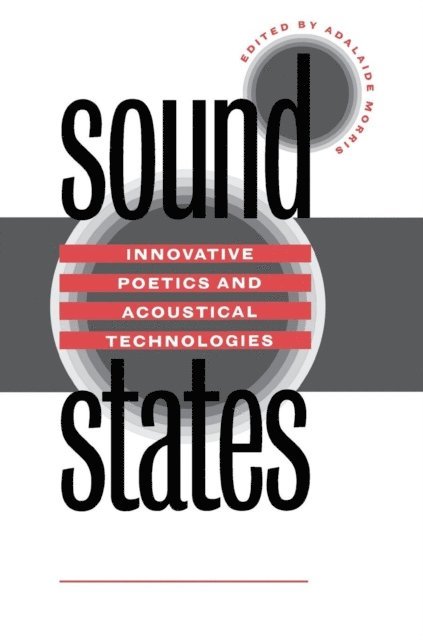
Sound States
Innovative Poetics and Acoustical Technologies
E-bok, 2018
569 kr
Lägg i varukorg
By investigating the relationship between acoustical technologies and twentieth-century experimental poetics, this collection, with an accompanying compact disc, aims to ''turn up the volume'' on printed works and rethink the way we read, hear, and talk about literary texts composed after …
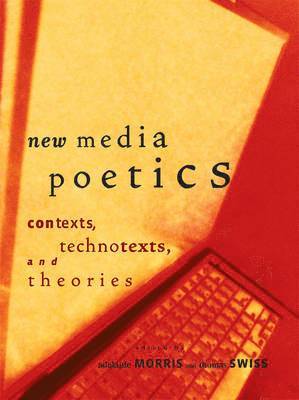
New Media Poetics
Contexts, Technotexts, and Theories
Av Adalaide Morris, Thomas Swiss
Häftad, 2009
113 kr
Tillfälligt slut