Adam Jortner – författare
Visar alla böcker från författaren Adam Jortner. Handla med fri frakt och snabb leverans.
9 produkter
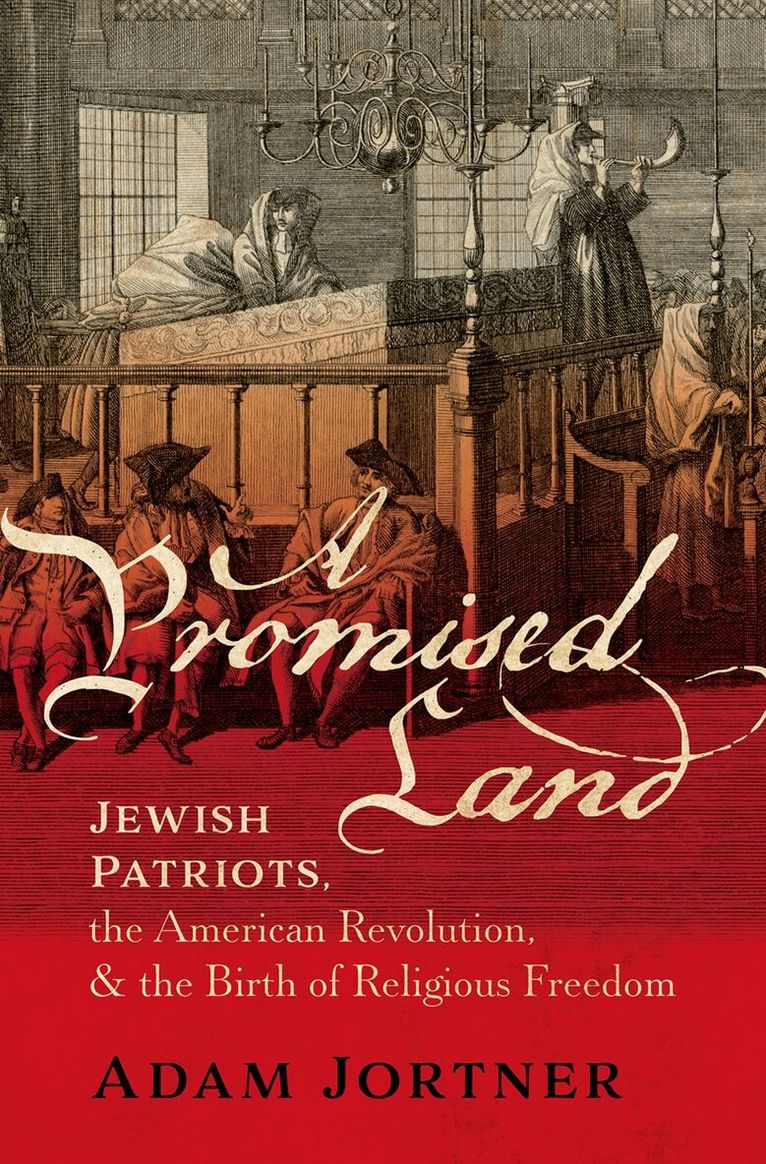
A Promised Land
Jewish Patriots, the American Revolution, and the Birth of Religious Freedom
Av Adam Jortner
Inbunden, 2024
406 kr
Lägg i varukorg
A new history that centers Judaism at the dawn of the United StatesJews played a critical role both in winning the American Revolution--fighting for the Patriot cause from Bunker Hill to Yorktown--and in defining the republic that was created from it. As the most visible non-Christian religion, …
Promised Land
Jewish Patriots, the American Revolution, and the Birth of Religious Freedom
Av Adam Jortner
E-bok, 2024
370 kr
Lägg i varukorg
A new history that centers Judaism at the dawn of the United States Jews played a critical role both in winning the American Revolution--fighting for the Patriot cause from Bunker Hill to Yorktown--and in defining the republic that was created from it. As the most visible non-Christian religion, …
Promised Land
Jewish Patriots, the American Revolution, and the Birth of Religious Freedom
Av Adam Jortner
E-bok, 2024
370 kr
Lägg i varukorg
A new history that centers Judaism at the dawn of the United States Jews played a critical role both in winning the American Revolution--fighting for the Patriot cause from Bunker Hill to Yorktown--and in defining the republic that was created from it. As the most visible non-Christian religion, …
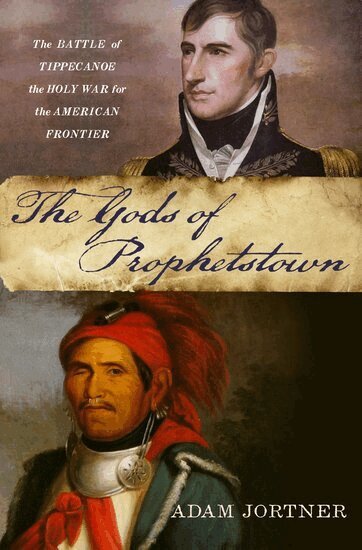
The Gods of Prophetstown
The Battle of Tippecanoe and the Holy War for the American Frontier
Av Adam Jortner
Inbunden, 2012
383 kr
Lägg i varukorg
It began with a total eclipse of the sun. In 1806, a Shawnee known as Lalawauthika (roughly meaning "Loudmouth"), proclaimed himself Tenskwatawa ("The Open Door"), a spiritual leader in direct contact with the Master of Life. Those who disbelieved him, he warned, "would see darkness come over the …
Gods of Prophetstown
The Battle of Tippecanoe and the Holy War for the American Frontier
Av Adam Jortner
E-bok, 2011
283 kr
Lägg i varukorg
It began with an eclipse. In 1806, the Shawnee leader Tenskwatawa ("The Open Door") declared himself to be in direct contact with the Master of Life, and therefore, the supreme religious authority for all Native Americans. Those who disbelieved him, he warned, "would see darkness come over the …
Gods of Prophetstown
The Battle of Tippecanoe and the Holy War for the American Frontier
Av Adam Jortner
E-bok, 2011
283 kr
Lägg i varukorg
It began with an eclipse. In 1806, the Shawnee leader Tenskwatawa ("The Open Door") declared himself to be in direct contact with the Master of Life, and therefore, the supreme religious authority for all Native Americans. Those who disbelieved him, he warned, "would see darkness come over the …
Blood from the Sky
Miracles and Politics in the Early American Republic
Av Adam Jortner
Inbunden, 2017
594 kr
Lägg i varukorg
In the decades following the Revolution, the supernatural exploded across the American landscape—fabulous reports of healings, exorcisms, magic, and angels crossed the nation. Under First Amendment protections, new sects based on such miracles proliferated. At the same time, Enlightenment …
Blood from the Sky
Miracles and Politics in the Early American Republic
Av Adam Jortner
E-bok, 2017
742 kr
Lägg i varukorg
In the decades following the Revolution, the supernatural exploded across the American landscape—fabulous reports of healings, exorcisms, magic, and angels crossed the nation. Under First Amendment protections, new sects based on such miracles proliferated. At the same time, Enlightenment …
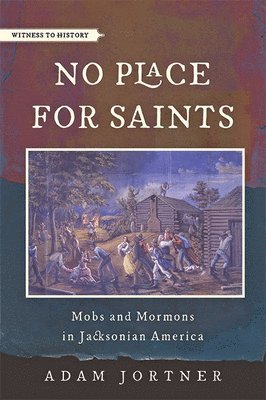
No Place for Saints
Mobs and Mormons in Jacksonian America
Av Adam Jortner
Häftad, 2022
286 kr
Lägg i varukorg
The emergence of the Mormon church is arguably the most radical event in American religious history. How and why did so many Americans flock to this new religion, and why did so many other Americans seek to silence or even destroy that movement?Winner of the MHA Best Book Award by the Mormon …