Adam King – författare
442 kr
Skickas inom 5-8 vardagar
731 kr
Läs direkt efter köp
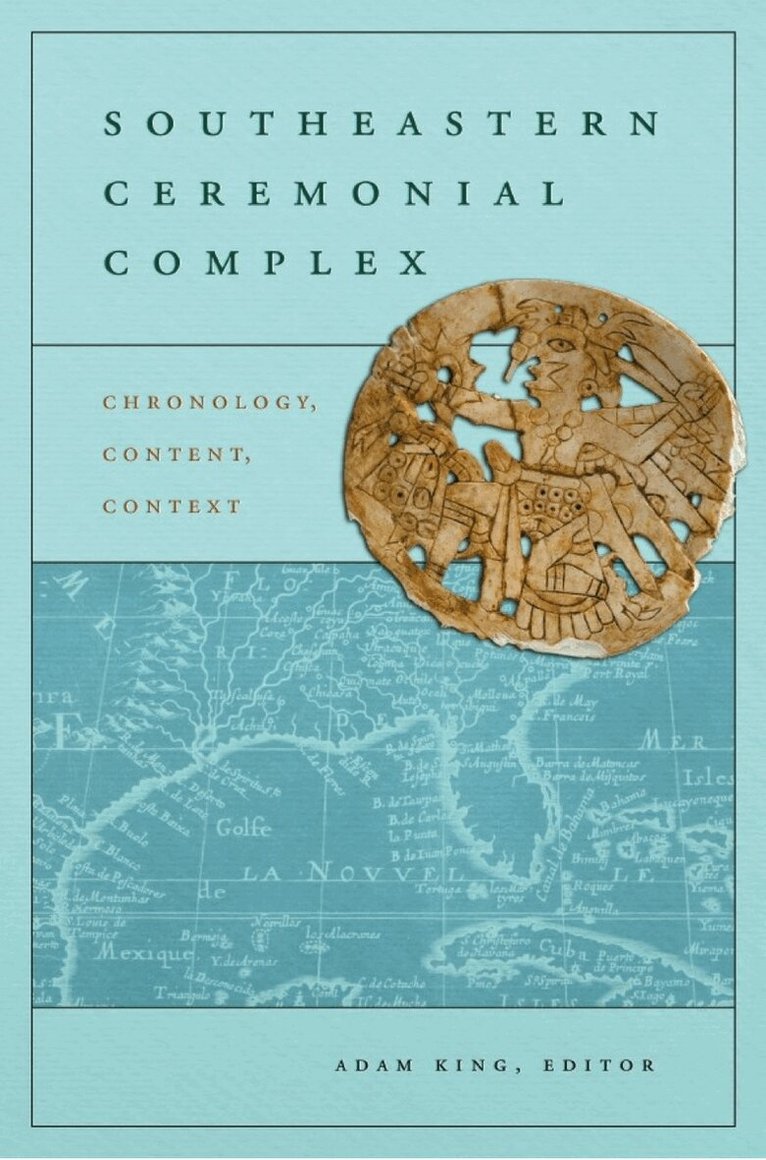
A timely, comprehensive reevaluation of the Southeastern Ceremonial Complex.
One of the most venerable concepts in Southeastern archaeology is that of the Southern Cult. The idea has its roots in the intensely productive decade (archaeologically) of the 1930s and is fundamentally tied to yet another venerable concept—Mississippian culture. The last comprehensive study of the melding of these two concepts into the term Southeastern Ceremonial Complex (SECC) is more than two decades old, yet our understanding of the objects, themes, and artistic styles associated with the SECC have changed a great deal. New primary data have come to light that bear directly on the complex, requiring a thorough reanalysis of both concepts and dating. Recent publications have ignited many debates about the dating and the nature of the SECC.
This work presents new data and new ideas on the temporal and social contexts, artistic styles, and symbolic themes included in the complex. It also demonstrates that engraved shell gorgets, along with other SECC materials, were produced before A.D. 1400.
548 kr
Läs direkt efter köp
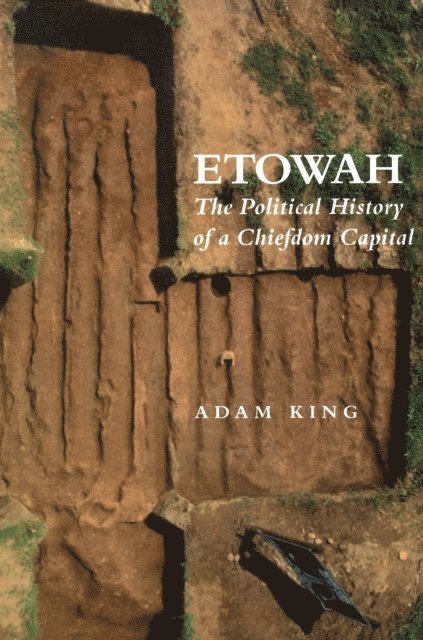
A Dan Josselyn Memorial Publication Detailed reconstruction of the waxing and waning of political fortunes among the chiefly elites at an important center of the prehistoric world
At the time the first Europeans arrived in the New World, thousands of earthen platform mounds dotted the landscape of eastern North America. Only a few of the mound sites have survived the ravages of time and the devastation of pilferers; one of these valuable monuments is Etowah, located near Cartersville in northern Georgia. Over a period of more than 100 years, excavations of the site’s six mounds, and in particular Mound C, have yielded a wealth of artifacts, including marble statues, copper embossed plates, ceremonial items, and personal adornments. These objects indicate an extensive trading network between Mississippian centers and confirm contact with Spanish conquistadores near Etowah in the mid-1500s.
Adam King has analyzed the architecture and artifacts of Etowah and deduced its vital role in the prehistory of the area. He advances a plausible historical sequence and a model for the ancient town''s complex political structure. The chiefdom society relied upon institutional social ranking, permanent political offices, religious ideology, a redistribution of goods and services, and the willing support of the constituent population. King reveals strategies used by the paramount chiefs to maintain their sources of power and to control changes in the social organization. Elite alliances did not necessarily involve the extreme asymmetry of political domination and tribute extraction. King''s use of ceramic assemblages recovered from Etowah to determine the occupation history and the construction sequence of public facilities (mounds and plazas) at the center is significant.
This fresh interpretation of the Etowah site places it in a contemporary social and political context with other Mississippian cultures. It is a one-volume sourcebook for the Etowah polity and its neighbors and will, therefore, command an eager audience of scholars and generalists.
11 kr
Läs direkt efter köp
11 kr
Läs direkt efter köp
484 kr
Läs direkt efter köp
The rich human history of South Carolina from its earliest days to the present
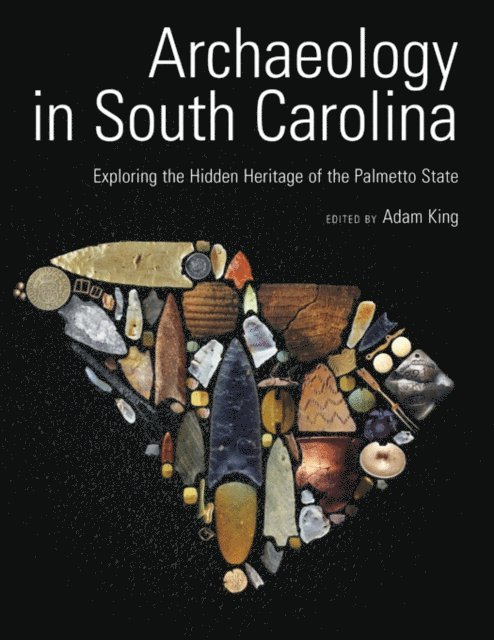
Adam King''s Archaeology in South Carolina contains an overview of the fascinating archaeological research currently ongoing in the Palmetto state featuring essays by twenty scholars studying South Carolina''s past through archaeological research. The scholarly contributions are enhanced by more than one hundred black and white and thirty-eight color images of some of the most important and interesting sites and artifacts found in the state.
South Carolina has an extraordinarily rich history encompassing the first human habitation of North America to the lives of people at the dawn of the modern era. King begins the anthology with the basic hows and whys of archeology and introduces readers to the current issues influencing the field of research. The contributors are all recognized experts from universities, state agencies, and private consulting firms, reflecting the diversity of people and institutions that engage in archaeology.
The volume begins with investigations of some of the earliest Paleo-Indian and Native American cultures that thrived in South Carolina, including work at the Topper Site along the Savannah River. Other essays explore the creation of early communities at the Stallings Island site, the emergence of large and complex Native American polities before the coming of Europeans,the impact of the coming of European settlers on Native American groups along the Savannah River, and the archaeology of the Yamassee, apeople whose history is tightly bound to the emerging European society.
The focus then shifts to Euro-Americans with an examination of a long-term project seeking to understand George Galphin''s trading post established on the Savannah River in the eighteenth century. A discussion of Middleburg Plantation, one of the oldest plantation houses in the South Carolina lowcountry, is followed by a fascinating glimpse into how the city of Charleston and the lives of its inhabitants changed during the seventeenth and eighteenth centuries. Essays on underwater archaeological research cover several Civil War-era vessels located in Winyah Bay near Georgetown and Station Creek near Beaufort, as well as one of the most famous Civil War naval vessels—the H.L. Hunley.
The volume concludes with the recollections of a life spent in the field by South Carolina''s preeminent historical archaeologist Stanley South, now retired from the South Carolina Institute of Archaeology and Anthropology at the University of South Carolina.
1 328 kr
Skickas inom 5-8 vardagar
223 kr
Skickas inom 5-8 vardagar