Adam Kotsko - Böcker
Visar alla böcker från författaren Adam Kotsko. Handla med fri frakt och snabb leverans.
21 produkter
21 produkter
526 kr
Skickas inom 5-8 vardagar
Slavoj Žižek has been called an "academic rock star." As public visibility of the Slovenian philosopher and psychoanalyst increases, so too does the depth of his engagement with Christian theology. Žižek's recent work includes extended treatments of key Christian thinkers from Paul, Pascal, and Kierkegaard to G. K. Chesterton and C. S. Lewis, while Christology and other theological themes have provided crucial points of reference. Žižek has even said that "to become a true dialectical materialist, one should go through the Christian experience." But Žižek's work on Christianity often overwhelms students of theology. To be sure, Žižek's style of argumentation is unusual and his concepts are complex. But the more basic problem is that his work on Christianity is a further development of a broader intellectual project established in many volumes produced in the course of the 1990s. This book will bring students of theology up to speed on this broader intellectual project, with an eye toward what brings Žižek to an explicit engagement with Christianity and how both his earlier and more recent works are relevant for theological reflection.
572 kr
Skickas inom 5-8 vardagar
2 338 kr
Skickas inom 5-8 vardagar
Presents a theory of the atonement, showing that the Christian account of salvation can only fully make sense if approached from a social-political angle. This title analyses some of the most important and original contributors to the tradition of atonement theory (Irenaeus, Gregory of Nyssa, Anselm, and Abelard).
1 059 kr
Skickas inom 7-10 vardagar
The most enduring challenge to traditional monotheism is the problem of evil, which attempts to reconcile three incompatible propositions: God is all-good, God is all-powerful, and evil happens. The Prince of This World traces the story of one of the most influential attempts to square this circle: the offloading of responsibility for evil onto one of God's rebellious creatures. In this striking reexamination, the devil's story is bitterly ironic, full of tragic reversals. He emerges as a theological symbol who helps oppressed communities cope with the trauma of unjust persecution, torture, and death at the hands of political authorities and eventually becomes a vehicle to justify oppression at the hands of Christian rulers. And he evolves alongside the biblical God, who at first presents himself as the liberator of the oppressed but ends up a cruel ruler who delights in the infliction of suffering on his friends and enemies alike. In other words, this is the story of how God becomes the devil—a devil who remains with us in our ostensibly secular age.
1 021 kr
Skickas inom 10-15 vardagar
The secular world may have thought it was done with theology, but theology was not done with it. Recent decades have seen a resurgence of religion on the social and political scene, which have driven thinkers across many disciplines to grapple with the Christian theological inheritance of the modern world. Adam Kotsko provides a unique guide to this fraught terrain. The title essay establishes a fresh and unexpected redefinition of theology and its complex and often polemical relationship with its sister discipline of philosophy. Subsequent essays build on this framework from three different perspectives. In the first part, Kotsko demonstrates the continued vibrancy of Christian theology as a creative and constructive pursuit outside the walls of the church, showing that theological concepts can underwrite a powerful critique of the modern world. The second approaches Christian theology from the perspective of a range of contemporary philosophers, showing how philosophical thought is drawn to theology even despite itself. The concluding section is devoted to the unexpected theological roots of the modern world-system, making a case that the interplay of state and economy and the structure of modern racial oppression both build on theological patterns of thought.Kotsko's book ultimately shows that theology is not a scholarly game or an edifying spiritual discipline, but a world-shaping force of great power. Lives are at stake when we do theology—and if we don't do it, someone else will.
277 kr
Skickas inom 7-10 vardagar
The secular world may have thought it was done with theology, but theology was not done with it. Recent decades have seen a resurgence of religion on the social and political scene, which have driven thinkers across many disciplines to grapple with the Christian theological inheritance of the modern world. Adam Kotsko provides a unique guide to this fraught terrain. The title essay establishes a fresh and unexpected redefinition of theology and its complex and often polemical relationship with its sister discipline of philosophy. Subsequent essays build on this framework from three different perspectives. In the first part, Kotsko demonstrates the continued vibrancy of Christian theology as a creative and constructive pursuit outside the walls of the church, showing that theological concepts can underwrite a powerful critique of the modern world. The second approaches Christian theology from the perspective of a range of contemporary philosophers, showing how philosophical thought is drawn to theology even despite itself. The concluding section is devoted to the unexpected theological roots of the modern world-system, making a case that the interplay of state and economy and the structure of modern racial oppression both build on theological patterns of thought.Kotsko's book ultimately shows that theology is not a scholarly game or an edifying spiritual discipline, but a world-shaping force of great power. Lives are at stake when we do theology—and if we don't do it, someone else will.
2 164 kr
Skickas inom 3-6 vardagar
One of the greatest challenges Agamben presents to his readers is the vast and often bewildering range of sources he draws upon in his work. Looking at figures including Michel Foucault, St Paul, Nietzsche, the Marquis de Sade, Simone Weil and Hannah Arendt, this one-stop reference to Agamben's influences covers 30 thinkers: his primary interlocutors, his secondary references, and the figures who lurk in the background of his arguments without being directly mentioned.
367 kr
Skickas
One of the greatest challenges Agamben presents to his readers is the vast and often bewildering range of sources he draws upon in his work. Looking at figures including Michel Foucault, St Paul, Nietzsche, the Marquis de Sade, Simone Weil and Hannah Arendt, this one-stop reference to Agamben's influences covers 30 thinkers: his primary interlocutors, his secondary references, and the figures who lurk in the background of his arguments without being directly mentioned.
2 164 kr
Skickas inom 3-6 vardagar
Giorgio Agamben has emerged as one of the most perceptive and even prophetic political thinkers of his era. Now that he has completed his career-defining work – the multivolume Homo Sacer series – Adam Kotsko, one of his leading translators, shows how his political concerns emerged and evolved as Agamben responded to contemporary events and new intellectual influences while striving to remain true to his deepest intuitions. Kotsko reveals the trajectory of Agamben’s work and shows us what it means to practice philosophy as a living, responsive discipline.
286 kr
Skickas
Giorgio Agamben has emerged as one of the most perceptive and even prophetic political thinkers of his era. Now that he has completed his career-defining work – the multivolume Homo Sacer series – Adam Kotsko, one of his leading translators, shows how his political concerns emerged and evolved as Agamben responded to contemporary events and new intellectual influences while striving to remain true to his deepest intuitions. Kotsko reveals the trajectory of Agamben’s work and shows us what it means to practice philosophy as a living, responsive discipline.
257 kr
Skickas inom 7-10 vardagar
The most enduring challenge to traditional monotheism is the problem of evil, which attempts to reconcile three incompatible propositions: God is all-good, God is all-powerful, and evil happens. The Prince of This World traces the story of one of the most influential attempts to square this circle: the offloading of responsibility for evil onto one of God's rebellious creatures. In this striking reexamination, the devil's story is bitterly ironic, full of tragic reversals. He emerges as a theological symbol who helps oppressed communities cope with the trauma of unjust persecution, torture, and death at the hands of political authorities and eventually becomes a vehicle to justify oppression at the hands of Christian rulers. And he evolves alongside the biblical God, who at first presents himself as the liberator of the oppressed but ends up a cruel ruler who delights in the infliction of suffering on his friends and enemies alike. In other words, this is the story of how God becomes the devil—a devil who remains with us in our ostensibly secular age.
1 059 kr
Skickas inom 7-10 vardagar
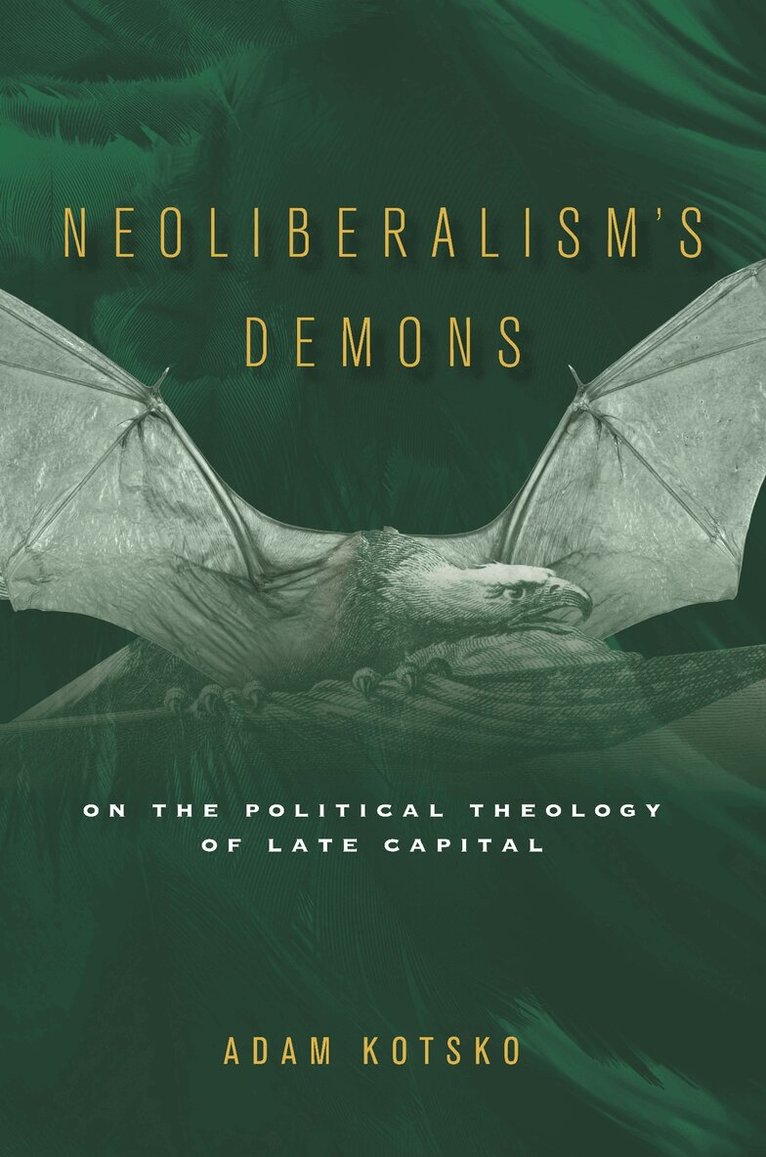
By both its supporters and detractors, neoliberalism is usually considered an economic policy agenda. Neoliberalism's Demons argues that it is much more than that: a complete worldview, neoliberalism presents the competitive marketplace as the model for true human flourishing. And it has enjoyed great success: from the struggle for "global competitiveness" on the world stage down to our individual practices of self-branding and social networking, neoliberalism has transformed every aspect of our shared social life. The book explores the sources of neoliberalism's remarkable success and the roots of its current decline. Neoliberalism's appeal is its promise of freedom in the form of unfettered free choice. But that freedom is a trap: we have just enough freedom to be accountable for our failings, but not enough to create genuine change. If we choose rightly, we ratify our own exploitation. And if we choose wrongly, we are consigned to the outer darkness—and then demonized as the cause of social ills. By tracing the political and theological roots of the neoliberal concept of freedom, Adam Kotsko offers a fresh perspective, one that emphasizes the dynamics of race, gender, and sexuality. More than that, he accounts for the rise of right-wing populism, arguing that, far from breaking with the neoliberal model, it actually doubles down on neoliberalism's most destructive features.
257 kr
Skickas inom 7-10 vardagar
By both its supporters and detractors, neoliberalism is usually considered an economic policy agenda. Neoliberalism's Demons argues that it is much more than that: a complete worldview, neoliberalism presents the competitive marketplace as the model for true human flourishing. And it has enjoyed great success: from the struggle for "global competitiveness" on the world stage down to our individual practices of self-branding and social networking, neoliberalism has transformed every aspect of our shared social life. The book explores the sources of neoliberalism's remarkable success and the roots of its current decline. Neoliberalism's appeal is its promise of freedom in the form of unfettered free choice. But that freedom is a trap: we have just enough freedom to be accountable for our failings, but not enough to create genuine change. If we choose rightly, we ratify our own exploitation. And if we choose wrongly, we are consigned to the outer darkness—and then demonized as the cause of social ills. By tracing the political and theological roots of the neoliberal concept of freedom, Adam Kotsko offers a fresh perspective, one that emphasizes the dynamics of race, gender, and sexuality. More than that, he accounts for the rise of right-wing populism, arguing that, far from breaking with the neoliberal model, it actually doubles down on neoliberalism's most destructive features.
980 kr
Skickas inom 7-10 vardagar
How Star Trek’s twenty-first-century reinventions illuminate the unique challenges and opportunities of franchise-style corporate storytellingLate Star Trek explores the beloved science fiction franchise’s repeated attempts to reinvent itself after the end of its 1990s golden age. Beginning with the prequel series Enterprise, Adam Kotsko analyzes the wealth of content set within Star Trek’s sprawling continuity-including authorized books, the three “Kelvin Timeline” films, and the streaming series Discovery, Picard, Lower Decks, Prodigy, and Strange New Worlds-along with fan discourse, to reflect on the perils and promise of the franchise as a unique form of storytelling. Significantly including the licensed novels and comic books that fill out the Star Trek universe for its fans, Kotsko brings the multiple productions of the early twenty-first century together as a unified whole rather than analyzing them in their current stratified view. He argues that the variety of styles and approaches in this tumultuous era of Star Trek history provides the perfect opportunity to reflect on the nature of the franchise storyworlds that now dominate popular culture. By taking the spin-offs and tie-ins seriously as creative attempts to tell a new story within an established universe, Late Star Trek highlights creative triumphs as well as the tendency for franchise faithfulness to get in the way of creating engaging characters and ideas. Arguing forcefully against the prevailing consensus that franchises are a sign of cultural decay, Kotsko contends that the Star Trek universe exemplifies an approach to storytelling that has been perennial across cultures. Instead, he finds that what limits creativity within franchises is not their reliance on the familiar but their status as modern myths, held not as common cultural heritage but rather owned as corporate intellectual property. Retail e-book files for this title are screen-reader friendly with images accompanied by short alt text and/or extended descriptions.
230 kr
Skickas inom 7-10 vardagar
How Star Trek’s twenty-first-century reinventions illuminate the unique challenges and opportunities of franchise-style corporate storytellingLate Star Trek explores the beloved science fiction franchise’s repeated attempts to reinvent itself after the end of its 1990s golden age. Beginning with the prequel series Enterprise, Adam Kotsko analyzes the wealth of content set within Star Trek’s sprawling continuity-including authorized books, the three “Kelvin Timeline” films, and the streaming series Discovery, Picard, Lower Decks, Prodigy, and Strange New Worlds-along with fan discourse, to reflect on the perils and promise of the franchise as a unique form of storytelling. Significantly including the licensed novels and comic books that fill out the Star Trek universe for its fans, Kotsko brings the multiple productions of the early twenty-first century together as a unified whole rather than analyzing them in their current stratified view. He argues that the variety of styles and approaches in this tumultuous era of Star Trek history provides the perfect opportunity to reflect on the nature of the franchise storyworlds that now dominate popular culture. By taking the spin-offs and tie-ins seriously as creative attempts to tell a new story within an established universe, Late Star Trek highlights creative triumphs as well as the tendency for franchise faithfulness to get in the way of creating engaging characters and ideas. Arguing forcefully against the prevailing consensus that franchises are a sign of cultural decay, Kotsko contends that the Star Trek universe exemplifies an approach to storytelling that has been perennial across cultures. Instead, he finds that what limits creativity within franchises is not their reliance on the familiar but their status as modern myths, held not as common cultural heritage but rather owned as corporate intellectual property. Retail e-book files for this title are screen-reader friendly with images accompanied by short alt text and/or extended descriptions.
220 kr
Skickas inom 3-6 vardagar
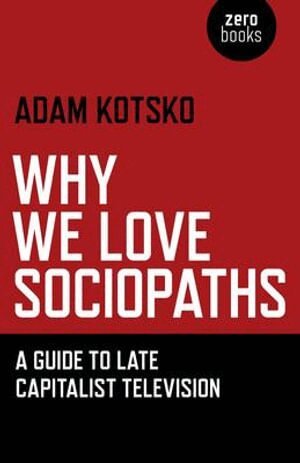
Sociopaths are pervasive in contemporary television, from high-brow drama all the way down to cartoons - and of course the news as well. From the scheming Eric Cartman of South Park to the seductive imposter Don Draper of Mad Men, cold and ruthless characters captivate us, making us wish that we could be so effective and successful. Yet why should we admire characters who get ahead by being amoral and uncaring? In his follow-up to Awkwardness, Adam Kotsko argues that the popularity of the ruthless sociopath reflects our dissatisfaction with a failed social contract, showing that we believe that the world rewards the evil and uncaring rather than the good. By analyzing characters like the serial killer star of Dexter and the cynical Dr. House, Kotsko shows that the fantasy of the sociopath distracts us from our real problems - but that we still might benefit from being a little more sociopathic.
104 kr
Skickas inom 7-10 vardagar
A specter is haunting contemporary television-the specter of creepiness. In our everyday lives, we try to avoid creepiness at every cost, shunning creepy people and recoiling in horror at the idea that we ourselves might be creeps. And yet when we sit down to watch TV, we are increasingly entranced by creepy characters. In this follow-up to Awkwardness and Why We Love Sociopaths, Adam Kotsko tries to account for the strange fascination of creepiness. In addition to surveying a wide range of contemporary examples-from Peep Show to Girls, from Orange is the New Black to Breaking Bad-Kotsko mines the television of his 90s childhood, marveling at the creepiness that seemed to be hiding in plain sight in shows like Full House and Family Matters. Using Freud as his guide through the treacherous territory of creepiness, Kotsko argues that we are fascinated by the creepy because in our own ways, we are all creeps.
1 833 kr
Skickas inom 10-15 vardagar
One of the many challenges for readers of Agamben’s sprawling and heterogeneous body of work is what to make of his increasingly insistent focus on theology. Agamben’s Coming Philosophy brings together Colby Dickinson, the author of Agamben and Theology, and Adam Kotsko, the translator of several of Agamben’s more recent theologically-oriented books, to discuss Agamben’s unique approach to theology—and its profound implications for understanding Agamben’s philosophical project and the deepest political and ethical problems of our time.The book covers the whole range of Agamben’s work, from his earliest reflections to his forthcoming magnum opus, The Use of Bodies. Along the way, the authors provide an overview of Agamben’s project as a whole, as well as incisive reflections on individual works and isolated themes. This volume is essential reading for anyone grappling with Agamben’s work. The theological starting point leads to a thorough examination of Agamben’s methodology, his relationship with his primary sources (most notably Walter Benjamin), and his relevance for questions of politics, ethics, and philosophy.
675 kr
Skickas inom 10-15 vardagar
One of the many challenges for readers of Agamben’s sprawling and heterogeneous body of work is what to make of his increasingly insistent focus on theology. Agamben’s Coming Philosophy brings together Colby Dickinson, the author of Agamben and Theology, and Adam Kotsko, the translator of several of Agamben’s more recent theologically-oriented books, to discuss Agamben’s unique approach to theology—and its profound implications for understanding Agamben’s philosophical project and the deepest political and ethical problems of our time.The book covers the whole range of Agamben’s work, from his earliest reflections to his forthcoming magnum opus, The Use of Bodies. Along the way, the authors provide an overview of Agamben’s project as a whole, as well as incisive reflections on individual works and isolated themes. This volume is essential reading for anyone grappling with Agamben’s work. The theological starting point leads to a thorough examination of Agamben’s methodology, his relationship with his primary sources (most notably Walter Benjamin), and his relevance for questions of politics, ethics, and philosophy.
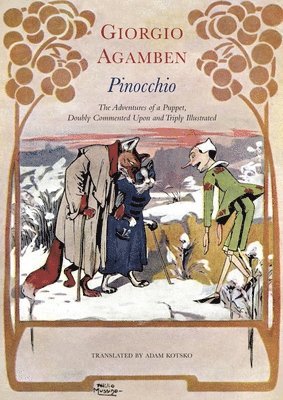
Pinocchio – The Adventures of a Puppet, Doubly Commented Upon and Triply Illustrated
Inbunden, Engelska, 2023
257 kr
Skickas inom 7-10 vardagar
A richly illustrated analysis from one of Europe’s greatest living philosophers. In Pinocchio, Giorgio Agamben turns his keen philosopher’s eye to the famous nineteenth-century novel by Carlo Collodi. To Agamben, Pinocchio’s adventures are a kind of initiation into life itself. Like us, the mischievous puppet is caught between two worlds. He is faced with the alternatives of submitting to authority or of carrying on, stubbornly indulging his way of being. From Agamben’s virtuoso interpretation of this classic story, we learn that we can harbor the mystery of existence only if we are not aware of it, only if we manage to cohabit with an area of non-knowledge, immemorial and very near. Richly illustrated with images from three early editions of Collodi’s novel, this new volume will delight enthusiasts of both literature and philosophy.
75 kr
Skickas inom 7-10 vardagar
Awkwardness has been one of the defining traits of the awkwardly unnamed first decade of our young century, dominating comedy on both the big and small screens. Could this trend point toward something deeper? In Awkwardness, Adam Kotsko answers that question with a resounding yes. Drawing on key insights of cultural theory, he argues that awkwardness is a structuring principle of human experience, something that the particular conditions of our time allow us to see with greater clarity than ever before. In an analysis that begins with the difference between the US and UK versions of Ricky Gervais's The Office, passes through the films of Judd Apatow, and culminates in the apotheosis of awkwardness, Larry David's Curb Your Enthusiasm, Kotsko looks at the ways we cope with our awkwardness and the unexpected opportunities awkwardness opens up when we stop resisting it and learn to enjoy it.