Adam Laats - Böcker
Visar alla böcker från författaren Adam Laats. Handla med fri frakt och snabb leverans.
6 produkter
6 produkter
394 kr
Skickas inom 5-8 vardagar
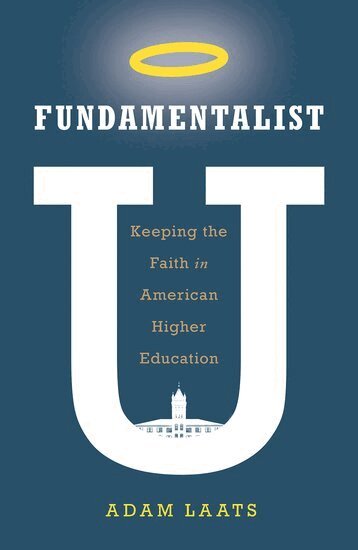
Why do so many conservative politicians flock to the campuses of Liberty University, Wheaton College, and Bob Jones University? In Fundamentalist U: Keeping the Faith in American Higher Education, Adam Laats shows that these colleges have always been more than just schools; they have been vital intellectual citadels in America's culture wars. They have been unique institutions that have defined what it has meant to be an evangelical and reshaped the landscape of American higher education. In the twentieth century, when higher education sometimes seemed to focus on sports, science, and social excess, conservative evangelical schools offered a compelling alternative. On their campuses, evangelicals debated what it meant to be a creationist, a Christian, a proper American, all within the bounds of Biblical revelation. Instead of encouraging greater personal freedom and deeper pluralist values, conservative evangelical schools have thrived by imposing stricter rules on their students and faculty.If we hope to understand either American higher education or American evangelicalism, we need to understand this influential network of dissenting institutions. Plus, only by making sense of these schools can we make sense of America's continuing culture wars. After all, our culture wars aren't between one group of educated people and another group that has not been educated. Rather, the fight is usually fiercest between two groups that have been educated in very different ways.
325 kr
Skickas inom 5-8 vardagar
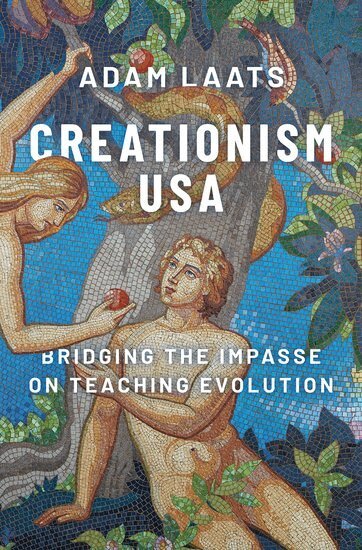
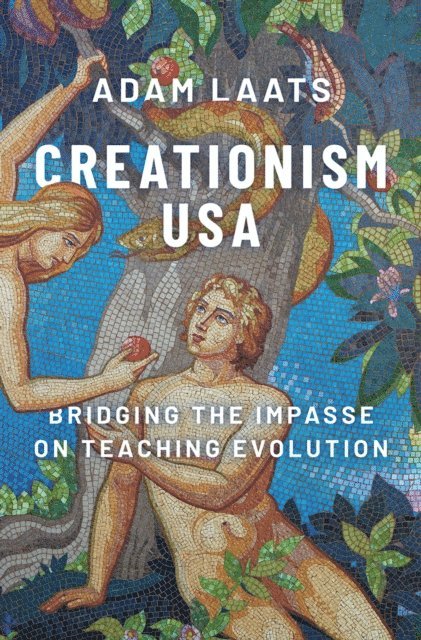
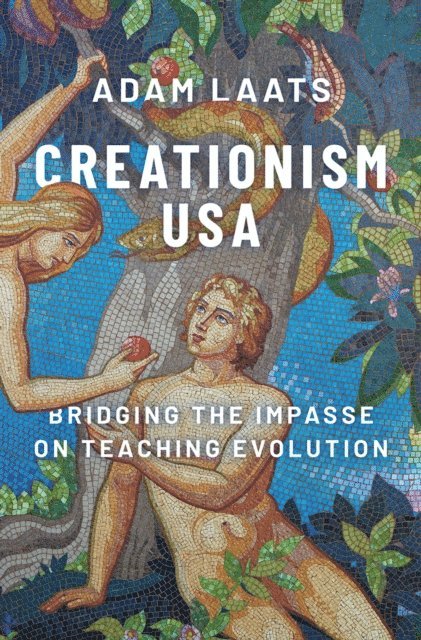
Who are America's creationists? What do they want? Do they truly believe Jesus rode around on dinosaurs, as sometimes depicted? Creationism USA reveals how common misconceptions about creationism have led Americans into a century of unnecessary culture-war histrionics about evolution education and creationism. Adam Laats argues that Americans do not have deep, fundamental disagreements about evolution - not about the actual science behind it and not in ways that truly matter to public policy. Laats asserts that Americans do, however, have significant disagreements about creationism. By describing the history of creationism and its many variations, Laats demonstrates that the real conflict about evolution is not between creationists and evolution. The true landscape of American creationism is far more complicated than headlines suggest. Creationism USA digs beyond those headlines to prove two fundamental facts about American creationism. First, almost all Americans can be classified as creationists of one type or another. Second, nearly all Americans (including self-identified creationists) want their children to learn mainstream evolutionary science. Taken together, these truths about American creationism point to a large and productive middle ground, a widely shared public vision of the proper relationship between schools, science, and religion. Creationism USA both explains the current state of America's battles over creationism and offers a nuanced yet straight-forward prescription to solve them.
554 kr
Tillfälligt slut
No fight over what gets taught in American classrooms is more heated than the battle over humanity’s origins. For more than a century we have argued about evolutionary theory and creationism (and its successor theory, intelligent design), yet we seem no closer to a resolution than we were in Darwin’s day. In this thoughtful examination of how we teach origins, historian Adam Laats and philosopher Harvey Siegel offer crucial new ways to think not just about the evolution debate but how science and religion can make peace in the classroom. Laats and Siegel agree with most scientists: creationism is flawed, as science. But, they argue, students who believe it nevertheless need to be accommodated in public school science classes. Scientific or not, creationism maintains an important role in American history and culture as a point of religious dissent, a sustained form of protest that has weathered a century of broad—and often dramatic—social changes. At the same time, evolutionary theory has become a critical building block of modern knowledge. The key to accommodating both viewpoints, they show, is to disentangle belief from knowledge. A student does not need to believe in evolution in order to understand its tenets and evidence, and in this way can be fully literate in modern scientific thought and still maintain contrary religious or cultural views. Altogether, Laats and Siegel offer the kind of level-headed analysis that is crucial to finding a way out of our culture-war deadlock.
188 kr
Skickas inom 7-10 vardagar
No fight over what gets taught in American classrooms is more heated than the battle over humanity’s origins. For more than a century we have argued about evolutionary theory and creationism (and its successor theory, intelligent design), yet we seem no closer to a resolution than we were in Darwin’s day. In this thoughtful examination of how we teach origins, historian Adam Laats and philosopher Harvey Siegel offer crucial new ways to think not just about the evolution debate but how science and religion can make peace in the classroom. Laats and Siegel agree with most scientists: creationism is flawed, as science. But, they argue, students who believe it nevertheless need to be accommodated in public school science classes. Scientific or not, creationism maintains an important role in American history and culture as a point of religious dissent, a sustained form of protest that has weathered a century of broad—and often dramatic—social changes. At the same time, evolutionary theory has become a critical building block of modern knowledge. The key to accommodating both viewpoints, they show, is to disentangle belief from knowledge. A student does not need to believe in evolution in order to understand its tenets and evidence, and in this way can be fully literate in modern scientific thought and still maintain contrary religious or cultural views. Altogether, Laats and Siegel offer the kind of level-headed analysis that is crucial to finding a way out of our culture-war deadlock.
462 kr
Skickas inom 10-15 vardagar
The idea that American education has been steered by progressive values is celebrated by liberals and deplored by conservatives, but both sides accept it as fact. Adam Laats shows that this widely held belief is simply wrong. Upending the standard narrative of American education as the product of courageous progressive reformers, he calls to center stage the conservative activists who decisively shaped America’s classrooms in the twentieth century. The Other School Reformers makes clear that, in the long march of American public education, progressive reform has more often been a beleaguered dream than an insuperable force.Laats takes an in-depth look at four landmark school battles: the 1925 Scopes Trial, the 1939 Rugg textbook controversy, the 1950 ouster of Pasadena Public Schools Superintendent Willard Goslin, and the 1974 Kanawha County school boycott. Focused on issues ranging from evolution to the role of religion in education to the correct interpretation of American history, these four highly publicized controversies forced conservatives to articulate their vision of public schooling—a vision that would keep traditional Protestant beliefs in America’s classrooms and push out subversive subjects like Darwinism, socialism, multiculturalism, and feminism. As Laats makes clear in case after case, activists such as Hiram Evans and Norma Gabler, Homer Chaillaux and Louise Padelford were fiercely committed to a view of the curriculum that inculcated love of country, reinforced traditional gender roles and family structures, allowed no alternatives to capitalism, and granted religion a central role in civic life.
Mr. Lancaster's System
The Failed Reform That Created America's Public Schools
Inbunden, Engelska, 2024
547 kr
Skickas inom 7-10 vardagar
How a con artist "reformer" shaped America's modern public schools.Two centuries ago, London school reformer Joseph Lancaster swept into New York City to revolutionize its public schools. Pennsylvania and Massachusetts passed laws mandating Lancaster's methods, and cities such as Albany, Savannah, Detroit, and Baltimore soon followed. In Mr. Lancaster's System, Adam Laats tells the story of how this abusive, scheming reformer fooled the world into believing his system could provide free high-quality education for poor children. The system never worked as promised, but thanks to real work done by students, teachers, and families, Lancaster's failed reforms eventually led to the creation of the modern public school system. Lancaster's idea was simple: instead of hiring expensive adult teachers, Lancasterian schools made children teach one another to read, write, and behave properly. America's city leaders poured the equivalent of millions of dollars into the scheme, built specialized school buildings featuring Lancaster's teaching machines, and offered him a huge salary. In London, where Lancaster opened his first school, the enthusiasm of city leaders was quickly and similarly followed by scandal and dismay. Lancaster borrowed money—even from the king of England—and spent it on fancy carriage rides and cases of champagne. Even worse, Lancaster proved to be a sexual predator. Kicked out of London, Lancaster brought his simplistic plan to the United States. His school model didn't work any better in US cities than it had in London, and Lancaster himself never changed his abusive ways. Mr. Lancaster's System details how American cities created their first public schools out of the wreckage of Lancasterian failure. In the end, the most important people in this story are not self-proclaimed geniuses like Lancaster or elites like New York's mayor De Witt Clinton, but rather the thousands of parents and children who forced urban public schools to assume their modern shape.