Adam S. Ferziger - Böcker
Visar alla böcker från författaren Adam S. Ferziger. Handla med fri frakt och snabb leverans.
4 produkter
4 produkter
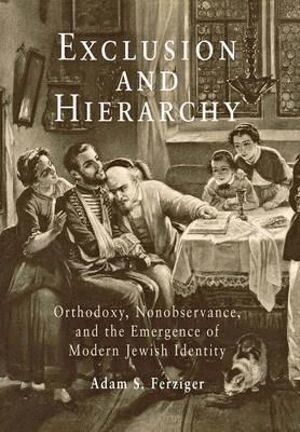
Exclusion and Hierarchy
Orthodoxy, Nonobservance, and the Emergence of Modern Jewish Identity
Inbunden, Engelska, 2005
832 kr
Skickas inom 10-15 vardagar
Following the Jewish Enlightenment, many eighteenth-century Jews chose not to observe the religious laws and customs that had earlier marked them as culturally different from their Christian peers. As the Jewish population became increasingly assimilated, an ultraorthodox movement also emerged, creating a discrete identity for a group within the Jewish community that opted not to move toward the mainstream but instead to embrace the traditional laws.By tracing the evolution of the approach of the Orthodox to their nonpracticing brethren, Adam S. Ferziger sheds new light on the emergence of Orthodoxy as a specific movement within modern Jewish society. In the course of this process, German Orthodoxy in particular articulated a new hierarchical vision of Jewish identity and the structure of modern Jewish society. Viewing Orthodox Judaism as no less a nineteenth-century phenomenon than Reform Judaism or Zionism, Ferziger looks at the ways it defined itself by its relationship to the nonobservant Jewish population. Ferziger argues that as the Orthodox movement emerged, it rejected the stance that the assimilated and nonobservers were deviant outcasts. Instead, they were accepted as legitimate members of a Jewish community, in which Orthodox Jews occupied the pinnacle, as the guardians of its tradition.This book's contribution, however, moves beyond a historical study of Orthodox Judaism. The sociological methodology that Ferziger employs enables the reader to appreciate how other religious groups have sought to carve out their places within the mosaic of modern society.
380 kr
Skickas inom 10-15 vardagar
In 1965 social scientist Charles S. Liebman published a study that boldly declared the vitality of American Jewish Orthodoxy and went on to guide scholarly investigations of the group for the next four decades. As American Orthodoxy continues to grow in geographical, institutional, and political strength, author Adam S. Ferziger argues in Beyond Sectarianism: The Realignment of American Orthodox Judaism that one of Liebman's principal definitions needs to be updated. While Liebman proposed that the ""committed Orthodox"" -observant rather than nominally affiliated-could be divided into two main streams: ""church,"" or Modern Orthodoxy, and ""sectarian,"" or Haredi Orthodoxy, Ferziger traces a narrowing of the gap between them and ultimately a realignment of American Orthodox Judaism.Ferziger shows that significant elements within Haredi Orthodoxy have abandoned certain strict and seemingly uncontested norms. He begins by offering fresh insight into the division between the American sectarian Orthodox and Modern Orthodox streams that developed in the early twentieth century and highlights New York's Congregation Kehilath Jeshurun as a pioneering Modern Orthodox synagogue. Ferziger also considers the nuances of American Orthodoxy as reflected in Soviet Jewish activism during the 1960s and early 1970s and educational trips to Poland taken by American Orthodox young adults studying in Israel, and explores the responses of prominent rabbinical authorities to Orthodox feminism and its call for expanded public religious roles for women. Considerable discussion is dedicated to the emergence of outreach to nonobservant Jews as a central priority for Haredi Orthodoxy and how this focus outside its core population reflects fundamental changes. In this context, Ferziger presents evidence for the growing influence of Chabad Hasidism - what he terms the ""Chabadization of American Orthodoxy.""Recent studies, including the 2013 Pew Survey of U.S. Jewry, demonstrate that an active and strongly connected American Orthodox Jewish population is poised to grow in the coming decades. Jewish studies scholars and readers interested in history, sociology, and religion will appreciate Ferziger's reappraisal of this important group.
434 kr
Skickas inom 10-15 vardagar
The rise of moderate Orthodox Judaism in Israel and the key role of Americans in its emergenceThe conservative ultra-Orthodox and redemptive "Kook" camps hold sway over religious matters in Israel. Yet from the mid-1960s to the early 1980s, a small cadre of American immigrants arrived in Israel and established or led a range of educational institutions that trained thousands of advanced students and laid the ideological foundations for an Israeli moderate religious stream. In Agents of Change, Adam S. Ferziger highlights the parts played by these Americans in promoting the rise of a transnational community of moderate Jewish Orthodoxy.Analyzing the novel outlooks that have found expression in central areas of debates, from women's engagements in religious and public life and approaches to the gay and lesbian community to interactions with non-Orthodox denominations and attitudes toward academic Jewish studies, Ferziger illuminates both shifting religious dynamics in Israel as a result of this rise in moderate Orthodoxy, as well as the changing relationship between Israeli and American Judaisms, challenging current understandings which see the Jewish communities of the two nations as drifting apart. Though a minority in Israel, this vocal Orthodox community with a more moderate take on key issues is significant in potentially paving the way for social change. Increasingly, their influence is being felt. Shedding light on the impact of American migration in forming a burgeoning moderate religious direction in Israeli life that has challenged the hegemony of the long dominant direction within Religious Zionism, Agents of Change offers a fresh perspective on the multifaceted collaboration of ideas and practices that exists between Israel and America.
1 279 kr
Skickas
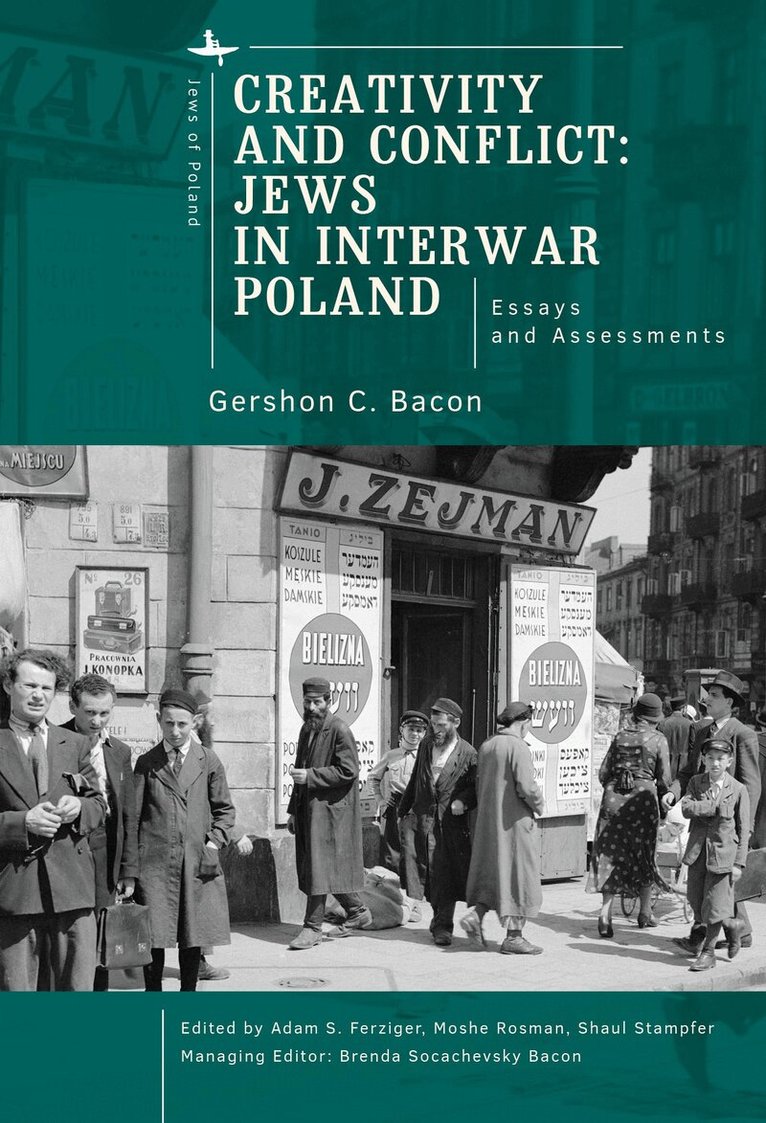
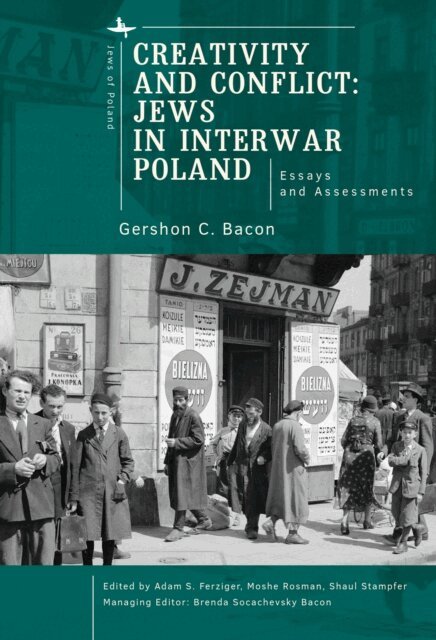
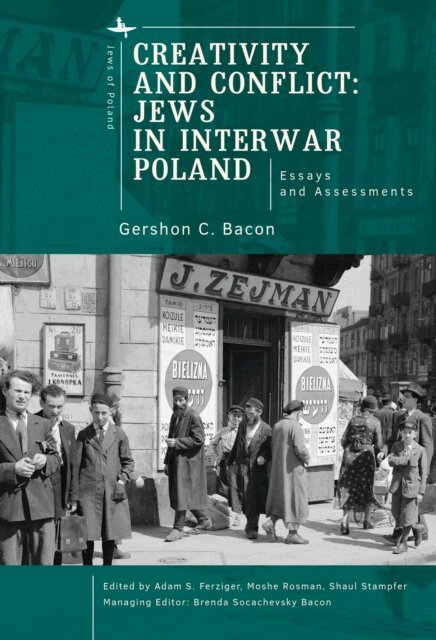
Creativity and Conflict reexamines interwar Polish Jewish history through the author's collected essays and scholarly responses of leading academicians. The work covers Polish-Jewish relations, Orthodox Judaism and the rabbinate, women's history, social history, and historiography, challenging prevalent myths about Jews in Poland.