Adam Segal - Böcker
Visar alla böcker från författaren Adam Segal. Handla med fri frakt och snabb leverans.
10 produkter
10 produkter
310 kr
Skickas inom 3-6 vardagar
294 kr
Skickas inom 5-8 vardagar
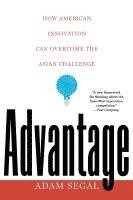
The emergence of India and China as economic powers has shifted the global landscape and called into question the ability of the United States to compete. Advantage sorts out the challenges the United States faces and focuses on what drives innovation, what constrains it, and what strengths we have to leverage. Entirely recasting the stakes of the debate, Adam Segal makes the compelling case for the crucial role of the “software” of innovation. By bolstering its politics, social relations, and institutions that move ideas from the lab to the marketplace, the United States can preserve its position as a global power. With up-to-the minute economic and political data, this is a resounding call to tie innovation to larger social goals in an age of global science and technology.
674 kr
Skickas inom 10-15 vardagar
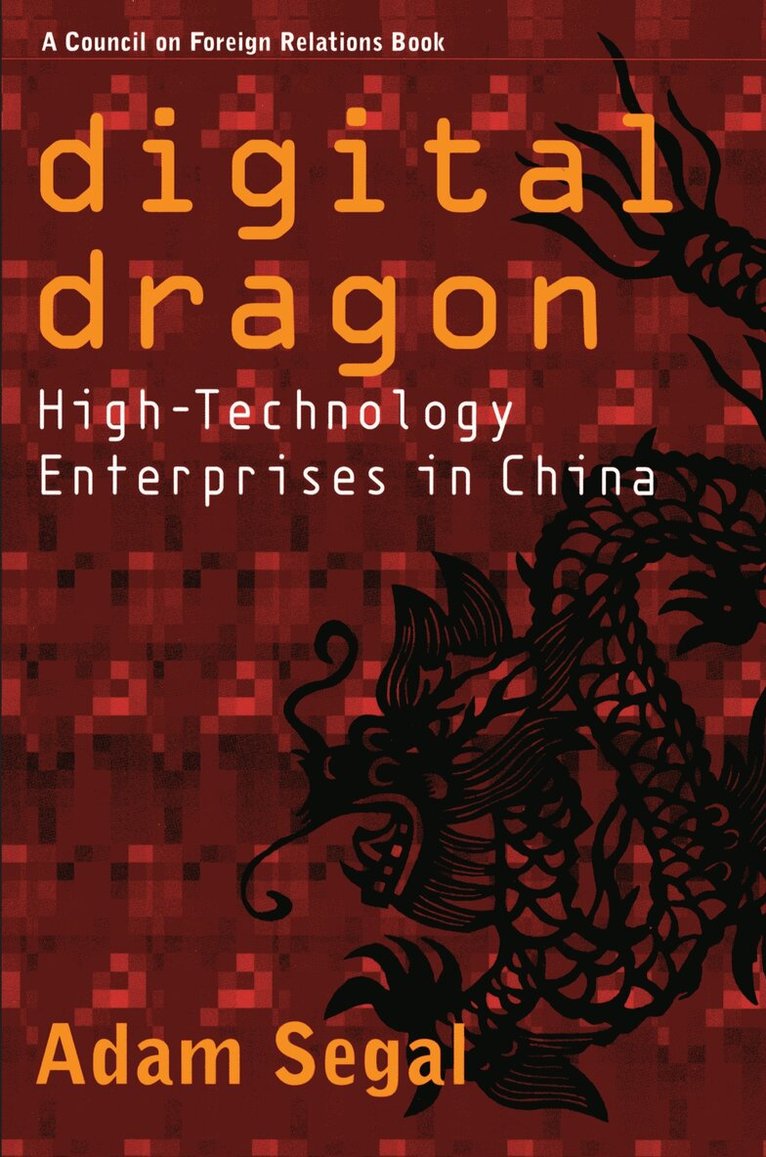
During the economic reforms of the last twenty years, China adopted a wide array of policies designed to raise its technological capability and foster industrial growth. Ideologically, the government would not promote private-ownership firms and instead created a hybrid concept, that of "nongovernmental enterprises" or minying qiye. Adam Segal examines the minying experience, particularly in high technology, in four key regions: Beijing, Shanghai, Xi'an, and Guangzhou.Minying enterprises have been neither clear successes nor abject failures, Segal finds. Instead, outcomes varied: though efforts to create a core of innovative high-tech firms succeeded in Beijing, minying enterprises elsewhere have languished. He points to variations in local implementation of government policies on investment, property-rights regulation, and government supervision as a key to the different outcomes. He explains these peculiarities of implementation by putting official decisions within their local contexts. Extending his analysis, he compares the experience of creating technology enterprises in China with those of Korea (the chaebol system) and Taiwan (enterprise groups).Based on interviews with entrepreneurs and local government officials, as well as numerous published primary sources, Digital Dragon is the first detailed look at a major Chinese institutional experiment and at high-tech endeavors in China. Can China become a true global economic power? The evolution of the high-technologies sector will determine, Segal says, whether China will become a modern economy or simply a large one.
447 kr
Skickas inom 10-15 vardagar
During the economic reforms of the last twenty years, China adopted a wide array of policies designed to raise its technological capability and foster industrial growth. Ideologically, the government would not promote private-ownership firms and instead created a hybrid concept, that of "nongovernmental enterprises" or minying qiye. Adam Segal examines the minying experience, particularly in high technology, in four key regions: Beijing, Shanghai, Xi'an, and Guangzhou.Minying enterprises have been neither clear successes nor abject failures, Segal finds. Instead, outcomes varied: though efforts to create a core of innovative high-tech firms succeeded in Beijing, minying enterprises elsewhere have languished. He points to variations in local implementation of government policies on investment, property-rights regulation, and government supervision as a key to the different outcomes. He explains these peculiarities of implementation by putting official decisions within their local contexts. Extending his analysis, he compares the experience of creating technology enterprises in China with those of Korea (the chaebol system) and Taiwan (enterprise groups).Based on interviews with entrepreneurs and local government officials, as well as numerous published primary sources, Digital Dragon is the first detailed look at a major Chinese institutional experiment and at high-tech endeavors in China. Can China become a true global economic power? The evolution of the high-technologies sector will determine, Segal says, whether China will become a modern economy or simply a large one.
373 kr
Skickas inom 3-6 vardagar
180 kr
Skickas inom 5-8 vardagar
Del 78 - Council Special Report
Rebuilding Trust Between Silicon Valley and Washington
Häftad, Engelska, 2017
153 kr
Skickas inom 5-8 vardagar
Del 77 - Independent Task Force Report
Innovation and National Security
Keeping Our Edge
Häftad, Engelska, 2019
311 kr
Skickas inom 5-8 vardagar
268 kr
Skickas inom 3-6 vardagar
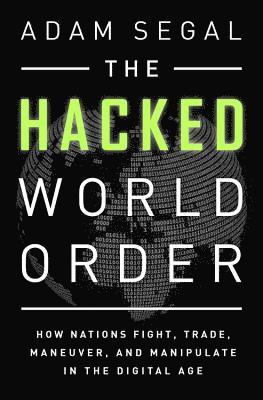
Hacked World Order
How Nations Fight, Trade, Maneuver, and Manipulate in the Digital Age
Häftad, Engelska, 2017
213 kr
Skickas inom 10-15 vardagar
For more than three hundred years, the world wrestled with conflicts that arose between nation-states. Nation-states wielded military force, financial pressure, and diplomatic persuasion to create "world order." Even after the end of the Cold War, the elements comprising world order remained essentially unchanged.But 2012 marked a transformation in geopolitics and the tactics of both the established powers and smaller entities looking to challenge the international community. That year, the US government revealed its involvement in Operation "Olympic Games," a mission aimed at disrupting the Iranian nuclear program through cyberattacks; Russia and China conducted massive cyber-espionage operations; and the world split over the governance of the Internet. Cyberspace became a battlefield.Cyber conflict is hard to track, often delivered by proxies, and has outcomes that are hard to gauge. It demands that the rules of engagement be completely reworked and all the old niceties of diplomacy be recast. Many of the critical resources of statecraft are now in the hands of the private sector, giant technology companies in particular. In this new world order, cybersecurity expert Adam Segal reveals, power has been well and truly hacked.