Adam Zachary Newton - Böcker
Visar alla böcker från författaren Adam Zachary Newton. Handla med fri frakt och snabb leverans.
6 produkter
6 produkter
368 kr
Skickas inom 10-15 vardagar
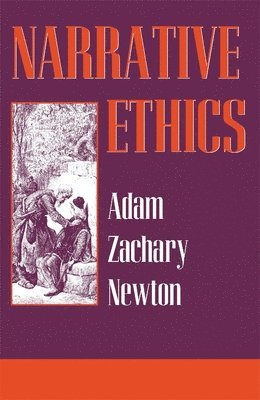
The ethics of literature, formalists have insisted, resides in the moral quality of a character, a story, perhaps the relation between author and reader. But in the wake of deconstruction and various forms of criticism focusing on difference, the ethical question has been freshly negotiated by literary studies, and to this approach Adam Newton brings a startling new thrust. His book makes a compelling case for understanding narrative as ethics. Assuming an intrinsic and necessary connection between the two, Newton explores the ethical consequences of telling stories and fictionalizing character, and the reciprocal claims binding teller, listener, witness, and reader in the process. He treats these relations as defining properties of prose fiction, of particular import in nineteenth- and twentieth-century texts.Newton's fresh and nuanced readings cover a wide range of authors and periods, from Charles Dickens to Kazuo Ishiguro and Julian Barnes, from Herman Melville to Richard Wright, from Joseph Conrad and Henry James to Sherwood Anderson and Stephen Crane. An original work of theory as well as a deft critical performance, Narrative Ethics also stakes a claim for itself as moral inquiry. To that end, Newton braids together the ethical-philosophical projects of Emmanuel Levinas, Stanley Cavell, and Mikhail Bakhtin as a kind of chorus for his textual analyses--an elegant bridge between philosophy's ear and literary criticism's voice. His work will generate enormous interest among scholars and students of English and American literature, as well as specialists in narrative and literary theory, hermeneutics, and contemporary philosophy.
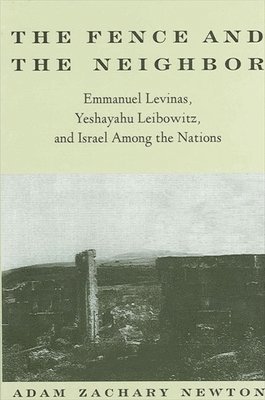
Fence and the Neighbor
Emmanuel Levinas, Yeshayahu Leibowitz, and Israel among the Nations
Häftad, Engelska, 2000
382 kr
Tillfälligt slut
Reviews the potentially complementary albeit sharp differences between two important contemporary Jewish philosophers.The Fence and the Neighbor traces the contours of two thinkers, Emmanuel Levinas and Yeshayahu Leibowitz, who crossed the divide between Talmud and philosophy "proper." Adam Zachary Newton shows how the question of nationalism that has so long haunted Western philosophy-the question of who belongs within its "fence," and who outside-has long been the concern of Jewish thought and its preoccupation with law, limits, and the place of Israel among the nations. To those unfamiliar with Talmudic thought Newton shows how deeply its language and concerns shape Levinas. He also offers an introduction to Leibowitz, a conservative religious thinker who was an outspoken gadfly and radically critical voice in the Israeli political scene. Together, their common origin in Jewish Eastern Europe, a common concern with national allegiance, and the common fence of religious Judaism that makes them intellectual neighbors are voiced in penetrating and original dialogue.
1 177 kr
Skickas inom 10-15 vardagar
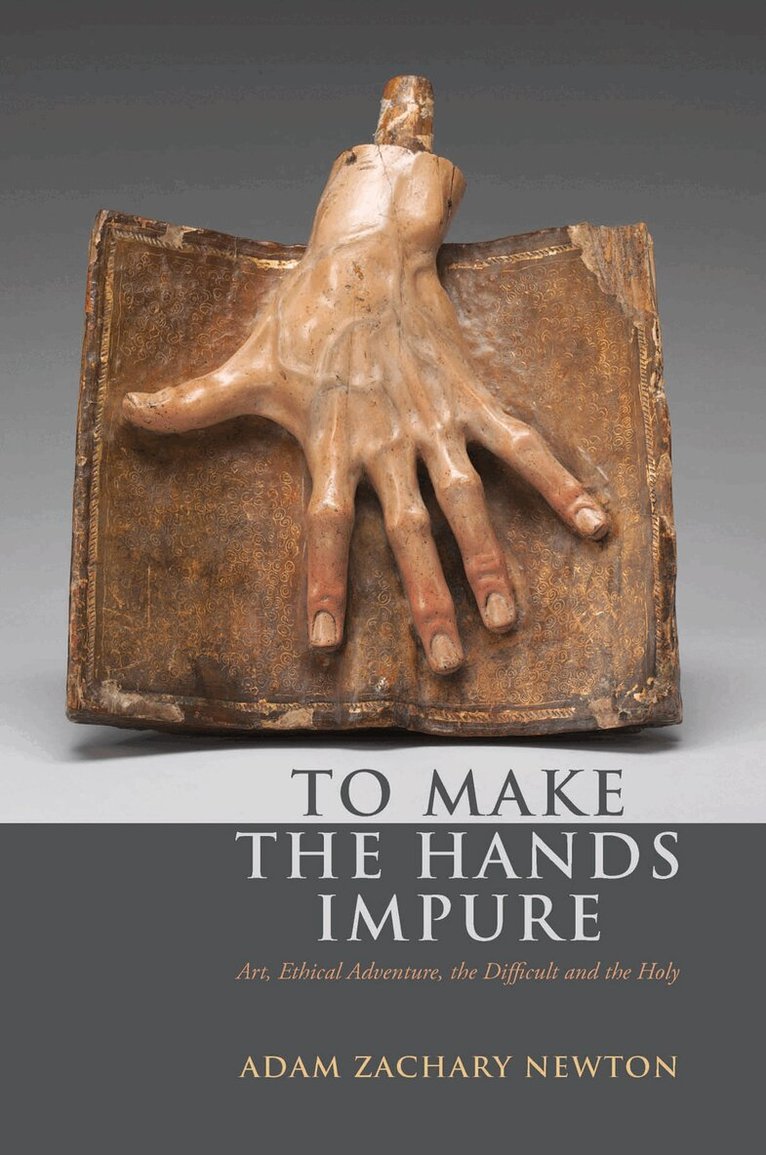
How can cradling, handling, or rubbing a text be said, ethically, to have made something happen? What, as readers or interpreters, may come off in our hands in as we maculate or mark the books we read?For Adam Zachary Newton, reading is anembodied practice wherein "ethics" becomes a matter of tact—in the doubled sense of touch and regard. With the image of the book lying in the hands of its readers as insistent refrain, To Make the Hands Impure cuts a provocative cross-disciplinary swath through classical Jewish texts, modern Jewish philosophy, film and performance, literature, translation, and the material text.Newton explores the ethics of reading through a range of texts, from the Talmud and Midrash to Conrad's Nostromo and Pascal's Le Mémorial, from works by Henry Darger and Martin Scorsese to the National September 11 Memorial and a synagogue in Havana, Cuba. In separate chapters, he conducts masterly treatments of Emmanuel Levinas, Mikhail Bakhtin, and Stanley Cavell by emphasizing their performances as readers—a trebled orientation to Talmud, novel, and theater/film. To Make the Hands Impure stages the encounter of literary experience and scriptural traditions—the difficult and the holy—through an ambitious, singular, and innovative approach marked in equal measure by erudition and imaginative daring.
423 kr
Skickas inom 10-15 vardagar
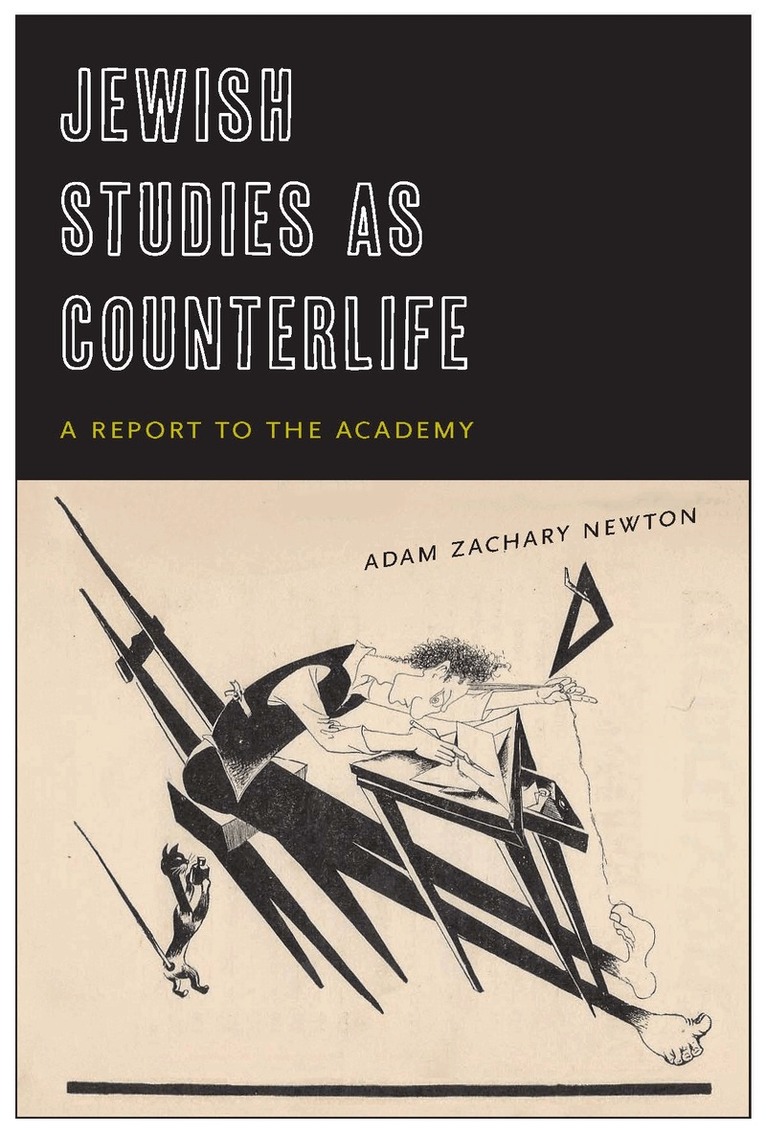
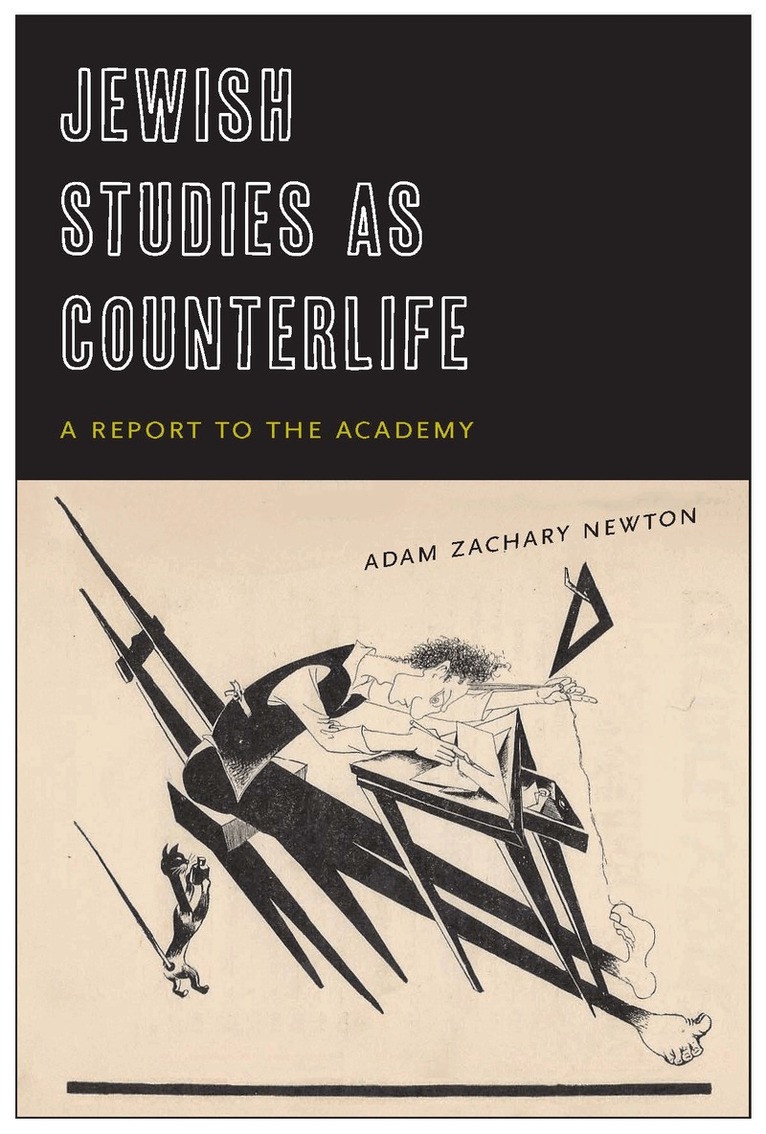
This book tells the story of a Jewish Studies that hasn't fully happened—at least not yet. Newton asks what we mean when we say "Jewish Studies"—and when we imagine it not as mere amalgam but as a project. Jewish Studies offers a unique perspective from which to view the horizon of the academic humanities because, although it arrived belatedly, it has spanned a range of disciplinary locations and configurations, from an "origin story" in nineteenth-century historicism and philology, to the emancipatory politics of the Enlightenment, to the ethnicity-driven pluralism of the postwar decades, to more recent configurations within an interdisciplinary cultural studies. The conflicted allegiances with respect to traditions, disciplines, divisions, stakes, and stakeholders represent the structural and historical situation of the field, as it comes into contact with the humanities more broadly.At once a literary and philosophical thinker, Newton deploys a tableau of texts in concert with an ensemble of vivid, elastic tropes not only to theorize Jewish Studies but also to reimagine it as an agent of that potency Jacques Derrida calls "leverage"—a force multiplier for the field's multiple possibilities. In refiguring a Jewish Studies to come, the book intervenes in a broader discourse about the challenge of professing disciplinary knowledges while promoting transit across their boundaries. Jewish Studies as Counterlife further amplifies Newton's career-long articulation of the dialogic as the staging ground of ethical encounter.
1 484 kr
Skickas inom 10-15 vardagar
This book tells the story of a Jewish Studies that hasn't fully happened—at least not yet. Newton asks what we mean when we say "Jewish Studies"—and when we imagine it not as mere amalgam but as a project. Jewish Studies offers a unique perspective from which to view the horizon of the academic humanities because, although it arrived belatedly, it has spanned a range of disciplinary locations and configurations, from an "origin story" in nineteenth-century historicism and philology, to the emancipatory politics of the Enlightenment, to the ethnicity-driven pluralism of the postwar decades, to more recent configurations within an interdisciplinary cultural studies. The conflicted allegiances with respect to traditions, disciplines, divisions, stakes, and stakeholders represent the structural and historical situation of the field, as it comes into contact with the humanities more broadly.At once a literary and philosophical thinker, Newton deploys a tableau of texts in concert with an ensemble of vivid, elastic tropes not only to theorize Jewish Studies but also to reimagine it as an agent of that potency Jacques Derrida calls "leverage"—a force multiplier for the field's multiple possibilities. In refiguring a Jewish Studies to come, the book intervenes in a broader discourse about the challenge of professing disciplinary knowledges while promoting transit across their boundaries. Jewish Studies as Counterlife further amplifies Newton's career-long articulation of the dialogic as the staging ground of ethical encounter.
579 kr
Skickas inom 5-8 vardagar