Adrian Forty - Böcker
Visar alla böcker från författaren Adrian Forty. Handla med fri frakt och snabb leverans.
5 produkter
5 produkter
410 kr
Skickas inom 7-10 vardagar
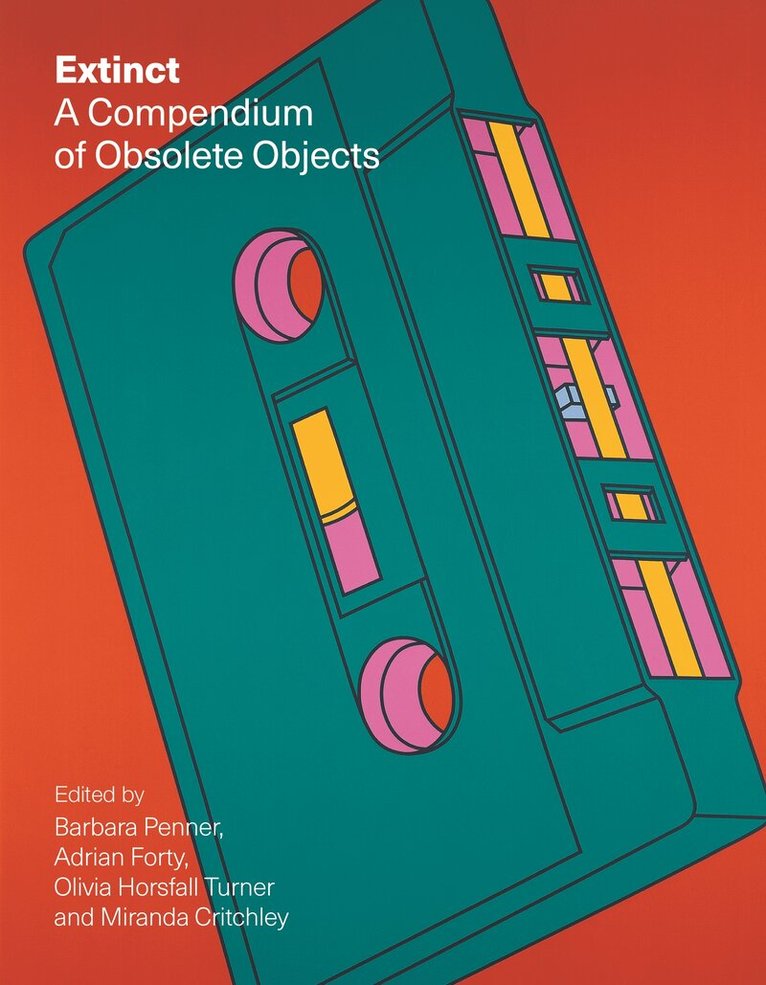
Extinct gathers together the work of an exceptional range of artists, curators, architects, critics and academics, including Barry Bergdoll, Gillian Darley, Tacita Dean, David Edgerton, Hal Foster, Catherine Slessor, Deyan Sudjic and Richard Wentworth. In 85 illustrated essays, contributors nominate ‘extinct’ objects and address them in a series of short, vivid, sometimes personal essays, speaking of not only obsolete technologies, but other ways of thinking, making and interacting with the world. Extinct is filled with curious, half-remembered objects, each one evoking a future that never came to pass.
400 kr
Skickas inom 7-10 vardagar
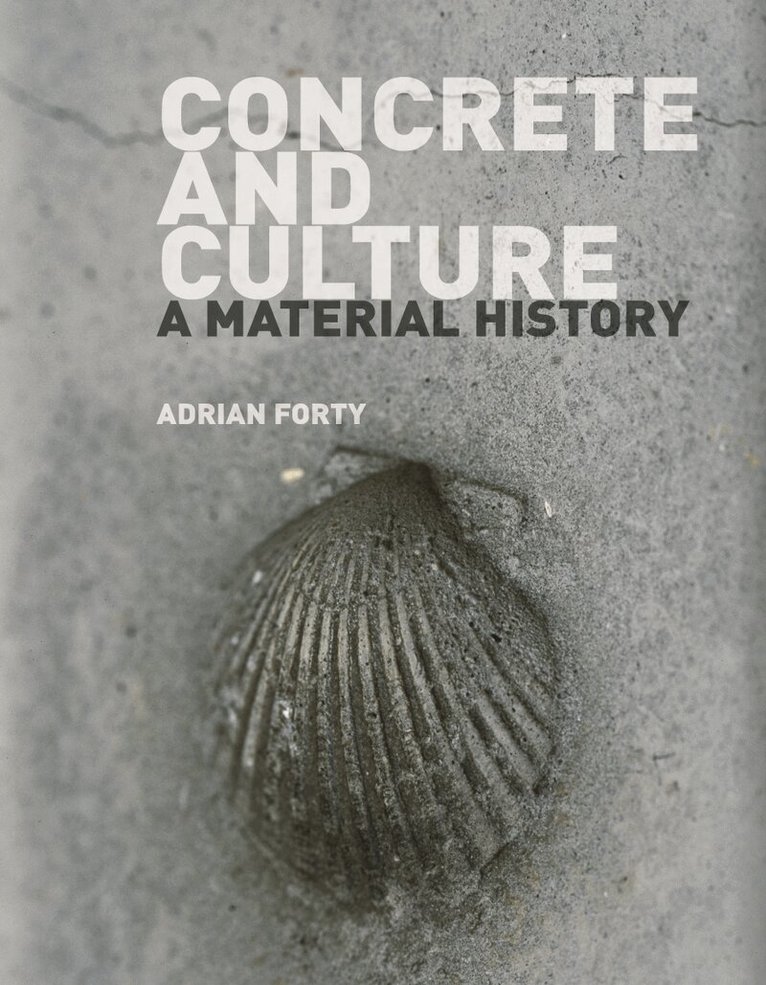
Despite its ancient Roman origins, concrete is considered the ultimate modern material, used everywhere in construction today: the equivalent of three tonnes of concrete per person on the planet is produced each year. Used in our pavements, roads, tunnels and walls, concrete surrounds us wherever we go and polarizes opinion, provoking intense loathing in some and fervent passion in others.Concrete and Culture breaks new ground by charting concrete's effects on culture since its reinvention in the modern period, examining the ways it has changed our understanding of nature, of time and of materiality. This book discusses architects’ responses to and uses of concrete while also taking into account the role it has played in politics, literature, cinema and labour-relations, as well as in present day arguments about sustainability.Crucial to the construction of some of the world’s most avant-garde buildings but also blamed for making all places look alike, concrete continues to be as controversial as ever. In this book Adrian Forty takes the reader across Europe, North and South America and the Far East, reflecting on the global consequences of the material. Concrete and Culture is a uniquely innovative historical account of the part played by an often despised substance in people’s relationships to their physical surroundings.
1 754 kr
Skickas inom 10-15 vardagar
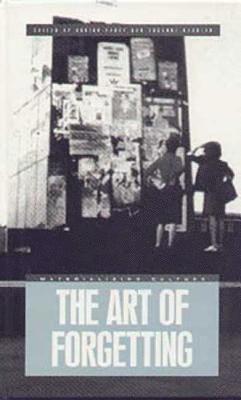
In tracing the process through which monuments give rise to collective memories, this path-breaking book emphasizes that memorials are not just inert and amnesiac spaces upon which individuals may graft their ever-shifting memories. To the contrary, the materiality of monuments can be seen to elicit a particular collective mode of remembering which shapes the consumption of the past as a shared cultural form of memory.In a variety of disciplines over the past decade, attention has moved away from the oral tradition of memory to the interplay between social remembering and object worlds. But research is very sketchy in this area and the materiality of monuments has tended to be ignored within anthropological literature, compared to the amount of attention given to commemorative practice. Art and architectural history, on the other hand, have been much interested in memorial representation through objects, but have paid scant attention to issues of social memory.Cross-cultural and interdisciplinary in scope, this book fills this gap and addresses topics ranging from material objects to physical space; from the contemporary to the historical; and from high art to memorials outside the category of art altogether.In so doing, it represents a significant contribution to an emerging field.
557 kr
Skickas inom 10-15 vardagar
In tracing the process through which monuments give rise to collective memories, this path-breaking book emphasizes that memorials are not just inert and amnesiac spaces upon which individuals may graft their ever-shifting memories. To the contrary, the materiality of monuments can be seen to elicit a particular collective mode of remembering which shapes the consumption of the past as a shared cultural form of memory.In a variety of disciplines over the past decade, attention has moved away from the oral tradition of memory to the interplay between social remembering and object worlds. But research is very sketchy in this area and the materiality of monuments has tended to be ignored within anthropological literature, compared to the amount of attention given to commemorative practice. Art and architectural history, on the other hand, have been much interested in memorial representation through objects, but have paid scant attention to issues of social memory.Cross-cultural and interdisciplinary in scope, this book fills this gap and addresses topics ranging from material objects to physical space; from the contemporary to the historical; and from high art to memorials outside the category of art altogether.In so doing, it represents a significant contribution to an emerging field.
214 kr
Skickas
Throughout his international career spanning more than thirty years, artist and writer David Batchelor has long been preoccupied with colour. ‘Colour is not just a feature of [my] sculpture or painting,’ he notes, ‘but its central and overriding subject.’ This new publication is devoted to an ongoing series of sculptures titled Concretos. First made in 2011, Concretos combine concrete with a variety of brightly coloured – and often found – materials.The publication features a text by Batchelor charting the origins and development of Concretos. He reveals that the first Concreto was made after encountering coloured glass shards embedded in a concrete wall in the back streets of Palermo. Over time these Concretos, their title a nod to the Latin American art movement to which Batchelor’s work is much indebted, have become more complex adventures in layering, pattern and process. Elements such as acrylic plastic, spray and household gloss paint, steel, fabric and found objects all find themselves set in a concrete base. The most recent works, titled Extra-Concretos (2019–) retain much of the simplicity of the early pieces while working on a much larger scale.In an essay commissioned for the publication, curator Eleanor Nairne considers Concretos in light of their material possibilities. Nairne’s vivid text draws connections between the sculptures and a wide range of art historical and literary references. Some of the playful and sensual characteristics of Batchelor’s artistic vocabulary are considered in relation to floral bouquets, sewing-machines, ice cream and poetry. Architectural historian Adrian Forty’s essay discusses concrete’s physical qualities and relationship with modernity. He notes that the imperfect nature and apparent neutrality of the material is key to its enduring place within architecture, design and in Batchelor’s case, contemporary sculpture. ‘In the Concretos,’ asserts Forty, ‘concrete plays a necessary part in allowing colour to be itself. Present, but at the same time part of the barely noticed, half-invisible infrastructure of the city, concrete’s very neutrality performs an unexpectedly active part in these works.’The publication is edited by David Batchelor and Matt Price, designed by Hyperkit, printed by Park, London, and published by Anomie, London. The publication coincides with the first large-scale survey exhibition of Batchelor’s work taking place at Compton Verney, Warwickshire in 2022. The publication has been supported by Goldsmiths’ College, University of London, and Arts Council England.David Batchelor was born in Dundee in 1955 and lives and works in London. In 2013, a major solo exhibition of Batchelor’s two-dimensional work, ‘Flatlands’, was displayed at Fruitmarket Gallery, Edinburgh and toured to Spike Island, Bristol. Batchelor’s work was included in the landmark group exhibition ‘Adventures of the Black Square: Abstract Art and Society 1915–2015’ at Whitechapel Gallery, London. ‘My Own Private Bauhaus’, a solo exhibition of sculptures and paintings by Batchelor was presented by Ingleby Gallery during the Edinburgh Art Festival, 2019. Between 2017 and 2020 a large-scale work by Batchelor was displayed in the collection of Tate Modern. He is represented by Ingleby Gallery, Edinburgh, and Galeria Leme, São Paulo. Batchelor’s portfolio also includes a number of major temporary and permanent artworks in the public realm including a chromatic clock titled ‘Sixty Minute Spectrum’ installed in the roof of the Hayward Gallery, London. ‘Chromophobia’, Batchelor’s book on colour and the fear of colour in the West, was published by Reaktion Books (2000), and is now available in ten languages. His more recent book, 'The Luminous and the Grey' (2014), is also published by Reaktion. In 2008 he was commissioned to edit ‘Colour’ an anthology of writings on colour from 1850 to the present published by Whitechapel/MIT Press.