Adrienne Lehrer – författare
Visar alla böcker från författaren Adrienne Lehrer. Handla med fri frakt och snabb leverans.
8 produkter
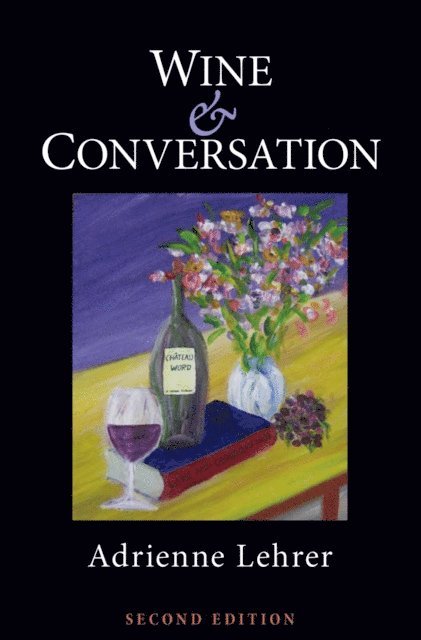
Wine and Conversation
E-bok, 2009
326 kr
Lägg i varukorg
The vocabulary of wine is large and exceptionally vibrant -- from straight-forward descriptive words like "sweet" and "fragrant", colorful metaphors like "ostentatious" and "brash", to the more technical lexicon of biochemistry. The world of wine vocabulary is growing alongside the current …
Wine and Conversation
Inbunden, 2009
2210 kr
Lägg i varukorg
The vocabulary of wine is large and exceptionally vibrant -- from straight-forward descriptive words like "sweet" and "fragrant", colorful metaphors like "ostentatious" and "brash", to the more technical lexicon of biochemistry. The world of wine vocabulary is growing alongside the current …
Wine and Conversation
Häftad, 2009
404 kr
Lägg i varukorg
The vocabulary of wine is large and exceptionally vibrant -- from straight-forward descriptive words like "sweet" and "fragrant", colorful metaphors like "ostentatious" and "brash", to the more technical lexicon of biochemistry. The world of wine vocabulary is growing alongside the current …
Wine and Conversation
E-bok, 2009
326 kr
Lägg i varukorg
The vocabulary of wine is large and exceptionally vibrant -- from straight-forward descriptive words like "sweet" and "fragrant", colorful metaphors like "ostentatious" and "brash", to the more technical lexicon of biochemistry. The world of wine vocabulary is growing alongside the current …
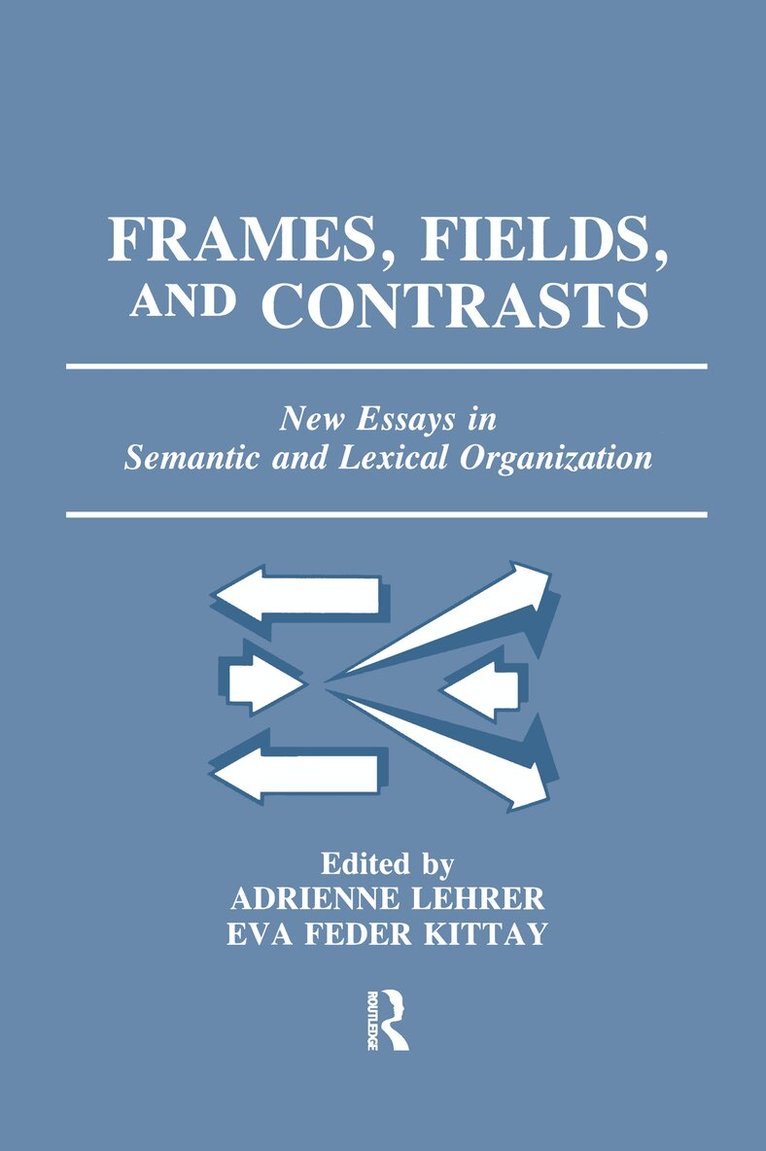
Frames, Fields, and Contrasts
New Essays in Semantic and Lexical Organization
Av Adrienne Lehrer, Eva Feder Kittay m. fl.
Häftad, 1992
1104 kr
Lägg i varukorg
Recently, there has been a surge of interest in the lexicon. The demand for a fuller and more adequate understanding of lexical meaning required by developments in computational linguistics, artificial intelligence, and cognitive science has stimulated a refocused interest in linguistics, …
Frames, Fields, and Contrasts
New Essays in Semantic and Lexical Organization
Av Richard Lehrer, Eva Feder Kittay m. fl.
E-bok, 2012
1229 kr
Lägg i varukorg
Recently, there has been a surge of interest in the lexicon. The demand for a fuller and more adequate understanding of lexical meaning required by developments in computational linguistics, artificial intelligence, and cognitive science has stimulated a refocused interest in linguistics, …
Frames, Fields, and Contrasts
New Essays in Semantic and Lexical Organization
Av Richard Lehrer, Eva Feder Kittay m. fl.
E-bok, 2012
1229 kr
Lägg i varukorg
Recently, there has been a surge of interest in the lexicon. The demand for a fuller and more adequate understanding of lexical meaning required by developments in computational linguistics, artificial intelligence, and cognitive science has stimulated a refocused interest in linguistics, …
Frames, Fields, and Contrasts
New Essays in Semantic and Lexical Organization
Av Adrienne Lehrer, Eva Feder Kittay m. fl.
Inbunden, 2016
2445 kr
Lägg i varukorg
Recently, there has been a surge of interest in the lexicon. The demand for a fuller and more adequate understanding of lexical meaning required by developments in computational linguistics, artificial intelligence, and cognitive science has stimulated a refocused interest in linguistics, …