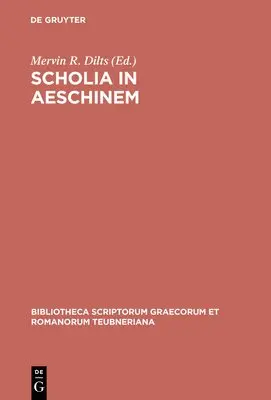
Aeschines – författare
Visar alla böcker från författaren Aeschines. Handla med fri frakt och snabb leverans.
14 produkter
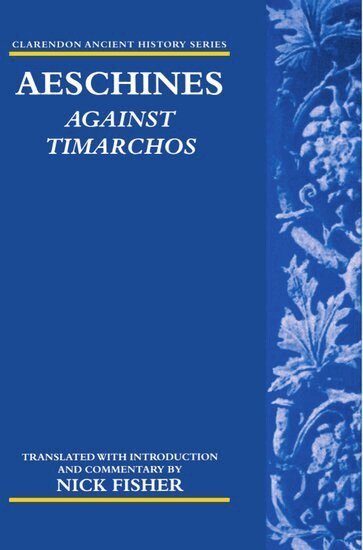
Aeschines: Against Timarchos
Av Aeschines, Nick Fisher
Inbunden, 2001
3602 kr
Lägg i varukorg
This is the first commentary in any language on Aeschines' Against Timarchos, the prosecution speech in the politically crucial trial of 346/5BC. The case in essence was that Timarchos was legally ineligible to engage in active politics because he had engaged in improper homosexual relationships in …
Aeschines: Against Timarchos
Av Aeschines
Häftad, 2001
1773 kr
Lägg i varukorg
This is the first commentary in any language on Aeschines' Against Timarchos, the prosecution speech in the politically crucial trial of 346/5BC. The case in essence was that Timarchos was legally ineligible to engage in active politics because he had engaged in improper homosexual relationships in …
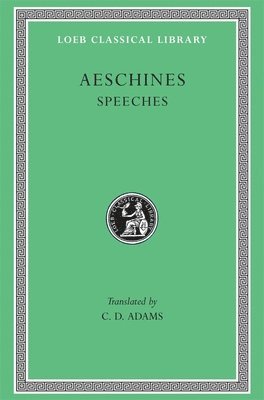
Speeches
Av Aeschines
Inbunden, 1919
373 kr
Lägg i varukorg
An adversarial advocate.Aeschines, orator and statesman of Athens, 390 or 389–314 BC, became active in politics about 350. In 348 he was a member of a mission sent to the Peloponnese to stir up feeling against the growing power of King Philip of Macedon; but in 347, when part of a peacemaking …
Aeschines Des Socratikers Philosophische Gespräche...
Av Aeschines (Socraticus), Aeschines m. fl.
Inbunden, 2022
367 kr
Lägg i varukorg
Aeschines Des Socratikers Philosophische Gespräche...
Av Aeschines (Socraticus), Aeschines m. fl.
Häftad, 2022
191 kr
Lägg i varukorg
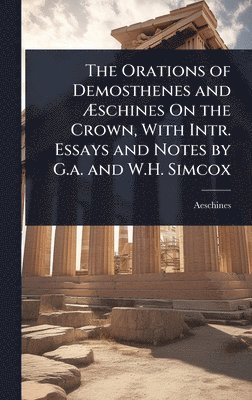
Orations of Demosthenes and Ãschines On the Crown, With Intr. Essays and Notes by G.a. and W.H. Simcox
Av Aeschines
Inbunden, 2025
442 kr
Lägg i varukorg
Orations of Demosthenes and Ãschines On the Crown, With Intr. Essays and Notes by G.a. and W.H. Simcox
Av Aeschines
Häftad, 2025
323 kr
Lägg i varukorg
[Dmosthenous kai Aischinou ta Szomena]; textui, qui variorum est
Av Aeschines, Demosthenes
Inbunden, 2025
529 kr
Lägg i varukorg
[Dmosthenous kai Aischinou ta Szomena]; textui, qui variorum est
Av Aeschines, Demosthenes
Inbunden, 2025
517 kr
Lägg i varukorg
[Dmosthenous kai Aischinou ta Szomena]; textui, qui variorum est
Av Aeschines, Demosthenes
Häftad, 2025
411 kr
Lägg i varukorg
[Dmosthenous kai Aischinou ta Szomena]; textui, qui variorum est
Av Aeschines, Demosthenes
Häftad, 2025
402 kr
Lägg i varukorg



![Aeschines, Demosthenes - [Dmosthenous kai Aischinou ta Szomena]; textui, qui variorum est, Inbunden. Tillgänglighet: Lägg i varukorg](https://image.bokus.com/images2/9781024126891_766)
![Aeschines, Demosthenes - [Dmosthenous kai Aischinou ta Szomena]; textui, qui variorum est, Inbunden. Tillgänglighet: Lägg i varukorg](https://image.bokus.com/images2/9781024126990_766)
![Aeschines, Demosthenes - [Dmosthenous kai Aischinou ta Szomena]; textui, qui variorum est, Häftad. Tillgänglighet: Lägg i varukorg](https://image.bokus.com/images2/9781024130904_766)
![Aeschines, Demosthenes - [Dmosthenous kai Aischinou ta Szomena]; textui, qui variorum est, Häftad. Tillgänglighet: Lägg i varukorg](https://image.bokus.com/images2/9781024131147_766)