
Aimée Joyce – författare
Visar alla böcker från författaren Aimée Joyce. Handla med fri frakt och snabb leverans.
2 produkter
2 produkter
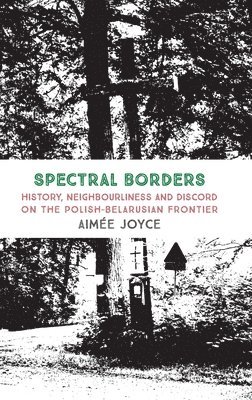
Spectral Borders
History, neighbourliness and discord on the Polish–Belarusian frontier
Inbunden, Engelska, 2024
1 016 kr
Skickas inom 5-8 vardagar
Based on ethnographic research conducted in a town on the Polish-Belarussian border, this book examines borders and the lingering echoes of conflict. Using hauntology as a guiding framework to understand how people live amidst the histories and reverberations of conflicts, the author investigates the role that landscape, with its material presences and absences, plays in evoking and maintaining the border. The ethnography probes themes of ethnicity, religious practice, memory and space, investigating the border as a dynamic social process. By immersing herself in the everyday lives of the borderland, Joyce unravels how traces – lingering imprints of the past – shape local relationships in the present, influencing shared understandings of history and the future. Introducing the concept of the spectral border as a lens to reveal the ambiguous presence of afterlives and memories tied to a historical boundary, the book unveils its present-day ghostly forms in the local ideas and practices of neighbourliness at the heart of borderland identity. Spectral Borders interrogates the use and limitations of these practices by exploring points of tension, where the meanings and uses of ‘being a neighbour’ and ‘being from the borderland’ are tested and challenged. In doing so, the book raises important questions about how conviviality is created and managed in a place with a long and unresolved history marked by ethnic and religious violence, war, and civil unrest.

Counter-Cartographies of Trace
Theoretical, Methodological and Ethical Approaches Across Disciplines
Häftad, Engelska, 2026
843 kr
Kommande
This volume provides a road map for a new field of transdisciplinary Traces Studies. Based on four years of collaborative, interdisciplinary research, it adopts an experimental approach to traces. In a world marked by layered forms of violence - political, economic, social, and environmental - the contributions offer a vital and timely intervention. Instead of searching for lost or silenced histories, they turn to counter-cartography: a radical practice where gaps, absences, and fragments become powerful sites of possibility. In this way, the authors seek to open space for speculation, incompleteness and the possibility of imagining: What might it be like - or feel like - to move through fractured, uncertain worlds guided by traces? How might we reimagine complex social realities and contested terrains through what remains? And what new possibilities might emerge from the act of tracing?First articulation of Traces StudiesOpens fresh pathways for engaging with the legacies of violence, the climate crisis, technological change, imperial histories, and everyday practices of resistanceFeaturing contributions from academic and artistic, non-academic voices