Alan Armstrong – författare
Visar alla böcker från författaren Alan Armstrong. Handla med fri frakt och snabb leverans.
6 produkter
Whittington
E-bok, 2009
117 kr
Lägg i varukorg
The power of reading is beautifully captured in this 2006 Newbery Honor-winning book. Bernie keeps a barn full of animals the rest of the world has no use for–two retired trotters, a rooster, some banty hens, and a Muscovy duck with clipped wings who calls herself The Lady. When the cat called …
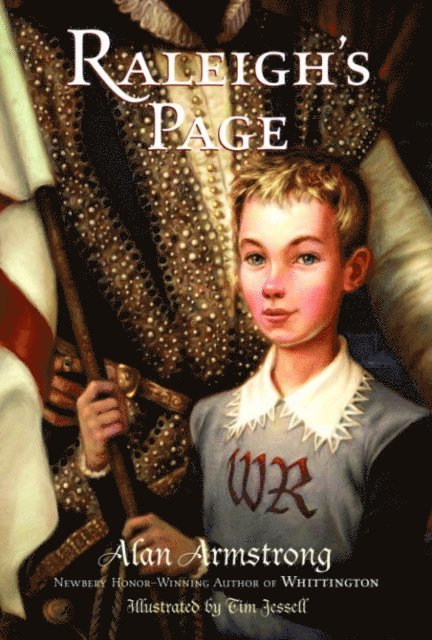
Raleigh's Page
E-bok, 2007
111 kr
Lägg i varukorg
ANDREW HAS grown up near the Plymouth docks hearing the sailors talk about America. Knowing that Andrew''s heart is set on going to the new world, his father sends him up to London to serve as page in the house of Walter Raleigh. In Queen Elizabeth''s court, Raleigh''s the strongest voice in favor …
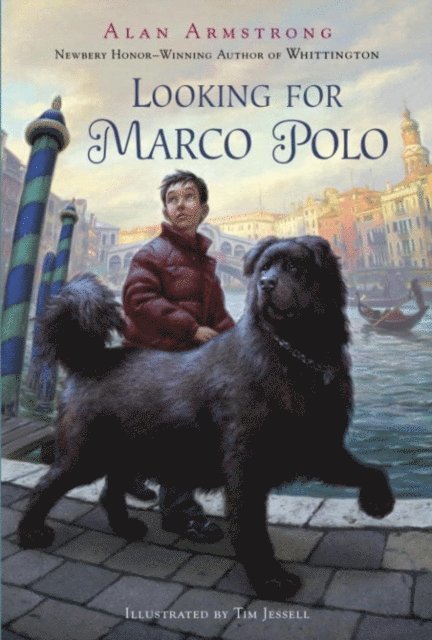
Looking for Marco Polo
E-bok, 2009
79 kr
Lägg i varukorg
Newbery Honor–winning author Alan Armstrong’s latest book! Eleven-year-old Mark''s anthropologist father has disappeared in the Gobi desert while tracing Marco Polo’s ancient route from Venice to China. His mother decides they must go to Venice to petition the agency that sent Mark’s father to send …
Racing the Moon
E-bok, 2012
117 kr
Lägg i varukorg
An adventurous new work from Newbery Honor-Winning author, Alan Armstrong. In the spring of 1947, outer space was an unexplored realm. But eleven year-old Alexis (Alex) Heart and her impulsive brother, Chuck, believe that the stars are within reach. In the midst of building their own rocket, Alex …
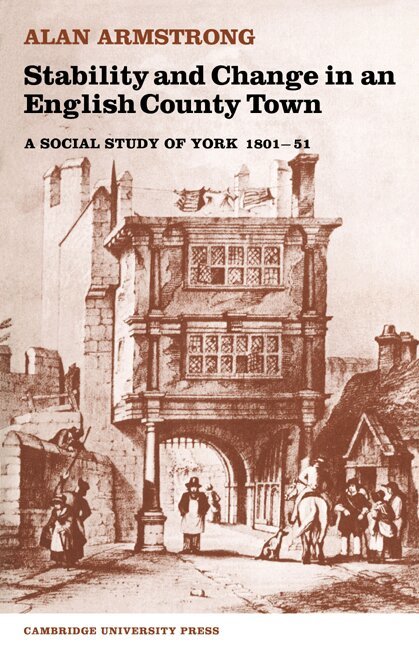
Stability and Change in an English County Town
A Social Study of York 1801-51
Häftad, 2005
703 kr
Lägg i varukorg
During the Industrial Revolution the attention of contemporaries was drawn inevitably towards conditions in the great manufacturing towns, a bias which most historical writing continues to perpetuate. By contrast, only scant attention has been paid to the development of older-established …
Economy of Kent, 1640-1914
Inbunden, 1996
544 kr
Tillfälligt slut
Studies of Kent's economic history confirm the industrial revolution to have been less cataclysmic and more widespread then formerly accepted.In recent years, historians' interpretations of the economic history of Britain from the seventeenth to the nineteenth century have changed significantly. …