Alan H. Goodman - Böcker
Visar alla böcker från författaren Alan H. Goodman. Handla med fri frakt och snabb leverans.
9 produkter
9 produkter
2 230 kr
Skickas inom 3-6 vardagar
282 kr
Skickas inom 7-10 vardagar
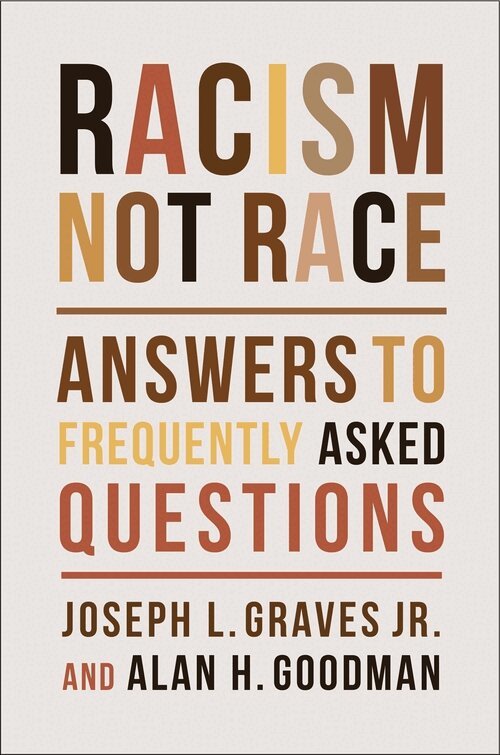
Winner, 2024 W.W. Howells Prize, American Anthropological Association, Biological Anthropology SectionThe science on race is clear. Common categories like “Black,” “white,” and “Asian” do not represent genetic differences among groups. But if race is a pernicious fiction according to natural science, it is all too significant in the day-to-day lives of racialized people across the globe. Inequities in health, wealth, and an array of other life outcomes cannot be explained without referring to “race”—but their true source is racism. What do we need to know about the pseudoscience of race in order to fight racism and fulfill human potential?In this book, two distinguished scientists tackle common misconceptions about race, human biology, and racism. Using an accessible question-and-answer format, Joseph L. Graves Jr. and Alan H. Goodman explain the differences between social and biological notions of race. Although there are many meaningful human genetic variations, they do not map onto socially constructed racial categories. Drawing on evidence from both natural and social science, Graves and Goodman dismantle the malignant myth of gene-based racial difference. They demonstrate that the ideology of racism created races and show why the inequalities ascribed to race are in fact caused by racism.Graves and Goodman provide persuasive and timely answers to key questions about race and racism for a moment when people of all backgrounds are striving for social justice. Racism, Not Race shows readers why antiracist principles are both just and backed by sound science.
203 kr
Skickas inom 7-10 vardagar
Winner, 2024 W.W. Howells Prize, American Anthropological Association, Biological Anthropology SectionThe science on race is clear. Common categories like “Black,” “white,” and “Asian” do not represent genetic differences among groups. But if race is a pernicious fiction according to natural science, it is all too significant in the day-to-day lives of racialized people across the globe. Inequities in health, wealth, and an array of other life outcomes cannot be explained without referring to “race”—but their true source is racism. What do we need to know about the pseudoscience of race in order to fight racism and fulfill human potential?In this book, two distinguished scientists tackle common misconceptions about race, human biology, and racism. Using an accessible question-and-answer format, Joseph L. Graves Jr. and Alan H. Goodman explain the differences between social and biological notions of race. Although there are many meaningful human genetic variations, they do not map onto socially constructed racial categories. Drawing on evidence from both natural and social science, Graves and Goodman dismantle the malignant myth of gene-based racial difference. They demonstrate that the ideology of racism created races and show why the inequalities ascribed to race are in fact caused by racism.Graves and Goodman provide persuasive and timely answers to key questions about race and racism for a moment when people of all backgrounds are striving for social justice. Racism, Not Race shows readers why antiracist principles are both just and backed by sound science.
Building a New Biocultural Synthesis
Political-Economic Perspectives on Human Biology
Häftad, Engelska, 1998
360 kr
Skickas inom 7-10 vardagar
Anthropology, with its dual emphasis on biology and culture, is--or should be--the discipline most suited to the study of the complex interactions between these aspects of our lives. Unfortunately, since the early decades of this century, biological and cultural anthropology have grown distinct, and a holistic vision of anthropology has suffered.This book brings culture and biology back together in new and refreshing ways. Directly addressing earlier criticisms of biological anthropology, Building a New Biocultural Synthesis concerns how culture and political economy affect human biology--e.g., people's nutritional status, the spread of disease, exposure to pollution--and how biological consequences might then have further effects on cultural, social, and economic systems. Contributors to the volume offer case studies on health, nutrition, and violence among prehistoric and historical peoples in the Americas; theoretical chapters on nonracial approaches to human variation and the development of critical, humanistic and political ecological approaches in biocultural anthropology; and explorations of biological conditions in contemporary societies in relationship to global changes.Building a New Biocultural Synthesis will sharpen and enrich the relevance of anthropology for understanding a wide variety of struggles to cope with and combat persistent human suffering. It should appeal to all anthropologists and be of interest to sister disciplines such as nutrition and sociology.Alan H. Goodman is Professor of Anthropology, Hampshire College. Thomas L. Leatherman is Associate Professor of Anthropology, University of South Carolina.
282 kr
Skickas inom 7-10 vardagar
The so-called science wars pit science against culture, and nowhere is the struggle more contentious--or more fraught with paradox--than in the burgeoning realm of genetics. A constructive response, and a welcome intervention, this volume brings together biological and cultural anthropologists to conduct an interdisciplinary dialogue that provokes and instructs even as it bridges the science/culture divide. Individual essays address issues raised by the science, politics, and history of race, evolution, and identity; genetically modified organisms and genetic diseases; gene work and ethics; and the boundary between humans and animals. The result is an entree to the complicated nexus of questions prompted by the power and importance of genetics and genetic thinking, and the dynamic connections linking culture, biology, nature, and technoscience. The volume offers critical perspectives on science and culture, with contributions that span disciplinary divisions and arguments grounded in both biological perspectives and cultural analysis.An invaluable resource and a provocative introduction to new research and thinking on the uses and study of genetics, Genetic Nature/Culture is a model of fruitful dialogue, presenting the quandaries faced by scholars on both sides of the two-cultures debate.
781 kr
Tillfälligt slut
Unprecedented advances in genetics and biotechnology have brought profound new insights into human biological variation. These present challenges and opportunities for understanding the origins of human nature, the nature of difference, and the social practices these sustain. This provides an opportunity for cooperation between the biological and social sciences – one that is capable of prompting a synergistic exchange of ideas with far-reaching implications. The Nature of Differencecritically analyses biological explanations for morality, criminality, race, sexuality, and disability. Based on the 45th annual symposium of the Society for the Study of Human Biology, this work synthesizes the perspectives of established experts in the field of human biology with those studying the social meanings of human biological variation and scientific practices in human biological research. Some questions addressed by The Nature of Difference:· Is there a biological basis for morality, criminality, witchcraft, sexuality or disability? · What do comparisons of humans and apes tell us about society? · How do people draw on scientific methods to justify racism? · Why do geneticists continue to use racial categories in their research? · Do ethical guidelines constrain or facilitate research into human biology? · Can science and society escape from biological determinism? As biotechnology expands the frontiers of what we know and what we are able to do, and as the genomic revolution moves out of the laboratory and into our daily lives, we are faced with a number of pressing social issues that need to be resolved. Offering an unparalleled collection of multidisciplinary perspectives on the meanings of biological diversity, this book provides readers with a vibrant analysis which revisits these issues with deepened insight from contrasting yet complementary perspectives.
357 kr
Skickas inom 7-10 vardagar
The second edition of the bestselling title on modern notions of race, providing timely examination of perspectives on race, racism, and human biological variationIn this fully updated second edition of this popular text on the study of race, Alan Goodman, Yolanda Moses, and Joseph Jones take a timely look at modern ideas surrounding race, racism, and human diversity, and consider the ways that ideas about race have changed over time. New material in the second edition covers recent history and emerging topics in the study of race. The second edition has also been updated to account for advancements in the study of human genetic variation, which provide further evidence that race is an entirely social phenomenon. RACE compels readers to carefully consider their own ideas about race and the role that race plays in the world around them. Examines the ways perceptions of race influence laws, customs, and social institutions in the US and around the worldExplores the impact of race and racism on health, wealth, education, and other domains of lifeIncludes guest essays by noted scholars, a complete bibliography, and a full glossaryStands as an ideal text for courses on race, racism, and cultural and economic dividesCombines insights and examples from science, history, and personal narrativeIncludes engaging photos, illustrations, timelines, and diagrams to illustrate important conceptsTo read author Alan Goodman's recent blog post on the complicated relationship between race and biology, please click here.
2 693 kr
Skickas inom 10-15 vardagar
Unprecedented advances in genetics and biotechnology have brought profound new insights into human biological variation. These present challenges and opportunities for understanding the origins of human nature, the nature of difference, and the social practices these sustain. This provides an opportunity for cooperation between the biological and social sciences � one that is capable of prompting a synergistic exchange of ideas with far-reaching implications. ���� The Nature of Differencecritically analyses biological explanations for morality, criminality, race, sexuality, and disability. Based on the 45th annual symposium of the Society for the Study of Human Biology, this work synthesizes the perspectives of established experts in the field of human biology with those studying the social meanings of human biological variation and scientific practices in human biological research. Some questions addressed by The Nature of Difference:� Is there a biological basis for morality, criminality, witchcraft, sexuality or disability? � What do comparisons of humans and apes tell us about society? � How do people draw on scientific methods to justify racism? � Why do geneticists continue to use racial categories in their research? � Do ethical guidelines constrain or facilitate research into human biology? � Can science and society escape from biological determinism? As biotechnology expands the frontiers of what we know and what we are able to do, and as the genomic revolution moves out of the laboratory and into our daily lives, we are faced with a number of pressing social issues that need to be resolved. Offering an unparall
245 kr
Skickas inom 5-8 vardagar