Alan Lessoff – författare
Visar alla böcker från författaren Alan Lessoff. Handla med fri frakt och snabb leverans.
4 produkter
Historical Dictionary of the Progressive Era
Av Catherine Cocks, Peter C. Holloran m. fl.
E-bok, 2009
2879 kr
Lägg i varukorg
The Progressive Era, the period in the United States between 1898 and 1917, was a time of great social, political, and industrial change. Following the Spanish-American War of 1898, an event that signaled the emergence of the United States as a great power, the country soon was involved in its …
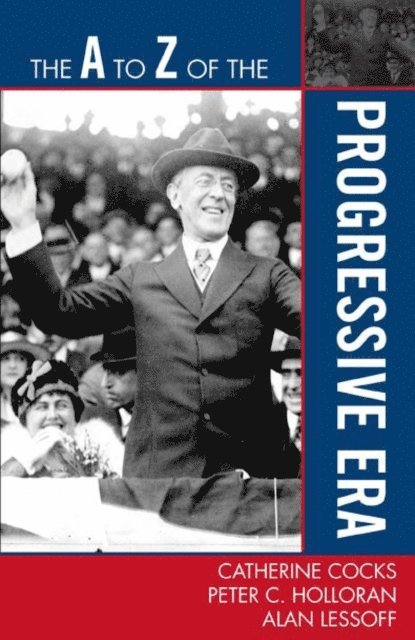
A to Z of the Progressive Era
Av Catherine Cocks, Peter C. Holloran m. fl.
E-bok, 2009
649 kr
Lägg i varukorg
The Progressive Era, the period in the United States between 1898 and 1917, was a time of great social, political, and industrial change. Following the Spanish-American War of 1898, an event that signaled the emergence of the United States as a great power, the country soon was involved in its …
Where Texas Meets the Sea
Corpus Christi and Its History
Av Alan Lessoff
Häftad, 2019
280 kr
Lägg i varukorg
A favorite destination of visitors to the Texas coast, Corpus Christi is a midsize city that manages to be both cosmopolitan and provincial, networked and local. It is an indispensable provider of urban services to South Texas, as well as a port of international significance. Its industries and …
Fractured Modernity
America Confronts Modern Times, 1890s to 1940s
Av Thomas Welskopp, Alan Lessoff
Inbunden, 2012
1383 kr
Tillfälligt slut
The ten essays in this volume deal with the debates and conflicts about modernity in a period of American history when the tensions and strains caused by seemingly unrestrained change and the reactions to it were particularly severe and tangible. Partly concentrating on the margins or dark …