Alan Palmer - Böcker
Visar alla böcker från författaren Alan Palmer. Handla med fri frakt och snabb leverans.
19 produkter
19 produkter
Who's Who in Shakespeare's England: Over 700 Concise Biographies of Shakespeare's Contemporaries
Häftad, Engelska, 1999
292 kr
Skickas inom 3-6 vardagar
238 kr
Skickas inom 10-15 vardagar
Who's Who in Modern History is a unique reference book which examines those individuals who have shaped the political world since 1860. Coverage is truly global, including the most important figures in Europe, Asia, North America, Latin America, Africa and Australasia.It provides:* an easy-to-use A-Z layout* authoritative, detailed biographies of the most important figures since 1860, from Clemenceau and Chief Buthelezi to King Fahd and Benazir Bhutto* bibliographical references for each entry, to aid further research* extensive cross-referencing* an essential guide for students, researchers and the general reader alike.
262 kr
Skickas inom 10-15 vardagar
'The Gardeners of Salonika' as Clemenceau contemptuously labelled them, could well be called the forgotten army of the First World War. Yet the Macedonian Campaign was, in Lord Hankey's words, 'the most controversial of all the so-called sideshows.' In his definitive The First World War (1999) Sir John Keegan hailed Alan Palmer for having written 'the best study of the Macedonian Front in English.' Palmer tells the story of this extraordinary polyglot army (it included, at various times, contingents from seven countries) from the first landing at Salonika in 1915 to the peace in 1918. He also illuminates the political and strategic background: the ceaseless argument in London and Paris over the army's future and the maze of Greek politics within which it and its commanders were enclosed. 'A masterly and colourful account of this, the most controversial and neglected sideshow of them all.' Guardian'Not only a valuable contribution to history, but also an enthralling book' Sunday Times
247 kr
Skickas
In the author's own words this is a book about 'chaps and maps'. More formally. The Chancelleries of Europe is a study of traditional diplomacy at its peak of influence in the nineteenth-century and the first years of the twentieth. At the Congress of Vienna in 1814-15 the five Great Powers - Austria, Britain, France, Prussia and Russia - established a system of international intercourse that safeguarded the world from major war for exactly a hundred years. The successive crises that challenged this supranational system - the unification of Italy and Germany, the scramble for colonies in Africa, and for trade concessions in Asia, the decline of the Ottoman Empire and the emergence of Japan - are well-known. Less attention has been given to the way the system functioned and to changes imposed on its character by the spread of speedier communications. It is these gaps in our understanding of the international politics of the century that the author seeks to fill.The book therefore studies the clashes of personality between crowned heads of the old empires and between rival statesmen and ambassadors seeking advancement. It compares the growth of personnel and specialist departments in the various foreign ministries, assesses the impact of domestic politics on external affairs, the power of the pressure groups like the (British) China Association and the (Russian) Far Eastern Committee, the proto-spin fed to favoured newspapers and, in contrast, the growing unease of press and public at 'hidden' negotiations and the concealment of diplomatic expedients and alliances. But the book also notes changes in the way diplomacy was conducted in the wake of technological inventions such as the semaphore towers of the early years and the electric telegraph and undersea cables of the second half of the century. Moments of high drama, skullduggery and bathos prove that the reading of diplomatic history is not the dull, dreary drudge many abhorred in their schooldays.
277 kr
Skickas
This book was first published in 1970. Its purpose can best be described by the author himself. In his original preface he writes, 'This book is intended as an introductory study of the political development over the last century and a half of the lands between Germany and Italy in the west and Russia in the east. It is therefore primarily concerned with six countries in Eastern Europe as constituted today: Bulgaria, Czechoslovakia, Hungary, Poland, Roumania and Yugoslavia. Since history in the broadest sense is no respecter of frontiers the narrative trespasses at times beyond the strict geographical limits of this region, but events in Germany, Austria and the northern and southern fringe are considered only in relation tot he central theme - the fate of the peoples in the central borderland and their response to the recurrent menace to independence offered by their more powerful neighbours.'Alan Palmer's pedigree for writing on this subject could hardly be more impressive. Not only do his own many titles on European history (many reissued in Faber Finds) testify to his excellence but he also, in his early days, worked with C. A. Macartney, one of the greatest of all historians on Eastern Europe. The result here is a book of impressive but accessible scholarship.'A magnificent work cof scholarship and fascinating to read from cover to cover.' Graham Wade, Tribune'An interesting and well written introduction to a very complex subject.' Times Literary Supplement
316 kr
Skickas
As Alan Palmer himself writes in his preface, 'Alexander 1, ruler of Russia for the first quarter of the nineteenth century, is remembered today mainly on three counts: as the Tsar who refused to make peace with the French when Moscow fell in 1812; as the idealist who sought to bind Europe's sovereigns in a Holy Alliance in 1815; and as the Emperor who died - or gave the impression of having died - at the remote southern seaport of Taganrog in the winter of 1825. Recent interest has concentrated , perhaps excessively, on the third of these dramatic episodes akthough it is natural that the epic years of the struggle with Napoleon should continue to excite the historical imagination.'He has been dubbed 'The Enigmatic Tsar'. There are many contrasting opinions of him. Thomas Jefferson declared 'A more virtuous man, I believe, does no exist, nor one who is more enthusiastically devoted to better the condition of mankind. Castlereagh thought well of him, too, but both Metternich and Napoleon considered him inconsistent and untrustworthy. And Pushkin famously described him as 'a Sphinx who carried his riddle with him to the tomb.' an assessment even more piquant if it is true, as some maintain, his tomb in empty.With his customary blend of meticulous scholarship and agreeable writing, Alan Palmer provides the most balanced and engaging portrait imaginable.'A pleasure to read and unlikely to be replaced for many years' Philip Ziegler, The Times'Excellent . . . a major biographical achievement, a notable contribution to our understanding of this still enigmatic monarch' Robert Blake, Spectator
277 kr
Skickas
A glib assessment of Metternich might not be a favourable one, he was not without his ridiculous qualities, and yet he survived, more than survived, in fact, with the 'Age of Metternich' lasting for more than a generation, and giving Europe a measure of peace, albeit repressive, that was much needed after the Napoleonic convulsions.Alan Palmer describes well Metternich's extraordinary longevity. 'Clement von Metternich held continuous office at the head of Europe's affairs for a longer period of time than any other statesman in modern history: he became foreign minister of the Austrian Empire in the autumn of 1809 and he did not resign until the spring of 1848. For thirty-three of these thirty-nine years his statecraft and philosophy of government determined the political pattern of the continent. The 'Age of Metternich' , though often impatiently dismissed by historians as a mere interlude, lasted for twice as long as the 'Age of Napoleon' which preceded it and for half as long again as the 'Age of Bismarck' which followed in the closing decades of the century.'Metternich was a statesman to his fingertips, practising 'the skills of diplomacy with greater fluency than any contemporary Talleyrand, from whom he had learnt many of the refinement of the game.'How would he fare today? Probably quite well as he was, again in Alan Palmer's words, 'an early champion of federalism and a good European ...''As a work of history (it) cannot be faulted.' A. J. P. Taylor, Observer'Well-written, well-researched, lucid and witty.' Philip Ziegler, The Times
277 kr
Skickas
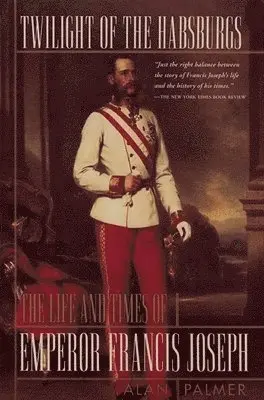
Emperor of Austria, Apostolic King of Hungary, King of Jerusalem, King of Bohemia, King of Dalmatia, King of Transylvania, King of Croatia and Slovenia, King of Galicia and Illyria, Grand Duke of Tuscany and Cracow, Margrave of Moravia, Duke of Salzburg, Duke of Bukovina, Duke of Modena, Parma, and Piacenza and so on, another thirty or so titles could be added. Was ever a monarch so festooned as Emperor Francis Joseph? He ruled from the Year of the Revolutions, 1848 until his death in 1916. His empire was the most multi-national state ever. An ethnic map of 1910 shows there to be Germans, Magyars, Czechs, Slovaks, Poles, Ruthenes, Serbs, Croats, Slovenes, Italians, Jews, Muslims, Ladins (in the Tyrol) and Roumanians. What is more, even together the Germans and the Magyars constituted a minority. And yet, as Alan Palmer observes no other European monarch 'exercised full sovereignty for so long.' Unlike Queen Victoria he ruled rather than merely reigned. That alone suggests he was something more than the humourless bureaucrat he is commonly thought to have been, and Alan Palmer is successful in providing a more rounded and sympathetic portrait of him both as head of an empire and head of a family.His personal life was punctuated with tragedy: his brother, Maximilian was executed y Mexican republicans; his only son, Rudolf shot himself and his mistress at Mayerling; his wife, Empress Elizabeth, was stabbed to death in Geneva, and his nephew and heir, Francis-Ferdinand was assassinated at Sarajevo. This was the first biography of Francis Joseph by an English writer and was acclaimed when originally published in 1994.'With great skill Mr Palmer blends in the Emperor's private life with the story of the Empire. . . This is an important book; also an entrancing one.' Allan Massie, Daily Telegraph'A compelling read' Lawrence James, Evening Standard
232 kr
Skickas
The East End as an idea is known to every Londoner, and to many others, though its boundaries are vague. Alan Palmer's historical overview of the area (first published in 1989 and revised in 2000) takes its extent to be the traditional limits of Hackney and Tower Hamlets, Hoxton and Shoreditch, the docklands and their overflow into West Ham and East Ham. And at the heart of the East End lies Spitalfields, home to a transient, often radical and hard-working population. Though it is often seen as London's centre of industry and poverty, in comparison to the well-to-do West End, the East End has always been a diverse place: in the seventeenth century, Hackney was a pleasant country retreat; Stepney and the docklands a bustling world of sailors and merchants. The book traces the development of the area from these roots, through the nineteenth century - when the East End became notorious as the home of radicals, exiled revolutionaries and the very poor, its crowded streets the scene of murder, riot and cholera -to the bombing of the first and second world war; and the subsequent decline and regeneration of the twentieth century.
277 kr
Skickas
Time and time again from the seventeenth century onward observers predicted the collapse of the Ottoman Empire; yet it outlived all its rivals. As late as 1910 it straddled three continents and was still recognised as an imperial dynasty during the peace-making that followed the Great War.Alan Palmer offers a fascinating overview of the Ottoman Empire's decline, from the failure to take Vienna in 1683 to the abolition of the Sultanate in 1922 by Mustafa Kemal. It deals with constantly recurring problems - vying secular and religious authority; acceptance or rejection of Western ideas; greedy neighbours; population movements; and the strength or weakness of successive sultans.The twenty-first century has put the problems that faced the later sultans back upon the world agenda. Places such as Basra and Mosul have again made headlines; likewise Libya and the Lebanon, Armenia and Bosnia-Herzegovina. As Alan Palmer shows, the Ottoman past retains a deep and troubling relevance for all of us.'A scholarly, readable and balanced history.' Independent
231 kr
Skickas inom 3-6 vardagar
When an armistice was finally signed in the forest of Compiegne outside of Paris, the Great War had shuddered to an end, but not before it had been fought on three continents, three oceans, and nine seas. Studies of World War I tend to focus on the Western front, the muddy trenches of France and Belgium, which is particularly problematic considering the final year of the conflict, when offensives in the Balkans, the Middle East, Italy, and the West all ended with decisive victories for the Allied powers. Alan Palmer embraces the full scope of the war and illuminates many of the major players -- Allied generals Sir Douglas Haig, Sir Edmund Allenby, Ferdinand Foch, and John J. Pershing; Central Powers generals Paul von Hindenburg and Erich Ludendorff; as well as David Lloyd George, Britain's prime minister. Victory 1918 is rife with tales of horrible misunderstandings such as the Austrian emperor Charles's appeal for peace on September 14, 1918, which was thought by the Allies to be a trick and, if taken seriously, could have saved as many as a quarter of a million lives. As he ably shifts between the diplomatic big picture and the local horrors of the trenches, Palmer presents the war in all its banality and valor.
299 kr
Skickas inom 10-15 vardagar
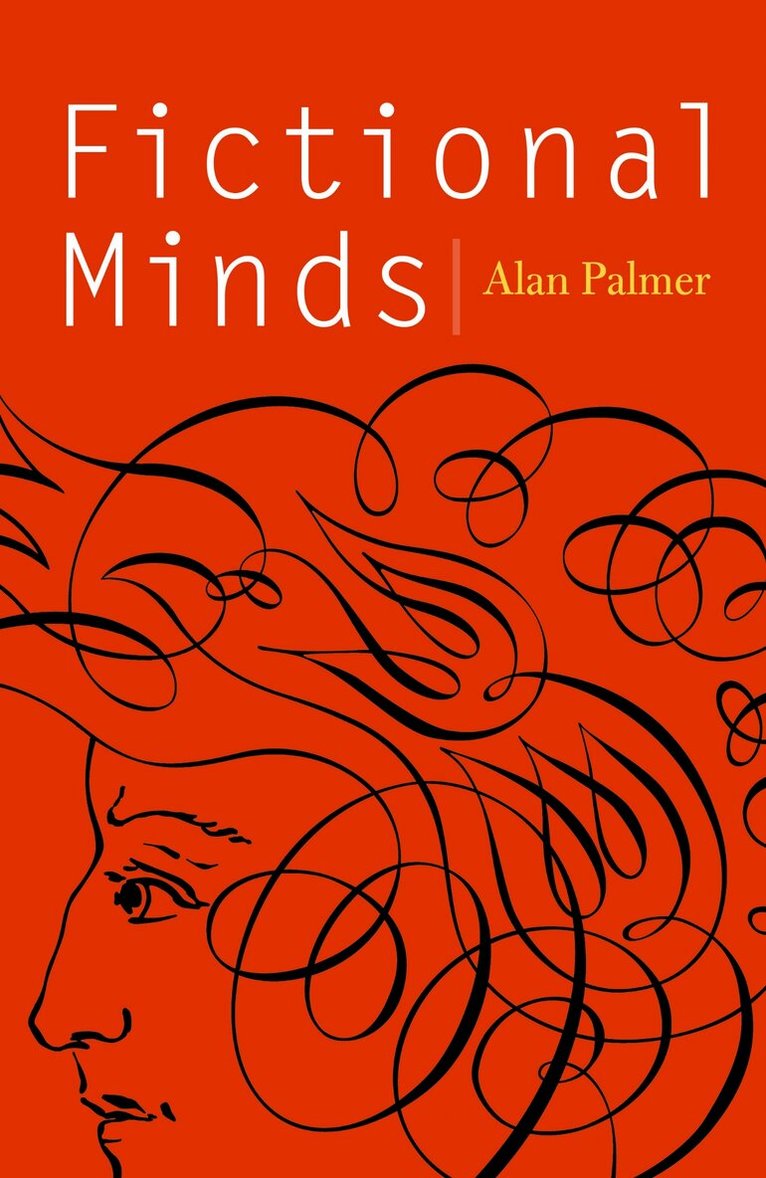
Fictional Minds suggests that readers understand novels primarily by following the functioning of the minds of characters in the novel storyworlds. Despite the importance of this aspect of the reading process, traditional narrative theory does not include a complete and coherent theory of fictional minds. Readers create a continuing consciousness out of scattered references to a particular character and read this consciousness as an "embedded narrative" within the whole narrative of the novel. The combination of these embedded narratives forms the plot. This perspective on narrative enables us to explore hitherto neglected aspects of fictional minds such as dispositions, emotions, and action. It also highlights the social, public, and dialogic mind and the "mind beyond the skin." For example, much of our thought is "intermental," or joint, group, or shared; even our identity is, to an extent, socially distributed.Written in a clear and accessible style, Fictional Minds analyzes constructions of characters' minds in the fictional texts of a wide range of authors, from Aphra Behn and Henry Fielding to Evelyn Waugh and Thomas Pynchon. In its innovative and groundbreaking explorations, this interdisciplinary project also makes substantial use of "real-mind" disciplines such as philosophy, psychology, psycholinguistics, and cognitive science.
130 kr
Skickas inom 7-10 vardagar
The businessperson's guide to saying what needs to be said and asking questions that need to be asked In the business world, the first step to great results is good communication. Talk Lean uses original research and a fresh approach to teach businesspeople how to say difficult things and ask difficult questions in a way that is positive, effective, and comfortable for everyone involved. You'll learn how to begin meetings and conversations in a way that is succinct, empathetic, and effective, while putting people in a positive and receptive frame of mind. You'll learn how to listen and respond during meetings to maximise both productivity and empathy and how to close meetings in positive ways that lead to great results. Offers proven techniques for improving communication and making an impact professionallyWritten by Alan Palmer, head of Interactifs UK, which offers communication coaching to major corporate clientsIdeal for executives, team leaders, entrepreneurs, and anyone whose success depends on great communication
247 kr
Skickas inom 3-6 vardagar
1 726 kr
Skickas inom 10-15 vardagar
Who's Who in Modern History is a unique reference book which examines those individuals who have shaped the political world since 1860. Coverage is truly global, including the most important figures in Europe, Asia, North America, Latin America, Africa and Australasia.It provides: an easy-to-use A-Z layout authoritative, detailed biographies of the most important figures since 1860, from Clemenceau and Chief Buthelezi to King Fahd and Benazir Bhutto bibliographical references for each entry, to aid further research extensive cross-referencing an essential guide for students, researchers and the general reader alike.
142 kr
Skickas inom 7-10 vardagar
Ypres today is an international 'Town of Peace', but in 1914 the town, and the Salient, the 35-mile bulge in the Western Front, of which it is part, saw a 1500-day military campaign of mud and blood at the heart of the First World War that turned it into the devil's nursery. Distinguished biographer and historian of modern Europe Alan Palmer tells the story of the war in Flanders as a conflict that has left a deep social and political mark on the history of Europe. Denying Germany possession of the historic town of Ypres and access to the Channel coast was crucial to Britain's victory in 1918. But though Flanders battlefields are the closest on the continent to English shores, this was always much more than a narrowly British conflict. Passchendaele, the Menin Road, Hill 60 and the Messines Ridge remain names etched in folk memory. Militarily and tactically the four-year long campaign was innovative and a grim testing ground with constantly changing ideas of strategy and disputes between politicians and generals. Alan Palmer details all its aspects in an illuminating history of the place as much as the fighting man's experience.
Del 653 - Insight Guides Main Series
Insight Guides Pakistan: Travel Guide with eBook
Häftad, Engelska, 2025
213 kr
Skickas
This Pakistan guidebook, perfect for travellers planning longer trips, is written by Insight Guides' destination experts. It blends detailed coverage of local history, culture and places to visit with the visual appeal of an illustrated magazine, packed with enticing photos that will inspire excitement for your travels. Printed on eco-friendly paper for sustainability.In this Pakistan travel guidebook, you will find:- Top Attractions and Editors' Choice - must-visit highlights including Badshahi Mosque, Baltistan, The Karakoram Highway, Mohenjo-daro, Nanga Parbat, Peshawar's Old City, Lahore Fort, showcasing the best of what Pakistan has to offer- In-depth coverage of attractions - detailed narrative descriptions of sites and hidden gem destinations, all organised by geographical location- When to go to Pakistan - guidance on the perfect times to visit, with details on the high and low seasons, climate and festivals- Practical travel information - essential advice on logistics, including getting there, moving around, budgeting tips, dining and shopping- Insider recommendation - top tips on beating the crowds, saving money and finding the best local spots- Engaging essays thoughtful features on the country's history, culture, contemporary life and politics give a deeper understanding- High-quality maps - detailed maps, featuring must-see places organised by number and corresponding to text- Striking pictures - inspirational photography on every page- Colour-coded chapters - each chapter is assigned a unique colour, aiding in easy navigation- Free download of eBook - after purchasing the printed guidebook, you'll also have access to a free download of the eBook- Coverage includes: Sindh, Karachi, Mohenjo-daro, Punjab, Islamabad, Rawalpindi, Taxila, Lahore, Balochistan, Khyber Pakhtunkhwa, Peshawar Old City, Peshawar Cantonment, Swat Valley, Chitral
241 kr
Skickas inom 10-15 vardagar
By 1812, when Napoleon invaded Russia, his Empire covered most of Europe. The invasion was to be its crowning glory. Instead it ended in disaster, defeat and humiliation, and marked the beginning of his decline.Here, with a brilliant use of sources and gripping narrative, the French campaign is followed day to day within the most intimate context of the Emperor's state of mind, bad health and indecision. As the invasion heads towards its climax among the flames of Moscow the great disaster that ensued can clearly be seen as the product of innumerable mistakes and omissions. The greatest military leader of modern times lost his army not by folly but by default; the Russians saved their country more by accident than by strategy.
Fortress Shield - 2026 Essential Digital Defense for Regular People
Step-by-Step Identity Protection with Zero-Cost Cybersecurity Tools That Actually Work
Häftad, Engelska, 2025
275 kr
Skickas inom 5-8 vardagar