Albert L. Park - Böcker
Visar alla böcker från författaren Albert L. Park. Handla med fri frakt och snabb leverans.
4 produkter
4 produkter
Building a Heaven on Earth
Religion, Activism, and Protest in Japanese Occupied Korea
Inbunden, Engelska, 2014
851 kr
Skickas inom 7-10 vardagar
Why and how did Korean religious groups respond to growing rural poverty, social dislocation, and the corrosion of culture caused by forces of modernization under strict Japanese colonial rule (1910–1945)? Questions about religion’s relationship and response to capitalism, industrialization, urbanization, and secularization lie at the heart of understanding the intersection between colonialism, religion, and modernity in Korea. Yet, getting answers to these questions has been a challenge because of narrow historical investigations that fail to study religious processes in relation to political, economic, social, and cultural developments. In Building a Heaven on Earth,Albert L. Park studies the progressive drives by religious groups to contest standard conceptions of modernity and forge a heavenly kingdom on the Korean peninsula to relieve people from fierce ruptures in their everyday lives. The results of his study will reconfigure the debates on colonial modernity, the origins of faith-based socialactivism in Korea, and the role of religion in a modern world.Building a Heaven on Earth, in particular, presents a compelling story about thedetermination of the Young Men’s Christian Association (YMCA), the Presbyterian Church, and the Ch’?ndogyo to carry out large-scale rural movements to form a paradiseon earth anchored in religion, agriculture, and a pastoral life. It is a transnational story of leaders from these three groups leaning on ideas and systems from countries, such as Denmark, France, Japan, and the United States, to help them reform political, economic, social, and cultural structures in colonial Korea. Th is book shows that these religious institutions provided discursive and material frameworks that allowed for an alternative form of modernity that featured new forms of agency, social organization, and the nation. In so doing, Building a Heaven on Earth repositions our understandings of modern Korean history.

Building a Heaven on Earth
Religion, Activism, and Protest in Japanese Occupied Korea
Häftad, Engelska, 2020
310 kr
Skickas inom 7-10 vardagar
Why and how did Korean religious groups respond to growing rural poverty, social dislocation, and the corrosion of culture caused by forces of modernization under strict Japanese colonial rule (1910-1945)? Questions about religion's relationship and response to capitalism, industrialization, urbanization, and secularization lie at the heart of understanding the intersection between colonialism, religion, and modernity in Korea. Yet, getting answers to these questions has been a challenge because of narrow historical investigations that fail to study religious processes in relation to political, economic, social, and cultural developments.In Building a Heaven on Earth, Albert L. Park studies the progressive drives by religious groups to contest standard conceptions of modernity and forge a heavenly kingdom on the Korean peninsula to relieve people from fierce ruptures in their everyday lives. The results of his study will reconfigure the debates on colonial modernity, the origins of faith-based social activism in Korea, and the role of religion in a modern world. Building a Heaven on Earth, in particular, presents a compelling story about the determination of the Young Men's Christian Association (YMCA), the Presbyterian Church, and the Ch'ŏndogyo to carry out large-scale rural movements to form a paradise on earth anchored in religion, agriculture, and a pastoral life. It is a transnational story of leaders from these three groups leaning on ideas and systems from countries, such as Denmark, France, Japan, and the United States, to help them reform political, economic, social, and cultural structures in colonial Korea. This book shows that these religious institutions provided discursive and material frameworks that allowed for an alternative form of modernity that featured new forms of agency, social organization, and the nation. In so doing, Building a Heaven on Earth repositions our understandings of modern Korean history.
1 344 kr
Skickas inom 10-15 vardagar
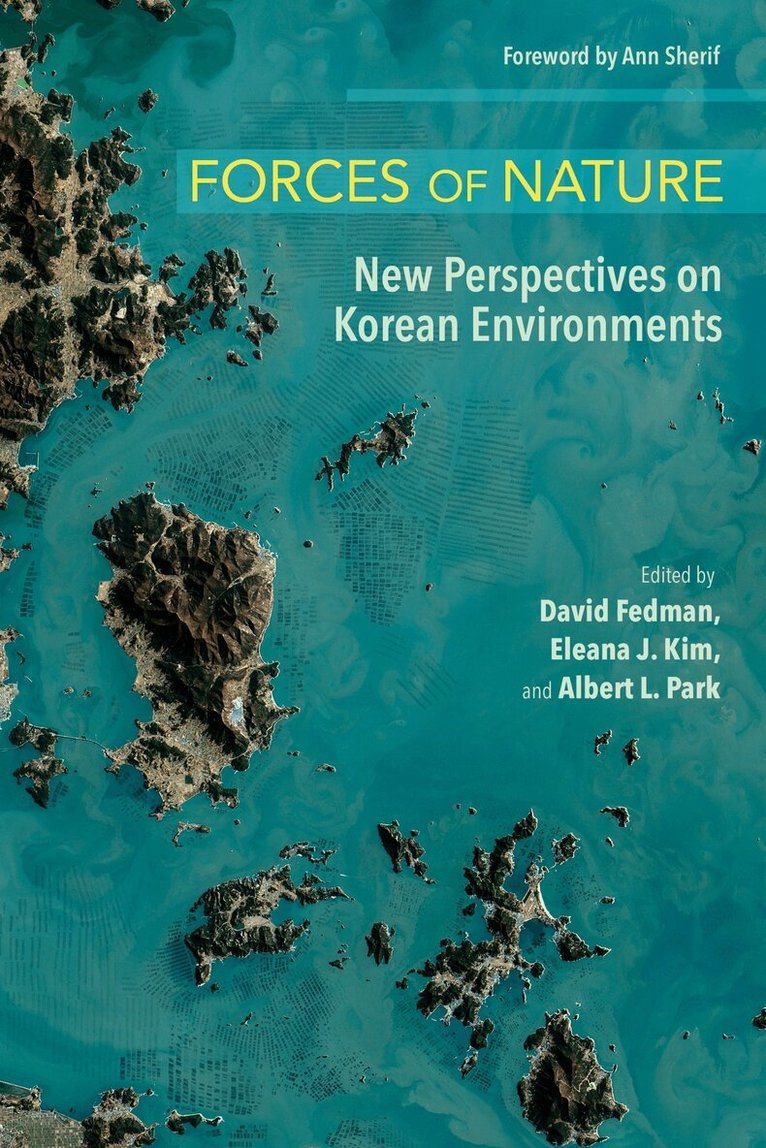
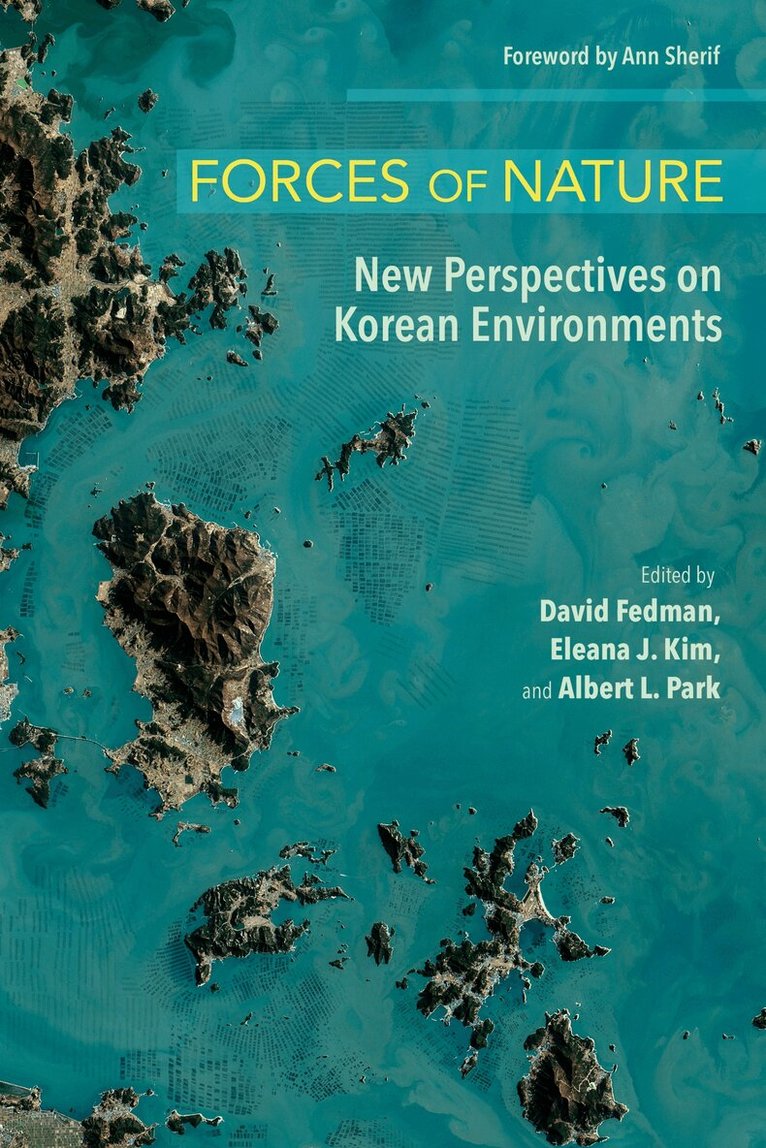
Bringing together a multidisciplinary conversation about the entanglement of nature and society in the Korean peninsula, Forces of Nature aims to define and develop the field of the Korean environmental humanities. At its core, the volume works to foreground non-human agents that have long been marginalized in Korean studies, placing flora, fauna, mineral deposits, and climatic conditions that have hitherto been confined to footnotes front and center. In the process, the authors blaze new trails through Korea's social and physical landscapes.What emerges is a deeper appreciation of the environmental conflicts that have animated life in Korea. The authors show how natural processes have continually shaped the course of events on the peninsula—how floods, droughts, famines, fires, and pests have inexorably impinged on human affairs—and how different forces have been mobilized by the state to variously, control, extract, modernize, and showcase the Korean landscape. Forces of Nature suggestively reveals Korea's physical landscape to be not so much a passive context to Korea's history, but an active agent in its transformation and reinvention across centuries.With support from the Henry Luce Foundation, our goal is to produce all titles in this series both in Open Access, for reasons of global accessibility and equity, as well as in print editions.
288 kr
Skickas inom 10-15 vardagar
Bringing together a multidisciplinary conversation about the entanglement of nature and society in the Korean peninsula, Forces of Nature aims to define and develop the field of the Korean environmental humanities. At its core, the volume works to foreground non-human agents that have long been marginalized in Korean studies, placing flora, fauna, mineral deposits, and climatic conditions that have hitherto been confined to footnotes front and center. In the process, the authors blaze new trails through Korea's social and physical landscapes.What emerges is a deeper appreciation of the environmental conflicts that have animated life in Korea. The authors show how natural processes have continually shaped the course of events on the peninsula—how floods, droughts, famines, fires, and pests have inexorably impinged on human affairs—and how different forces have been mobilized by the state to variously, control, extract, modernize, and showcase the Korean landscape. Forces of Nature suggestively reveals Korea's physical landscape to be not so much a passive context to Korea's history, but an active agent in its transformation and reinvention across centuries.With support from the Henry Luce Foundation, our goal is to produce all titles in this series both in Open Access, for reasons of global accessibility and equity, as well as in print editions.