Aleardo Zanghellini - Böcker
Visar alla böcker från författaren Aleardo Zanghellini. Handla med fri frakt och snabb leverans.
5 produkter
5 produkter
1 259 kr
Skickas inom 10-15 vardagar
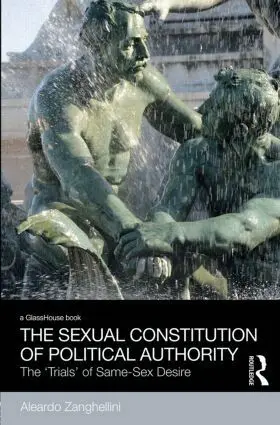
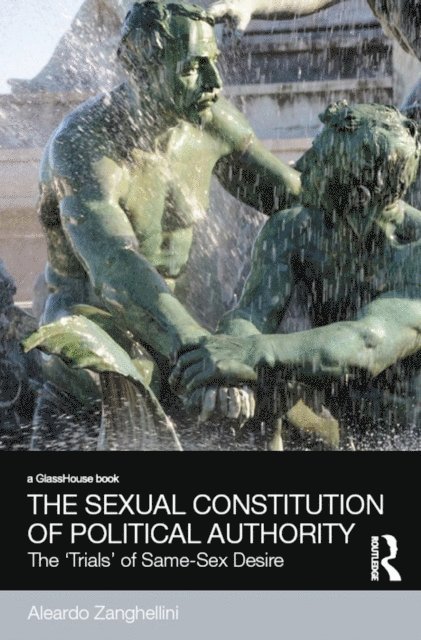
While there is no shortage of studies addressing the state’s regulation of the sexual, research into the ways in which the sexual governs the state and its attributes is still in its infancy. The Sexual Constitution of Political Authority argues that there are good reasons to suppose that our understandings of state power quiver with erotic undercurrents. The book maintains, more specifically, that the relationship between ideas of political authority and male same-sex desire is especially fraught. Through a series of case studies where a statesman’s same-sex desire was put on trial (either literally or metaphorically) as a problem for the good exercise of public powers, the book shows the resilience and adaptability of cultural beliefs in the incompatibility between public office and male same-sex desire. Some of the case studies analysed are familiar ground for both political/constitutional history and the history of sexuality. The Sexual Constitution of Political Authority argues, however, that only by systematically reading questions of institutional politics and questions of sexuality through each other will we have access to the most interesting insights that a study of these trials can generate. Whether they involve obscure public officials or iconic rulers such as Hadrian and James I, these compelling fragments of queer history reveal that the disavowal of male same-sex desire has been, and partly remains, central to mainstream understandings of political authority.
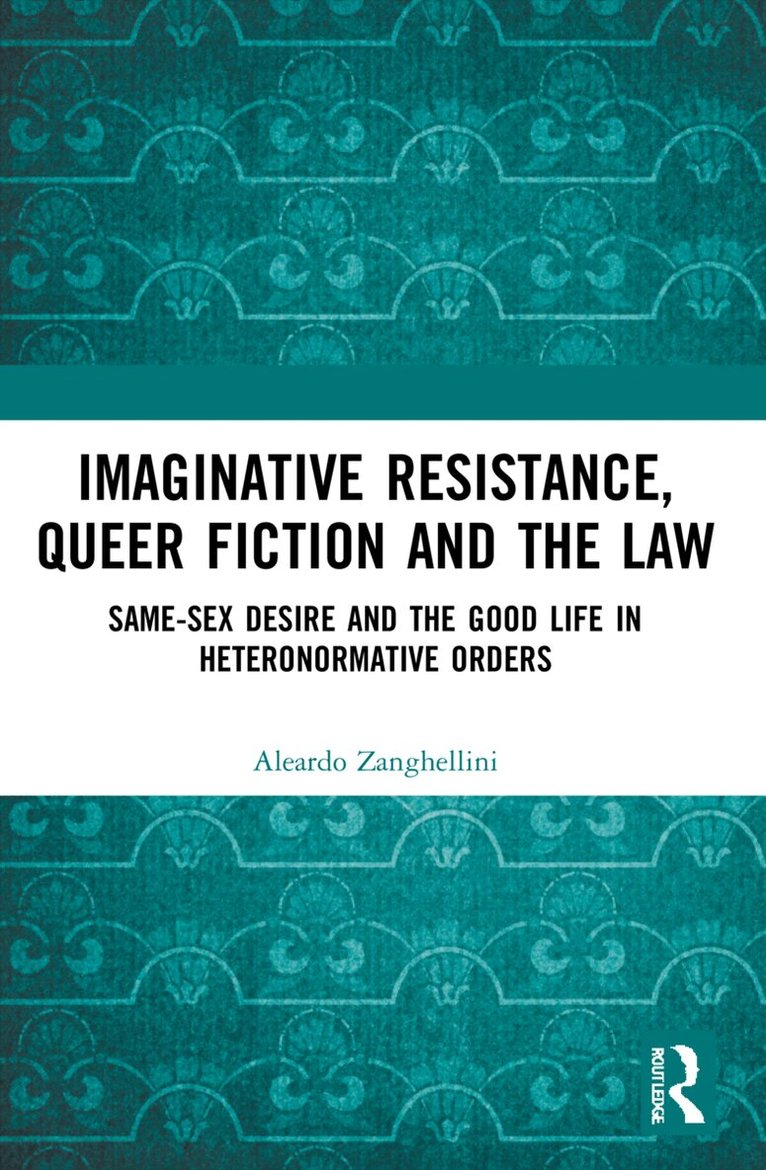
Imaginative Resistance, Queer Fiction and the Law
Same-Sex Desire and the Good Life in Heteronormative Orders
Inbunden, Engelska, 2021
2 401 kr
Skickas inom 10-15 vardagar
Imaginative Resistance, Queer Fiction and the Law develops a novel account of how heteronormative sociolegal orders undermine the well-being of same-sex attracted people, even when these normative orders may fall short of coercively interfering with their choices. Queer well-being is generally studied from psychological perspectives, through the concept of ‘minority stress.’Taking four texts of mid-century Anglo-American queer fiction as illustrative case studies, this book argues – in a philosophical rather than a psychological register – that heteronormativity also affects queer well-being in more intangible ways. The central claim is that heteronormativity shackles the imagination: it curtails no less the imaginative reach of authors of queer fiction, than our ability – engaged as we are in projects of self-authorship – to make-believe personal futures in which same-sex intimacy is brought to bear on our well-being. The book’s central claim re-works a concept central to the philosophy of fiction – ‘imaginative resistance’ – and puts it into service of questions raised in moral philosophy. Apart from its political and normative implications – strengthening the case for at least some global gay rights – and from challenging some of queer theory’s orthodoxies, the book also makes contributions to queer literary history, criticism and biography. Drawing on archival material and personal interviews, fresh readings are offered of Charles Jackson’s The Fall of Valor (1946), Gillian Freeman’s The Leather Boys (1961), and Patricia Highsmith’s The Price of Salt (1952) and The Talented Mr Ripley (1955), making a case for their inclusion in the queer literary canon. Imaginative Resistance, Queer Fiction and the Law will appeal to students of literary criticism, queer sociolegal history, law & literature, the philosophy of fiction, and queer theory, politics and ethics.
Imaginative Resistance, Queer Fiction and the Law
Same-Sex Desire and the Good Life in Heteronormative Orders
Häftad, Engelska, 2023
709 kr
Skickas inom 10-15 vardagar
Imaginative Resistance, Queer Fiction and the Law develops a novel account of how heteronormative sociolegal orders undermine the well-being of same-sex attracted people, even when these normative orders may fall short of coercively interfering with their choices. Queer well-being is generally studied from psychological perspectives, through the concept of ‘minority stress.’Taking four texts of mid-century Anglo-American queer fiction as illustrative case studies, this book argues – in a philosophical rather than a psychological register – that heteronormativity also affects queer well-being in more intangible ways. The central claim is that heteronormativity shackles the imagination: it curtails no less the imaginative reach of authors of queer fiction, than our ability – engaged as we are in projects of self-authorship – to make-believe personal futures in which same-sex intimacy is brought to bear on our well-being. The book’s central claim re-works a concept central to the philosophy of fiction – ‘imaginative resistance’ – and puts it into service of questions raised in moral philosophy. Apart from its political and normative implications – strengthening the case for at least some global gay rights – and from challenging some of queer theory’s orthodoxies, the book also makes contributions to queer literary history, criticism and biography. Drawing on archival material and personal interviews, fresh readings are offered of Charles Jackson’s The Fall of Valor (1946), Gillian Freeman’s The Leather Boys (1961), and Patricia Highsmith’s The Price of Salt (1952) and The Talented Mr Ripley (1955), making a case for their inclusion in the queer literary canon. Imaginative Resistance, Queer Fiction and the Law will appeal to students of literary criticism, queer sociolegal history, law & literature, the philosophy of fiction, and queer theory, politics and ethics.
470 kr
Skickas inom 10-15 vardagar
While there is no shortage of studies addressing the state’s regulation of the sexual, research into the ways in which the sexual governs the state and its attributes is still in its infancy. The Sexual Constitution of Political Authority argues that there are good reasons to suppose that our understandings of state power quiver with erotic undercurrents. The book maintains, more specifically, that the relationship between ideas of political authority and male same-sex desire is especially fraught. Through a series of case studies where a statesman’s same-sex desire was put on trial (either literally or metaphorically) as a problem for the good exercise of public powers, the book shows the resilience and adaptability of cultural beliefs in the incompatibility between public office and male same-sex desire. Some of the case studies analysed are familiar ground for both political/constitutional history and the history of sexuality. The Sexual Constitution of Political Authority argues, however, that only by systematically reading questions of institutional politics and questions of sexuality through each other will we have access to the most interesting insights that a study of these trials can generate. Whether they involve obscure public officials or iconic rulers such as Hadrian and James I, these compelling fragments of queer history reveal that the disavowal of male same-sex desire has been, and partly remains, central to mainstream understandings of political authority.
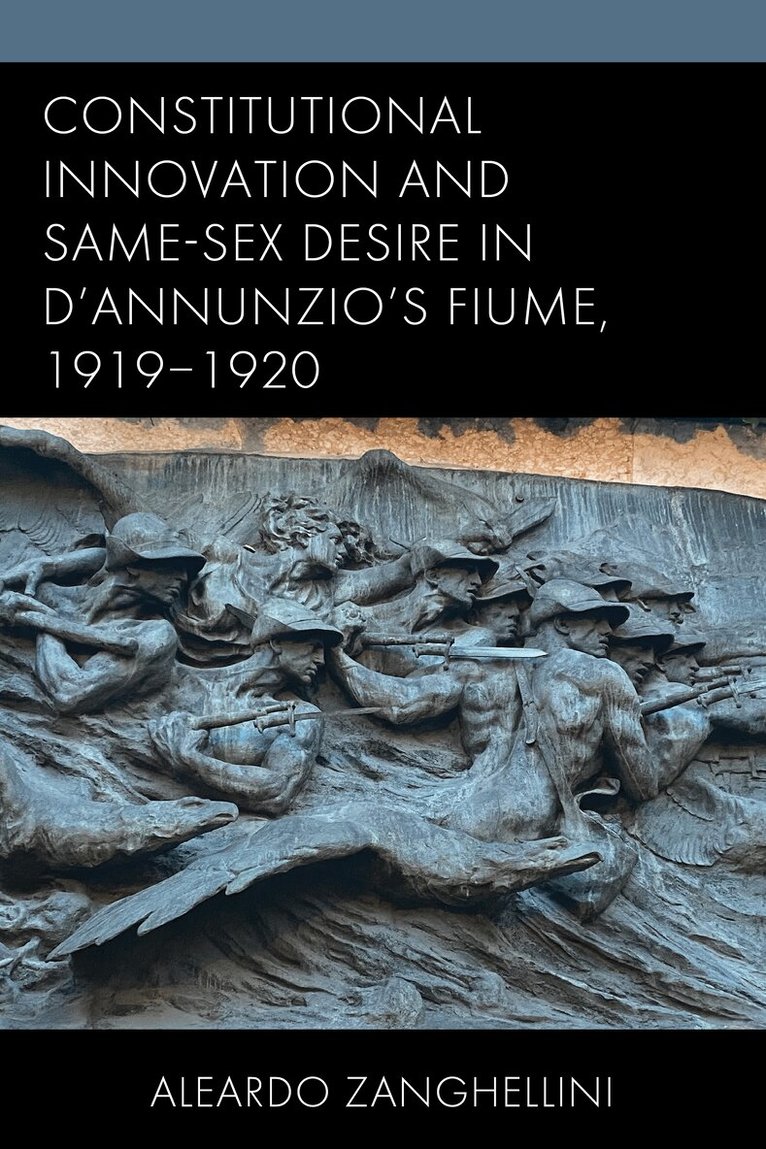
Constitutional Innovation and Same-Sex Desire in D'Annunzio's Fiume, 1919–1920
Inbunden, Engelska, 2024
1 512 kr
Skickas inom 10-15 vardagar
Drawing on novel archival evidence that sheds light on Anglo-Italian diplomatic relations and the French-Italian contest for power in the Adriatic, this book recounts the story of decadent poet Gabriele D’Annunzio’s occupation of Fiume. Determining the fate of this Italian enclave in coastal Croatia had proved impossible at the Paris Peace Conference. In September 1919, D’Annunzio and his ‘legionnaires’ installed themselves in Fiume in a bid to embarrass Italy into declaring its annexation. In the months that followed, the poet did his best to fashion Fiume into his ideal political community, culminating in the proclamation of a Constitution known as the Carnaro Charter. The Charter was as visionary as it was short-lived: having reached an agreement with Yugoslavia on the status of Fiume, Italy put an end to the poet’s socio-political experiment in December 1920. In addition to offering the most comprehensive and detailed analysis to date of the Carnaro Charter, the book shows what has eluded all historians of D’Annunzio’s Fiume: that the sublimation and discursive circulation of same-sex desire was integral to shaping and sustaining the political and legal order of the occupation, and that D’Annunzio’s love-lore in Fiume was continuous with broader homoerotic preoccupations in his oeuvre.